The Day After: Linen Outfits for a Long Holiday Weekend
The Day After: Linen Outfits for a Long Holiday Weekend
Build a four-day holiday weekend around four linen pieces at 150 to 220 gsm: a shirt for visiting, a matching set for errands, wide-leg pants for the house, and a shirt dress for the drive home. Add one neutral layer and one pair of shoes, and each day solves itself.
Why a Four-Day Weekend Breaks Normal Outfit Math
A normal weekend is two days and one mood. A holiday weekend is four days and four different rooms, and the difference is not the extra forty-eight hours, it is the number of social contracts you sign. Thursday you are a guest or a host at a table. Friday you are a person in a shop queue at 9 a.m. with a list. Saturday you are nobody in particular, which is the hardest role to dress for. Sunday you are a traveller with a bag, a thermos and a car seat that has already seen three seasons of crumbs.
Most packing advice for this weekend assumes you are going somewhere warm, or assumes you are staying home and hosting, or assumes the whole four days happen in one house. In practice the American Thanksgiving weekend is a mix: one formal-ish meal, one day of retail and errands, one day of collapse, one day of transit. If you pack for only one of those, you spend the other three days in the wrong clothes, and the wrong clothes on day three is how people end up buying something they do not need on day four.
Linen is unusually good at this particular problem, and for a reason that has nothing to do with summer. The fibre is hollow and low-twist, so it moves moisture along the yarn instead of holding it against the skin, and it releases that moisture quickly when the air is dry. That means a linen shirt worn in a 24 C car, then carried into an 18 C shop, then sat in at a 21 C kitchen table, does not go through the clammy-hot-cold cycle that a cotton jersey does. It also does not hold kitchen and restaurant smells the way wool does over four days, which matters more than most packing lists admit.
What linen does require is planning, because it creases and because it does not stretch. A four-day plan built on four linen pieces works only if each piece is chosen for one specific day and one specific failure mode. That is what the rest of this guide does: it assigns one garment to each day, names the weight that survives that day, and gives the one layer and one pair of shoes that make the four days cohere into a single bag.
This is the companion piece to two guides already on the site. If you are hosting the meal itself, the hosting guide covers aprons, cuffs and kitchen heat in detail. If you are attending as a guest, the guest outfit guide handles dress codes and table-side seating. This article starts on Friday morning, when the plates are cleared and the weekend is still three days long.
The Four-Piece Rule: One Garment Per Day, One Layer for All
The rule is deliberately rigid. Four days, four garments, one outer layer, one pair of shoes, one bag. Every additional piece you add breaks the system by creating a choice at 7:40 a.m., and choice is what turns a small bag into a large one.
The logic behind it is simple arithmetic. A four-day trip with a wash window on day three needs five wearing slots covered if you count the travel day home, and linen can be worn twice if one of the wears is short and the garment is aired overnight. Four pieces plus one layer covers eight to ten slots comfortably. Six pieces covers the same eight slots but adds two kilos and four decisions, which is why the six-piece capsule works better for a five-day work week in one building than for a four-day weekend across four locations. The six-piece winter week article is the right reference when every day is the same commute; this one assumes every day is a different room.
| Day | Scene | Garment | Weight | Footwear | Layer |
|---|---|---|---|---|---|
| Thursday | Holiday meal, seated 3 to 4 hours | Linen shirt, relaxed cut | 150 to 170 gsm | Low block heel or leather loafer | Fine knit cardigan |
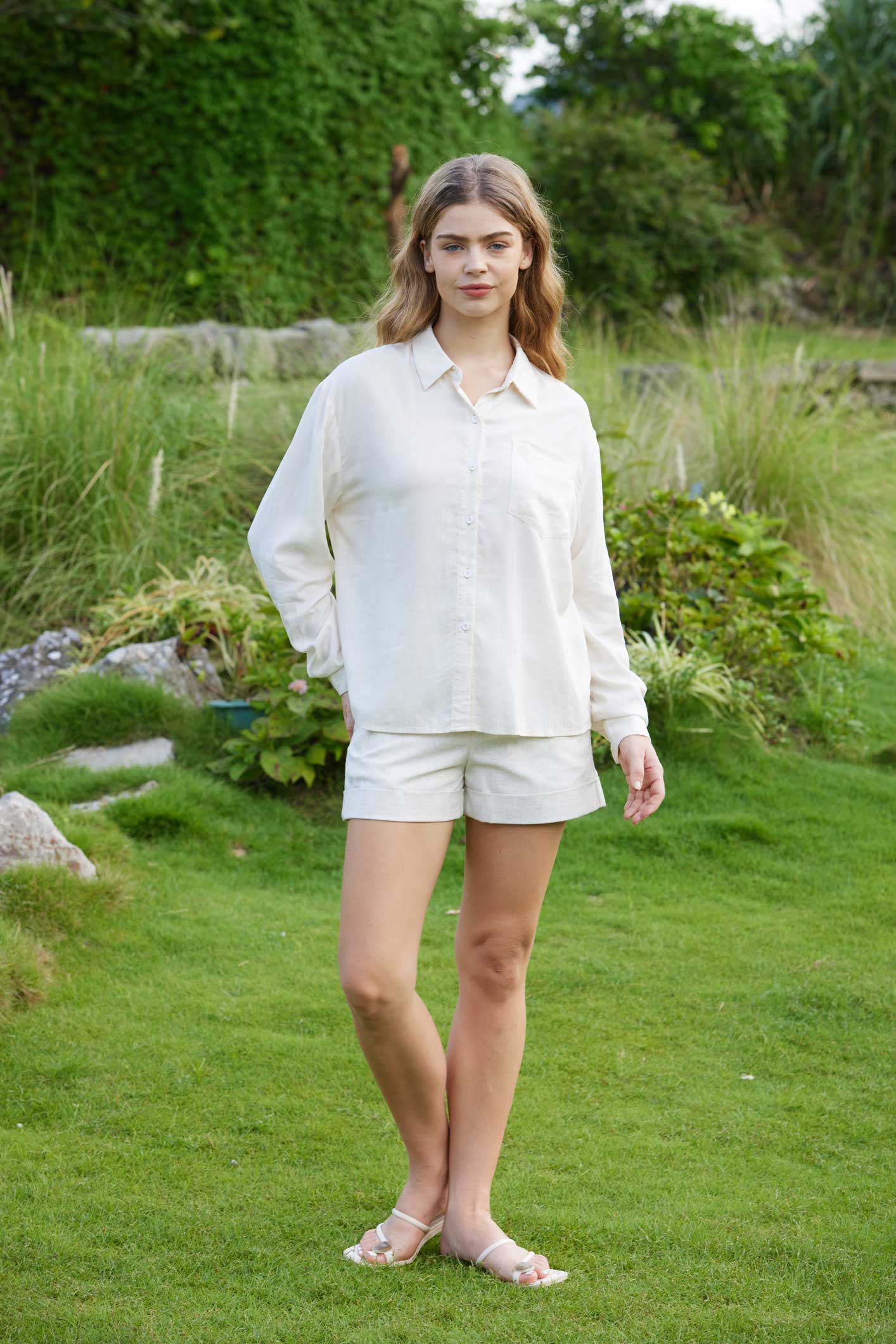
| Friday | Errands and shops, 4 to 6 hours on foot | Linen set, shirt and wide-leg pant | 180 to 200 gsm | Cushioned white sneaker | Same cardigan, worn open |
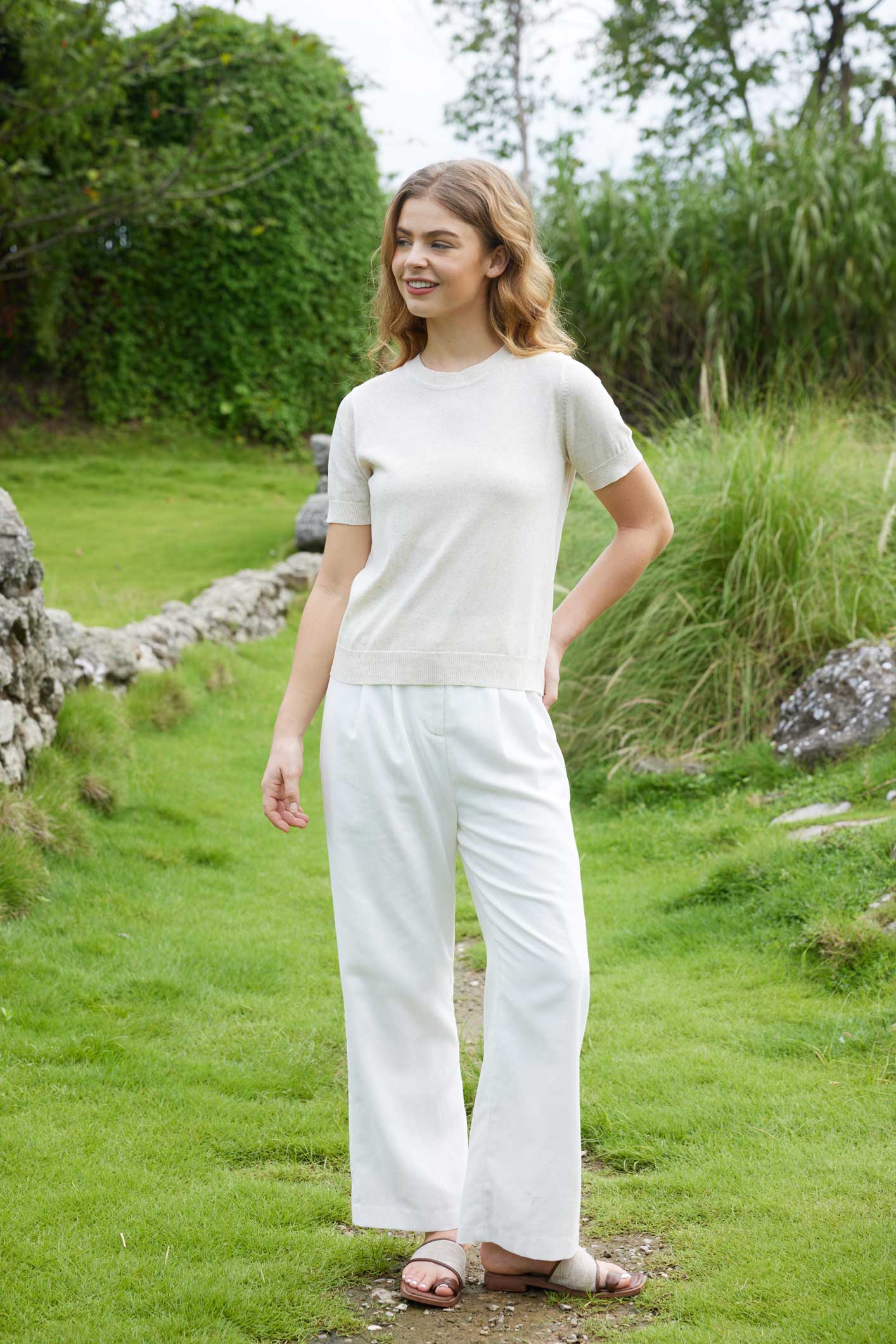
| Saturday | Home, 18 to 22 C, low activity | Wide-leg linen pant, drawstring | 200 to 220 gsm | Wool-blend house sock | Oversized linen overshirt |
| Sunday | Travel home, 3 to 6 hours in a car or train | Linen shirt dress | 160 to 190 gsm | Flat ankle boot | Long wool coat |
Read the table as a constraint system rather than a suggestion. The shirt is the only piece that has to look polished at a table with four generations of photographs happening. The set is the only piece that has to survive six hours of walking and a changing room mirror. The pant is the only piece that has to be comfortable enough to fall asleep in on a sofa at 4 p.m. The dress is the only piece that has to be comfortable in a car seat for a long drive and still presentable at a fuel stop.
Nothing in the plan requires a second pair of shoes. That is not minimalism for its own sake. A second pair costs roughly the same luggage volume as a fourth garment, and the fourth garment buys you a whole day of coverage, while the second pair buys you a marginally better match with one outfit. If you must choose, choose the garment.
Day One: Visiting Family in a Linen Shirt That Starts Polite
Thursday is the day the photographs happen, and it is also the day with the widest temperature range. A house with an oven running, a dining room with a radiator, and a porch where somebody insists on standing for twenty minutes in 7 C air. The garment has to read as intentional at the table and not read as fragile on the porch.
A 150 to 170 gsm linen shirt in a mid-tone is the most reliable answer. Mid-tone means oyster, stone, sage, camel or a muted rust, not optic white and not black. White at this weight is translucent under a warm pendant light and shows the first drop of anything, and black shows every speck of flour and lint in a house where somebody has been baking since Tuesday. Mid-tone absorbs both problems.
The cut matters more than the colour. You want a shirt with a straight hem that hits mid-hip, a collar that stands on its own without fusing, and sleeves that roll to just below the elbow and stay there. A dropped shoulder and a slightly wider body give you room to sit through a four-hour meal without the placket pulling across the chest when you reach for the water jug.
Styling for the day is a single decision: tuck or not. Untucked with wide-leg trousers reads relaxed and hides a food baby, which is the correct priority on Thanksgiving. Tucked with a belt reads sharper and works if the meal is late and the room is formal. Pick one before you leave the house, because changing halfway through the meal means carrying a belt in a pocket and adjusting a hem every time you stand up.
- Roll the sleeves once, not three times. A single 4 cm turn sits flat and stays put; multiple turns create a thick band that catches on plates.
- Leave the top button open and the second one fastened. This holds the collar up without exposing the neckline when you lean forward to serve.
- Choose a shirt with a back yoke. A yoke adds structure across the shoulders, which is what stops a relaxed shirt from collapsing into a shapeless block in photographs.
- Wear a fine knit cardigan, not a blazer. A cardigan comes off in one motion when the oven heat hits and goes back on for the porch without creasing the shirt underneath.
The one failure mode to plan for is grease. A holiday table produces more oil than any other meal of the year, and oil on linen at 160 gsm shows within about twenty seconds as a dark patch. Do not rub it. Blot it with a dry napkin for five seconds, lift any solid with the back of a knife, and leave the rest until you get home. Rubbing spreads the mark across three fibres instead of one, and water at the table drives the oil deeper before you have a chance to treat it properly.
Day Two: Errands and Shops in a Linen Set That Survives a Mirror
Friday is the day the weekend changes register. You are outdoors, in and out of cars and shops, standing in a queue, carrying bags, and occasionally standing in front of a changing room mirror under the least flattering light ever installed in a building. This is the day a matching linen set earns its place, and it is also the day most people get the weight wrong.
Go heavier than you think. A 180 to 200 gsm set has enough body to hold a line when you are walking, does not cling after four hours of carrying bags, and does not go transparent under the cold white light of a shop fitting room. A 130 gsm set looks wonderful for the first hour and looks like sleepwear by hour four, which is a problem when the fourth hour is a return at a customer service desk.
The set works because it removes a decision and creates a silhouette. A matching shirt and wide-leg pant in the same cloth reads as one garment from three metres away, which is the distance at which most people see you on a Friday. It also means the top can be re-worn on Saturday morning with the house pant, which quietly extends the plan by half a day.
Footwear is the one place to spend your comfort budget. Four to six hours on a mall floor is 8,000 to 12,000 steps on a hard surface, and a linen set with a fashion sneaker reads intentional in a way that a linen set with a running shoe does not. Choose a low-profile leather sneaker with a cushioned insole, in white, bone or black. It works with the set, with the Sunday dress, and with the trousers on Saturday, which is why one pair is enough.
| Condition | What happens to light linen | What 180 to 200 gsm does |
|---|---|---|
| Four hours carrying bags | Stretches at the shoulder and elbow, sags at the hem | Recovers shape within ten minutes of putting the bag down |
| Shop lighting at 4000 K | Shows transparency and every crease as a shadow | Holds opacity and reads as texture rather than wrinkle |
| 18 C outside, 23 C inside | Clammy on entry, cold on exit | Dries in roughly half the time of cotton jersey |
| Changing room mirror | Reveals every horizontal fold at the waist | Falls from the hip without gathering |
Two practical notes for the day itself. First, wear the shirt tucked at the front only, or half-tucked, so the waistband is visible and the leg line reads long; a fully untucked shirt over a wide-leg pant at this weight creates a box. Second, carry a tote rather than a shoulder bag. A strap across a linen shoulder for four hours polishes the cloth in one spot, and that sheen does not wash out.
If the day includes a stop at a grocery store for the second wave of cooking, the set handles it better than a knit would. Linen does not hold odour the way wool does, and it does not pill the way a soft cotton sweatshirt does after a seatbelt and a shopping cart handle. Brush it down, hang it for two hours, and it is ready for a dinner out on Friday night if the plan changes.
Day Three: At Home in Wide-Leg Linen Pants and an 18 to 22 C Room
Saturday is the day nobody photographs, which makes it the day your clothes have to work hardest for you and least for anyone else. The house is at 18 to 22 C, the activity level is low, and the main risk is not style but the specific misery of being cold and over-layered by 2 p.m. because you put on a sweater at 9 a.m. and never took it off.
Wide-leg linen pants at 200 to 220 gsm are the right base. At this weight the cloth has enough mass to sit against the skin without feeling cool, and the wide leg means air moves when you stand up, which is what stops the overheated-then-chilled cycle that happens when you sit still in a warm room in a tight garment. A drawstring waist is not a compromise here; it is the correct closure for a day that involves a sofa, a kitchen counter and a second helping.
The top is where the layering logic lives. Start with a long-sleeve linen or linen-cotton tee at 160 to 180 gsm, add an oversized linen overshirt at 200 to 240 gsm, and stop there. Two layers over the base is enough for 18 C, and the overshirt comes off at 22 C without leaving you in something that looks like underwear. This is the same principle as the winter layering guides, applied to a room rather than to the outdoors: the guide to mixing linen with wool and cashmere explains why the outer layer should be the one with the most structure, and why the base layer should be the one with the least.
- Keep the base layer thin. A 110 to 140 gsm tee under an overshirt traps less heat than a 200 gsm shirt worn alone, and it can be changed in thirty seconds if you overheat.
- Choose the overshirt one size up. The extra volume is what makes it wearable open over a tee without looking like a lab coat.
- Skip the socks until you are cold. Wool-blend house socks at 4 p.m. are a better decision than wool-blend house socks at 9 a.m.
- Hang, do not drape. A linen overshirt left over a chair back for six hours takes the shape of the chair; a hanger costs nothing.
There is a specific comfort argument for linen on a sedentary day that is worth stating plainly, because it is counterintuitive. Linen feels cool to the touch when you first put it on, which is why people assume it is a summer fabric. But the hollow fibre also insulates when the air is still, and a 200 to 220 gsm linen trouser in a 20 C room sits at roughly the same warmth as a midweight cotton sweatpant while remaining far more breathable when you move. The result is a garment you can wear from breakfast to bedtime without the 3 p.m. decision about whether to change.
Saturday is also the day to do the only laundry of the trip. Wash the Thursday shirt and the Friday set together at 30 to 40 C on a gentle cycle, with a low spin, and hang both. Linen at these weights dries in three to five hours indoors in winter if it has air movement, which means a wash started at 6 p.m. is wearable by Sunday morning. Do not put linen in a tumble dryer on high heat to speed this up; the heat sets creases along every fold and shrinks the cloth unevenly at the seams.
Day Four: The Return Trip in a Linen Shirt Dress
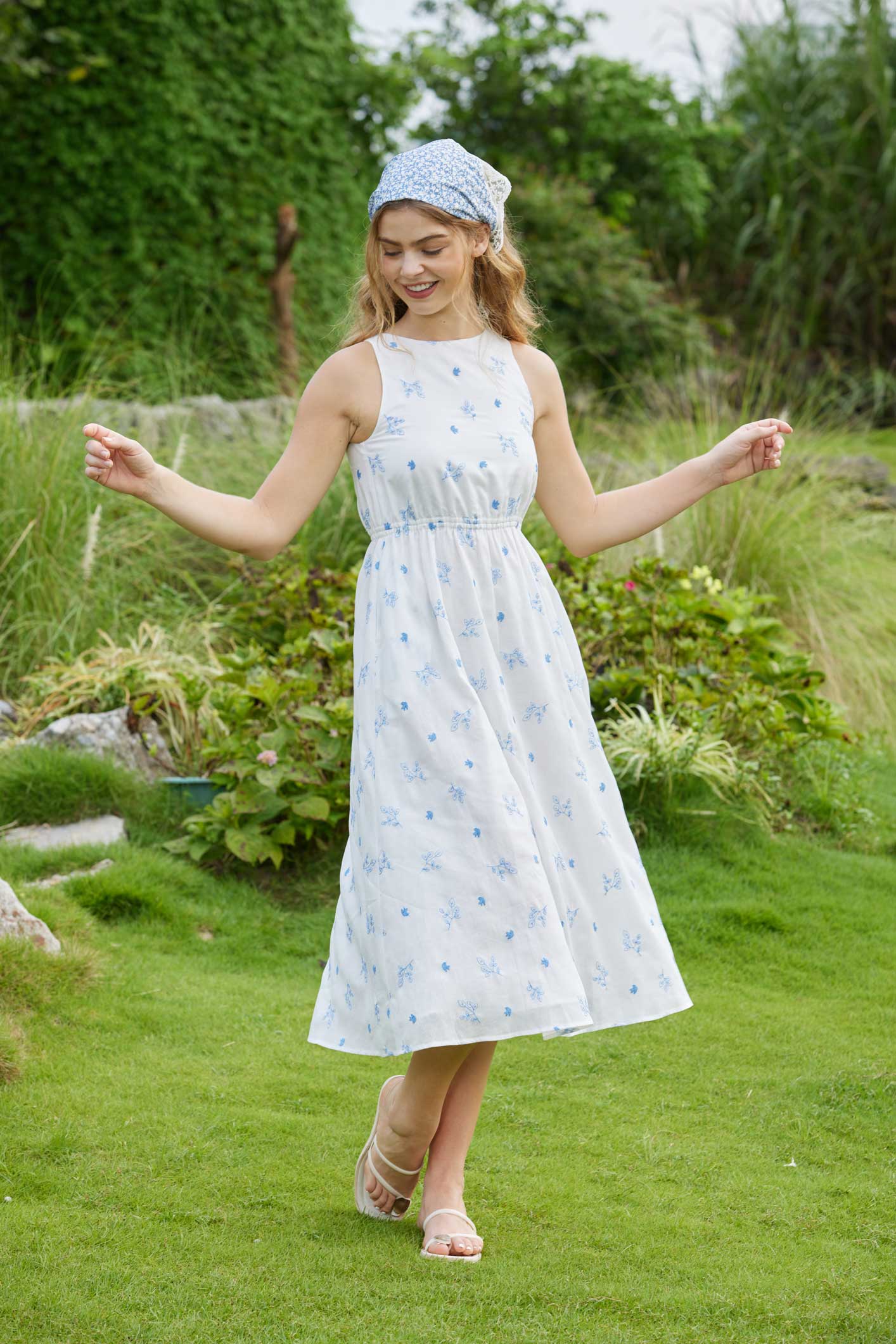
Sunday is a transit day, and transit days punish anything with a waistband, a tight armhole or a fabric that creases into a fan across the lap. A linen shirt dress at 160 to 190 gsm is the most forgiving garment in the plan for three to six hours in a car seat or a train seat, and it is the only one that looks presentable when you stop for fuel and coffee at a service station where everybody else is in a hoodie.
The dress has to meet four conditions to work as a travel garment. It must have a hem that clears the knee by at least 10 cm so it does not catch on a seat belt or a door sill. It must have sleeves you can push to the elbow without the whole shoulder shifting. It must have a placket or a wrap that does not gap when you sit. And it must be opaque enough at 160 gsm to not show the outline of a seat belt across the chest in daylight.
Layer it with a long wool coat rather than a puffer. A coat in a straight cut slides on and off in a car without bunching, and it covers the crease that forms across the lap after two hours of sitting. A puffer adds bulk at the hip, which is exactly where a shirt dress has the least room. If the trip is a train, add a scarf in a colour that picks up the dress rather than contrasts with it, because a scarf is the only piece of the outfit that will be visible in the photograph somebody takes at the station.
The return trip is also the moment to use what you learned on days one to three. If the dress has been in a bag since Thursday, shake it out and hang it in the bathroom while you shower; ten minutes of steam at 40 to 50 C from the shower releases most of the fold lines at this weight. If you are driving and the dress has been worn already, spot-clean the hem and the cuffs before you leave rather than after you arrive, because a mark that has been sat on for four hours has been pressed into the fibre.
What Goes in the Bag: The Twelve-Item List
The bag for this weekend is a weekender, not a suitcase. Twelve items, one pair of shoes worn on the drive, one pair packed only if the forecast is below 4 C. The list is ordered by the sequence you will reach for things, not by category.
- Linen shirt, 150 to 170 gsm, mid-tone. Day one, and the backup top for day two if the set shirt gets marked.
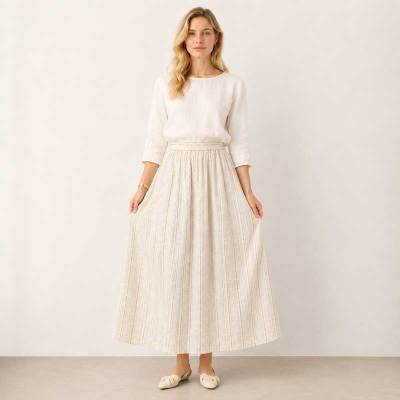
- Linen set, shirt and wide-leg pant, 180 to 200 gsm, matching. Day two, then the pant again on day four if the dress is unavailable.
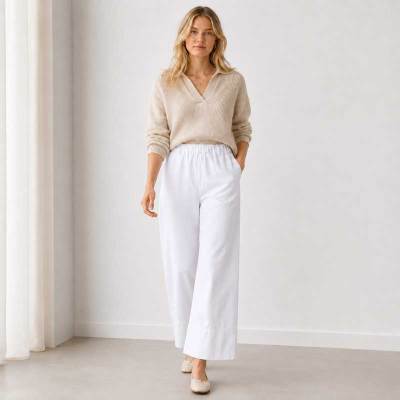
- Wide-leg linen pant, 200 to 220 gsm, drawstring. Day three, and the travel pant if the trip is by car and comfort wins.
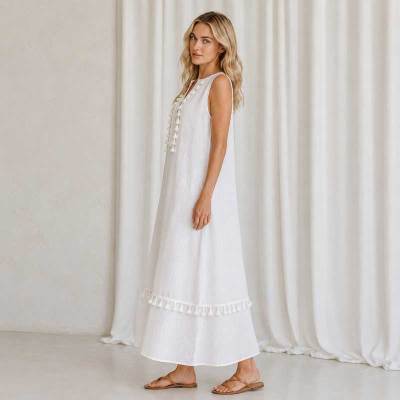
- Linen shirt dress, 160 to 190 gsm. Day four, and the dinner option if Friday night changes plans.
- Long-sleeve linen or linen-cotton tee, 160 to 180 gsm. The base layer for day three and the sleep top for all four nights.
- Oversized linen overshirt, 200 to 240 gsm. The Saturday layer, and the car layer if the heating is aggressive.
- Fine knit cardigan, merino or a merino-cotton blend. The only non-linen garment in the plan, and the one that makes the temperature range survivable.
- Long wool coat, straight cut. Worn on the trip, not packed.
- One pair of leather sneakers, low profile, cushioned. Days two and three.
- One pair of flat ankle boots. Day four, and day one if the meal is dressier.
- One tote and one small crossbody. The tote for errands, the crossbody for the meal.
- A laundry bag and a stain pen. The two items that decide whether the plan survives day three.
That is twelve items including the coat, which fits a standard weekender with room for a laptop and a gift. The reason the list works is that every garment appears in at least two contexts: the shirt is day one and a backup, the set shirt can stand in for the dress, the pant is day three and a travel option, the tee is a base layer and sleepwear. Nothing is single-use, which is the actual test of a packing list.
What is deliberately absent matters as much. No jeans, because denim at 12 oz weighs more than two linen garments and does not dry overnight. No second coat, because the wool coat covers every outdoor moment. No gym clothes, because a linen tee and the wide-leg pant cover a walk. No "just in case" formal outfit, because the shirt with the ankle boot covers the formal case. Every item you add beyond twelve has to displace something already on the list, and in practice nothing on the list is willing to go.
The Colour Plan: Three Neutrals and One Accent
Four garments that have to work together create a colour problem, and the solution is stricter than most people expect. Three neutrals and one accent. The neutrals do the mixing; the accent does the remembering. If you pack four colours that all want attention, you get four outfits that each require a specific shoe and a specific layer, which defeats the purpose of a four-piece plan.
The most reliable neutral trio for a late-November weekend is oyster or cream, stone or greige, and a deep neutral such as charcoal, espresso or navy. These three sit next to each other without competing, and each one flatters the other two in daylight and in tungsten light, which matters because holiday interiors are lit almost entirely by warm bulbs. The accent can be a muted rust, a sage, an olive or a dusty rose, and it should appear on exactly one garment, usually the shirt or the dress.
- Put the accent on the piece worn closest to the face. Colour near the face does the work; colour on the leg is mostly hidden by a table or a car door.
- Keep the shoes in the neutral range. White, bone or black. A coloured shoe multiplies the combinations you have to think about.
- Let the layer be the darkest item. A charcoal or espresso cardigan over cream, stone and sage pulls the outfit together at the top, which is where people look first.
- Do not add a fourth neutral. Four neutrals in the same bag read as indecision rather than as a palette, and they make every morning a comparison exercise.
There is a practical benefit beyond aesthetics. A tight palette means a stain on one garment is less visible, because the eye reads the outfit as a whole rather than as four separate items. It also means the Thursday shirt can be worn again on Sunday under the coat without anyone noticing, which is the kind of quiet reuse that makes a small bag possible.
Laundry and Care Across Four Days
Four days, four garments, one wash window. The wash window is Saturday evening, and it only works if you accept two constraints: a low temperature and no dryer. Linen at 150 to 220 gsm washes well at 30 to 40 C on a gentle cycle with a low spin of 600 to 800 rpm, and it dries indoors in three to five hours in a heated house if it has air movement. A hot wash at 60 C will shrink the cloth two to four per cent on the first wash and set every crease that was in the garment when it went in.
Sort by colour, not by fabric, for this trip. All four garments are linen, so the only real risk is a dark neutral bleeding onto a cream. Wash the cream and oyster pieces together, the stone and charcoal pieces together, and use a mesh bag for the shirt so the collar and cuffs do not abrade against a zip or a button.
| When | Action | Temperature or time | Why it matters |
|---|---|---|---|
| Thursday night | Air the shirt, spot-treat any oil with cornstarch | 10 to 15 minutes on the mark | Oil that sits overnight untreated becomes a yellow shadow |
| Friday night | Brush the set, hang both pieces | 2 hours on a hanger | Removes road dust and resets the shoulder line |
| Saturday 6 p.m. | Wash shirt and set together, gentle cycle | 30 to 40 C, 600 to 800 rpm | Gives both pieces 12 hours to dry before Sunday |
| Saturday 7 p.m. | Hang on a rack with 10 cm between garments | 3 to 5 hours indoors | Air gaps are what replace a dryer |
| Sunday morning | Steam the dress in the bathroom during a shower | 10 minutes at 40 to 50 C | Releases fold lines without an iron |
Two things not to do. Do not wash the shirt and the dress in the same load if the dress is the accent colour, because a new accent dye can release in the first three washes even when the fabric is garment-washed. Do not use fabric softener on linen; it coats the fibre and reduces the absorbency that makes the cloth comfortable in the first place. If the linen feels stiff after drying, shake it hard twice and hang it again for twenty minutes; the stiffness is the fibre settling, not a defect.
If a mark survives the wash, do not wash it again immediately. Dry heat is what fixes a stain permanently, so a second wash after a dry cycle mostly wastes water. Treat it, air-dry it, and check it in daylight before deciding. The guide to which linen pieces work below 10 C covers the weight questions that come up when the weekend turns colder than forecast, and the winter dress layering guide covers the tights and boot combinations if the dress day lands on the coldest of the four.
What Breaks the Four-Day Plan
Most packing plans fail for reasons that have nothing to do with the clothes. These are the five failures that show up most often on a long holiday weekend, in the order they tend to happen.
- Packing for the photograph instead of the day. A beautiful outfit that cannot survive a four-hour car ride will be worn once and then carried. Choose the garment for the worst hour of the day, not the best one.
- One layer that is too warm. A heavy sweater at 9 a.m. becomes a garment you carry at 2 p.m. and resent by 4 p.m. A fine knit plus an overshirt covers a wider range than one thick piece.
- No wash window. If Saturday evening is booked, the plan collapses on day three. Either protect ninety minutes on Saturday or accept that day four is a repeat of day two.
- Shoes that have not been worn for a full day. This is the single most common cause of a ruined weekend. Wear the sneakers for a full errand day before you pack them.
- A bag with no laundry compartment. Clean and worn linen in the same space means the clean pieces take the creases and the smell of the worn ones. A cotton laundry bag costs almost nothing and solves it.
There is a sixth failure that is specific to linen and worth naming separately: buying a new linen garment for the trip and wearing it unwashed. New linen that has not been through a wash still carries sizing, which makes it feel stiff and look slightly shiny under indoor light, and it can transfer dye onto a light coat or a car seat. Wash it once at 30 C before you pack it, or choose a garment that has already been garment-washed at the mill, which is the process that removes the sizing and pre-shrinks the cloth before it is cut.
The one-number summary: if you remember nothing else, remember 180. A 180 gsm linen shirt, set or dress covers the widest range of indoor and outdoor November conditions, dries overnight, and folds flat enough for a weekender. Weight is the decision that everything else follows from.
Frequently Asked Questions
How many outfits do I need for a four-day holiday weekend?
Four garments plus one layer, if each garment is a linen piece at 150 to 220 gsm and you have a wash window on day three. That covers eight to ten wearing slots, including sleep and travel, because linen can be aired and re-worn once. A fifth garment adds weight and decisions without adding coverage.
Is linen warm enough for a November holiday weekend?
Yes, at the right weight. A 200 to 220 gsm linen trouser worn indoors at 18 to 22 C is roughly as warm as a midweight cotton sweatpant, and it breathes better when you move. For outdoor time below 10 C, the linen is the base and the wool coat does the insulating.
What is the best linen weight for a car trip?
160 to 190 gsm for a dress or shirt, and 200 to 220 gsm for trousers. Lighter than 150 gsm creases sharply across the lap and shows every fold in daylight; heavier than 220 gsm holds a crease and feels stiff against a seat belt for three hours.
Can I wear the same linen shirt two days in a row?
Yes, if you air it overnight on a hanger and it has not been against the skin for more than four hours the first day. Linen resists odour better than cotton or wool because the hollow fibre dries quickly. Spot-clean the collar and cuffs before the second wear rather than after.
How do I pack linen so it does not arrive creased?
Fold along the existing seams, roll rather than fold for shirts, and place the heaviest garment at the bottom of the bag. Leave the top third of the bag empty. On arrival, hang each piece in the bathroom during a shower; ten minutes at 40 to 50 C releases most fold lines at these weights.
What shoes work for all four days?
One pair of low-profile leather sneakers with a cushioned insole covers errands, the house and the drive. Add one pair of flat ankle boots only if the holiday meal is dressy or the forecast drops below 4 C. A third pair is luggage volume you will regret.
The Short Version
Plan the four-day weekend as four garments, not four outfits: a 150 to 170 gsm shirt for the meal, a 180 to 200 gsm matching set for errands, a 200 to 220 gsm wide-leg pant for the house, and a 160 to 190 gsm shirt dress for the drive home. Add one fine knit cardigan, one wool coat, one pair of leather sneakers and one pair of ankle boots. Keep three neutrals and one accent, protect Saturday evening for a 30 to 40 C wash, and hang everything with 10 cm of air between garments. Do that, and the day after Thanksgiving stops being a wardrobe problem and becomes the easiest day of the weekend.
Linen Cut for the Whole Weekend
Our shirts, sets and wide-leg trousers are woven from 100 percent European Flax at 110 to 240 gsm and garment-washed before they ship, so the cloth has already been through the wet process that shrinks and stiffens lesser linen. The European Flax certification traces the fibre back to Western European fields, and for customers who ask what safe dyeing means in practice, the OEKO-TEX standard publishes the limit values we point to. Start with a linen shirt for day one, or a linen midi dress for day four, and build the rest of the four-piece plan around it.