How to Mix Linen with Wool and Cashmere in One Outfit
How to Mix Linen with Wool and Cashmere in One Outfit
Linen, wool and cashmere mix well when each fibre is given the job it does best. The short answer: wear linen closest to the skin in a 110-170 gsm weight, use a mid layer of either heavier linen or fine merino in the 180-260 gsm range, and finish with wool or cashmere in a loftier 300-500 gsm weight on the outside. Keep the linen smooth and the wool textured, leave room between the layers, and the combination gives you moisture control, insulation and a visible mix of surfaces that looks deliberate rather than accidental. This guide gives you the weights, the temperature bands, five complete outfits and the care routine that keeps all three fibres wearable for years. Start with a linen shirt you already own, then build outward.
The Short Answer: Yes, and the Order Matters
Linen and wool are not rivals; they are complementary. Linen is a smooth, low-loft cellulose fibre that absorbs moisture quickly and releases it into the air. Wool is a crimped protein fibre that traps air in its scales and crimp, which is why a wool sweater feels warm without being heavy. Cashmere is the fine undercoat of the cashmere goat: softer than most sheep's wool, warm for its weight, and more delicate under friction. None of these fibres cancels the others out. The problems people experience come from order, weight and fit, not from fibre incompatibility.
The order that works is linen, then wool or cashmere, then more wool if the weather demands it. Linen against the skin handles perspiration from a warm train, a heated office or a long walk, and it does not cling the way a synthetic base layer can. Wool outside the linen provides insulation and resists wind. If you reverse the order and put wool directly against skin with linen over it, you lose the moisture benefit of the flax, the linen catches on the knit surface, and the outfit becomes harder to take on and off.
There is one important exception. Very coarse or heavily textured linen worn directly against very fine cashmere creates friction that pills the cashmere. In that case, put a smooth cotton or fine linen tee between them, or choose a smoother linen shirt rather than a slubby one. The fibre combination is still sound; it is the surface pairing that needs adjusting.
One-line rule: smooth fibre next to skin, lofty fibre on the outside, and at least one finger of space between every layer. If a layer cannot slide over the one beneath it, the outfit is too tight, not too warm.
Why Linen and Wool Behave So Differently
Understanding the behaviour of each fibre makes the styling decisions obvious. Linen is made from the bast fibre of the flax plant. It is strong when dry, stronger when wet, and has very little elasticity, which is why a linen shirt holds a clean line but does not stretch to accommodate a thick knit underneath. Its surface is naturally slightly irregular, with the slubs and variations that make it recognisable. It conducts heat away from the body rather than trapping it, so a thin linen shirt feels cool in summer and neutral in a heated room, but it will not keep you warm on a cold platform by itself.
Wool is the opposite in almost every respect. The fibre is crimped, elastic and able to trap air between fibres. That trapped air is the insulation. Wool also absorbs moisture vapour without feeling wet, which is why it works in damp cold weather where cotton would feel clammy. The trade-off is that wool can be scratchy, it can felt if agitated in warm water, and it needs more careful washing than linen. Merino is simply wool from merino sheep, with finer fibres and a softer hand; it is the easiest wool to wear next to skin if you choose to break the linen-first rule.
Cashmere sits at the soft end of the wool family. Its fibres are finer and its hand is smoother, so it feels warm and light rather than sturdy. That softness comes with a cost: cashmere pills more readily under friction, and it loses shape if hung wet. It is best used as a mid or outer layer that is not rubbed by a bag strap or a rough linen surface all day. In a mixed outfit, cashmere is the layer you touch and wool is the layer that takes the weather.
- Linen: smooth, strong, low elasticity, fast moisture release, no loft. Best as base or first visible layer.
- Merino wool: fine, elastic, insulating, tolerable next to skin. Best as a mid layer.
- Lambswool or Shetland: loftier, more textured, more durable. Best as a sweater or outer mid layer.
- Cashmere: soft, warm for its weight, prone to pilling. Best as a mid or outer layer with low friction.
- Wool coating: dense, wind-resistant, heavy. Best as the outermost layer over linen and knit.
If you want the longer comparison of how the two fibres perform across a whole autumn wardrobe, our guide to linen for autumn layering covers the seasonal side in more detail. The practical takeaway here is simpler: linen manages moisture, wool manages heat, and cashmere manages softness. Assign those jobs deliberately and the outfit works.
The Layer Stack: What Goes Where
A mixed-fibre outfit is a small system, and systems fail at the interfaces. The interface between skin and linen decides comfort. The interface between linen and wool decides whether the layers slide or bunch. The interface between wool and the outside air decides warmth. Build the stack from the inside out and check each interface before you leave the house.
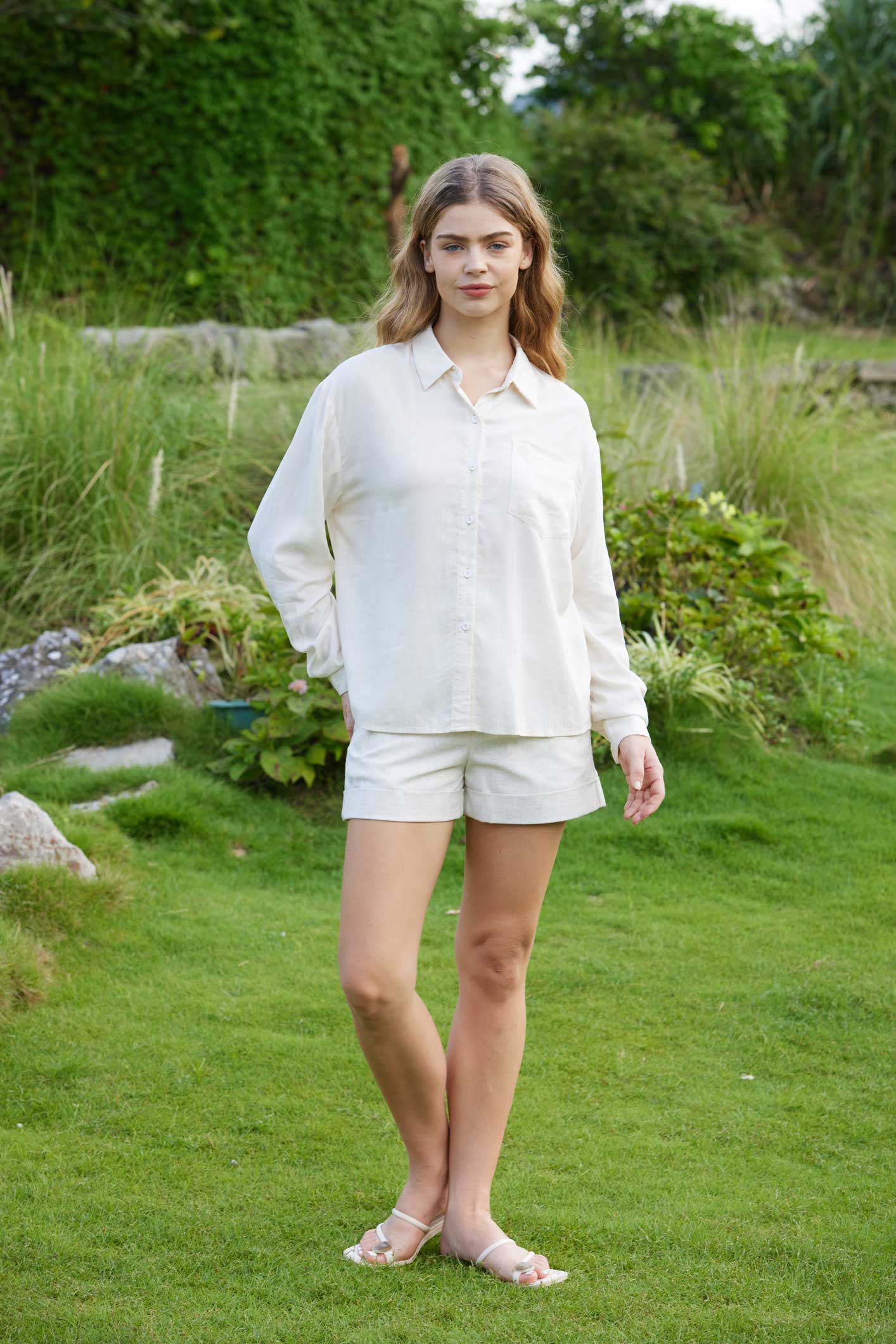
The base layer should be the lightest linen you own, ideally 110-150 gsm. A camisole, a tank, a short-sleeve shirt or a lightweight long-sleeve works. Its job is moisture transport and a smooth surface, not warmth. If the base is a visible shirt, choose a relaxed cut so the knit can sit over it without pulling at the buttons. The mid layer is where you choose your fibre: a 170-240 gsm linen shirt or overshirt if the day is mild, or a 180-260 gsm merino crewneck if it is genuinely cool. The outer layer is wool or cashmere with enough loft to trap air: a 300-400 gsm sweater, a 400-500 gsm coat, or a cashmere cardigan in a 2-ply or 3-ply weight.
At the collar, the linen should sit closest to the neck and the knit should open away from it. At the cuff, the linen cuff should be visible beyond the knit cuff by about one centimetre, which keeps the sleeve from riding up and shows the texture contrast. At the hem, the linen shirt should end below the knit hem by five to ten centimetres, or be fully tucked, but not stop halfway. These small rules do most of the visual work in a mixed outfit.
| Outdoor temperature | Linen layer | Wool or cashmere layer | Outer layer | Practical note |
|---|---|---|---|---|
| 20-24 C | 110-140 gsm linen shirt or dress | None, or a 180 gsm cardigan carried | None | Linen alone; knit is for air-conditioned interiors |
| 16-19 C | 140-170 gsm linen shirt | 180-220 gsm fine merino crewneck | Optional linen blazer | The most useful band; knit can be removed indoors |
| 11-15 C | 170-200 gsm linen shirt or tunic | 220-300 gsm lambswool or cashmere | Wool blazer or light coat | Keep the linen untucked for air movement |
| 5-10 C | 140-170 gsm linen base plus linen mid | 300-400 gsm wool sweater | 400 gsm wool coat | Two thin linen layers beat one heavy one |
| 0-4 C | 110-150 gsm linen base | 300-400 gsm cashmere or merino | Heavy wool coat or down-free wool parka | Linen becomes the moisture layer, not the warm layer |
Weight Matching: The Numbers That Decide Comfort
Most layering advice stops at color and silhouette. Weight is more useful, because it predicts whether the outfit will feel comfortable after two hours indoors. Fabric weight is measured in grams per square metre, and the numbers behave differently across fibres. A 200 gsm linen shirt is a substantial garment; a 200 gsm merino sweater is a light one. That difference is why you cannot match numbers directly across fibres. Match function instead, then use the numbers to compare within a fibre.
For linen, 110-140 gsm is shirting and dress weight, 150-190 gsm is a mid-weight shirt or tunic, and 200-240 gsm is bottom-weight or a heavy overshirt. For merino, 180-220 gsm is a light crewneck, 240-280 gsm is a standard sweater, and 300 gsm and above is outerwear-weight knit. For cashmere, two-ply is a light sweater, three-ply is a substantial one, and anything described as four-ply is approaching coat weight. For wool coating, 400-600 gsm is normal, and anything below 350 gsm is a jacket rather than a coat.
The practical rule is to keep the total bulk manageable rather than the total weight high. A 140 gsm linen shirt, a 220 gsm merino crewneck and a 450 gsm wool coat add up to a warm outfit that still allows arm movement. A 240 gsm linen shirt, a 400 gsm lambswool sweater and the same coat add up to a much bulkier outfit with only marginally more warmth, because the inner layers are already thick enough to compress the knit's air space. Thin inner layers preserve the loft of the outer layers, which is where the insulation actually lives.
| Fibre | Light | Mid | Heavy | Best role in a mixed outfit |
|---|---|---|---|---|
| Linen | 110-140 gsm | 150-190 gsm | 200-240 gsm | Base or first visible layer |
| Merino wool | 180-220 gsm | 240-280 gsm | 300-360 gsm | Mid layer under a coat |
| Lambswool | 220-260 gsm | 280-340 gsm | 350-450 gsm | Outer mid layer in dry cold |
| Cashmere | 2-ply | 3-ply | 4-ply | Soft mid or outer layer with low friction |
| Wool coating | 350-400 gsm | 400-500 gsm | 500-600 gsm | Outermost shell |
Five Outfits, Built From the Skin Out
These five combinations cover most autumn and early winter situations. Each one follows the same order, but the weights and proportions change. Use them as templates rather than prescriptions, and adjust the linen weight to the temperature you will actually experience rather than the forecast at breakfast.
1. The office outfit: linen shirt, merino crewneck, wool blazer
Start with a 150-170 gsm linen shirt in white, oat or pale blue, buttoned but not tight. Add a 200-240 gsm merino crewneck in charcoal, navy or camel, with the shirt collar sitting outside the knit and the cuffs showing. Finish with a 380-420 gsm wool blazer. This works from about 12 to 18 C outdoors and remains comfortable in a heated office because each layer can be removed independently. Keep the linen shirt untucked by five centimetres so the hem does not bunch under the knit.
2. The weekend outfit: linen tee, cashmere cardigan, wool scarf
Use a 110-140 gsm linen tee as the base, a 2-ply cashmere cardigan as the mid layer, and a 200-240 gsm wool or linen-wool scarf at the neck. This is the softest combination in the guide and the one most likely to be worn indoors for long periods. The linen tee handles warmth from movement; the cashmere provides light insulation without weight; the scarf adds a removable collar. Choose a cardigan with a smooth knit rather than a brushed surface so the linen does not catch when you move.
3. The cold-morning outfit: linen base, heavy linen shirt, wool sweater, wool coat
For 5-10 C, use two thin linen layers rather than one thick one. A 110-140 gsm linen tank or tee sits underneath a 170-190 gsm linen shirt, then a 300-360 gsm wool sweater, then a 400-450 gsm wool coat. The two linen layers move moisture away from the body while the wool traps heat. The risk is bulk at the armhole, so choose a sweater with a set-in sleeve rather than a dropped shoulder, and a coat with enough room to close over the knit without pulling.
4. The evening outfit: linen dress, cashmere wrap, wool coat
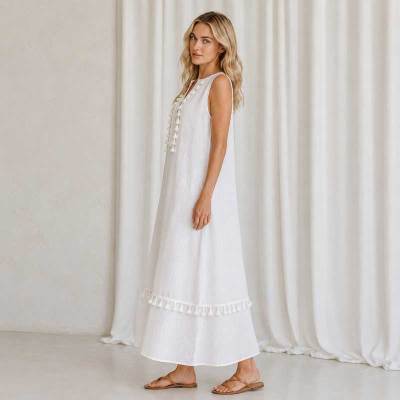
A 170-200 gsm linen midi or maxi dress works under a large 3-ply cashmere wrap and a 400 gsm wool coat. The dress provides the smooth vertical line; the wrap adds warmth at the shoulders without a sleeve; the coat handles the walk. Keep the wrap in a tone close to the dress so the outfit reads as one column rather than three separate pieces. A narrow belt over the wrap, or none at all, is usually better than belting the coat.
5. The men's outfit: linen shirt, cashmere sweater, wool overshirt
A 150-170 gsm linen shirt under a 2-ply cashmere crewneck, with a 350-400 gsm wool overshirt or shirt-jacket on top, is the most versatile men's combination in this guide. Leave the overshirt open, the sweater hem at the waistband and the linen collar visible. For a colder day, add a 200 gsm merino base under the linen shirt, which is the one case where wool sits closer to the skin. Our guide to how men layer linen in cold weather goes deeper on the men's side.
[IMAGE_PLACEHOLDER] img prompt: Full-length editorial street style photograph of a man in a white linen shirt, charcoal cashmere crewneck and olive wool overshirt, hands in pockets, standing on a leaf-covered pavement in soft overcast light, natural fabric textures clearly visible, no textTexture and Color: Making Two Fibres Look Intentional
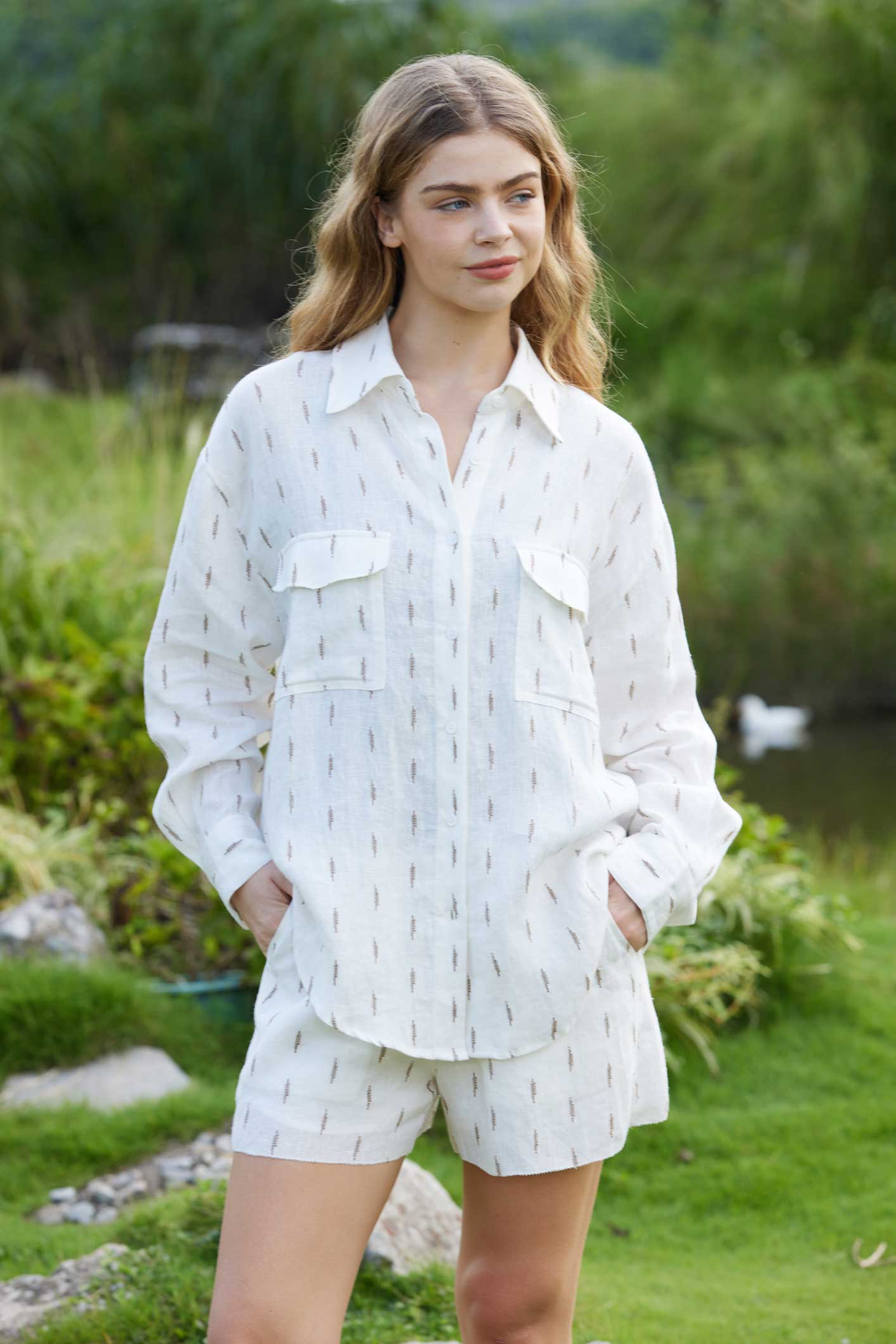
Mixing fibres is easy; making the mix look intentional is the harder part. The eye reads texture before color, and a linen-wool outfit has two strong textures competing for attention. The solution is contrast by scale: a smooth linen shirt against a chunky wool knit, or a slubby linen overshirt against a fine-gauge cashmere crewneck. Two heavily textured pieces in the same visual weight look noisy; one smooth and one textured looks composed.
Color is the second tool. The safest approach is tonal: oat linen, camel cashmere, charcoal wool, all within a warm neutral family. The second approach is a dark outer layer over a light inner column, which is flattering and visually simple: white linen shirt, pale grey knit, black or navy coat. The third approach is a single accent, such as a rust scarf or an olive overshirt, against an otherwise neutral outfit. What tends not to work is three unrelated colors at full saturation, because the textures already create enough visual activity.
- Tonal warm: oat linen, camel cashmere, chocolate wool. Soft and expensive-looking.
- Light column, dark shell: white or sand linen, grey knit, black coat. Clean and slimming.
- Cool neutral: pale blue linen, grey merino, navy coat. Useful for business settings.
- Single accent: neutral linen and knit, one rust, olive or burgundy piece. Easy to wear.
- Avoid: three saturated colors plus a print; the textures and the pattern compete.
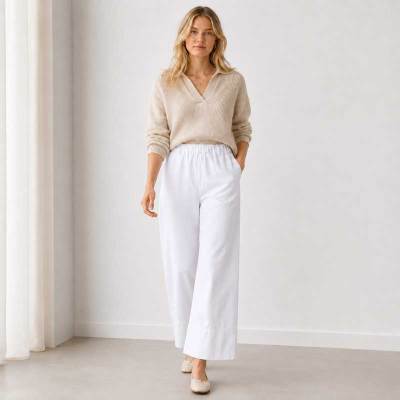
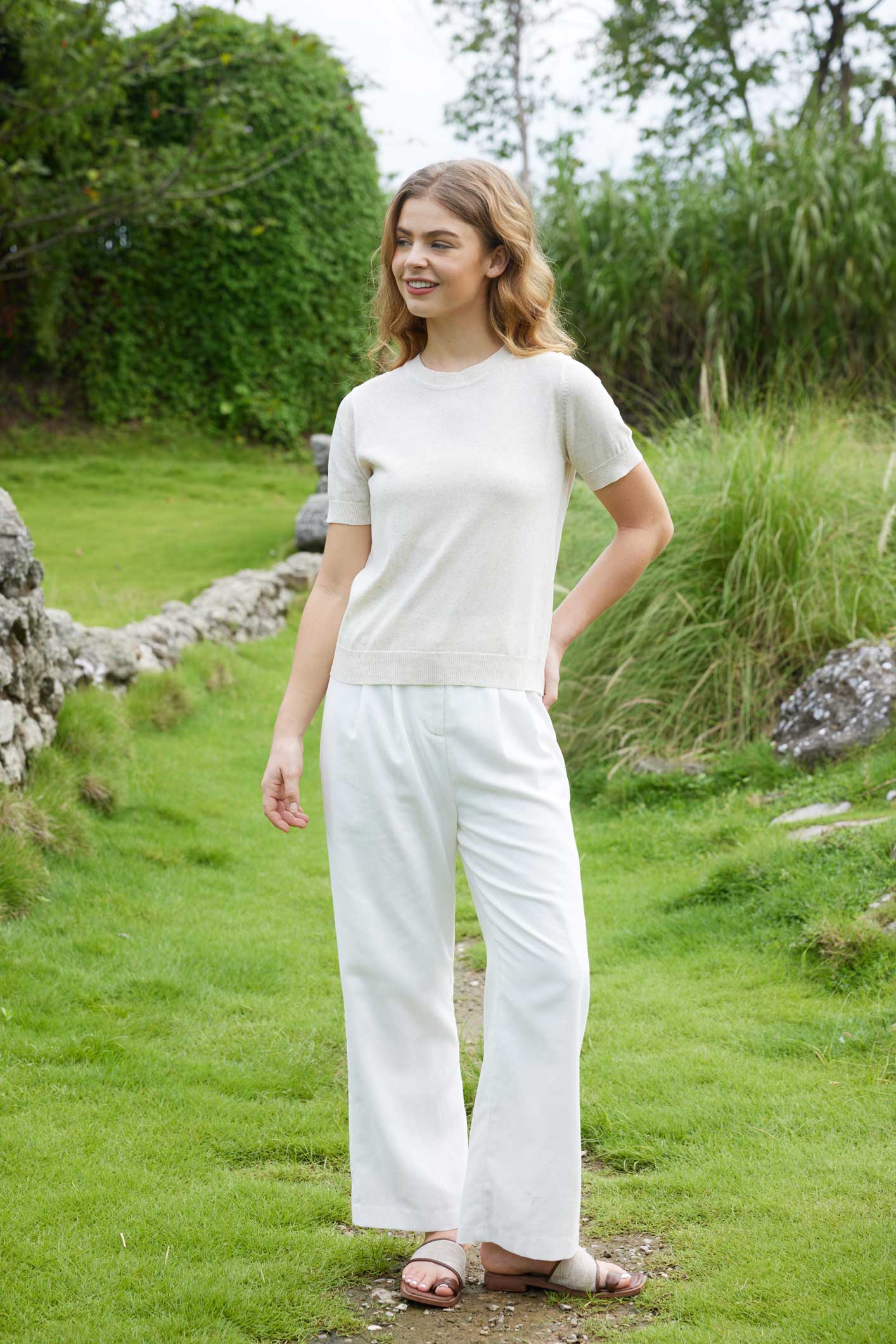
Proportion matters as much as palette. A heavy knit over a light linen shirt adds visual weight to the torso, so keep the linen hem long enough to create a vertical line below the knit. A cropped knit over a long linen shirt reads more casual; a hip-length knit over a tucked shirt reads more polished. For trousers, a wide-leg linen pant in 200-240 gsm balances a bulky sweater far better than a slim cut, because the volume is distributed rather than concentrated at the top. Our linen wide leg pants are cut for that balance.
Fit and Proportion: Controlling Bulk
Bulk is the main reason mixed-fibre outfits fail. Each layer adds circumference, and the body has only so much room at the armhole, the neck and the waist before movement becomes restricted. The fix is not to size up everything; it is to choose layers that are thin where they meet and roomy where they overlap. A linen shirt should be relaxed through the body but close at the shoulder. A knit should fit closely at the neck, cuff and hem so it does not slide around, while having enough ease through the chest to sit over the shirt without stretching.
Check three points before committing to an outfit. First, raise both arms: the linen shirt should not pull out of the waistband and the knit should not ride up to the ribs. Second, cross your arms: the outer layer should not tighten across the back of the shoulders. Third, sit down: the linen hem should not bunch under the knit and the coat should not pull at the hip. If any of these fail, remove a layer or replace one mid layer with a thinner version. The outfit is not warmer because it is tighter.
- Shoulder seam: should sit at the edge of the shoulder on the linen shirt, not beyond it, or the knit will push it outward.
- Knit hem: should end at the high hip or below, never at the widest part of the stomach.
- Sleeve length: linen cuff visible by one centimetre beyond the knit cuff, coat sleeve covering the knit cuff by two centimetres.
- Coat closure: should close over the knit with a flat hand's width of ease at the chest.
- Waistband: if tucking, use a thin linen shirt and a knit that ends below the waistband to avoid a visible lump.
Static, Pilling and Shedding: The Practical Fixes
Two fibres rubbing together create friction, and friction creates the small annoyances that make people give up on layered outfits: static cling, pills and loose fibres. Linen and wool are both natural fibres and both conduct moisture, so they generate less static than synthetic layers, but dry indoor air in winter can still produce a shock when you take off a coat. The fix is humidity and a light touch of moisture, not chemical sprays. A room at roughly 40-50 percent relative humidity, a humidifier in the bedroom, or simply drying laundry indoors without venting all the moisture away will reduce static more than any product.
Pilling is a different problem. It happens when short fibres work loose from the yarn and tangle into small balls, usually where a bag strap, seatbelt or coat lining rubs. Cashmere pills more than wool because its fibres are finer and shorter; linen does not pill in the same way but can shed short fibres at cut edges. To reduce pilling, rest knitwear between wears, fold rather than hang it, and use a fabric comb rather than a razor. To reduce shedding at linen seams, wash the garment inside out and avoid overloading the machine, which increases abrasion.
Do not use fabric softener on either fibre. Softener coats linen and reduces its absorbency, and it can loosen wool fibres. A pH-neutral wool wash for knitwear and a simple gentle detergent for linen is enough. Skip dryer sheets entirely; they leave a film that attracts lint.
If a linen shirt clings to a wool sweater when you move, the cause is usually dryness plus a tight fit, not the fibres themselves. Add moisture to the air, loosen the outer layer, and the problem usually disappears. If a cashmere sweater pills heavily in the first week, that is normal for a soft yarn under friction; remove the pills gently and the surface will stabilise after a few wears. Persistent pilling across the whole garment usually means the yarn is too short-stapled for the way you are wearing it.
Care When You Mix Fibres
The care routine is where mixed-fibre wardrobes quietly fall apart. Linen wants a warm machine wash and robust handling; wool and cashmere want cool water, low agitation and flat drying. You cannot wash them together, and you should not treat them the same way. The practical solution is separate loads and a small amount of discipline: linen in one wash, knitwear in another, and never a tumble dryer for either.
Wash linen at 30-40 C on a normal or gentle cycle, with a mild detergent and a half load so the fabric has room to move. Garment-washed linen, which is what our pieces are, has already been relaxed, so it will not shrink dramatically, but hot water and high heat still stress the fibre. Remove it promptly and either hang it or press it damp. For knitwear, use a 30 C wool cycle or hand wash in cool water with a pH-neutral wool detergent, press the water out against the side of the basin rather than wringing, and dry flat on a towel away from direct heat. Never hang a wet knit; the weight of the water stretches the shoulders.
- Separate loads: linen with linen, wool with wool. Never mix a load of heavy linen with fine knitwear.
- Turn inside out: protects the linen surface and reduces pilling on knits.
- Use a mesh bag: for cashmere and fine merino, to limit agitation.
- Skip the dryer: both fibres shrink, distort or felt under heat and tumbling.
- Dry flat: knitwear on a towel, linen on a hanger or a drying rack.
- Store folded: knits folded in a drawer, linen on a hanger with space at the shoulders.
- Rest between wears: a day of airing restores loft and reduces washing frequency.
Stains need to be treated according to the fibre, not the garment. On linen, cool water and a little detergent usually lift food and drink marks if you act quickly; on wool and cashmere, blot rather than rub and use a wool-safe spot cleaner, because rubbing pushes the stain into the fibre and creates a felted patch. When in doubt, follow the care label and our guide to washing linen clothing for the flax side of the routine.
What to Buy First
If you are building this wardrobe from scratch, buy in the order that gives you the most combinations for the least money. The first purchase is a 150-170 gsm linen shirt in a neutral you actually wear, because it works as a base layer, a visible shirt and a summer piece. The second is a 200-260 gsm merino crewneck in charcoal or navy, which layers over the shirt and under a coat. The third is a 400-450 gsm wool coat or blazer, depending on your climate and how formal your days are. The fourth is a 2-ply or 3-ply cashmere sweater, which adds softness and warmth once the basics are in place.
Do not buy the cashmere first. It is the most expensive piece and the least versatile, because it is too warm for mild days and too delicate for heavy friction. Buy it when you already have the linen and wool layers that will protect it. Similarly, do not buy a very heavy linen shirt for winter layering; it will make every knit feel tight. Two 150 gsm linen shirts will serve you better than one 240 gsm shirt, because they can be worn together on cold days and separately for the rest of the year.
Check three things on the label before you buy. For linen, look for 100 percent European flax and a garment-washed finish; the weight should be stated, and anything between 110 and 240 gsm is within a normal range for clothing. For wool, look for merino, lambswool or a named breed, and check that the knit is tight enough to hold its shape. For cashmere, look for two-ply or three-ply and a density you can feel; a loose, thin cashmere sweater will pill before it pays back its price. Our linen blazers are a useful bridge piece if you want a third layer that is lighter than a wool coat.
Frequently Asked Questions
Can you wear linen and wool at the same time?
Yes. The combination is comfortable when linen sits closer to the skin and wool sits outside it. Linen moves moisture and provides a smooth surface; wool traps air and insulates. Keep the linen in the 110-190 gsm range, the wool in a weight appropriate to the temperature, and leave enough ease that the layers can slide over each other.
Does linen under wool make you cold?
No, unless the linen is damp and the wool layer is too thin. Linen conducts heat away from the body, so it feels cool when worn alone, but under wool it acts as a moisture layer rather than the insulation. The wool provides the warmth. In very cold weather, add a second thin linen layer rather than a thicker one, and make sure the outer wool layer is wind-resistant.
Does linen cause static with wool or cashmere?
Less than synthetic fabrics do, because both linen and wool absorb moisture. Static appears mainly in dry indoor air and in tight-fitting layers. Raise indoor humidity to around 40-50 percent, avoid over-layering, and skip fabric softener and dryer sheets, which leave films that can increase cling.
Can you wash linen and wool together?
No. Linen tolerates a 30-40 C machine wash; wool and cashmere need cool water, low agitation and flat drying. Wash them in separate loads, use a wool-safe detergent for knitwear, and never tumble dry either fibre. If a garment is a linen-wool blend, follow the care label and treat it as wool.
What is the best linen weight for layering under a sweater?
Between 110 and 170 gsm. A 110-140 gsm linen tee or camisole is the thinnest base; a 150-170 gsm shirt is the best visible layer under a crewneck. Above 190 gsm, the linen starts to add bulk at the armhole and collar, and the knit will feel tight even if it fitted well on its own.
The Short Version
Linen, wool and cashmere work together because they do different jobs. Put a 110-170 gsm linen layer closest to the skin, add a 180-300 gsm merino or cashmere mid layer, and finish with a 350-500 gsm wool outer layer. Keep the linen smooth and the knit textured, leave one finger of ease between layers, and stay within a tonal or single-accent palette. Wash the fibres separately, dry both flat or on a hanger, and never tumble dry. Build the wardrobe in the order linen shirt, merino crewneck, wool coat, cashmere sweater, and you will have a system that works from 20 C down to near freezing.
Start with the layer that does the most work. A linen shirt in the 150-170 gsm range is the base of every outfit in this guide, and a linen scarf adds the collar layer without bulk. Both are cut from 100% European flax, garment-washed for softness, and designed to sit under the wool and cashmere you already own.