Best Picks
The Six Linen Pieces That Cover a Whole Winter Week
Six pieces cover five working days when they are chosen by weight rather than by style: one 220 gsm overshirt, one 190 gsm shirt, one 220 gsm trouser, one 200 gsm midi dress, one 140 gsm tee, and one 220 gsm skirt. The combinations come from layering order, not from owning more.
The Six Pieces, and What Each One Does
A winter week does not need a large wardrobe. It needs a small set of pieces whose weights interlock, so that each day can be assembled from the same six garments in a different order. The list below is the smallest set that covers a working week in a temperate climate without repeating an outfit twice in a way anyone would notice.
The six pieces, by weight and role
| Piece | Weight | Primary role | Secondary role |
|---|
| Overshirt | 220 gsm | Outer layer indoors, structure | Wind block under a coat |
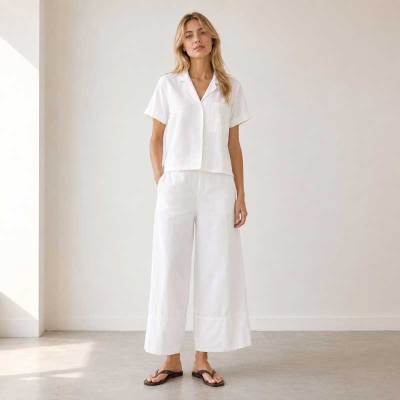
| Shirt | 190 gsm | Visible layer, collared | Middle layer under the overshirt |
| Wide trousers | 200 to 220 gsm | Lower body, holds a line | Warm with tights underneath |
| Midi dress | 190 to 200 gsm | One-piece outfit | Layer under the overshirt |
| Tee or tank | 130 to 140 gsm | Base layer, moisture | Summer piece in a warm room |
| Skirt | 200 to 220 gsm | Alternative lower body | Changes the silhouette of three tops |
Two things are deliberate. First, only two weight bands appear: 130 to 140 gsm for the base, and 190 to 220 gsm for everything visible. That gap is what makes layering work, because a base layer thin enough to disappear under a visible layer never competes with it. Second, every piece is in the same colour family, so any combination is coherent without planning.
The pieces that are missing are as important as the ones included. There is no light summer dress, no occasion piece, no second coat. Those are real needs for some weeks, and the section on gaps explains how to add one piece without breaking the system. For the ordinary week, the six are enough, and the reason is arithmetic rather than minimalism.
Why Six, and Not Eight
The number six comes from combination count rather than from a style rule. Six pieces that all work together produce fifteen pairings before layering is added; eight pieces produce twenty-eight, but four of the eight will be duplicates in weight and role, and duplicates do not increase the number of distinct outfits. They increase the number of decisions.
The useful calculation is not how many combinations are possible but how many are distinguishable. A shirt and a second shirt in the same weight and colour are two garments and one outfit. A shirt and a skirt in the same weight are two garments and several outfits, because the silhouette changes when the lower half changes. Wardrobes grow without becoming more useful when pieces are added within a category instead of across roles.
There is also a laundry argument. Six pieces worn across five days, with a base layer changed daily, produce one small wash a week. Twelve pieces produce two washes and the same number of outfits, because the extra six are usually variations. The smaller set is easier to keep clean, easier to store, and easier to see, which matters more on a dark winter morning than any theoretical versatility.
What the six pieces produce across a week
| Count | Number | Note |
|---|
| Distinct top-and-bottom combinations | 9 | Shirt, dress, tee and overshirt against trousers and skirt |
| Outfits with a layer added | 12 | Overshirt over shirt, dress, or tee |
| Wears per piece per week | 2 to 3 | Enough to test fit and construction |
| Wash loads per week | 1 | Base layers and one visible piece |
The numbers are conservative. They assume no belts, no scarves, and no change of shoes, all of which multiply the visible result without adding a garment. A single scarf in a contrasting tone can change the reading of three outfits, which is why accessories are the cheapest way to extend a small wardrobe and the last thing to buy. Count combinations by silhouette rather than by garment: a shirt tucked into trousers and the same shirt worn open over a dress are two outfits with one shirt, and that distinction is where the fifteen comes from.
The Week, Day by Day
The table below is one possible week. It is not a prescription; it is proof that five days can be covered without repeating a silhouette. Each day uses the same six pieces, with the base layer changed and the outer layer varied.
One week from six pieces
| Day | Combination | Why it works |
|---|
| Monday | 190 gsm shirt, 220 gsm trousers, 140 gsm tee underneath | Structured start; the tee handles a warm commute |
| Tuesday | 200 gsm midi dress, 220 gsm overshirt open | One-piece ease with a layer that can come off |
| Wednesday | 140 gsm tee, 220 gsm skirt, 190 gsm shirt tied or open | Changes the silhouette without a new garment |
| Thursday | 190 gsm shirt, 220 gsm trousers, overshirt over | The coldest day; three layers, all removable |
| Friday | 200 gsm dress, tee underneath, skirt-length coat | Dress again, read differently by the layer and shoe |
Three principles make the week work. First, the base layer changes daily while the visible layer changes every two days, which keeps the wash small and the outfits distinct. Second, the overshirt appears on three days in three different roles: open over a dress, closed over a shirt, and carried rather than worn. Third, the skirt appears once, on the day when the week needs a different line rather than a different colour.
The week also shows why the dress is worth including even though it is a single garment. It removes a decision on the days when decisions are expensive, and it can be layered to look like a different outfit. A dress plus an overshirt is not the same outfit as the same dress plus a knit, even though the dress is identical.
Piece One: The 220 GSM Overshirt
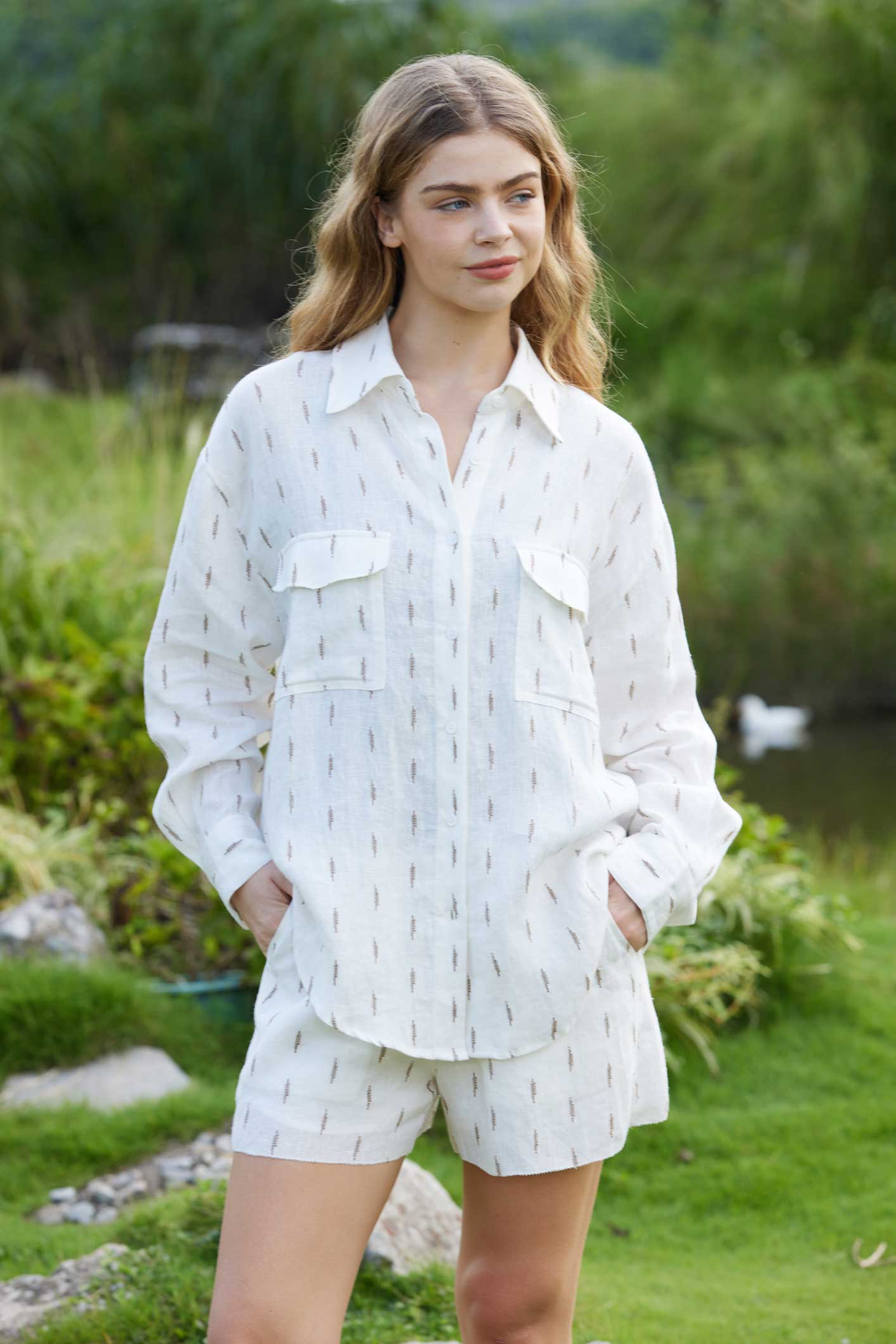
The overshirt is the piece that makes the other five usable in winter. At 220 gsm, it has enough body to sit over a shirt without collapsing, and enough weight to block a cold corridor. Worn open, it reads as a light jacket; buttoned, it reads as a heavy shirt; carried, it is the layer that saves an overheated afternoon.
Look for four details. A two-piece collar that stands when open, a chest pocket with a second row of stitching, a hem that falls below the hip, and a sleeve that ends at the wrist bone. Those details separate an overshirt from a large shirt, and they matter more at this weight because the fabric has enough structure to show the difference.
The colour should be the darkest in the set. Charcoal or deep olive gives the week a visual anchor and hides the marks that come from being worn over everything. A pale overshirt in a six-piece wardrobe becomes the piece you cannot wear on three of the five days, which defeats its purpose.
Care is straightforward but slow: wash rarely, air often, press the collar and the placket only. A 220 gsm overshirt worn three days a week needs washing every three or four weeks, not every week, because it never touches the skin directly. Use a mild detergent without optical brighteners; the OEKO-TEX site explains what a testing standard covers on dyes and finishes if you want to check a label. The guide to winter-weight linen explains why the heavier bands tolerate this rhythm better than light ones.
Piece Two: The 190 GSM Shirt
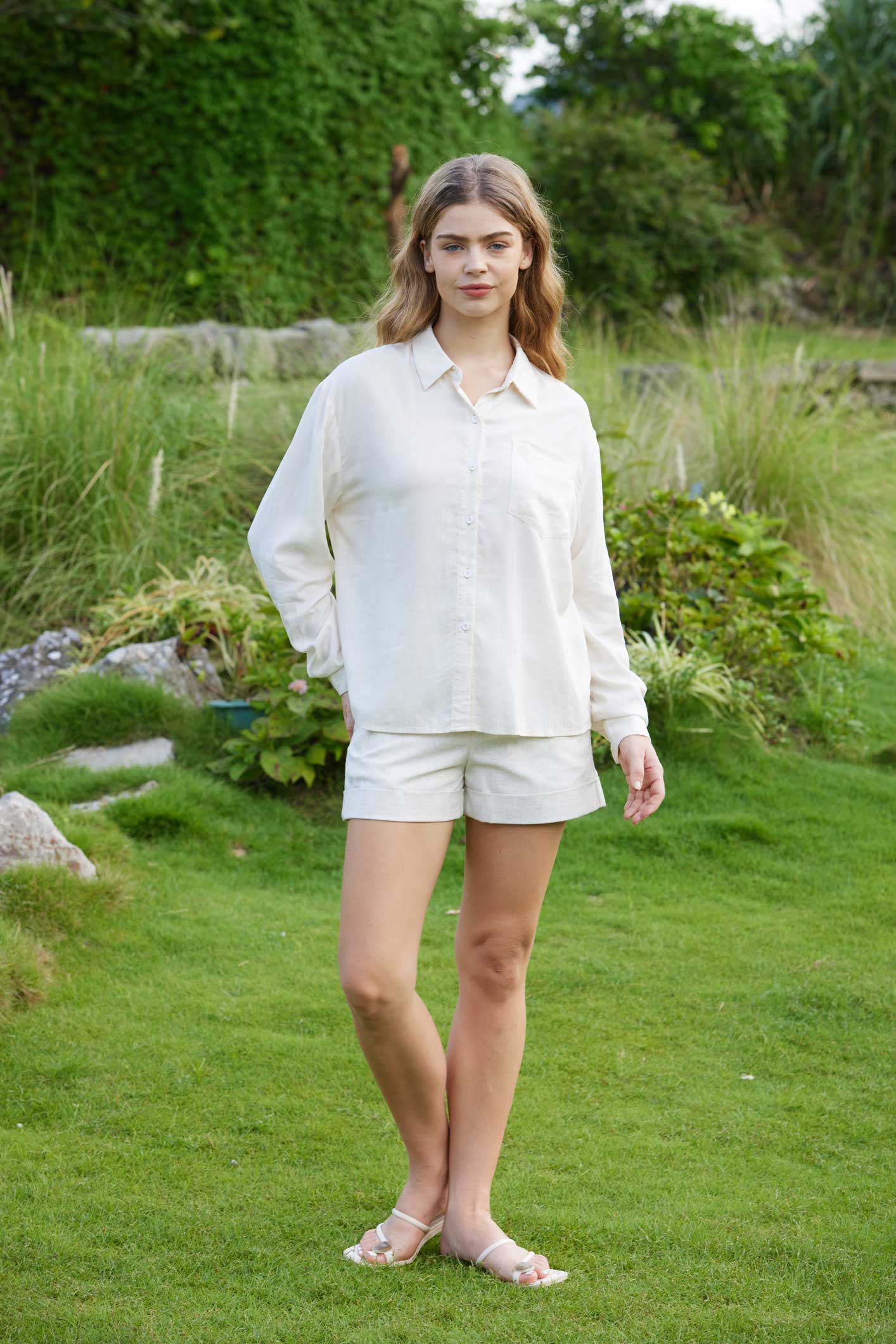
The shirt is the most-worn piece in the set and the one where fit matters most. At 190 gsm it is opaque, it holds a collar, and it takes a base layer without pulling at the armhole. It is also the piece that has to work in three modes: buttoned as a shirt, open as a light layer, and tucked as a base under the overshirt.
Three measurements decide whether it will do all three jobs. The shoulder should sit at the edge of the shoulder, not past it, because linen does not stretch and a dropped seam on a collared shirt looks like a size error. The chest should have two fingers of ease, enough for a tee but not enough to billow. The sleeve should end at the wrist bone, so it can be worn long under the overshirt and pushed up when the room is warm.
Off-white is the most useful colour in a six-piece set because it lightens every combination and shows the texture that makes linen worth wearing. It is also the least forgiving, which is why the shirt should be the piece you wash most carefully: 30 °C, gentle cycle, hang damp, press the collar only. A white shirt that has gone grey makes the whole week look tired.
The shirt is also the piece that most needs a second life. When it stops being crisp enough for work, it becomes the overshirt's underlayer on weekends, then a beach shirt, then a sleep shirt. That progression is normal for linen and it is the reason a good shirt is worth buying before a second dress.
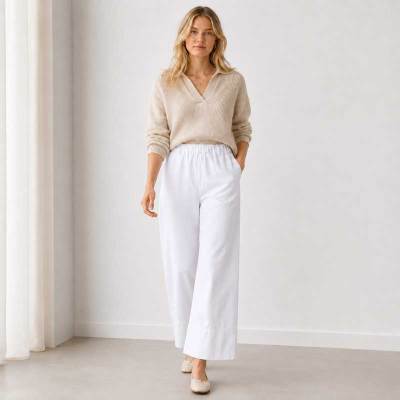
Piece Three: The 220 GSM Wide Trouser
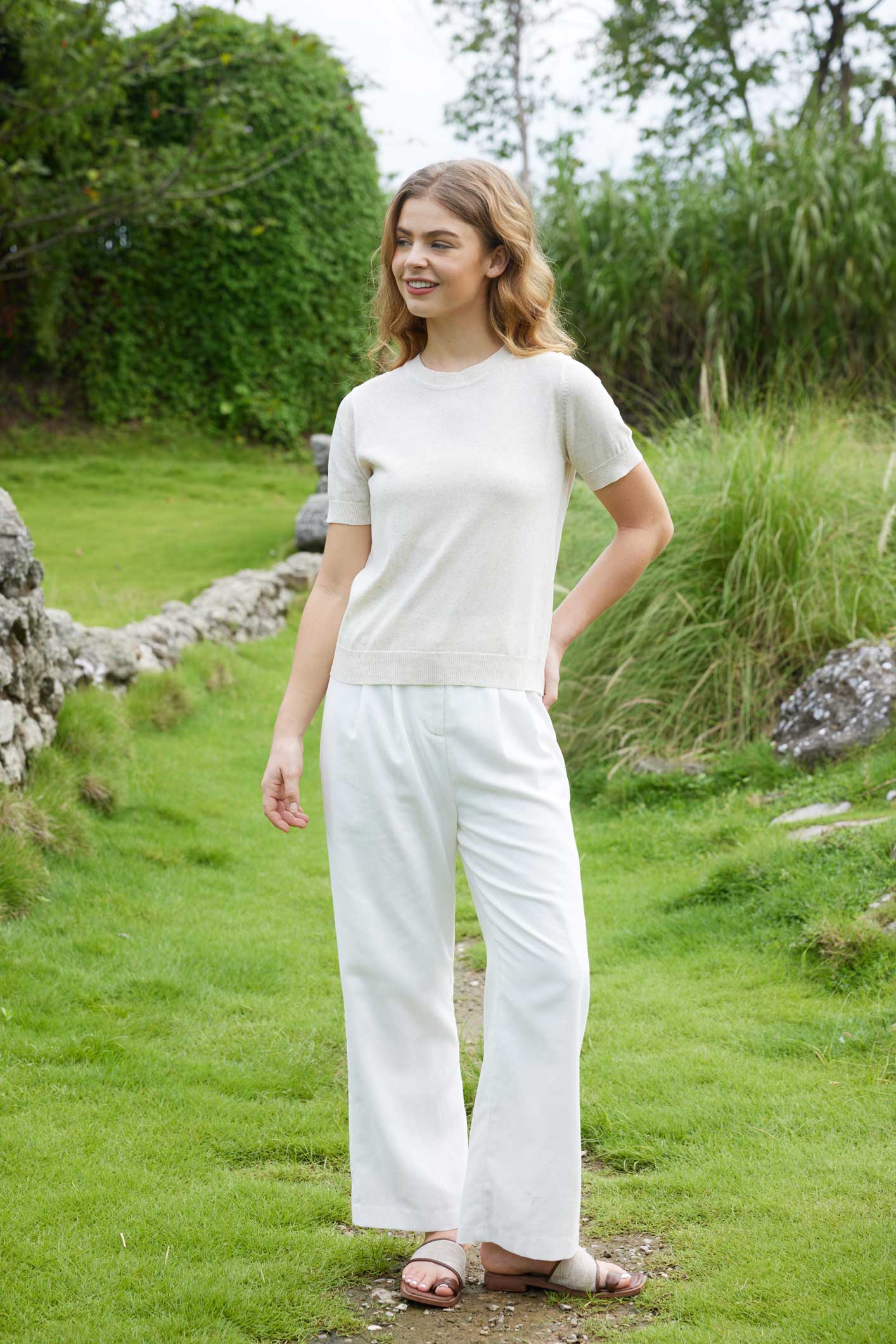
Trousers carry more weight in a winter wardrobe than any other piece, literally and figuratively. A 220 gsm wide-leg trouser holds a vertical line, does not cling at the knee, and resists the seat abrasion that thins a lighter trouser within a season. With tights underneath it is a winter trouser; without them it works from March to November.
Four details are worth checking. The waistband should be faced and stable, not a single layer of fabric that folds over after ten wears. The fly should be long enough to sit flat when seated. The hem should be deep, four centimetres or more, so it can be let down once. And the pocket bags should be cotton rather than the same linen, because a linen pocket bag shows through the front of the trouser in daylight.
- Length: full length, breaking slightly on the shoe. A cropped wide leg depends on ankle and footwear in a way a six-piece wardrobe cannot plan for.
- Rise: at or just above the natural waist, so a tucked shirt stays tucked and a belt has something to sit on.
- Width: wide enough to clear the calf by several centimetres; the fabric should move when you walk, not wrap.
- Colour: charcoal or a deep olive, to anchor the lighter shirt and dress.
The trouser is where the six-piece system earns its keep, because it makes the shirt, the tee, and the overshirt into outfits. A shirt with no trouser is a garment; a shirt with one good trouser is a week of dressing. The linen bottoms range lists the 200 to 220 gsm cuts, and the difference between a 190 and a 220 gsm trouser is most visible at the knee after a month of wear.
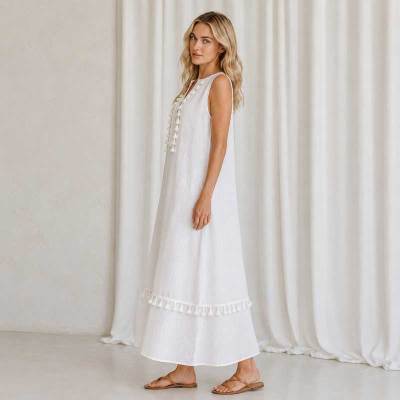
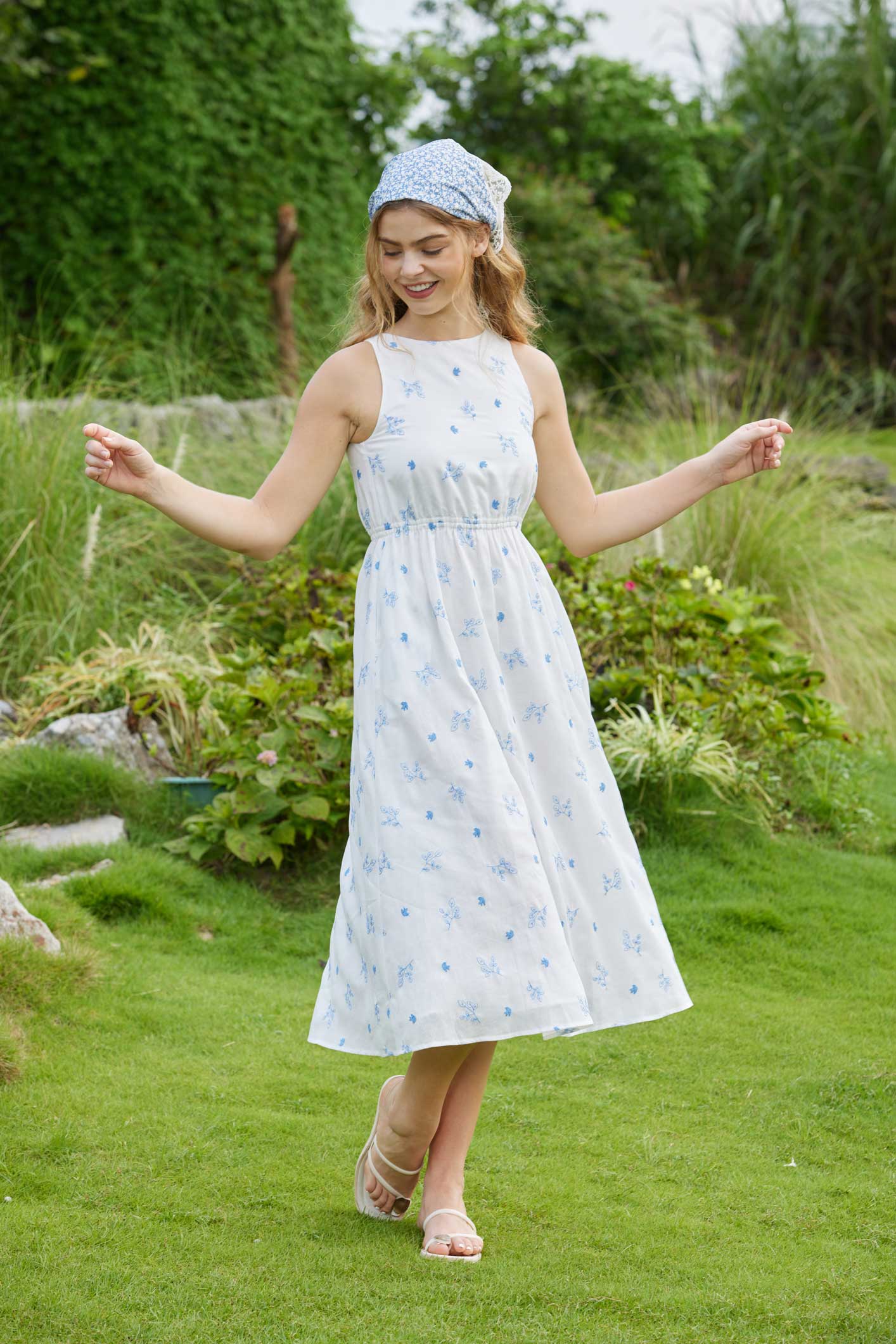
Piece Four: The 200 GSM Midi Dress
The dress is the piece that removes a decision. On a morning when nothing else works, a 200 gsm midi with boots and an overshirt is a complete outfit in two movements. That is worth more than the extra combinations a second skirt would provide, because the value is in the mornings when you have no attention to spare.
At 200 gsm the dress is opaque, holds a soft shape, and takes tights without showing their outline. The length should finish mid-calf, which works with flats, ankle boots, and mid-calf boots. A hem that finishes just below the knee limits the footwear and the season, and a floor-length hem limits the weather.
The cut that works best in a six-piece set is a simple A-line or a straight shift with a sleeve. Both accept a base layer underneath and an overshirt over the top without bulk at the shoulder. A wrap dress is beautiful and less reliable in this role, because the tie adds volume exactly where the overshirt needs to sit flat.
One dress in a workable colour is enough. Sand, charcoal, or a deep olive will combine with the shirt, the tee, and the overshirt. A print would be the piece that only works with itself, which is the opposite of what a six-piece wardrobe needs. The winter dress layering guide covers the tights and boot decisions in detail.
Piece Five: The 140 GSM Tee or Tank
The base layer is the least visible and the most functional piece in the set. At 130 to 140 gsm, it is thin enough to disappear under a 190 gsm shirt and warm enough to add a real layer of insulation. It is also the piece that makes the wardrobe work in heated rooms, because it manages moisture at the skin while the visible layers stay dry.
Two versions are worth owning rather than one: a short-sleeve tee for the coldest weeks, and a tank for the weeks when a sleeve under a shirt is too much. Both should be the same colour as the shirt or one shade lighter, so they disappear rather than compete.
The fit should be close but not tight. A base layer that is loose bunches under the shirt; one that is tight leaves marks at the shoulder. Look for a scoop or a deep crew neck that sits below the shirt's collar, and a hem long enough to tuck into the trouser waistband without pulling out when you sit.
This is the piece that gets washed every wear, so it should be the cheapest item in the set and the one you are willing to replace. Two tees and one tank cost less than a second shirt and extend the wardrobe more, because they are what allow the visible pieces to go two or three wears between washes. The linen tops range includes the lighter weights that work as base layers.
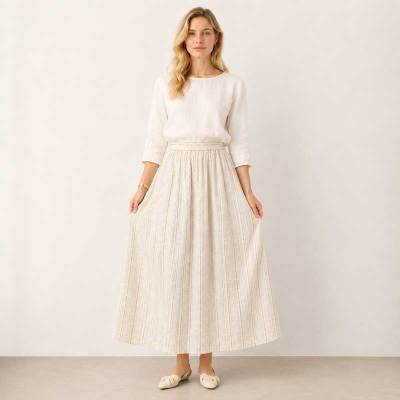
Piece Six: The 220 GSM Skirt
The skirt is the piece that changes the silhouette of the week without adding a new colour or a new weight. Worn with the tee and the overshirt it reads as a casual outfit; worn with the shirt tucked it reads as a work outfit; worn with the dress's boots it reads as a third option that is neither.
A 220 gsm A-line or straight midi is the most useful shape, because it clears the calf and works with tights. A pleated skirt in heavy linen is beautiful and less practical, because the pleats need pressing and the weight makes them permanent in a way that limits the seasons. A bias-cut skirt in this weight holds its shape rather than draping, which is fine if that is the intent and disappointing if it is not.
The skirt is also the piece that makes the six-piece set feel less like a uniform. Three tops, one dress, one skirt, and one trouser produce enough variation that the same base layer can appear twice in a week without anyone noticing, which is the practical definition of a working wardrobe.
If the budget allows only five pieces, drop the skirt rather than the dress. The dress covers more mornings, and the trouser covers the rest. The skirt is the sixth piece because it adds range, not because it is essential. A skirt also buys a second use for the overshirt on days when the trouser is being washed, which is a practical argument rather than a stylistic one, and practical arguments are what keep a small wardrobe running through a wet week in January.
What the six do not cover
Evening wear, exercise, and sleep. Those are separate jobs with separate requirements, and trying to solve them with the same six pieces is how wardrobes grow without becoming more useful. Add one piece per job when the job is real, not in advance.
How to Add a Seventh Piece Without Breaking the Set
A six-piece wardrobe will eventually need a seventh, and the way to add it is to choose a piece that multiplies combinations rather than competing with them. The test is simple: name three outfits the new piece makes possible that the current six cannot. If you cannot name three, it is a duplicate.
- A long wool coat. Not linen, but the piece that extends the set outdoors and covers the dress hem. It changes every outfit at once.
- A 240 gsm linen jacket. The linen answer to the coat, for dry cold and indoor-outdoor days. It adds structure where the overshirt is soft.
- A second trouser in a different cut. A straight leg rather than a wide, in the same weight. It changes the proportion of every top.
- A knit in a contrasting tone. The only non-linen piece that belongs in the set, because it provides warmth the linen cannot and creates a visible layer at the neckline.
The wrong seventh piece is almost always another shirt, another dress, or another tee. Those are duplicates in role: they add a garment and a decision without adding an outfit. The right seventh piece changes what the other six can do, which is why the coat and the knit come first in most wardrobes.
If you are starting from nothing, the buying order matters as much as the set itself. The starter order guide puts the shirt and the trouser first; the capsule essentials guide covers the colour logic if you want the set to be smaller still.
Weight Pairing: The Only Rule You Need
The six pieces work because of one rule: a base layer at 130 to 140 gsm, everything visible at 190 gsm or above. That gap is what allows a thin layer to disappear and a heavy layer to sit on top without bulk. Breaking the rule is what produces the familiar problem of a wardrobe that is large and still has nothing to wear.
Pairing rules by weight
| Combination | Works? | Why |
|---|
| 140 gsm tee under 190 gsm shirt | Yes | The base disappears; the shirt stays smooth |
| 190 gsm shirt under 220 gsm overshirt | Yes | Enough difference in weight for the layers to sit flat |
| 190 gsm shirt over 190 gsm shirt | No | Same weight means same bulk; the seams collide |
| 220 gsm dress under 220 gsm overshirt | Borderline | Works if the dress is fitted and the overshirt is loose |
| 140 gsm tee alone in winter | No | Not enough mass to hold warm air, even indoors |
The second rule is colour. One family, four tones, no prints. That is not an aesthetic preference; it is what makes the combinations automatic. A wardrobe with three colour families needs planning every morning, and planning is the thing a six-piece set is supposed to remove.
The third rule is that every piece must be washable at 30 °C. A dry-clean piece in a six-piece set becomes the piece that is never worn, because the maintenance cost is out of proportion to the garment's role. The linen outerwear range includes the heavier pieces that still wash at home, which is the practical requirement for this kind of wardrobe.
Questions About a Six-Piece Week
Is six pieces enough for a whole winter?
For a working week in a temperate climate, yes, with one coat and one knit added. Six pieces do not cover evenings, exercise, or very cold outdoor days, and they are not meant to. The set covers the ordinary week, which is most of the calendar.
What if I work in a formal office?
Swap the skirt for a second dress and choose a darker shirt. The structure holds; the formality comes from the dress and the shoe rather than from the number of pieces. A 200 gsm midi in charcoal reads as formal with the right boot.
How often does each piece need washing?
Base layers every wear, shirts every two or three, trousers every five to six, overshirts every three to four weeks. That rhythm keeps one small wash a week and protects the heavier pieces from unnecessary agitation.
Can the six pieces work in summer?
Partly. The tee and the shirt work; the 220 gsm trouser and overshirt do not. A six-piece winter set is a winter set, and trying to make it year-round is how people end up with a wardrobe that is wrong in both seasons.
A Week Is a Better Test Than a Season
Six pieces covering five days is a modest claim, and it is the right one. A wardrobe is not proved by a season of possibilities; it is proved by an ordinary Tuesday when you have four minutes to dress. If six weighted pieces can produce that Tuesday, the wardrobe works, and everything added afterwards is a genuine improvement rather than a substitute for planning. It also leaves room to repair rather than replace, which is the quieter half of the same idea.
Build the Week From the Middle
Start with the two pieces that carry the most days: a 190 gsm shirt and a 220 gsm wide trouser. Browse linen tops for the shirt, linen bottoms for the trouser, and linen outerwear for the 220 gsm overshirt that turns both into a winter wardrobe.