Building a Linen Gift Set That Looks Considered
Building a Linen Gift Set That Looks Considered
A considered linen gift set is built in three layers: one main wearable piece from a linen set at roughly 70 percent of the budget, one small accessory at 20 percent, and a handwritten care card at 10 percent. Keep the total to three to five items, hold everything inside one colour family, and leave out the filler. That structure is what makes a set look chosen rather than assembled.
What this guide covers
Why a Linen Gift Set Reads as Considered
A gift looks considered when the recipient can see a decision behind it. That decision is not the price. It is the relationship between the parts: one piece that does the work, one piece that supports it, and one piece that explains it. A set built this way has a centre. A set built by adding items until the box feels full has no centre, and the recipient feels that immediately, even if they cannot name it.
There is a practical reason to work in layers as well. Linen is a fabric that shows its quality in the hand and in the drape, not in a logo. A single garment presented alone asks the recipient to judge the fabric from one angle. A set gives them three angles: a large surface to feel, a small surface to handle, and a written note that tells them what they are holding. That is why a three-piece linen set usually feels more expensive than the sum of its parts.
The failure mode is equally predictable. Most weak gift sets are not cheap; they are crowded. They contain two garments that compete for attention, a scented product that fights the fabric, and a box that is two sizes too large. The receiver opens it, sees five unrelated objects, and reads the set as a hamper rather than a present. The fix is subtraction, not addition.
img prompt: Overhead flat lay of a folded garment-washed linen shirt in oatmeal, a matching linen pouch, and a small handwritten card on a pale oak table, soft morning window light, natural shadows, editorial gift styling, no logos, muted warm palette
The Three-Layer Rule: Main Piece, Supporting Piece, Paper Layer
Think of the set as a small stack. The bottom layer is the main piece: the item the recipient will actually wear or use, and the reason the gift exists. The middle layer is the supporting piece: a smaller linen object that extends the main piece into a routine. The top layer is the paper layer: a care card, a short note, and the wrapping that holds the stack together.
Each layer has a different job, and the jobs should not overlap. The main piece answers the question "what did you give me?" The supporting piece answers "when will I use it?" The paper layer answers "how do I keep it?" When two layers try to answer the same question, the set feels repetitive. Two garments, for example, both answer the first question, and the recipient has to choose a favourite. A garment plus a wash bag plus a care card answers three different questions in sequence, which is why it feels complete at three items rather than thin.
The rule also protects the budget. Once you assign a share to each layer, you stop drifting upward. You choose the best main piece you can afford inside its share, then let the accessory and the paper stay modest. Most gift-buying stress comes from an unallocated budget, not from a small one.
The one-sentence version
One thing to wear, one thing to keep it company, one thing that tells the recipient how to care for it.
Layer One: Choosing the Main Piece
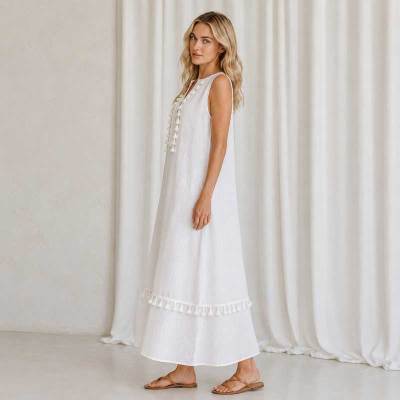
The main piece should be a garment that works without a fitting room. That single constraint removes most of the risk from linen gifting, because linen is unforgiving about fit: a shirt that is slightly small at the shoulder reads as tight, and a dress that is slightly long reads as borrowed. Choose formats where a relaxed fit is the intended fit.
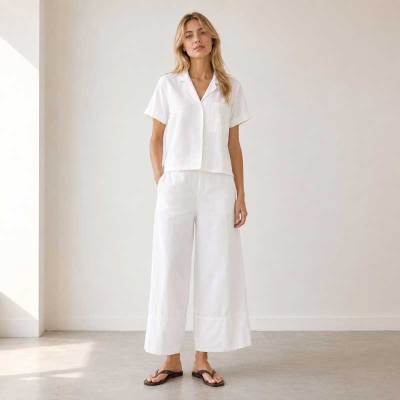
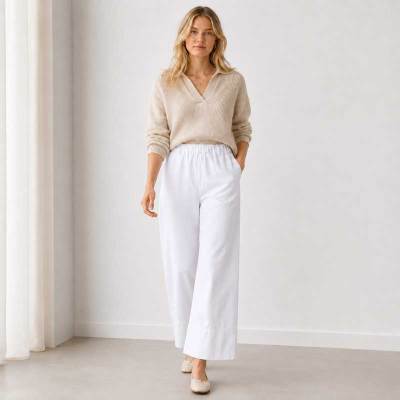
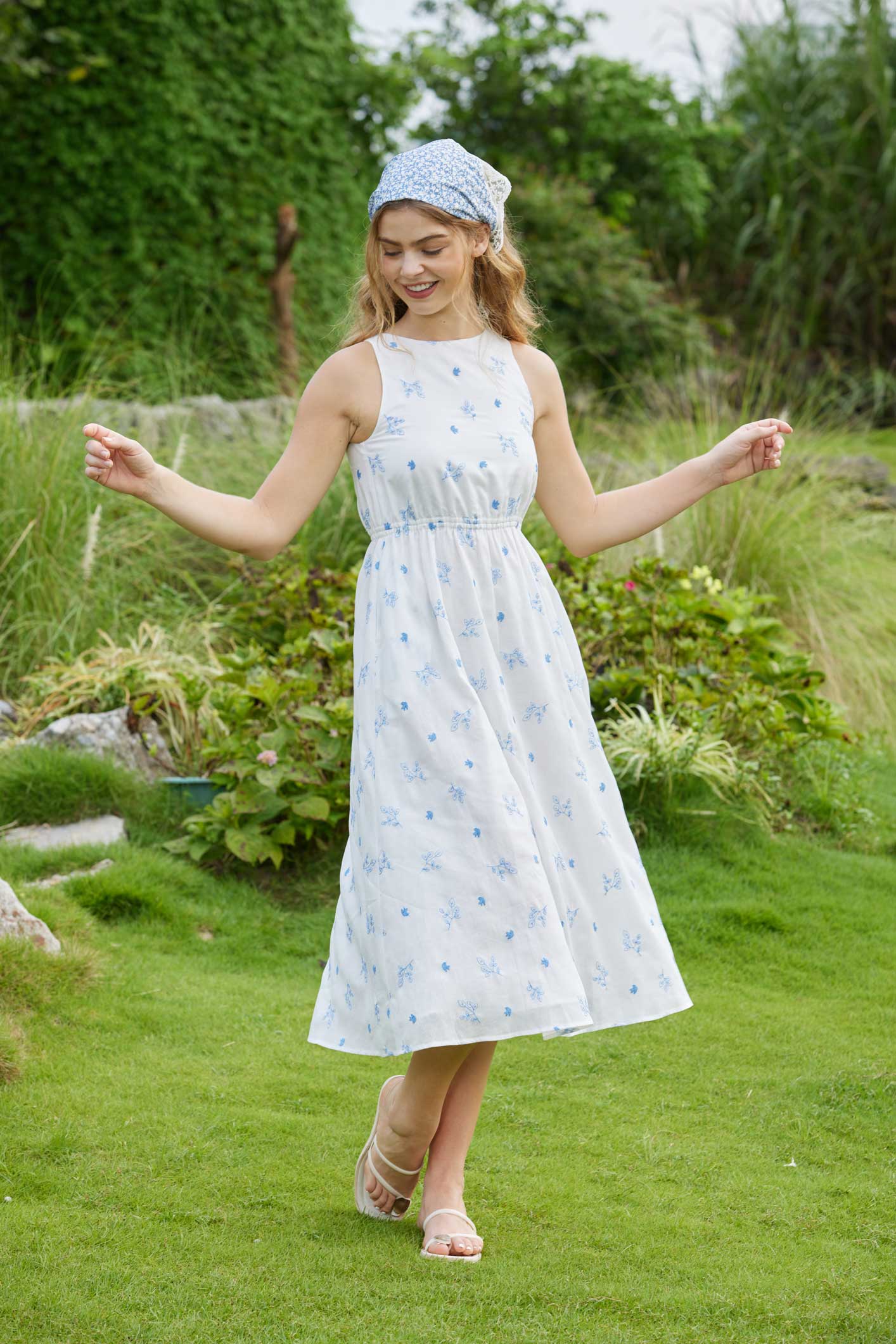
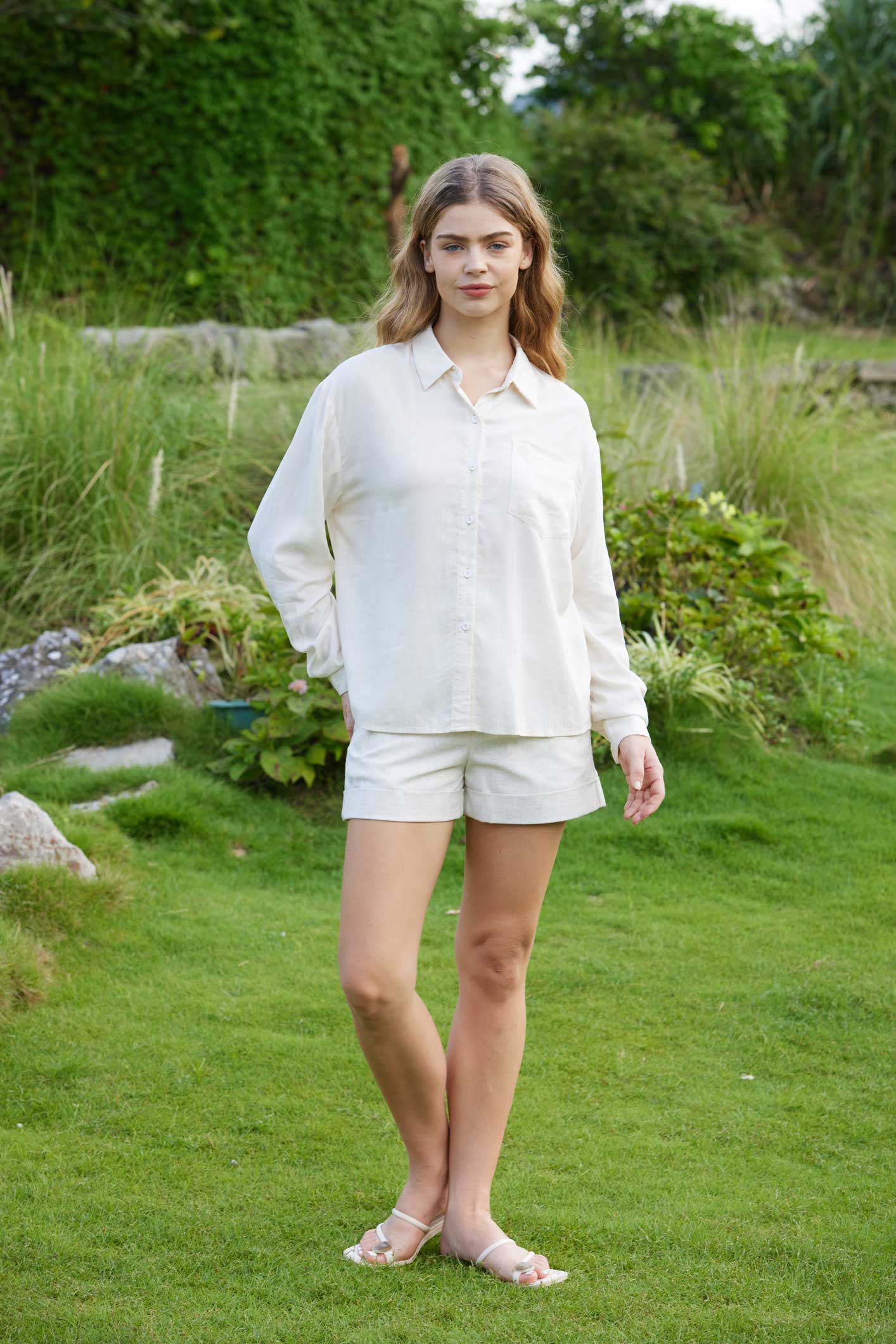
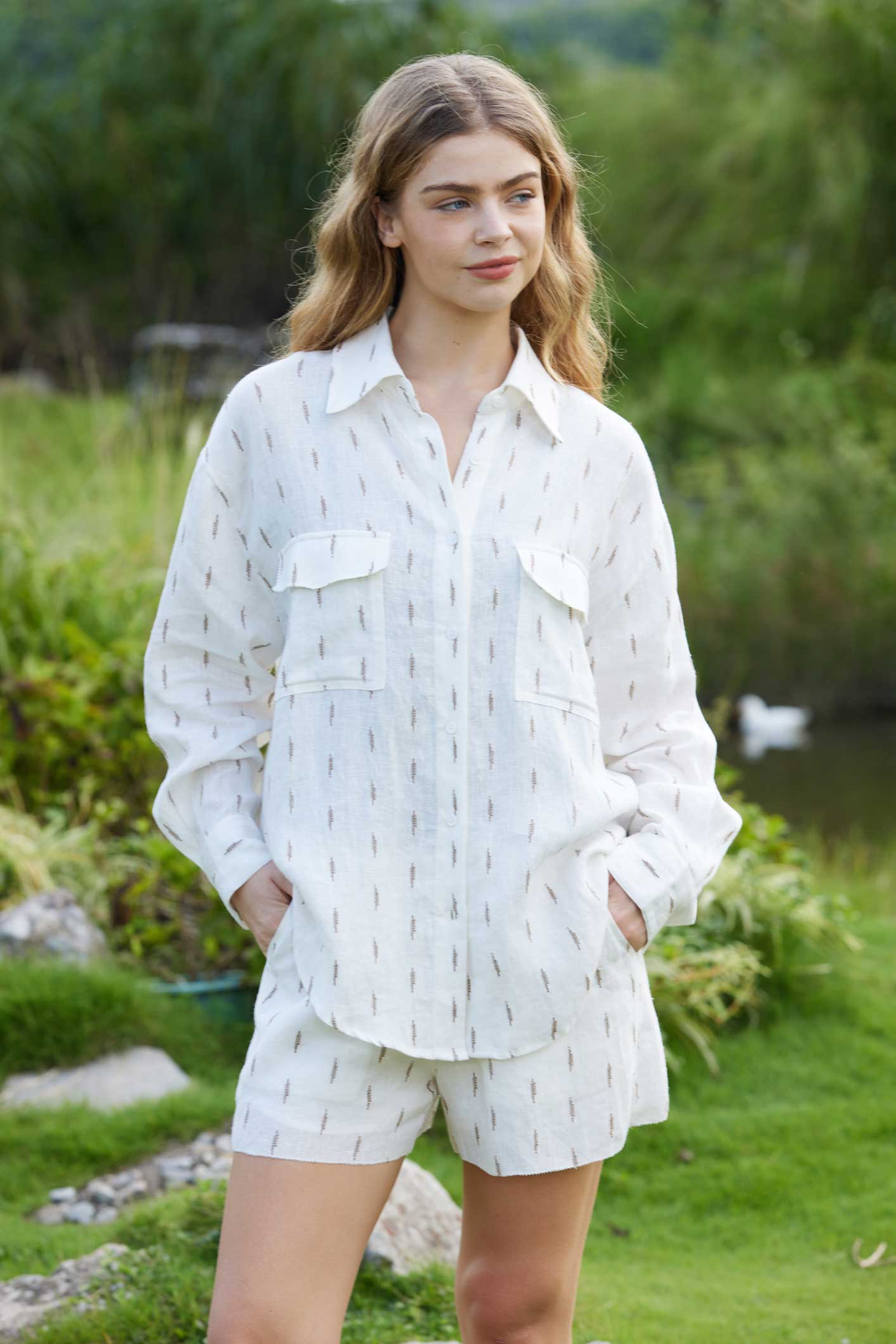
In practice, four formats carry most of the weight: a relaxed shirt, a pull-on dress or shirt dress, a two-piece set with an elastic or drawstring waist, and a robe or lounge piece. All four tolerate a size guess because the silhouette is meant to be loose. Fitted bodices, tailored trousers with a fixed waistband, and structured jackets do not, and they should only be given when you have real measurements.
Weight matters as much as shape. A linen shirt in the 150 to 180 gsm range has enough body to hold a collar and enough softness to drape; it is the safest main piece in the range. A dress in the 170 to 200 gsm range hangs cleanly without being transparent. Loungewear and robes sit lighter, around 110 to 150 gsm, because the fabric is meant to collapse and move. Heavier cloth above 220 gsm reads as outerwear or trousers and can feel stiff as a first linen gift, especially for someone who has never worn the fibre.
| Main piece format | Typical weight | Size risk | Best recipient |
|---|---|---|---|
| Relaxed linen shirt | 150 to 180 gsm | Low, if you take the size chart measurement across the chest and compare it to a shirt they already own | Anyone; the most universal option |
| Shirt dress or pull-on dress | 170 to 200 gsm | Medium; length is the main variable | Someone whose height and usual dress length you know |
| Two-piece set with soft waist | 170 to 220 gsm | Low to medium; separates can be worn independently | Someone who dresses in separates |
| Robe or lounge piece | 110 to 150 gsm | Very low; one size or generous cut | Someone who works from home or travels |
| Heavy trousers or overshirt | 220 to 240 gsm | High; tailoring and length both matter | Only with known measurements |
If you are choosing between two main pieces and cannot decide, choose the one that can be worn in more than one season. A shirt goes under a jacket in winter and over nothing in summer. A heavy overshirt does one season well. Gift value is partly measured in wearings, and a piece that survives three seasons earns its place faster. For a wider view of formats before you commit, the linen dresses collection shows how the silhouettes differ in practice.
Layer Two: The Supporting Piece
The supporting piece is where most gift sets go wrong, because the instinct is to add a second garment. Resist it. A second garment competes with the first, doubles the size risk, and turns a gift into a wardrobe decision. The supporting piece should be small, useful, and clearly subordinate.
Good supporting pieces share three traits: they are one-size or close to it, they are used in the same routine as the main piece, and they cost a fraction of it. A linen pouch that holds the shirt while travelling. A scarf that adds a layer without a fit. A set of napkins that turns a hostess gift into a table story. A wash bag that makes the care instructions physical. A hair wrap or scrunchie that uses the same fabric offcut. Each of these extends the main piece into a habit.
Scale is the discipline here. The accessory should be visibly smaller than the main piece when both are laid flat, ideally no more than a third of its footprint. If the accessory is close in size, the set reads as two gifts of equal weight, and the recipient starts comparing them. If it is much smaller, it reads as a detail, which is exactly what a supporting layer should be.
img prompt: Close-up of hands folding a soft garment-washed linen scarf beside a small linen drawstring pouch on a cream linen surface, warm side light, shallow depth of field, tactile fabric texture, calm neutral tones
Layer Three: The Paper Layer
The paper layer is the cheapest part of the set and the one recipients remember. It has three components: a care card, a short handwritten note, and the wrapping that holds the stack. None of them needs to be expensive. All of them need to be specific.
A care card is not a marketing insert. It is a small piece of paper that answers the four questions a linen owner asks in the first month: what is it made of, how heavy is it, how do I wash it, and what do I do about creases. Write the fibre content, the weight in grams per square metre if you know it, the wash temperature you would use, and one line about ironing damp or embracing the texture. That is enough. A card with four facts gets kept; a card with a brand story gets thrown away.
The note should explain the choice, not the price. One or two sentences is right: why this piece, why this colour, what you imagined them doing in it. That sentence is what turns three objects into a gift. It also gives the recipient permission to use the item rather than save it, which is the whole point of giving linen.
Wrapping should be matte and quiet. Unbleached tissue, a paper band, a cotton ribbon. Avoid plastic film, printed logos on the outside, and anything that rustles loudly. The paper layer is meant to slow the opening down by a few seconds, not to perform.
What to write on the care card
- Fibre: 100 percent European flax linen, garment-washed.
- Weight: the gsm figure, if the product page states it.
- Wash: cold or lukewarm machine wash, mild detergent, no bleach.
- Dry: line dry in shade, or tumble low briefly and remove damp.
- Iron: while still damp, or accept the natural crease.
The 70/20/10 Split, and Where It Flexes
The split is a planning tool, not a rule of law. Seventy percent on the main piece keeps the set anchored: the recipient should be able to tell which item is the gift. Twenty percent on the accessory gives the set a second surface without competing. Ten percent on paper and packing covers the card, the tissue, the box, and the ribbon.
There are two legitimate reasons to flex. The first is a hostess gift, where the main piece may be a home textile rather than a garment; in that case the accessory share can rise to 25 percent because napkins and a runner read as a pair rather than a hierarchy. The second is a very small budget, where the main piece is a single scarf or pouch; then the paper share should stay at 10 percent and the accessory share collapses, because there is no meaningful second layer. What you should not do is spend 40 percent on packaging. A beautiful box around a thin gift reads as compensation.
Three Budget Tiers, Three Different Sets
The tiers below are planning bands, not prices from a specific catalogue. They describe what the money buys at each level so you can decide which tier matches the relationship and the occasion.
| Tier | Planning band | Main piece | Supporting piece | Paper layer |
|---|---|---|---|---|
| Essential | Entry | One relaxed shirt or a single accessory-led piece | One small pouch or scarf in the same fabric family | Printed care card, handwritten note, paper band |
| Considered | Mid | Shirt dress, two-piece set, or a heavier shirt | Scarf or wash bag that matches the main piece weight | Letterpress card, cotton ribbon, tissue-lined box |
| Heirloom | Upper | Two-piece set in a heavier cloth, or a robe | Two small pieces that work together, such as pouch and scarf | Written care card, fabric swatch, keepsake box |
Notice that the tier changes the quality of the main piece before it changes the number of items. That is deliberate. Three good items beat five average ones in every gifting context, and the recipient can feel the difference in the first thirty seconds. The tier should raise the standard of the anchor, not the volume of the box.
Three Set Recipes You Can Copy
These recipes are complete sets, not shopping lists. Each one names the layers, the weight logic, and the occasion it suits. Adapt the colours to what the recipient already wears.
| Set | Main piece | Supporting piece | Paper layer | Best occasion |
|---|---|---|---|---|
| The Everyday Set | Relaxed shirt in oatmeal or white, 150 to 180 gsm | Linen pouch in the same cloth | Care card plus one line about wearing it open over a tee | Birthday, thank you, new job |
| The Hostess Set | Four linen napkins in a muted colour | Table runner or bread bag in the same weave | Card with washing notes and a serving suggestion | Dinner invitation, housewarming |
| The Traveller Set | Linen scarf or lightweight robe, 110 to 150 gsm | Drawstring pouch sized to the folded piece | Card with a packing note and a crease tip | Departure gift, long-haul trip, retirement |
The Everyday Set is the safest first linen gift because a shirt is the lowest-risk garment and the pouch explains how to store it. The Hostess Set works because napkins are size-free and useful immediately; it also avoids the awkwardness of giving clothing to someone whose size you do not know. The Traveller Set leans on the fact that linen packs small and dries fast, which is a practical benefit rather than a decorative one.
If you want a fourth option, build around a two-piece set and skip the accessory entirely. A matching shirt and trouser set is already a complete idea, and adding a pouch can make it feel like a uniform. In that case, put the freed accessory share into a better care card and a proper box. More ideas by occasion and spend level sit in the linen gift ideas guide.
Colour and Weight: The Two Matching Rules
Matching a set is simpler than it looks because linen already carries texture. You need to align two things: colour temperature and fabric weight. Everything else is optional.
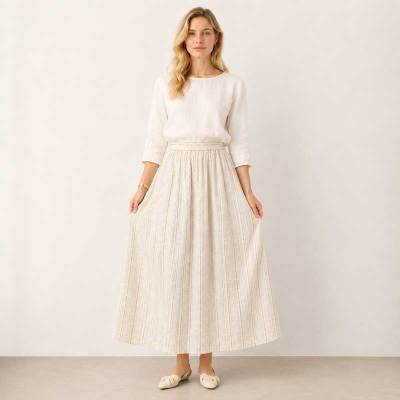
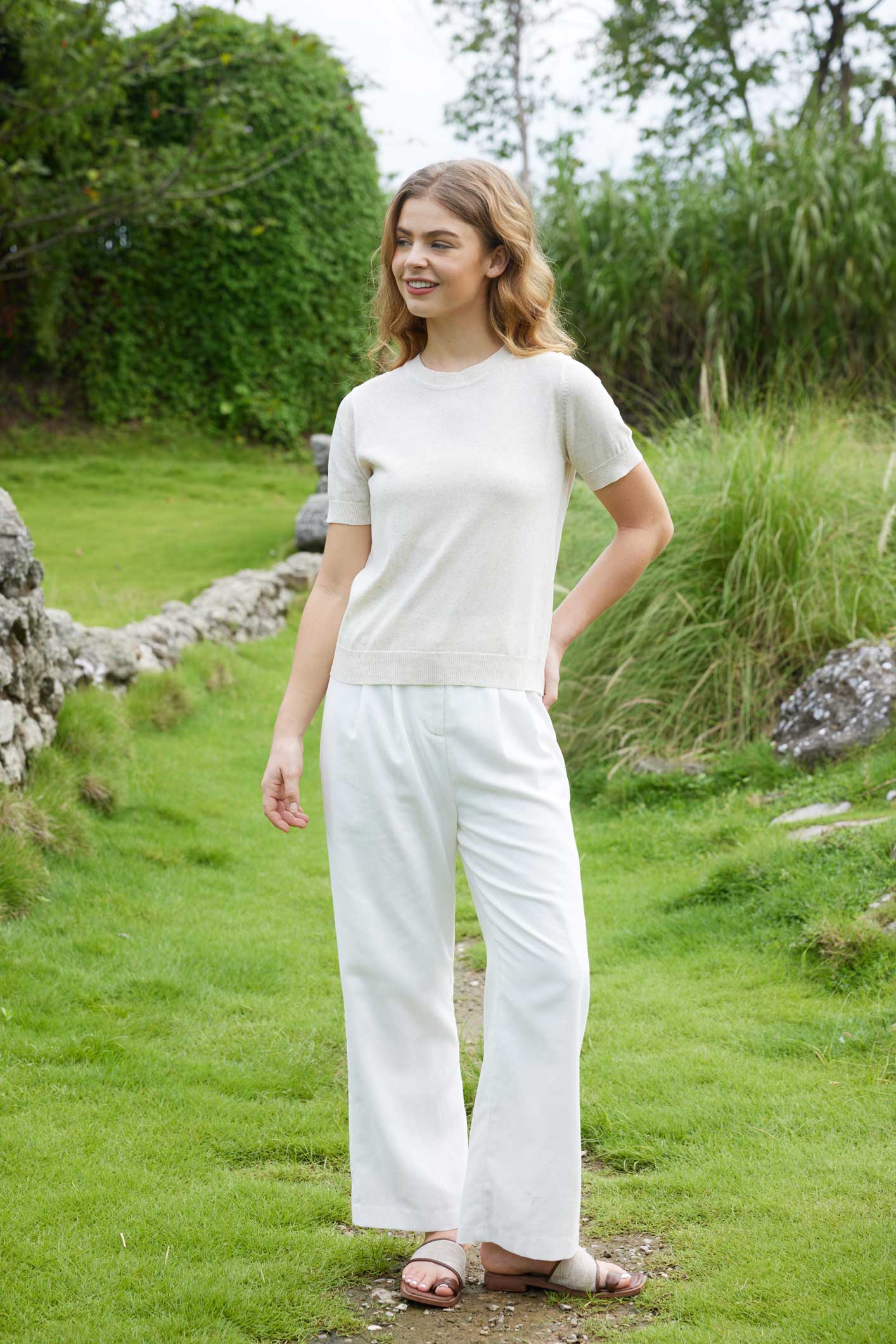
For colour, stay inside one family and vary the value. Oatmeal, ecru, sand, and warm white belong together. Olive, sage, and deep green belong together. Black, charcoal, and stone belong together. The mistake is mixing a warm neutral with a cool grey, which makes both look dirty under indoor light. A second safe move is one solid plus one tonal stripe in the same family; a third is a single accent colour used only on the accessory.
For weight, keep the accessory at or below the main piece. A 170 gsm dress with a 110 gsm scarf reads as a deliberate contrast; the same dress with a 240 gsm tote reads as two different products from two different collections. If you cannot find the gsm, use the hand: if the accessory feels stiffer than the garment, it is probably heavier, and it will look like a separate purchase.
| Main piece weight | Accessory weight that matches | What to avoid |
|---|---|---|
| 110 to 150 gsm, light and fluid | 90 to 130 gsm, scarf, hair wrap, soft pouch | A structured tote or heavy belt |
| 150 to 180 gsm, shirt weight | 120 to 170 gsm, pouch, scarf, napkin set | Anything with a rigid base |
| 180 to 220 gsm, dress and trouser weight | 150 to 200 gsm, wash bag, table linen | A voile scarf that looks weightless beside it |
| 220 to 240 gsm, heavy overshirt | 180 to 240 gsm, tote, apron, heavy pouch | Delicate accessories that will pill against it |
img prompt: Three folded linen pieces in tonal oatmeal, sand and warm white stacked on a linen surface with a small card on top, top-down view, soft diffused daylight, visible weave texture, minimal editorial composition
What to Leave Out
Subtraction is the fastest way to make a set look considered. These are the additions that most often weaken an otherwise good gift.
- A second garment. It doubles the size risk and splits attention. If you want more volume, choose a heavier main piece instead.
- Scented products. Candles, soaps, and sachets fight the smell of clean linen and can transfer onto the fabric in a closed box.
- Printed brand brochures. They read as packaging, not as care. A single card with real instructions replaces three pages of copy.
- An oversized box. Empty space makes a set look sparse. The box should be just larger than the folded stack, with one centimetre of tissue on each side.
- Plastic ribbon and film. They cheapen the paper layer and trap moisture during transit.
- Anything that needs explaining. If you have to tell the recipient why an item is in the box, it should not be in the box.
There is one more item worth leaving out: a certificate you cannot verify. If a brand claims a standard, the claim should come with a certificate number the buyer can check. The OEKO-TEX labelling system, for example, publishes a certificate number that can be looked up, which is why a verifiable claim is worth more than a decorative badge. If you cannot check it, do not repeat it on the care card.
Sizing Without Measurements
The safest gift sets avoid the question of size entirely. Napkins, runners, scarves, pouches, and robes with a generous cut do not need a measurement. When the main piece must be a garment, use three tactics in order.
First, choose a silhouette where looseness is correct: a relaxed shirt, a shirt dress, a pull-on set. Second, compare the product's flat measurements to a garment the recipient already wears, ideally one you have seen on them. Third, if you are between two sizes, take the larger one, because linen has no stretch and a garment that is too small cannot be fixed by washing. The guide to buying linen as a gift by size walks through the measurement comparison in more detail.
Also check the exchange window before you buy, and say so in the note. A gift that can be exchanged without friction removes the last piece of anxiety from the recipient, and it costs nothing to mention. The returns and exchanges guide explains how that works in practice.
Packing the Set So It Survives the Journey
A linen set is soft, which makes it easy to pack badly. The goal is a stack that arrives with the folds intact and no permanent creases. Fold each piece along its natural lines, place the largest item at the bottom, the accessory in the middle, and the card on top. Wrap the stack in unbleached tissue and seal it with a paper band rather than tape, so the recipient can open it without tearing the paper.
Use a box that matches the stack, not a box that matches the occasion. A box with five centimetres of empty space on each side lets the contents shift, and shifting is what creates hard creases. If you are shipping, put the box inside a mailer with paper padding, not loose filler, and avoid vacuum bags: compression creases linen at the fold and takes days to relax.
Humidity is the other variable. Linen absorbs moisture from the air, so a set packed in a damp room can arrive smelling of the box. Pack in a dry room, include a paper slip rather than a plastic one, and avoid storing the finished set in a basement or garage before shipping.
Timing: Assemble Early, Ship Once
The main piece drives the timeline. Choose it first, because it determines the colour family and the weight ceiling for everything else. The accessory usually ships from the same place, so it adds no transit time. The paper layer is the only part you control completely, and it should be written last, after you have seen the finished stack.
Build in a buffer for the exchange window and the shipping estimate. Standard transit varies by destination, and the only reliable figure is the one quoted at checkout for your address. The shipping timeline guide explains how processing and transit stack up, and it is worth reading before you commit to a date. If the set is for a fixed occasion, order the main piece first and the accessory in the same order, so a partial delivery cannot leave you with half a gift.
Adapting the Set: Him, Hostess, Traveller
The three-layer structure holds across recipients; only the main piece changes. For a men's set, the anchor is usually a linen shirt in a heavier weight, paired with a pouch or a cap and a card that mentions wearing it open over a tee. The guide to linen gifts for men covers the formats that get worn rather than stored.
For a hostess set, the anchor is table linen: four napkins, or a runner, paired with a bread bag and a card that includes a washing note. The advantage is that nothing needs a size, and the gift is used the next time the recipient entertains, which is the etiquette test that matters most for a hostess present.
For a traveller, the anchor is a scarf or a lightweight robe, paired with a drawstring pouch and a card with a packing tip. Weight is the key: keep the whole set under 150 gsm so it folds into a carry-on and dries overnight. A short line on the card about why the fibre lasts is useful context if the recipient cares about materials as much as utility.
img prompt: A linen scarf loosely folded into a drawstring pouch beside a passport and a small handwritten card on a wooden tray, soft window light, travel packing scene, natural fibres, warm neutral palette
A Five-Minute Checklist Before You Order
- Is there exactly one main piece, and can I name it in a sentence?
- Does the accessory serve the same routine, or is it a second gift?
- Is the accessory visibly smaller than the main piece when laid flat?
- Are all the colours in one family, with no cool grey mixed into warm neutrals?
- Is the accessory weight equal to or lower than the main piece?
- Does the care card state fibre, weight, wash, dry, and iron?
- Does the note explain the choice in one or two sentences?
- Is the box within two centimetres of the folded stack?
- Have I checked the exchange window and the shipping estimate?
- Have I removed everything that needs explaining?
A Short Gift Set FAQ
How many items should a linen gift set contain?
Three to five. Three is the minimum for the layered structure to read: a main piece, a supporting piece, and a paper layer. Five is the practical maximum before the set starts to feel like a hamper. Four is usually the most balanced, because it allows one extra small piece without crowding the box.
Should the accessory match the main piece exactly?
Not exactly. Match the colour family and the weight, then vary the value or the weave. An exact match in the same fabric can look like a uniform; a tonal match looks intentional. The exception is a two-piece garment set, where the pieces are designed to match and should be kept together.
What is the most common mistake in a linen gift set?
Adding a second garment. It doubles the sizing risk, splits the recipient's attention, and usually pushes the budget away from the main piece. The second most common mistake is an oversized box, which makes a good set look sparse before it is opened.
The Short Version
Build in three layers: one main piece at about 70 percent of the budget, one small accessory at 20 percent, and a care card plus packing at 10 percent. Keep the item count between three and five, hold the colour family together, keep the accessory weight at or below the main piece, and remove anything that needs explaining. Choose a main piece that tolerates a relaxed fit, write four real facts on the care card, and pack the stack in a box that fits it. That is the whole method, and it is repeatable for any budget.
Start With the Anchor
The main piece decides everything else, so choose it first. A relaxed shirt or a soft two-piece set gives you the widest range of accessories and the lowest sizing risk. Browse the linen accessories to build the supporting layer, then write the card that makes it a gift.
Build a Set That Gets Worn
Start with a garment-washed piece in the weight that suits the season, then add one accessory that keeps it company. Every piece is 100 percent European flax linen, pre-washed for softness and cut for a relaxed fit.
Shop linen sets or linen accessories to finish the set, and check the size chart before you choose the anchor.