Why Linen Softens With Every Wash and When It Stops
Why Linen Softens With Every Wash and When It Stops
Linen softens because washing gradually strips the pectin and natural wax that hold flax fibres stiff, while mechanical action loosens the weave. Most of the change happens in the first eight to ten washes; after roughly thirty, the hand feel levels off, and further washing starts removing fabric instead of stiffness.
The Short Answer: A Curve, Not a Switch
The phrase "linen softens with every wash" is repeated so often that it has stopped meaning anything precise. It implies a straight line, a gentle improvement that continues indefinitely as long as you keep washing. The behaviour is closer to a curve with a steep opening, a long flattening section, and a limit that most people never notice because they reach it around the same time the garment starts to look tired.
Two different processes are running at once. The first is chemical: flax fibre arrives wrapped in pectin and natural waxes that stiffen the bundle and give new linen its papery hand. Water, detergent and heat slowly dissolve and carry those substances away. The second is mechanical: every wash cycle tumbles and flexes the yarn thousands of times, breaking the rigid bonds between fibres and letting the weave move independently. Both processes make the cloth feel softer. Neither continues at the same rate forever.
The chemical part has a natural end point. Once the pectin and surface wax are gone, there is nothing left to remove, and additional washing cannot make the fibre chemically softer than the fibre itself. The mechanical part also slows, because the yarn can only be flexed into suppleness once; after that, further flexing abrades rather than softens. That is why the curve flattens rather than climbing, and why the useful question is not "does linen soften" but "how many washes does this particular piece need, and what happens after that".
If you are working with a brand-new garment, the practical first step is a short break-in routine rather than a long one. Our guide to breaking in new linen and reaching the soft stage faster covers the first three cycles in detail. This article picks up where that one ends: what happens across thirty washes, why the improvement stops, and how to recognise the point where more washing costs more than it gives.
[IMAGE_PLACEHOLDER] img prompt: A close-up of a folded stack of natural and oatmeal linen garments on a pale oak table, fibres and weave texture visible in raking morning light, minimal editorial styling, no propsWhat a Wash Cycle Actually Removes
A single wash does three things to linen, and they run on different timelines. Understanding the split explains most of the confusing advice online, including the claim that hot water softens faster and the counterclaim that hot water ruins linen. Both are partly right, because they are describing different mechanisms.
The pectin layer goes first
Flax fibres are held together in bundles by pectin, a natural gum that survives retting and spinning. In the first washes, warm water and alkaline detergent break that gum down and rinse it away. This is the single largest contributor to the change in hand feel, and it is why the first three washes produce a more dramatic difference than the next ten. It is also why garment-washed linen, which has been through this process at the factory, feels soft on the first day and then changes comparatively little. The distinction between the two products is covered in our comparison of washed linen and regular linen.
Pectin removal is mostly complete within eight to twelve wash cycles at 30 to 40 degrees Celsius. Higher temperatures accelerate it, but they also accelerate the mechanical damage described below, so the trade is rarely worth taking. A 40 degree wash might remove the gum in six cycles instead of ten, at the cost of measurably more surface abrasion across the garment's life.
Heat and water do the softening quietly
Water alone relaxes the fibre. Flax is hygroscopic, meaning it absorbs moisture into the fibre wall and swells slightly, which loosens the internal stresses left over from weaving. This is why linen that feels crisp on the hanger feels different after twenty minutes in humid air, and why a cool rinse is not a wasted step. The effect is temporary on its own, but repeated wetting and drying gradually trains the fibre into a relaxed state.
Heat adds a second effect: it relaxes the yarn's memory of its loom state. A 30 degree wash plus a warm rinse does most of this work. Going above 40 degrees adds little softness and starts to stress dyes, especially on indigo, olive and garment-dyed rust tones. For coloured linen, the temperature ceiling is usually set by the dye, not by the fibre.
Mechanical action is the accelerator
The drum is doing more than cleaning. Each rotation flexes the yarn against itself, against other garments and against the drum wall. At a 45 to 60 minute cycle and roughly 40 to 50 drum rotations per minute, a single wash subjects the fabric to thousands of flex cycles. That is what breaks the stiffness of the weave, and it is also what eventually thins the cloth.
This is the reason a gentle cycle with a lower spin speed still softens linen well. The flexing happens throughout the wash phase; the spin phase contributes little softness and a disproportionate share of the mechanical stress. Dropping from 1200 to 700 revolutions per minute reduces creasing and fibre strain without meaningfully slowing the softening curve.
The number that matters
Softening is driven by cumulative flex cycles, not by the number of times the machine is switched on. A 30 minute quick wash at low spin delivers roughly half the flexing of a full 60 minute cycle. If you are counting washes to track softening, count cycle minutes as well as loads, or standardise on one programme and count loads only.
The Softening Curve in Three Phases
Across a typical mid-weight garment, the change in hand feel follows a predictable shape. The exact numbers vary with weight, weave and water hardness, but the sequence holds well enough to plan around. The table below describes a 160 to 180 gsm garment-washed linen shirt or dress washed at 30 degrees with a neutral detergent and line dried.
| Phase | Wash count | What changes | Hand feel | Fibre cost |
|---|---|---|---|---|
| Steep | 1 to 8 | Pectin and surface wax removed, weave relaxed, loom stiffness gone | Noticeably softer each cycle, drape improves quickly | Very low |
| Flattening | 9 to 25 | Residual gum cleared, yarn flexed into a settled state, surface hair lifted | Small but real gains, mostly in drape rather than surface | Low to moderate |
| Plateau | 26 to 60 | No further chemical change, surface abrasion begins to dominate | Effectively unchanged; a slight bloom then a slight thinning | Moderate and rising |
| Decline | 60 plus | Fibre loss at creases, thinning at collar, cuffs and seat | Soft in the hand but weaker, prone to holes | High |
Washes 1 to 8: the steep section
This is where almost all of the perceived improvement lives. A new garment-washed shirt taken through eight cool cycles typically moves from a dry, slightly papery hand to something that folds without resistance at the elbow. The visible change is mostly in drape: the fabric starts to hang in soft folds rather than standing away from the body. Most people who say linen "becomes a different garment" are describing this window.
The steepness is not a reason to wash aggressively. Eight cycles spread across two months of normal wear will do the same work as eight cycles in a fortnight, without the extra abrasion. There is no prize for reaching the soft stage sooner, and the garment that got there slowly usually has better surface integrity at the end of the first year.
Washes 9 to 25: the flattening
Here the curve turns. Each wash still changes something, but the change is measured in drape and surface texture rather than in obvious softness. The fabric may develop a slight bloom as short fibres lift from the yarn, which reads as softness to the hand even though the structural change is small. It is also the phase where pilling, if it is going to happen, appears, usually under the arms and along the sides where friction is highest.
This is the most useful phase for judging quality. A garment that continues to improve between washes 10 and 25 is usually made from longer staple fibre with a balanced weave. A garment that peaks at wash five and starts to fuzz is telling you something about the raw material, not about your washing machine. Our guide to telling real quality linen at home in five checks covers the visual tests that confirm this at the seam and the selvedge.
Washes 26 and beyond: the plateau
By the thirtieth wash, a mid-weight garment has usually reached its final hand. Further washing produces no meaningful softening, because there is no gum left to remove and the yarn has already been flexed into its settled configuration. What continues is abrasion: a slow removal of fibre from the surface, most visible as a slight sheen at pressure points and a gradual reduction in weight.
This is the answer to the question in the title. Softening stops, in any practical sense, somewhere between wash twenty-five and wash thirty-five for most garments. The exact point depends on weight and weave, but the shape of the curve does not. Bedding and heavier household linen take longer to reach it, lightweight shirting reaches it sooner, and garment-washed pieces start partway up the slope.
[IMAGE_PLACEHOLDER] img prompt: Hands folding a soft washed linen shirt on a linen-covered table beside a small stack of clean laundry, warm diffused daylight from a side window, calm domestic editorial photographyWhat "Stops" Actually Means
Three different things stop at three different times, and confusing them is the source of most disappointment with linen care.
- Chemical softening stops first. Once pectin and surface wax are gone, usually within eight to twelve washes, the fibre cannot become chemically more pliable. Additional washing removes nothing more.
- Perceived softening stops next. The hand and eye stop registering change somewhere around wash twenty to thirty, because the remaining differences are smaller than the variation between one drying day and the next.
- Structural decline starts before you notice it. Abrasion begins at wash one but only becomes visible after the plateau, which is why garments seem to hold up well and then fail quickly.
The practical consequence is that "wash it more to make it softer" is good advice for the first month and poor advice after the first year. Between those two points, the correct move is to wash for cleanliness and let softness follow, rather than washing for softness and accepting the wear as a side effect.
A five-second test you can repeat
To judge where a garment sits on the curve without guessing, use the same test each time. Hold the fabric in one hand, close the fist for five seconds, then open it and watch how the creases behave. New linen holds sharp, angular creases that stay visible. Softened linen releases most of the crease within a few seconds and leaves a rounded fold instead of a sharp line. Linen past the plateau releases the crease just as quickly but the fold looks thinner, and backlighting shows a slight transparency at the crease line.
Do this at the same point on the garment each time, ideally the lower front panel, and keep the test dry. Wet fabric always reads softer, which makes a damp test useless for tracking change.
The Reverse Curve: Over-Washing Costs Fabric
If softening were free, the correct routine would be to wash linen continuously until it reached the desired hand. It is not free. Every cycle past the point of chemical saturation removes a small amount of fibre, and the removal is not evenly distributed. It concentrates where the fabric flexes hardest: collar points, cuffs, underarm seams, the seat of trousers and the hem of a dress.
The mechanism is straightforward. Cotton and flax fibres both fail by fatigue when repeatedly bent. In a wash cycle, the same fold lines recur in roughly the same places, so the fibres at those lines accumulate fatigue faster than the fibres in flat panels. After enough cycles, the yarn at the fold line is thinner than the yarn beside it, and the difference shows up first as a lighter band and then as a hole.
This is why vintage linen often looks beautiful in the middle of a panel and worn at the edges. It is also why heavy household linen, which is washed weekly for decades, develops thin patches at the fold lines of a fitted sheet but stays intact across the centre.
The signals that you have passed the useful part of the curve
- A sheen at pressure points. A faint shine on the collar or seat means the surface fibres have been abraded flat. Softness and shine are not the same thing.
- Light visible through a crease. Hold the garment up to a window and flex a fold. If light passes through the crease line more readily than the panel, the yarn is thinning.
- Short fibres on the surface after drying. A little lint is normal. A persistent halo that does not brush off suggests the yarn is shedding staple length.
- Colour fading faster at folds. Dye loss follows abrasion, so fold lines lighten before flat areas do.
- Seams failing before fabric. When the stitching gives way while the cloth is still sound, the garment has usually been washed more than worn.
None of these signals means the garment is finished. They mean the softening phase is over and the preservation phase has begun. From that point, the goal changes from improving the hand to slowing the decline, which mostly means washing less often, at a lower temperature, with a shorter cycle.
How Weight Rewrites the Timeline
Fabric weight is measured in grams per square metre, and it changes both the speed of softening and the point where the curve flattens. A light shirt and a heavy tablecloth are not on the same schedule, even if they are made from identical fibre.
- 110 to 140 gsm. Lightweight shirting, summer dresses, scarves. The weave is open and the yarn is thin, so pectin clears quickly. Expect the steep phase to finish in four to six washes and the plateau to arrive around wash fifteen to twenty. These pieces also reach structural decline sooner, because there is less fibre to lose.
- 145 to 175 gsm. The standard garment weight for shirts, dresses and relaxed trousers. The steep phase runs six to ten washes, the plateau arrives between twenty-five and thirty-five, and the decline phase is usually visible after sixty cycles of normal wear.
- 180 to 240 gsm. Heavy dresses, jackets, trousers and household linen. Denser weave and thicker yarn slow the water and detergent, so the steep phase can take ten to fifteen washes. The plateau may not arrive until wash forty. These pieces tolerate far more washing before decline, which is why they are the better choice for anything you intend to keep for a decade.
Weight also changes the visible result. A heavy linen that reaches its plateau feels substantial and cool rather than limp, because the yarn is thick enough to hold shape even when soft. A lightweight linen at the same point on the curve can feel almost flimsy, which is why very light linen is often blended or garment-washed to compensate. Our note on how 190 to 240 gsm linen behaves explains the same threshold from the perspective of warmth rather than hand feel.
Garment-Washed Linen Starts Further Along the Curve
Garment washing is a factory process, not a marketing phrase. The finished garment is washed in an industrial machine, typically for 45 to 90 minutes at 40 to 60 degrees with a mild alkaline detergent and sometimes a softener or enzyme, then tumbled partially dry and pressed. The process does three things at once: it removes most of the pectin and surface wax, it shrinks the fabric before it reaches the customer, and it softens the seams and edges that a home wash would take months to relax.
The consequence for the curve is significant. A garment-washed piece arrives roughly at the position a raw piece would reach after three to six home washes. That is why it feels soft in the shop and why the first home wash produces a much smaller change than the first wash of an untreated garment. It is also why garment-washed linen usually carries a lower shrinkage risk: the 3 to 6 percent contraction that raw linen typically shows in the first washes has already happened.
This does not make home washing irrelevant. It shifts the starting point. A garment-washed shirt may reach its plateau after twenty home washes instead of thirty, because it began partway up the slope. The practical difference is that you get the soft hand immediately and the structural decline arrives sooner in calendar terms, which is worth knowing when you are choosing between two similar pieces at different prices.
The certification picture is worth checking at the same time, because garment washing involves additional water, heat and chemistry. OEKO-TEX certification covers the finished article for harmful substances, and the OEKO-TEX standard is the reference most European buyers use. Fibre origin is a separate question, covered by the European Flax certification for flax grown and processed in Western Europe. Neither certification tells you how many washes a garment will take to soften, but both tell you what is in the cloth while it does.
[IMAGE_PLACEHOLDER] img prompt: A linen shirt hanging to dry on a wooden rack in a bright utility room, soft shadows across the fabric, steam from a nearby iron, natural light, quiet documentary styleA Washing Routine That Adds Softness Without the Bill
The routine below is built around the curve rather than against it. It targets the mechanical and chemical softening that matters in the first ten washes and then shifts to preservation once the plateau arrives.
- Sort by weight, not only by colour. A 110 gsm shirt and a 240 gsm jacket in the same drum means one of them gets more agitation than it needs. Wash light shirting together and heavy pieces together.
- Dose detergent for soft water and a half load. Excess detergent leaves residue that stiffens the fibre and holds odour. A neutral liquid at roughly two thirds of the recommended dose is usually enough for six garments.
- Skip fabric softener entirely. Softener works by coating fibres in a fatty film. On linen it reduces absorbency, traps odour and makes the cloth feel slick rather than soft. The softness you want comes from fibre relaxation, not from a coating.
- Wash at 30 degrees on a normal or gentle cycle. Thirty degrees is enough to remove pectin over several cycles and gentle enough to protect dye. Reserve 40 degrees for household linen and white pieces that need it.
- Set the spin to 600 or 800 revolutions per minute. Higher spin extracts more water and creates sharper creases that later need ironing. Lower spin leaves the garment damp but relaxed, which is better for the fibre.
- Line dry in shade, and take the garment down slightly damp. Around 80 to 90 percent dry is the sweet spot: the remaining moisture lets the fibres settle without the stiffness that comes from drying bone dry in direct sun.
- Shake and smooth instead of ironing. A firm shake along the length, then smoothing by hand on the line, removes most of the crease. Ironing damp linen at medium heat with steam is fine, but it flattens the surface bloom that makes washed linen look lived in.
The full method, including stain handling and detergent chemistry, sits in our complete linen washing guide. If shrinkage is your concern rather than softness, the mechanics are covered separately in does linen shrink and how to prevent it. Both articles assume the same temperature ceiling and the same no-softener rule.
One habit that changes the curve
Wash less often, but wash properly. Two well-run 30 degree cycles with correct dosing do more for hand feel than four rushed cycles with too much detergent, and they cost the fabric roughly half as much abrasion. Airing a garment for two hours after wear frequently replaces a full wash, which pushes the softening curve onto a slower and gentler track without stopping it.
A Practical Wash-Count Protocol
If you want to reach the soft stage deliberately rather than by accident, track the first thirty washes. After that, stop counting and start protecting. The checklist below is the version we suggest to customers who ask how many washes a new piece needs.
- Washes 1 to 3: wash separately or with similar light colours, 30 degrees, half detergent dose. Expect the largest visible change here.
- Washes 4 to 8: normal wear cycle, still 30 degrees, still no softener. This is the window where most garments become genuinely comfortable.
- Washes 9 to 15: begin airing between wears instead of washing after every use. Two wears per wash is reasonable for shirts, three for trousers.
- Washes 16 to 25: check the crease lines at collar, cuffs and seat every fifth wash. Note any sheen or thinning.
- Wash 26 onward: move to preservation mode. Cold wash where possible, shortest cycle that cleans, and repair loose seams before they open.
- Any time: never tumble dry on high heat. The heat sets creases and the tumbling adds abrasion that the curve does not need.
For a lightweight piece, compress the whole schedule by about 40 percent. For a heavy piece, stretch it by 50 percent. The sequence stays the same; only the number of cycles per phase changes.
Common Questions About Linen Softening
Does linen really get softer with every single wash?
Up to a point. The change is largest in the first eight to ten washes, when pectin and surface wax are being removed. Between wash ten and wash thirty the improvement continues but becomes gradual, mostly in drape rather than surface feel. After roughly thirty washes on a mid-weight garment, further washing produces no meaningful softening. The phrase is accurate for the first month of ownership and misleading for the rest.
Can I speed up softening by washing at a higher temperature?
You can, but the trade is poor. A 60 degree wash may remove pectin in three or four cycles instead of eight, and it will also accelerate dye loss, shrinkage risk and surface abrasion. For white household linen the trade is sometimes acceptable. For coloured garments, 30 to 40 degrees is the practical ceiling, and the extra weeks are cheaper than replacing the piece.
Why did my linen stop getting softer after a few months?
Because it reached the plateau. Once the natural gum is gone and the yarn has been flexed into a settled state, there is nothing left for washing to change. What feels like a stall is the fibre reaching its final hand. If the garment also feels slightly thinner or shows a sheen at the collar, it has moved into the abrasion phase, and the correct response is fewer washes rather than more.
Does fabric softener make linen softer?
It makes linen feel slicker for a few wears, which is not the same thing. Softener deposits a fatty film on the fibre that reduces absorbency, traps odour and can leave a grey cast on darker colours. Linen's natural softness comes from removed pectin and relaxed yarn, not from a coating. Skipping softener and extending the wash count gives a better result at no cost.
How many washes before new linen stops feeling stiff?
For garment-washed linen, one or two. For untreated linen at 145 to 175 gsm, expect the papery feel to fade across the first three to five washes and the garment to feel properly relaxed by wash eight. Lightweight untreated linen can take four to six. Heavy untreated linen may need ten before the hand settles, simply because the thicker yarn holds more gum for longer.
The Curve in One Paragraph
Linen softens because washing removes the pectin and wax that stiffen flax and because repeated flexing relaxes the weave. The improvement is steep for the first eight to ten washes, gradual until roughly wash thirty, and effectively finished after that. Beyond the plateau, additional washing removes fibre rather than stiffness, and the damage shows up at fold lines long before it shows up in the hand. The useful routine is therefore front-loaded: wash properly and patiently early, then wash less and protect more. A garment that reaches its soft stage over two months of normal wear will usually outlast one that was pushed there in a fortnight.
Weight changes the timing but not the shape. Garment-washed pieces start partway up the curve. Lightweight pieces finish sooner and decline sooner. Heavy pieces take longer and hold longer. In every case, the last third of the curve is about preservation, not improvement, and recognising that transition is the difference between linen that lasts five years and linen that lasts fifteen.
Choose Linen That Ages Well
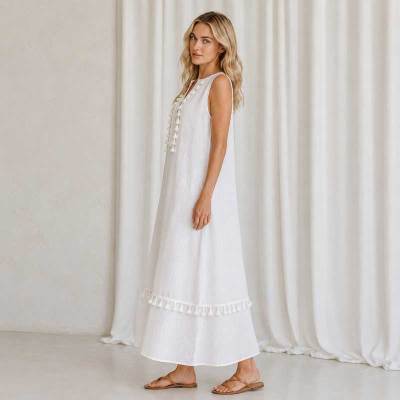
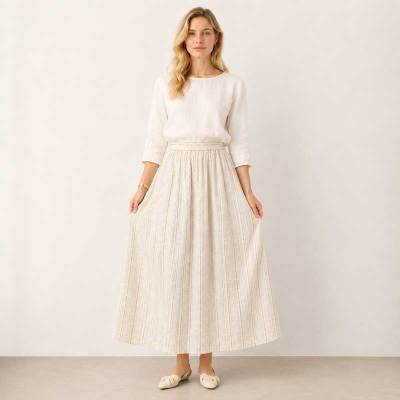
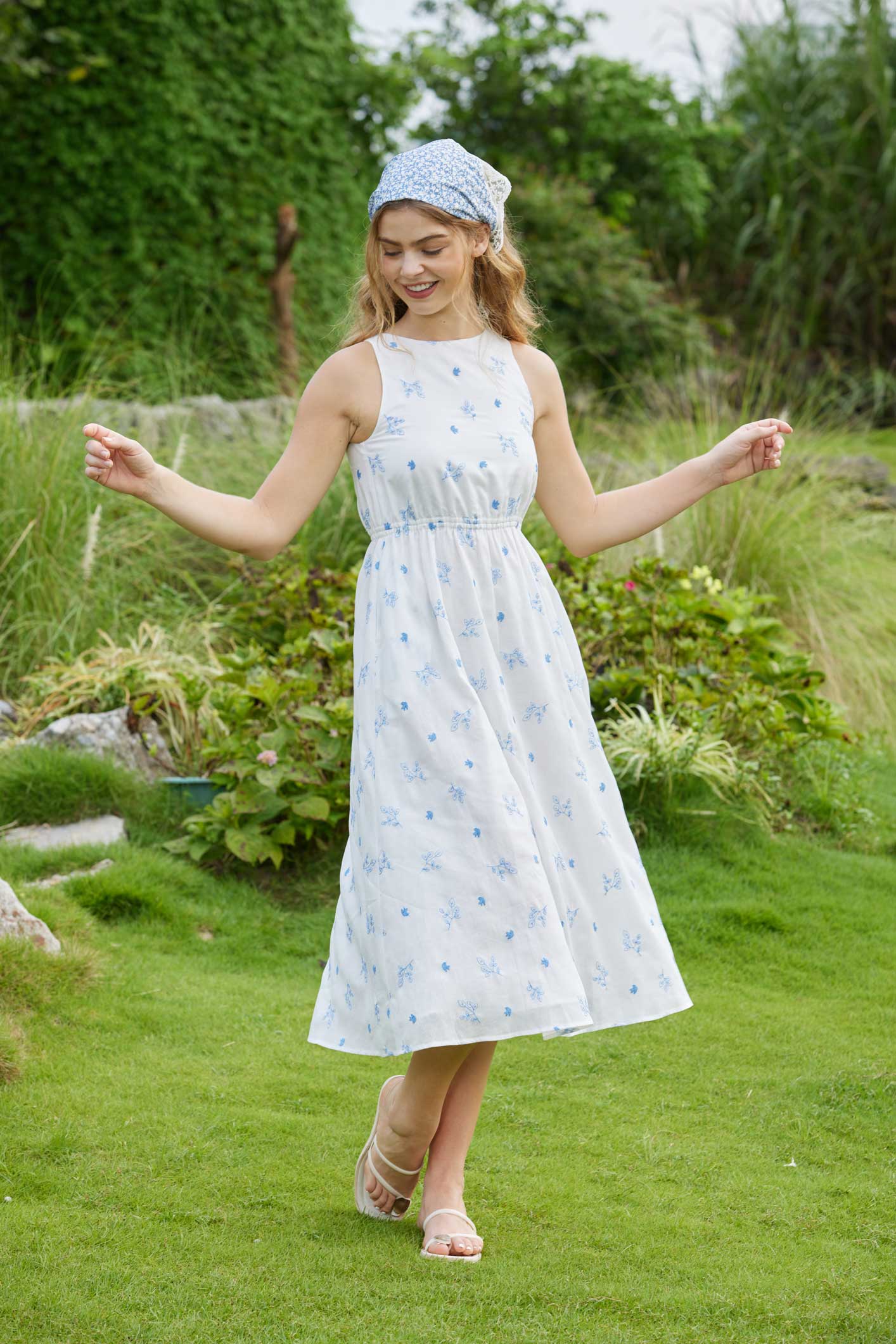
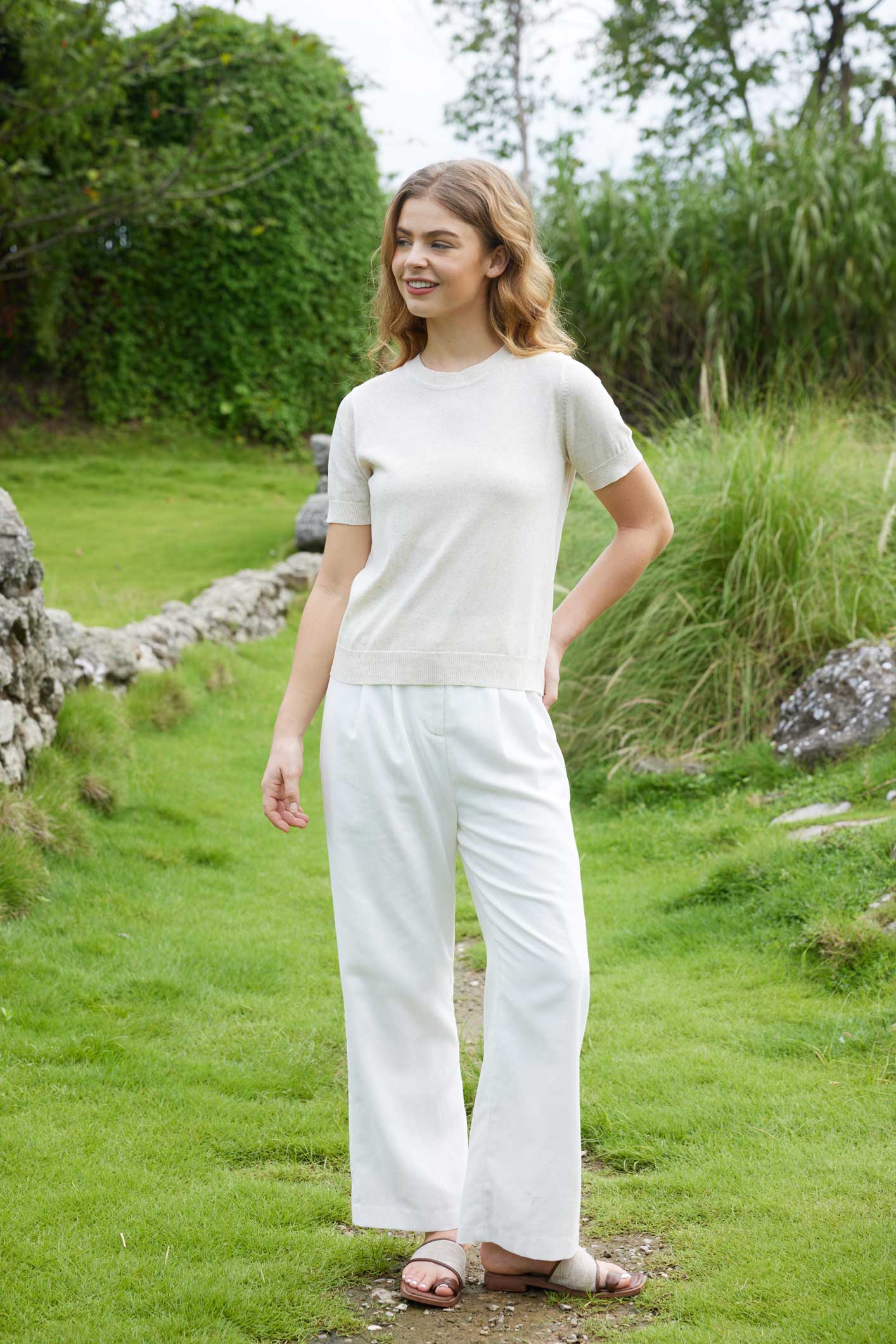
Our garment-washed pieces arrive already partway along the softening curve, pre-shrunk and ready to wear without a break-in period. Every piece lists its weight in grams per square metre so you can judge how it will behave across the first thirty washes.
Shop linen dresses and linen tops, or read the care notes on each product page before your first wash.