How to Tell If Linen Is Good Quality | KOSSR Buying Guide
How to Tell If Linen Is Good Quality
Not all linen is created equal. Whether you are shopping online or in a store, knowing how to assess linen quality helps you invest in pieces that last longer, look better, and feel more comfortable with every wear. This comprehensive guide covers every factor — from fiber source and thread count to fabric weight, weave structure, finishing processes, certifications, and brand transparency — so you can confidently choose quality linen every time, whether you are buying your first linen dress or adding to an established collection.
In This Guide
- Fiber Source: Where the Flax Comes From
- Fabric Weight: The First Quality Indicator
- Weave Structure and Thread Count
- Finishing and Pre-Washing Processes
- How Quality Linen Looks and Feels
- Certifications and Brand Transparency
- Price as a Quality Signal
- Linen Quality Checklist
- Frequently Asked Questions
- Summary and Buying Strategy
1. Fiber Source: Where the Flax Comes From
The single most important factor in linen quality is the source of the flax fiber itself. Linen is made from the stalks of the flax plant, scientifically known as Linum usitatissimum, and not all flax is grown or processed equally. The quality of the fiber determines everything that follows — the strength of the yarn, the smoothness of the fabric, the depth of the color, and how long the garment will last. Understanding fiber sourcing is the foundation of knowing how to tell if linen is good quality.
The best linen in the world comes from Western Europe, specifically from France, Belgium, and the Netherlands. These regions offer the cool, damp climate and the rich, well-drained soil that flax needs to grow long, strong, and fine fibers. French flax from Normandy and Belgian flax from the Lys River valley are widely considered the finest in the world, prized for their exceptional fiber length of 60 to 120 millimeters. Long-staple fibers can be spun into finer, smoother, and significantly more durable yarns than short-staple fibers, which are more common in lower-grade linen from China or Eastern Europe.
European flax — often labelled as "European Flax" or certified by "Masters of Linen" — is widely regarded as the gold standard for quality. Flax grown in Europe is typically harvested using traditional dew retting methods that preserve fiber length and strength, and the entire supply chain from field to fabric is traceable. The European Flax certification requires that 100 percent of the flax is grown and harvested in Europe, with full traceability documentation maintained throughout the production process. This level of transparency is simply not available for lower-cost linen sources.
What to look for: Product descriptions that mention "100 percent European flax," "French linen," "Belgian linen," or certification by "Masters of Linen" or "European Flax" are strong indicators of quality. If a linen product does not disclose the origin of its flax at all, that is often a sign that it uses lower-cost, shorter-fiber flax from non-European sources. At KOSSR, every garment is made from premium European flax sourced from trusted growers in France and Belgium, ensuring that each piece starts with the highest-quality raw material available anywhere in the world.
KOSSR Sources from European Flax: All KOSSR linen garments are made from premium European flax, sourced from trusted growers in France and Belgium. This ensures every piece starts with the highest-quality raw material available, with full traceability from field to finished garment.

European Flax Fields
French and Belgian flax is considered the finest in the world due to optimal growing conditions and generations of cultivation expertise passed down through farming families. The long, strong fibers produce linen that feels smoother, wears longer, and looks better with age.
2. Fabric Weight: The First Quality Indicator
Fabric weight, measured in grams per square meter (gsm), is one of the most reliable initial indicators of linen quality. While weight alone does not tell the complete story — weave density and fiber quality also play crucial roles — it provides a useful baseline for understanding what to expect from a garment before you even touch it. Knowing how to interpret fabric weight is essential for anyone learning how to tell if linen is good quality.
| Weight Range | Quality Level | Best For | Key Characteristics |
|---|---|---|---|
| 100–130 gsm | Entry-level | Light shirts, summer blouses, sheer layers | Airy and breathable but can be translucent, wrinkles easily, shorter lifespan, may not hold shape after repeated washing |
| 140–170 gsm | Good to Premium | Dresses, skirts, tops, shirts, relaxed blazers | Balanced drape with comfortable weight, moderate wrinkle resistance, holds shape well, ideal for most garment types |
| 170–200 gsm | Premium | Trousers, blazers, structured dresses, jackets | Substantial feel with excellent shape retention, minimal wrinkling, very durable, holds tailored details well |
| 200+ gsm | Heavyweight | Structured jackets, coats, upholstery-weight garments | Very sturdy build, holds structure firmly, longest-lasting, less fluid drape, best for outerwear pieces |
For most garment types, a fabric weight of 140 to 190 gsm represents the ideal sweet spot between comfort, drape, durability, and elegance. Linen that is too light — anything below 120 gsm — tends to wrinkle excessively and may not hold its shape after just a few wears and washes. The fabric can also become translucent when stretched, which limits its versatility for different occasions. On the other hand, linen that is too heavy — over 200 gsm — can feel stiff and may not drape as fluidly for dresses, blouses, and tops where movement and flow are important.
At KOSSR, our linen dresses and tops use a carefully selected 150 to 180 gsm European flax fabric. This weight range provides the perfect balance of drape, comfort, and lasting shape retention. Our trousers and blazers use the upper end of this range to provide additional structure where it is needed, while our lighter tops sit at the lower end for maximum comfort and flow. This thoughtful variation in fabric weight across different garment types is another sign of a quality linen brand that understands how different garments need different fabrics to perform their best.
KOSSR's Standard: Our linen dresses and tops use 150–180 gsm European flax fabric — carefully selected to provide the perfect balance of drape, comfort, and lasting shape retention. Different garment types use different weights within this range for optimal performance.
3. Weave Structure and Thread Count
The way linen is woven significantly affects its quality, appearance, and long-term performance. Two main weave types dominate the linen market, and understanding the difference between them is essential for anyone learning how to tell if linen is good quality. The weave determines how the fabric feels against the skin, how it drapes on the body, how it handles washing, and how long it will last before showing signs of wear.
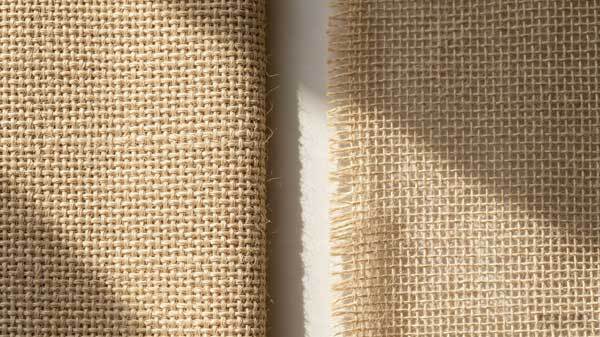
Plain Weave is the most common linen weave, where each weft thread passes alternately over and under each warp thread in a simple, balanced crisscross pattern. Quality plain-weave linen has a high thread count, measured in threads per inch (TPI), which creates a tighter, smoother, and more durable fabric. A thread count of 80 to 120 TPI is typical for good quality linen, while counts above 140 TPI indicate premium construction. Lower thread count plain-weave linen feels looser, allows more light to pass through, wrinkles more deeply, and wears out significantly faster. When you hold quality plain-weave linen up to the light, you should see minimal light penetration through the weave structure.
Herringbone and Twill Weaves create distinctive diagonal patterns and are typically used for heavier linen garments like blazers, trousers, and structured coats. Twill-weave linen is denser and more durable than plain-weave alternatives, with better wrinkle resistance and a softer, more fluid drape that improves with each wash. The diagonal weave structure distributes stress across the fabric more evenly, which is why twill-weave linen garments often last longer than their plain-weave counterparts. High-quality herringbone linen, with its characteristic broken zigzag pattern, is a hallmark of premium garment construction and is often found in the best linen blazers and jackets on the market.
What to look for when assessing weave quality: A quality linen fabric should feel substantial and tightly woven when you hold it up to a light source — you should see only minimal light coming through the weave. Loose, sloppy weaves with large visible gaps between threads indicate lower quality and will not hold up well over time. The fabric surface should be relatively even, without excessive loose threads, knots, or weaving defects. Many premium linen brands specify thread count in their product descriptions; if this information is missing and the fabric feels loose or insubstantial, that is a reliable signal to look for a better option.
4. Finishing and Pre-Washing Processes
How linen is finished after weaving has a profound impact on its quality, feel, and wearability. The best linen garments undergo several finishing processes that enhance both appearance and performance in daily use. These processes are what transform raw woven linen from a stiff, board-like fabric into the soft, draping material that linen lovers prize. Understanding these finishing steps is crucial for anyone learning how to tell if linen is good quality, because they are invisible in product photos but immediately noticeable when you wear the garment.
- Pre-washing or garment washing — High-quality linen is pre-washed to remove natural waxes and starches from the weaving process, soften the fabric, and pre-shrink it before cutting and sewing. Pre-washed linen, also called "washable linen" or "garment washed linen," is noticeably softer from the very first wear and will not shrink significantly after you launder it at home. Unwashed linen can shrink 5 to 8 percent in the first wash and may feel stiff, rough, and uncomfortable against the skin initially. At KOSSR, all our linen is pre-washed so that it arrives soft, stable, and ready to wear from the moment you open the package.
- Stone washing or enzyme washing — These mechanical or biological processes further soften linen and give it a relaxed, lived-in feel from the first wear. Stone washing uses pumice stones to gently abrade the fabric surface, while enzyme washing uses natural enzymes to break down surface fibers. Stone-washed linen is especially popular for casual garments like shirts and relaxed dresses, while enzyme-washed linen retains a cleaner, more polished appearance with enhanced softness that makes it suitable for both casual and dressy pieces.
- Mercerization — A chemical treatment that strengthens linen fibers, increases natural luster, and improves dye uptake for richer, more even color. Mercerized linen has a subtle, natural sheen that distinguishes it from untreated linen and feels noticeably smoother against the skin. This is a mark of higher-end linen processing and is typically found only in premium linen garments. Mercerized linen also holds dye more effectively, which means colors stay vibrant longer through repeated washing.
- Singeing — A process that burns off loose fiber ends on the fabric surface, resulting in a smoother, cleaner finish with significantly less pilling and fuzzing over time. Singeing is typically performed only on premium linen because it adds an extra production step. Garments made from singed linen feel smoother to the touch and maintain their fresh appearance through many more washes than unsinged alternatives.
What to look for: Look for product descriptions that mention "pre-washed," "garment washed," "stone washed," or "enzyme washed." These terms indicate that the manufacturer has invested in finishing processes that improve the garment's feel and longevity. If a linen product does not mention any finishing process, it is likely unwashed linen that will feel stiff initially and may shrink noticeably in the first wash. At KOSSR, we pre-wash all our linen garments and clearly communicate this on every product page, because we believe transparency about production processes is an essential part of quality.
5. How Quality Linen Looks and Feels
Before buying, you can assess linen quality through careful observation of its look and feel. These sensory checks are the most practical way to tell if linen is good quality when you are shopping in person, and they can also be assessed from detailed product photos and descriptions when shopping online. Here are the specific things to check, organized into visual cues and tactile cues:
Visual Cues
- Natural slubs: Quality linen has small, irregular thickened spots called slubs — these are a natural characteristic of flax fibers and a positive sign of authentic, minimally processed linen. However, excessive slubs, large uneven areas, or an overly rough, nubby texture can indicate lower-grade fiber processing where short fibers were used and not properly combed out. The presence of slubs alone is not a quality indicator; it is the size and distribution of slubs that matters.
- Color depth and evenness: Quality linen takes dye beautifully and holds color evenly across the entire surface. Look for rich, uniform color without patchiness, streaks, or lighter areas. Poor-quality linen often appears washed-out or unevenly dyed because short fibers cannot hold dye as effectively as long European flax fibers. The best-dyed linen has depth and dimension — the color seems to come from within the fiber rather than sitting on the surface.
- Fabric surface cleanliness: High-quality linen has a clean, even surface with minimal loose threads, knots, or weaving defects. Hold the fabric up to good light and examine it closely — if you see many loose ends, uneven thread density, or areas where the weave appears distorted, the fabric is lower quality and will likely develop holes or thinning in those areas over time.
Tactile Cues
- Softness combined with structure: Quality linen feels soft to the touch but not flimsy or insubstantial. It should have a reassuring weight and body that tells you it will hold up through many wears and washes. Cheap linen feels either stiff and rough (unwashed, low-quality fibers) or thin and papery (over-processed short fibers with no remaining structure).
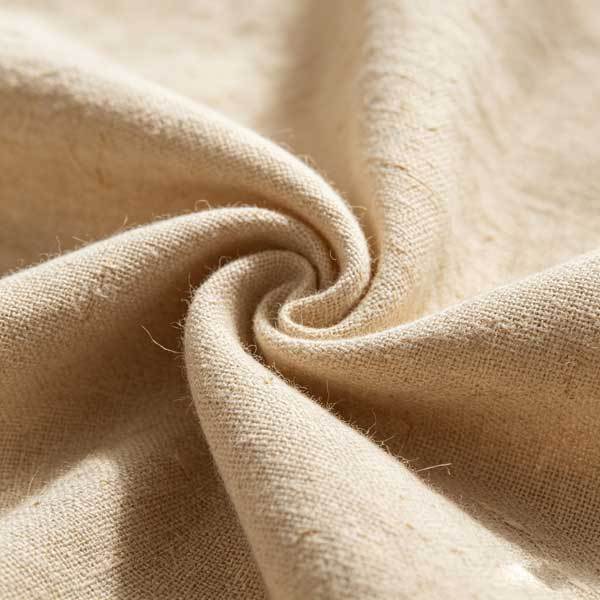
- The drape test: Hold a corner of the garment or fabric and let it hang freely. Quality linen drapes smoothly and evenly, with a gentle, fluid movement that follows the natural pull of gravity without excessive stiffness or limpness. Poor-quality linen either hangs stiffly, indicating excessive starch or sizing that will wash out, or collapses into a limp, shapeless heap, indicating insufficient fabric weight and structure.
- The crush test: Gently crush a handful of fabric in your palm and then release it. Quality linen will show soft, natural creases that fall out relatively quickly — within a few seconds to a minute. Cheap linen either wrinkles into deep, sharp creases that persist (short fibers with poor recovery) or stays completely smooth (indicating synthetic fiber blends or heavy chemical resin treatment that masks the true nature of the fabric).
The Drape Test
Quality linen flows gracefully when held at one corner. It has a balanced weight that creates soft, natural folds rather than sharp, stiff creases or lifeless, drooping fabric. This balance of drape and body is one of the most reliable tactile indicators of linen quality.
6. Certifications and Brand Transparency
In today's market, the best linen brands are transparent about their sourcing, production processes, and quality standards. Several independent certifications can help you identify genuine quality and distinguish premium linen from mass-market alternatives. These certifications provide objective, third-verified confirmation of quality claims that would otherwise be impossible for consumers to verify on their own. Understanding which certifications matter and what they actually mean is an important part of learning how to tell if linen is good quality.
| Certification | What It Certifies | Why It Matters for Quality |
|---|---|---|
| European Flax or Masters of Linen | Flax is grown and harvested in Europe, traced from field to finished fabric | Guarantees premium fiber origin and strict quality controls throughout processing; the most reliable single indicator of raw material quality |
| OEKO-TEX Standard 100 | All components tested for harmful substances at every production stage | Confirms fabric is free from toxic dyes, chemical residues, and allergens; essential for skin-sensitive shoppers and those concerned about chemical safety |
| GOTS (Global Organic Textile Standard) | Organic flax fiber with environmentally and socially responsible production | Covers the entire supply chain from organic farming to ethical manufacturing; the most comprehensive certification for sustainable quality |
| ISO 9001 (Factory Certification) | Factory quality management system meets international standards | Ensures consistent production quality, documented processes, and continuous improvement; indicates a professional manufacturing operation |
Beyond formal certifications, a brand's transparency about its manufacturing process is a strong and reliable quality signal. Brands that clearly and specifically describe their fiber sourcing, production process, weight specifications, finishing treatments, and quality testing are far more likely to be producing high-quality linen than brands that use vague, generic descriptions with no specific details. At KOSSR, we openly share our fiber sourcing from European flax growers, our pre-washing process, our specific fabric weight ranges for each garment type, and our quality checks at every stage of production. We believe that this transparency is owed to our customers and is a fundamental part of what quality means in the modern marketplace.
7. Price as a Quality Signal: What to Expect
Price is often a reliable indicator of linen quality, but it is important to understand what you are actually paying for at different price points. Knowing the relationship between price and quality helps you set realistic expectations and avoid both overpaying for marketing hype and under-investing in garments that will disappoint. Here is what different price ranges typically deliver in the linen market today:
| Price Range (USD) | Typical Quality Level | What You Get | What to Watch For |
|---|---|---|---|
| $20 to $50 | Entry-level | Short-fiber linen or linen blends, lightweight (under 130 gsm), unwashed or minimally finished, no fiber source disclosure | High shrinkage, stiff feel, poor color retention, may pill or develop thin spots within a year |
| $50 to $100 | Mid-range | Better fiber quality, 130 to 160 gsm weight, some pre-washing or finishing, partial origin disclosure | Inconsistent quality between brands; some offer genuine European flax while others use generic linen with better marketing |
| $100 to $200 | Premium | European flax, 150 to 190 gsm, pre-washed, certifications (OEKO-TEX or European Flax), transparent brand | Generally reliable quality; verify weight and fiber source as some brands charge premium prices for standard materials |
| $200+ | Luxury | Highest-grade European or Belgian flax, 180+ gsm, multiple finishing treatments, full certifications, artisan construction | Diminishing returns on quality versus price; paying for brand cachet, limited editions, or designer markup |
The sweet spot for quality linen is typically in the $80 to $150 range, where you can find genuine European flax with good fabric weight, proper pre-washing, and transparent brand practices. At KOSSR, our collection sits in this premium range because we insist on European flax, pre-washed finishing, and full production transparency. When you see linen priced significantly below $50, it is almost always cutting corners on fiber quality, finishing, or both, regardless of how appealing the product photos may look. Investing a bit more upfront in verified quality saves money over time because premium linen garments last years longer than budget alternatives.
The Cost Per Wear: A $120 quality linen dress worn 80 times over five years costs just $1.50 per wear. A $40 budget linen dress worn 15 times before looking worn out costs $2.67 per wear. Quality linen is actually more economical when measured by cost per wear, making it a smarter long-term investment for your wardrobe.
8. Linen Quality Checklist
Before purchasing any linen garment, run through this practical 10-point checklist to ensure you are getting genuine quality. Each item on this list addresses a specific, verifiable aspect of linen quality that you can assess from product descriptions, photos, or in-person inspection. This checklist condenses all the information in this guide into a quick, actionable format that you can use every time you shop for linen.
Linen Quality Quick-Check — 10 Questions
- Does the product specify 100 percent European flax or French or Belgian linen as the fiber source?
- Is the fabric weight at least 140 gsm (ideally 150 to 190 gsm for garments)?
- Is the weave tight — does minimal light pass through when held up to a bright light source?
- Is the fabric pre-washed or garment washed before cutting and sewing?
- Does the product page mention OEKO-TEX, European Flax, or other formal certifications?
- Does the brand disclose its fiber source, production process, and fabric specifications transparently?
- Does the fabric feel soft yet substantial when touched — not stiff, rough, or paper-thin?
- Are the seams, hems, buttonholes, and finishing details clean, straight, and reinforced?
- Is the sizing consistent, accurate, and clearly communicated with a detailed size chart?
- Does the garment have positive customer reviews that specifically mention quality, durability, and the feel of the fabric?
If a product answers "yes" to at least 7 out of these 10 questions, you can be confident it is genuine quality linen that will serve you well for years to come. At KOSSR, our entire linen collection meets all 10 criteria — from European flax sourcing, to 150–180 gsm fabric weight, to pre-washed finishing, to full production transparency and quality customer feedback.
9. Frequently Asked Questions
Is expensive linen always better quality?
Not always, but price is a reasonably reliable indicator of quality in the linen market. Quality linen costs more to produce because European flax fiber, tight weave construction, thorough pre-washing, and independent certification all add significantly to manufacturing costs. A linen dress priced under $50 is almost certainly made from short-fiber flax with minimal finishing and no certification. However, some brands charge premium prices primarily for marketing, branding, and packaging rather than actual fabric quality. When evaluating expensive linen, always verify fiber source, fabric weight, and finishing processes rather than assuming that a higher price automatically means higher quality. The best value comes from brands that combine premium materials with transparent pricing and honest production descriptions.
How long should quality linen last with proper care?
Quality linen made from European flax, with proper care, can last 10 to 15 years or even longer. Linen is one of the most durable natural fibers available — it is actually stronger when wet than dry, which is a unique property not shared by cotton or wool. The key determining factor is the quality of the original fabric. Premium 170+ gsm European flax linen garments can easily outlast comparable cotton garments by three to five times, making them an exceptional long-term investment for your wardrobe. To maximize the lifespan of your linen, wash in cold or lukewarm water, avoid bleach and harsh detergents, and air dry or tumble dry on low heat. With these simple care practices, quality linen only gets better with age, becoming softer and more comfortable while maintaining its structural integrity.
Does higher thread count always mean better linen?
Generally yes, but with an important caveat that shoppers should understand. A thread count of 80 to 120 threads per inch is typical for good quality linen. Above 140 TPI indicates premium quality fabric. However, some manufacturers artificially inflate thread count numbers by using multi-ply yarns — twisting two or more thin yarns together and counting each ply as a separate thread. This practice can make lower-quality linen appear to have a higher thread count than it actually does. A more reliable approach is to combine thread count information with fabric weight and the actual feel of the material. If the fabric is listed with a very high thread count but feels thin, flimsy, or papery, the thread count number may be misleading and the actual quality may be lower than claimed.
Can you tell linen quality by how it wrinkles?
Partially, yes. All authentic linen wrinkles — that is a natural, inherent property of flax fibers and one of the characteristics that distinguishes real linen from synthetic imitations. However, the nature and behavior of the wrinkles tell you a great deal about fiber quality. Quality linen wrinkles in soft, natural creases that release relatively quickly when steamed, hung in a steamy bathroom, or simply worn for a few minutes. The creases have a gentle, organic quality that contributes to linen's characteristic relaxed elegance. Poor-quality linen either wrinkles deeply and permanently — creating sharp, stubborn creases that remain even after steaming — or stays artificially smooth, which often indicates heavy chemical resin treatment or a synthetic fiber blend that undermines the natural benefits of linen. A garment that combines soft, releasable creases with quality fabric weight and fiber sourcing is a reliable sign of premium linen.
What is the difference between 100 percent linen and linen blend fabrics?
One hundred percent linen is made entirely from flax fibers with no other materials added. Linen blends combine flax with other fibers like cotton, rayon, polyester, or a small percentage of elastane for stretch. Blended fabrics can be less expensive and more wrinkle-resistant in the short term, but they lack the exceptional breathability, natural moisture-wicking ability, and long-term durability of pure linen. For maximum quality, comfort, and longevity, choose 100 percent linen made from European flax. If you specifically want stretch or reduced wrinkling for a particular use case, look for a blend with 70 percent or higher linen content to preserve as many of linen's natural benefits as possible. Our blog on linen versus linen blends provides a detailed comparison of the performance, care, and longevity differences between the two options.
Does the country of manufacture affect linen quality?
The fiber source — where the flax is grown — matters significantly more than where the fabric is woven or where the garment is sewn. European flax retains its quality advantages regardless of where it is manufactured into finished garments. Countries like Portugal, Lithuania, and Italy have strong traditions of linen weaving and garment construction, and linen finished in these countries often benefits from generations of specialized expertise. However, quality linen can also be produced in other countries if the manufacturer uses premium European flax and maintains high production standards. At KOSSR, we prioritize fiber source over manufacturing location, using only European flax while ensuring that every factory in our supply chain meets our quality standards regardless of its geographic location.
How can I assess linen quality when shopping online without touching the fabric?
When shopping online, focus on four things you can verify from the product page: fiber origin (look for European flax or French/Belgian linen in the description), fabric weight in gsm (aim for 140 gsm or higher for garments), finishing details (pre-washed or garment washed is ideal), and certifications (OEKO-TEX and European Flax are reliable quality signals). Read customer reviews specifically for mentions of fabric feel, thickness, and how the garment has held up over time. Photos that show fabric close-ups and texture details are a good sign that the brand is confident in its material quality. Size consistency and accurate measurements also indicate attention to quality. At KOSSR, we provide all of this information clearly on every product page because we believe informed customers make better buying decisions.
10. Summary: Your Quality Linen Buying Strategy
Knowing how to tell if linen is good quality comes down to four simple, verifiable checks that you can apply to any linen purchase, whether online or in person. We recommend making these four checks your standard routine whenever you evaluate a linen garment. Together, they cover the complete quality picture from raw material to finished product and eliminate the guesswork that makes linen shopping feel overwhelming for so many consumers.
- Fiber source: Is it European flax, ideally from France or Belgium? This single factor has more impact on final quality than any other variable. Look for explicit mention of European flax or certification by European Flax or Masters of Linen.
- Fabric weight: Is it at least 140 gsm, and ideally between 150 and 190 gsm for most garment types? Weight provides a reliable, objective baseline for quality that is difficult for manufacturers to misrepresent.
- Finishing: Is the fabric pre-washed or garment washed? Pre-washing ensures the garment is soft from day one, will not shrink unexpectedly, and has been through an additional quality check during production.
- Brand transparency: Does the brand openly disclose its sourcing, specifications, and production processes? Transparency is one of the best indicators of genuine quality because brands producing premium linen have nothing to hide and everything to gain from sharing their processes.
When you find linen that passes all four checks — European flax, 140+ gsm fabric weight, pre-washed finishing, and transparent brand communication — you have found a garment worth investing in. These four criteria together provide a reliable, practical system for evaluating quality that works across brands, price points, and garment types.
Armed with the knowledge from this guide, you can now confidently evaluate linen quality whether you are shopping in a boutique or browsing online. The four pillars of linen quality assessment — fiber source, fabric weight, finishing process, and brand transparency — give you a practical, repeatable framework that works every time and applies to any linen garment regardless of style, brand, or price point. Remember that quality linen is a long-term investment: a well-made garment from European flax will serve you faithfully for a decade or more, becoming softer and more comfortable with each wash while maintaining its structural integrity. Cheap linen may save money upfront, but it costs more in the long run through faster wear, higher replacement frequency, and the frustration of garments that never quite look or feel right no matter how you style them.
At KOSSR, every piece in our collection is made from premium European flax at 150 to 180 gsm, pre-washed for immediate comfort and stability, and designed to maintain its quality through years of regular wear and proper care. We believe that quality linen is not a luxury reserved for special occasions — it is an investment in how you feel every single day. When you choose quality linen, you are choosing comfort, durability, sustainability, and a garment that will serve you faithfully for years rather than seasons.
Browse our complete collection of premium European flax linen to experience the difference that genuine quality makes.
Find Your Quality Linen at KOSSR
Shop our collection of premium European flax linen — designed for real life, made to last through years of wear and washing.
Browse our linen dresses, linen tops, linen trousers, and linen sets.
Every KOSSR purchase supports sustainable European flax farming, ethical production practices, and a slower, more thoughtful approach to fashion.