Buying Guide
Gifting Linen to Someone Who Does Not Know Their Size
Short answer: gift linen that does not depend on a size number. One-size accessories, relaxed shirts and wide-leg trousers with adjustable waists cover the widest range of bodies, and a size exchange inside 14 to 30 days makes the remaining risk recoverable. Choose by tolerance, not by guessing.
The Short Answer: Gift the Fit, Not the Size
When you do not know someone's size, the instinct is to guess a letter and hope. That is the wrong variable to solve for. A linen gift succeeds or fails on three things that have nothing to do with guessing correctly: how much ease the cut already has, whether the waist or shoulder can be adjusted, and how easily the item can be exchanged if it misses.
Solve those three and the size question mostly disappears. A 180 by 70 cm scarf does not have a size. A shirt cut with 12 cm of ease over the chest will sit on a size small and a size large body without looking borrowed. A pair of wide-leg pants with an elastic back panel absorbs six to eight centimetres of waist difference. And an exchange window of 14 to 30 days converts a wrong guess from a failure into an errand.
This guide works through that logic in order. First, what actually goes wrong when a size is unknown. Second, a tolerance ranking of gift categories, so you can see which purchases carry risk and which do not. Third, the specific measurements that make a one-size or relaxed piece work. Fourth, how to ask for a size without announcing the gift. Fifth, how the exchange path works in practice, including what condition the item has to be in.
If you already know roughly what size the person wears and only need the chart-reading method, the shorter route is our answer to what size linen to buy as a gift. This article is for the harder case: no size, no measurements, and a deadline.
Why an Unknown Size Is Really an Unknown Risk
A size label is a shorthand for measurements the maker chose. It is not a fact about the person receiving the gift. Two people who both wear a medium can differ by 12 cm at the chest and 15 cm at the hip, and linen, being a woven cloth with very little stretch, punishes that difference more than jersey does.
Three failure modes matter, and they are not equally bad.
- Too small. The garment cannot be worn at all. The gift fails on the day it is opened, and the recipient has to decide whether to mention it.
- Too large. The garment can be worn, but it reads as borrowed: shoulder seams slide down the arm, the waist sits away from the body, the hem breaks in the wrong place. This is the most common outcome of sizing up defensively.
- Wrong proportion. The chest fits but the torso is short, or the waist fits but the rise is wrong. Proportion errors are the hardest to predict from a size chart because charts list circumference, not length distribution.
The cost of a miss is not only the return. It is the 14 to 30 days of the return window, the possibility that the replacement size is out of stock, and the small social cost of handing someone a parcel they have to send back. All three are manageable, but they are reasons to prefer gifts where the question never arises.
There is a useful way to frame it. Risk equals the precision the garment demands, multiplied by the consequence of being wrong, divided by how easily the mistake can be fixed. A fitted dress demands two to three centimetres of precision and is hard to fix quietly. A scarf demands none and needs no fixing. Between those two ends sits most of the linen category, and the rest of this guide is about finding the pieces that sit at the low-risk end without looking like a compromise.
One more asymmetry matters. The person receiving the gift usually will not tell you it does not fit. They will say it is lovely, put it in a drawer, and wear it never. That silence is why the tolerance of the cut matters more than the accuracy of your guess.
The Size-Tolerance Ladder: Six Gift Categories Ranked
Rank linen gifts by how much body measurement they require, and the categories sort themselves into a ladder. The rungs are stable across almost every linen label because they follow from construction, not from brand.
Linen gift categories ranked by size tolerance
| Category | Measurement needed | Typical tolerance | Risk if unknown |
|---|
| Scarves, bandanas, table linen | None | One size, 55 cm to 180 cm formats | Very low |
| Napkin sets, runners, aprons | None, or a tie length | One size, adjustable ties | Very low |
| Loungewear with drawstring waist | Height only | Waist plus or minus 8 cm | Low |
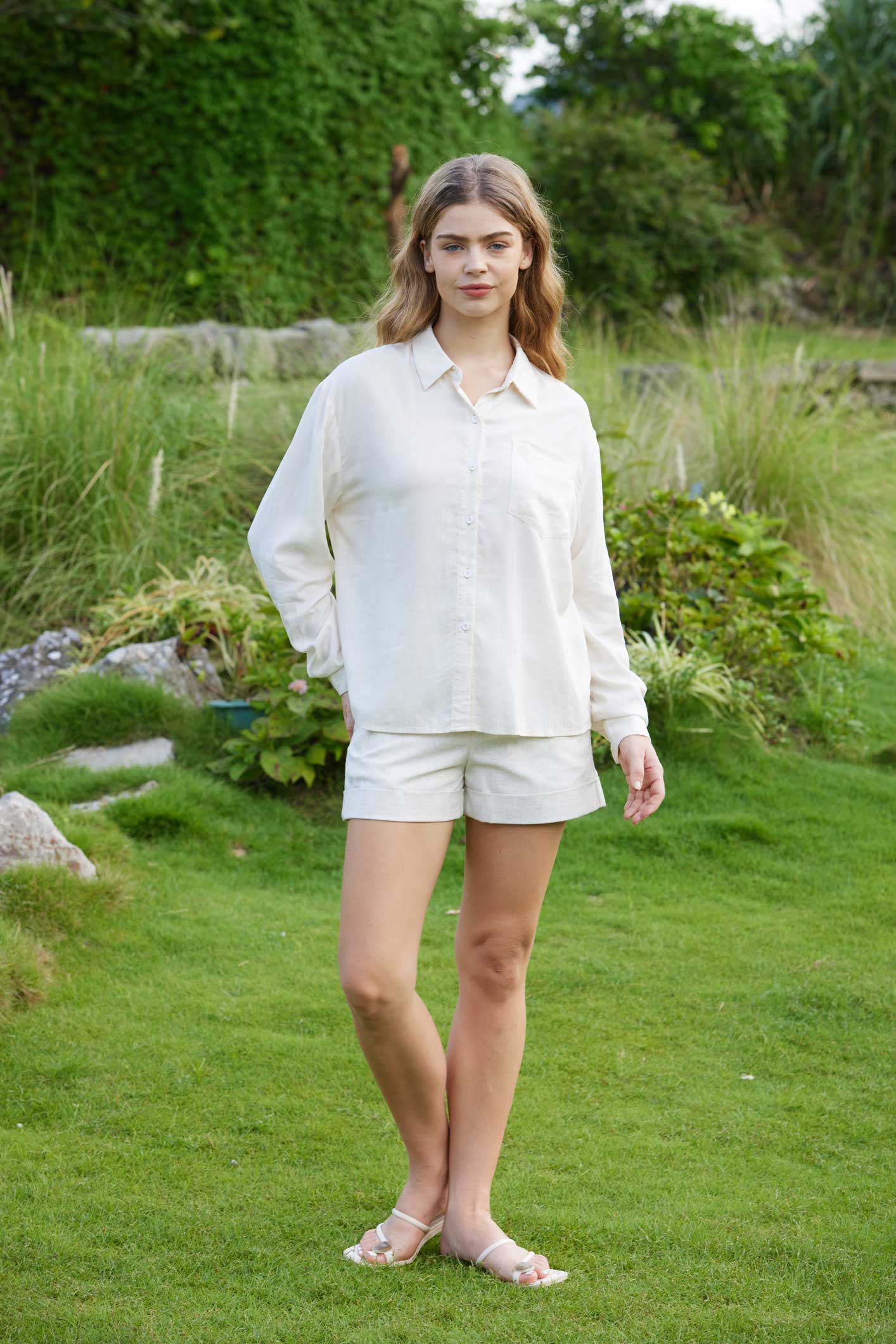
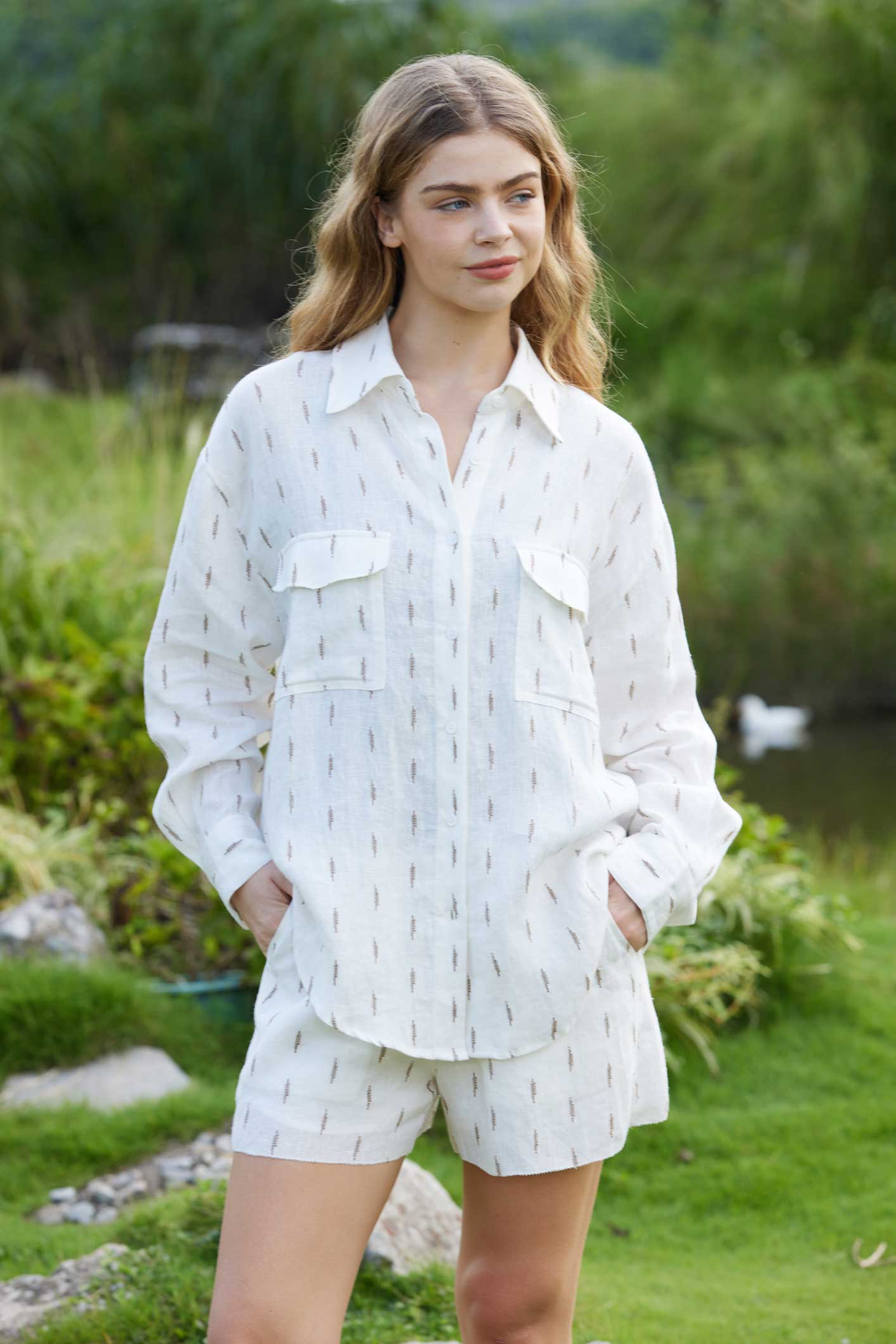
| Relaxed shirts, tunics, overshirts | Chest, roughly | 10 to 14 cm of chest ease | Low |
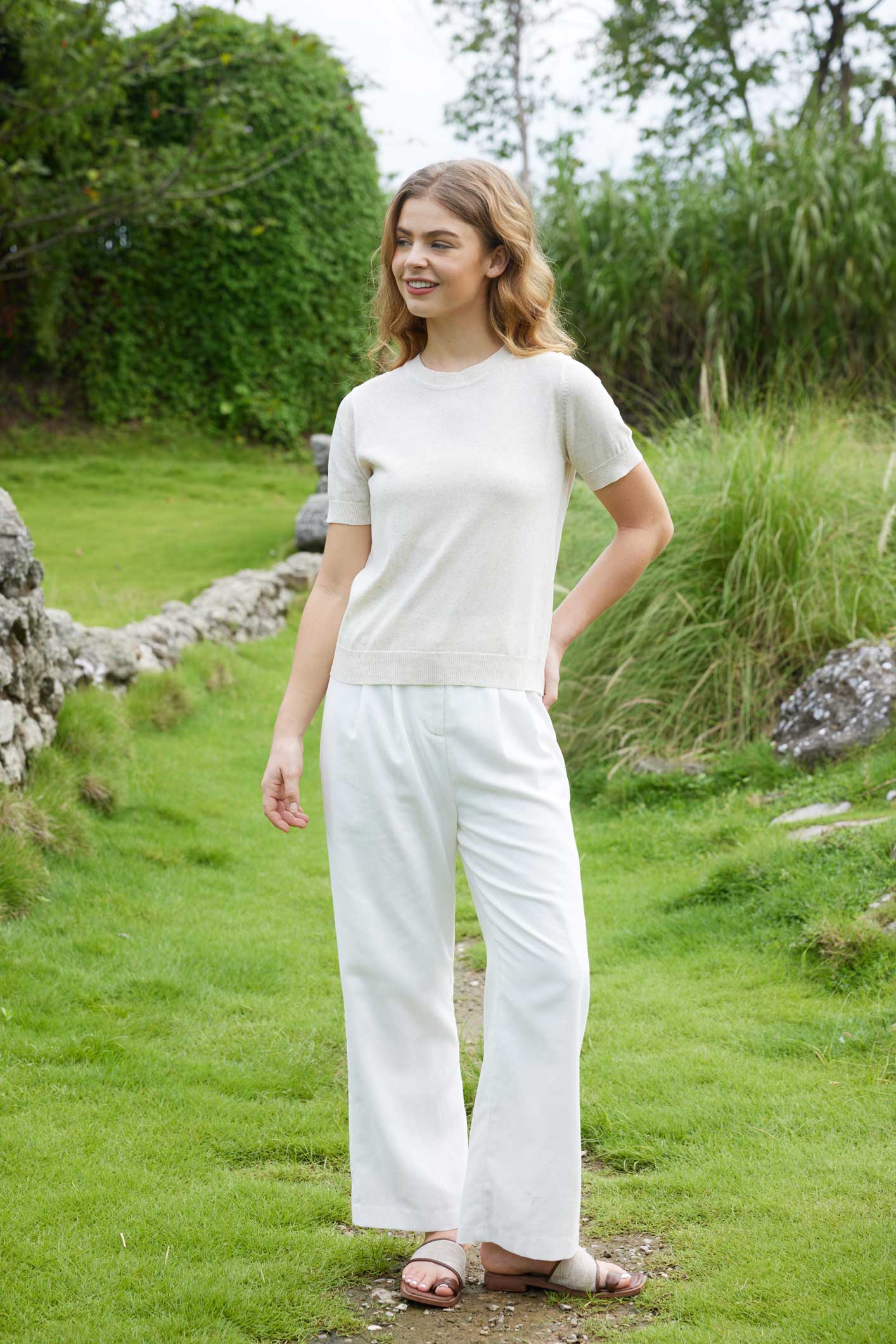
| Wide-leg pants, elastic-back waists | Waist and height | 6 to 8 cm of waist adjustment | Medium |
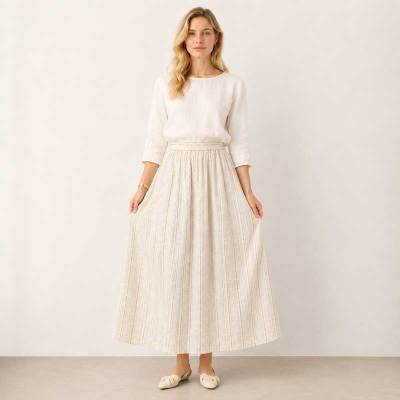
| Straight and A-line skirts | Waist, roughly | 4 to 6 cm of waist ease | Medium |
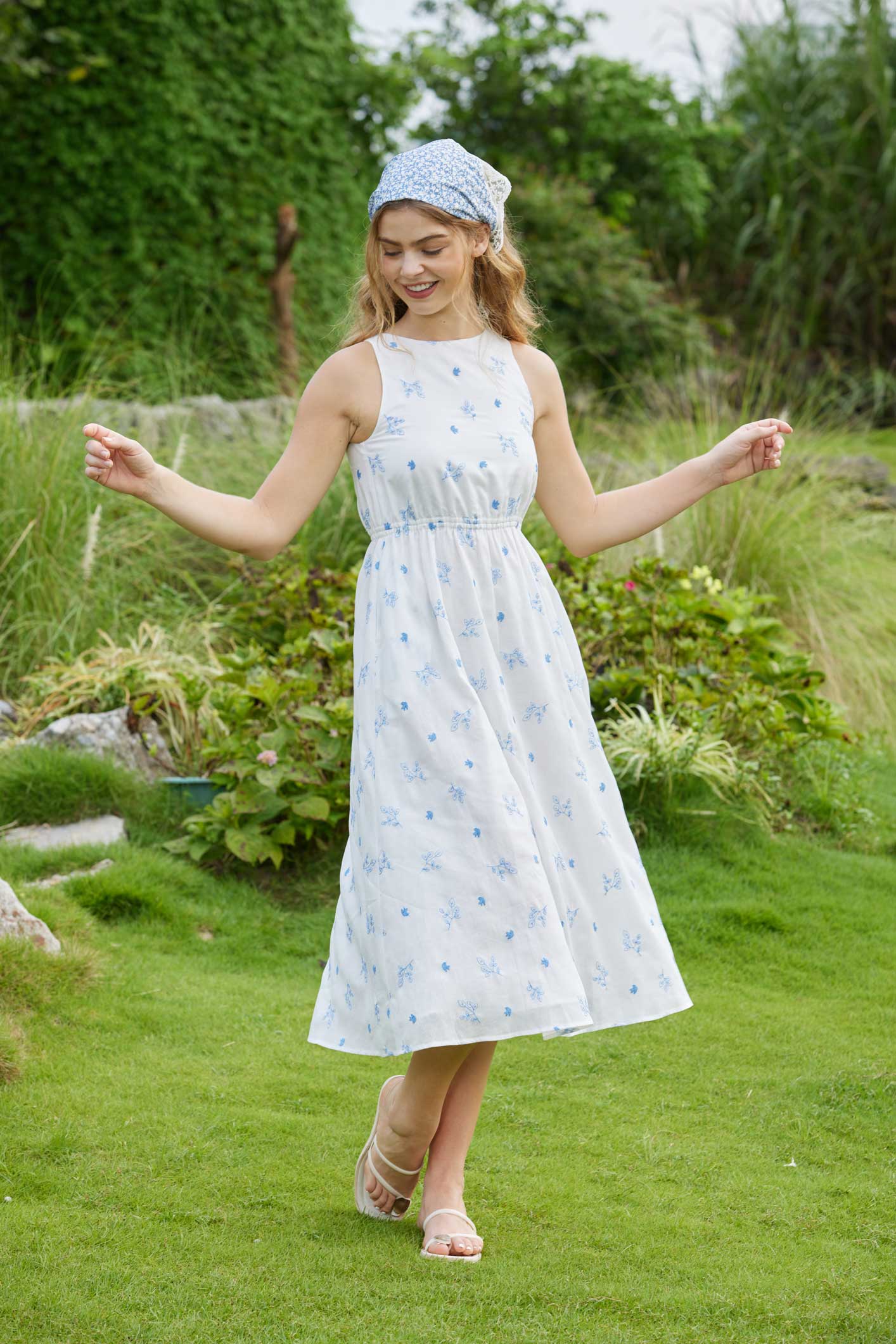
| Fitted dresses, tailored blazers | Bust, waist, hip, height | 2 to 3 cm before it reads wrong | High |
The ladder is not a quality ranking. A fitted linen dress can be the better gift when you know the person's measurements, because it looks intentional in a way a scarf cannot. The ladder only tells you what to reach for when the information is missing.
Notice where the break falls. Everything above the shirt line is essentially body-agnostic: the object works because it is a rectangle, a square, or a tie. Everything from wide-leg pants downward needs at least one real number, usually waist circumference. And everything below the skirt line needs three numbers plus a preference about how the garment should sit.
There is a second, quieter advantage to the upper rungs. These pieces do not require the recipient to have an opinion about their own body that day. A shirt that fits well is pleasant; a dress that almost fits invites scrutiny in a mirror. Gifts that avoid the mirror are gifts that get worn.
One-Size Pieces and the Measurements That Make Them Work
A scarf is not sized because it does not have to close around anything. That sounds trivial, but it is the whole reason the category is the safest linen gift you can buy. The piece is a finished rectangle, and a rectangle drapes the same way on a 155 cm frame and a 185 cm frame.
What separates a good one-size linen gift from a thin, disappointing one is not the label but the numbers behind it.
- Finished dimensions. A rectangular scarf in the 180 by 70 cm range wraps once around the neck and still hangs; below about 160 by 50 cm it becomes a decorative bandana rather than a scarf.
- Fabric weight. Scarves read best between roughly 110 and 180 gsm, light enough to gather without bulk. Napkins and runners want more body, typically 180 to 240 gsm, so they sit flat on a table instead of sliding.
- Hem depth. A turned hem of 1 to 1.5 cm holds a straight edge through washing. A skimpy 5 mm hem curls on the first wash and never lies flat again.
- Edge finishing. Look for a double-folded stitched hem or a hand-rolled edge. A raw cut edge is acceptable on some bandanas by design, but it will fray, and a gift that frays in the first month reads as cheap.
- Colour consistency. Garment-dyed linen can vary within a batch. If you are buying two napkin sets for the same household, ask whether they come from the same dye lot.
Weight is where the value sits. A 140 gsm scarf carries roughly 0.35 square metres of cloth; a 200 gsm napkin set of four carries about 0.8 square metres in total. Both are small purchases, which is exactly why the fabric can be good: there is no pressure to spread a fixed retail price across three metres of cloth.
The same logic extends to aprons, tote bags and table runners. An apron with a waist tie and a neck loop adjusts across a 30 cm waist range without a size decision. A tote has no fit at all. A runner is specified by table length, which most people can estimate from the room rather than from their body. These are the gifts to buy when you know the person's taste but not their measurements.
For the full range of pieces that fall into this bracket, browse linen scarves and the wider accessories category, which also covers napkins, runners and aprons.
Relaxed Shirts: The 12-Centimetre Rule
If the gift has to be clothing, a relaxed linen shirt is the most forgiving garment in the wardrobe. The reason is arithmetic. A shirt cut with 10 to 14 cm of ease over the chest will fit a body that measures 4 cm smaller or 6 cm larger than the size chart's midpoint and still look deliberate, because the cut is supposed to stand away from the body.
The mistake is to read a size chart as body measurements. Linen shirt charts usually list garment measurements: chest width across the front, shoulder width, body length, sleeve length. Compare those to a shirt the person already owns and wears, not to their body.
- Chest width. Lay a favourite shirt flat, button it, and measure straight across 2 cm below the armhole. Double it. That number is your target garment chest.
- Shoulder. Measure seam to seam across the back. A drop-shoulder linen shirt can carry 2 to 4 cm more than a set-in shoulder before it looks oversized rather than relaxed.
- Body length. Measure from the collar seam to the hem. A 72 to 76 cm length covers the hip on most adults between 165 and 180 cm; below 70 cm it becomes a cropped shape.
- Sleeve. Long sleeves are the least forgiving part of a shirt. If you cannot confirm sleeve length, choose a short sleeve or a rolled-cuff style and remove the variable.
Weight changes the read as well. A 110 to 150 gsm shirt drapes and moves, which hides a slightly wrong fit; a 200 gsm shirt holds a crisper line and shows every centimetre of excess. When you are guessing, choose the lighter cloth in a relaxed cut, not the heavier cloth in a slim one.
Garment washing matters here too. Pre-washed linen has already done most of its shrinking, so residual shrinkage is usually in the 2 to 3 percent range rather than the 5 to 8 percent you get from raw loom-state cloth. That small difference is the gap between a shirt that still fits after the first wash and one that does not.
Our linen shirts category lists the relaxed and overshirt cuts that carry this tolerance best. For the underlying rules on how much ease each garment should have, the fit guide in how linen should fit goes deeper than this section can.
Wide-Leg Pants and Straight Skirts: Waist Tolerance Explained
Below the waist, the gift needs one real number. That is the honest limit of this guide, and pretending otherwise would produce bad advice. But a single number is a much smaller ask than three, and two constructions stretch it further than most people expect.
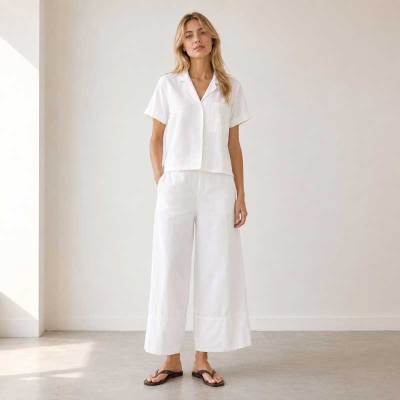
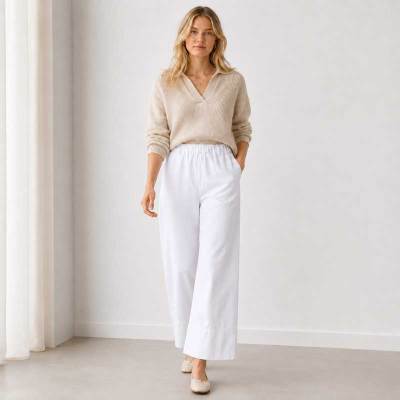
The first is an elastic back panel. A pants waistband that is flat at the front and elasticated across the back 12 to 15 cm will comfortably cover a 6 to 8 cm range of waist measurement, because the elastic takes up the difference at the back where the body is most forgiving. A full drawstring waist covers a similar range but changes the look, so it suits loungewear better than tailored wide-leg pants.
The second is a wide leg with a high rise. Wide-leg linen pants in the 28 to 32 cm rise range sit on the natural waist, which is the most stable point on the torso; a low rise sits on the hip and shifts with every 3 cm of hip measurement. Wide legs also remove the thigh and calf from the fit equation entirely, which is where most pants fail.
Straight and A-line skirts work on a similar principle. A straight skirt needs 4 to 6 cm of ease at the hip to walk in, plus a vent or a slit; an A-line skirt needs almost none because the flare starts at the waist. If you are guessing between two sizes on a skirt, take the larger one and let the waistband sit slightly lower, or choose a style with a side tie.
The one measurement that decides. Waist circumference, measured at the narrowest point, not at the top of the jeans. If the recipient will not give you that number, buy above the waist: a scarf, a shirt, or a set of napkins.
Length is the second variable and the easier one to solve. Hem your gift downward rather than upward in your imagination: a wide-leg pant that is 3 cm too long can be worn with a heel or taken up, while a pant that is 3 cm too short cannot be fixed. For skirts, a midi length between 75 and 85 cm from waist to hem lands below the knee on most heights between 160 and 175 cm.
Browse linen wide-leg pants for the cuts that use these constructions; the skirt equivalents share the same waistband logic.
How to Ask for a Size Without Giving the Gift Away
Most people skip this step because they think asking ruins the surprise. In practice, one well-placed question is less awkward than a returned parcel, and there are several ways to ask that keep the occasion intact.
- Ask a proxy. A partner, a sibling or a close friend usually knows the size and enjoys being let in on the plan. One message is enough: "I am putting together something for Alex and want to get the size right. What does he wear in a shirt?"
- Use the shopping-for-myself frame. "I am ordering a linen shirt and we look similar — what size do you take?" This works because it makes the question about you, not about them.
- Ask for three numbers instead of a size. Height, waist in centimetres, and the size they wear in one brand they buy often. Brand-relative sizing is far more reliable than a naked letter, because it anchors to a fit they already accept.
- Ask what fits badly. "What is the one thing in your wardrobe that never fits right?" The answer tells you whether to avoid sleeves, waists or lengths, which is more useful than a size label.
- Confirm with a photo. If you are choosing between two sizes, send a picture of the size chart and ask which column looks like them. People are surprisingly good at this and it takes ten seconds.
If none of these is possible, do not ask. Move up the tolerance ladder instead. The point of the ladder is that it lets you buy well without information, and a gift chosen for its tolerance is not a lesser gift.
When the Size Is Wrong: Making the Mistake Recoverable
A gift with a clear return path is a different object from one without it. KOSSR's published policy gives most eligible items a window of 14 to 30 days after delivery, with the exact window varying by promotion, product category and region, so the practical advice is to check the product page at checkout rather than assume a single number.
The condition requirements are the part people get wrong. Returned items need to be unworn, unwashed, undamaged and free of stains or odour, with original tags attached and original packaging where possible. In other words: do not wash the gift before the recipient tries it on. A garment-washed linen shirt may feel soft enough to wear immediately, but the first wash removes the option to exchange it.
- Ask before shipping. Exchange requests are handled by contacting support first. Do not send an item back without instructions, because the return address and process can vary by order.
- Stock decides the exchange. A size exchange is only possible if the replacement size is available when the request is processed. Popular sizes run out first, which is an argument for opening the parcel early rather than saving it.
- Wrong-size returns may carry shipping cost. The published policy notes that return shipping for a wrongly selected size may fall to the customer, while damaged or incorrect items are handled by support. A gift receipt does not change that, but it does make the process smoother.
- Final sale is final. Clearance and final-sale items may have limited or no exchange eligibility. Never gift a final-sale linen piece to someone whose size you do not know.
The full mechanics, including the seven-step exchange sequence, are set out in can I exchange for another size. Read it before you choose the gift, not after, because it changes which category you should buy from.
Gift receipt habit. Include the order number on a small card, not the price. It gives the recipient everything they need to start an exchange without disclosing what you spent.
Five Linen Gifts That Carry No Size Risk
These are the pieces to buy when you have a deadline, no measurements, and no way to ask. Each one is specified by dimensions rather than by body size, and each one is useful enough to be worn or used weekly.
- A rectangular scarf, 180 by 70 cm, 110 to 180 gsm. Wraps once, hangs straight, works as a shoulder cover in a cold room. No size, no fit, no mirror.
- A set of four napkins, 45 by 45 cm, 180 to 240 gsm. Heavy enough to sit flat, cheap enough to buy in a good quality, and used at every meal. The safest gift for a household you do not know well.
- A table runner, 40 by 180 cm. Sized to the table, not the person. Works on a dining table, a console or a sideboard.
- An apron with a neck loop and waist tie. Adjusts across roughly 30 cm of waist measurement and suits anyone who cooks, gardens or works with their hands.
- A bandana, 55 by 55 cm. The lowest-cost entry into the category, and the most versatile: neck, hair, bag handle, picnic wrap.
All five share the same property: the only number that matters is the finished dimension of the object, and you can read that from the product page without knowing anything about the recipient. That is what size-risk transfer means in practice — you move the uncertainty from the person to the product specification.
What Not to Gift When You Do Not Know the Size
Some linen pieces are worth buying only when you have measurements. They are not bad gifts; they are simply the wrong instrument for an unknown variable.
- Fitted or body-skimming dresses. Two to three centimetres decides whether the dress reads as tailored or tight, and the bust, waist and hip all have to agree at once.
- Tailored linen blazers. Shoulder width and sleeve length are structural. A blazer that is 2 cm off at the shoulder cannot be fixed by a tailor without rebuilding the garment.
- Structured pants with a fixed waistband. No elastic, no drawstring, no tolerance. One number, one chance.
- Two-piece sets with a fitted top. The set only works if both halves fit, which doubles the failure probability.
- Anything final sale. You are removing the recovery path that makes an unknown size survivable.
There is a seasonal version of this list. Holiday gifting pushes people toward statement pieces, and statement pieces are usually the fitted ones. Resist that pull when the size is unknown. A plain, well-made scarf in a colour the person actually wears will be used for years; a dramatic dress that almost fits will be remembered as the year the gift missed.
A Five-Minute Decision Table for Last-Minute Gifts
Use this table when you have five minutes and no information. Read down the left column until a row matches your situation, then buy the item in the middle.
Gift choice by situation and available information
| Your situation | Buy this | Why it works |
|---|
| No size, no way to ask, ships this week | Scarf or napkin set | One-size object, no fit decision, low return likelihood |
| You know their height and general build | Relaxed shirt in a lighter weight | 10 to 14 cm of chest ease absorbs the error |
| You know their waist but nothing else | Wide-leg pants with an elastic back | 6 to 8 cm of adjustment at the waistband |
| They wear linen already and have a defined style | Straight or A-line skirt | Waist plus one length number, flare covers the hip |
| You know all their measurements | Fitted dress or tailored blazer | Precision is available, so use it |
| Buying for a household, not a person | Table linen or apron | Sized to furniture and ties, not to bodies |
The table assumes the gift will be opened within the return window. If it will sit under a tree for three weeks, add the shipping and delivery estimate to the calendar before you order, and choose a category with no size dependence if the dates are tight.
One final check before you pay: confirm the item is not final sale, and confirm the exchange window on the product page. Those two facts decide whether a wrong guess is recoverable, and they take less time to verify than reading a size chart.
Why Linen Specifically Makes This Easier
Linen is a woven flax cloth, and that structure is the reason relaxed cuts work so well in it. A woven fabric has no inherent stretch, so garments are drafted with more ease from the start; the same shirt in a knit would be cut closer to the body and would fail more readily on a size miss.
The fibre also has a particular hand that helps. European flax, the fibre standard most European linen is traded under, produces a yarn that softens with washing and drapes rather than clinging. A relaxed shirt in 100 percent European Flax at 140 to 180 gsm falls away from the body instead of outlining it, which is precisely the behaviour that hides a two-centimetre error. You can read the fibre specification at European Flax.
Dye and finish matter for a gift because they decide whether the piece looks considered on the first wear. OEKO-TEX Standard 100 is the certification framework most European mills use to verify that finished textiles are tested for harmful substances; it is a mill-level reference, not a claim about any individual garment, and you can read the standard at OEKO-TEX. For a gift, the practical takeaway is simple: a neutral, garment-washed piece in a tested dye lot is less likely to bleed onto a white shirt or smell of finishing chemicals when it is opened.
Weight is the last variable to hold in mind. Between 110 and 240 gsm covers almost everything in a linen wardrobe. Below 110 gsm the cloth becomes sheer and reads as summer-only; above 240 gsm it holds a crisp architectural line and tolerates almost no fit error. For an unknown size, stay in the middle of that range.
Quick Answers
What is the safest linen gift if I do not know the size?
A scarf, a napkin set, a table runner or an apron. These are specified by finished dimensions and ties rather than body measurements, so there is no size to get wrong and no exchange to arrange.
Should I size up or size down for a linen gift?
Neither, if you can avoid the choice. If you must pick between two sizes on a relaxed shirt, take the larger one; the cut is designed to stand away from the body. On a fitted dress, sizing up changes the silhouette and is usually the wrong call.
Are linen gifts easy to exchange if the size is wrong?
Most eligible items can be returned within 14 to 30 days after delivery, provided they are unworn, unwashed and have tags attached. A size exchange depends on stock, and you should contact support before shipping anything back.
How many measurements do I actually need?
Three: height, waist in centimetres, and the size the person wears in one brand they buy often. That is enough to size a shirt, a pair of wide-leg pants or a straight skirt with reasonable confidence.
Can I gift a linen dress without knowing the size?
Only if the dress is cut loose or has an adjustable waist, and only if the return window is comfortably longer than the date it will be opened. A fitted dress with a fixed waist is the highest-risk linen gift you can buy.
Shop by Tolerance, Not by Guesswork
Start with the pieces that need no size at all: linen accessories, table linen and aprons. If you want clothing, the relaxed shirts and wide-leg pants above carry the most tolerance in the range. When you can get one measurement, the size guide turns that number into a confident order.