Can You Wear Linen All Year Round? A Season-by-Season Guide
Can You Wear Linen All Year Round? A Season-by-Season Guide
Direct answer: Yes. Linen can be worn in every month of the year, but only if you match the weight of the fabric to the temperature and change how you layer rather than changing the fibre. A light 110 to 140 gsm weave is a summer fabric and becomes a poor choice in winter, while a 190 to 260 gsm weave worn as a base layer under wool or a heavy knit is comfortable at 5 to 12 degrees Celsius. The practical rule is simple: below about 15 degrees Celsius you stop wearing linen as your outer layer and start wearing it as the layer closest to your skin, where its moisture handling matters most. The idea that linen is a summer-only fabric comes from the fact that most linen sold in the United States and Europe is lightweight summer shirting, not from any limit in the fibre itself. Choose the weight, the cut and the layering, and linen becomes a twelve-month fabric rather than a four-month one.
1. The Direct Answer: Linen Is a Twelve-Month Fabric When the Weight Matches the Weather
The belief that linen belongs to summer survives because of one detail that almost never appears on a product page: weight. Linen is sold in a range that runs from roughly 90 grams per square metre to more than 300, and the difference between the two ends is the difference between a fabric designed for a heatwave and a fabric strong enough to be worn as a winter trouser. When people say linen cannot be worn in winter, they are usually describing a 120 gsm summer shirt worn alone in January. That is not a limitation of the fibre. It is a mismatch between fabric weight and air temperature.
Flax fibre has a hollow, slightly irregular structure and high moisture regain, which means it holds and releases water vapour rather than trapping it against the skin. In summer that behaviour cools you. In winter the same behaviour keeps a base layer from feeling clammy when you move between a cold street and a heated room, which is exactly the situation where synthetics and tightly woven cotton become uncomfortable. Linen is not warm on its own the way wool is warm on its own. It is a superb layer to wear directly against the skin, and a poor choice as the only layer when the temperature drops.
That is the whole argument in two sentences: linen has no seasonal limit, but it has a weight limit for each season. If your linen drawer is built entirely around summer, the fastest way to close that gap is the same set of moves covered in our guide to transitioning a linen wardrobe from summer to fall, which identifies the pieces that move most easily between the two seasons. Everything below translates the same idea into temperatures, weights, layering systems and care so you can wear linen in April, August, November and February without guessing.
Working rule: below about 15 degrees Celsius, linen moves inward and becomes the layer against your skin. Above about 24 degrees Celsius, a 140 gsm weave is comfortable on its own. Between those two numbers, a mid-weight weave plus one removable layer covers almost any day.
2. How Linen Actually Behaves in Each Season
Before the season-by-season detail, it helps to know what the fibre does at different temperatures, because the same three properties explain summer comfort and winter layering.
Breathability
Linen's weave leaves more open space between yarns than comparable cotton cloth, so air moves through it and evaporated moisture escapes rather than sitting on the skin. In summer this is the reason a linen shirt feels cool within seconds of being put on. In winter the same airflow is the reason linen works as a base layer: it moves sweat away from the body instead of holding it, so you do not chill when you step back outside.
Moisture handling
Flax can absorb a meaningful share of its own weight in water and release it again quickly. That is why linen towels dry faster than terry and why a linen base layer stays comfortable under a coat during a long walk. The fibre absorbs the moisture and then passes it outward, which is the behaviour you want between skin and wool.
Strength and structure
Flax is strongest when wet and holds its shape across repeated washing, so a heavier 190 to 260 gsm linen pant or overshirt keeps a clean line under a jacket instead of collapsing. That structural quality is what makes mid and heavy weights genuinely cold-weather appropriate rather than a compromise.
None of these properties change by season. What changes is how much fabric sits between you and the air, and how many other layers sit next to it.
3. Spring: The Season Linen Is Actually Built For
Spring is the best test of whether you understand linen weights, because the temperature swings from 8 to 22 degrees Celsius inside a single day. A single weight will not cover that; a mid-weight weave plus one removable layer will.
What to wear
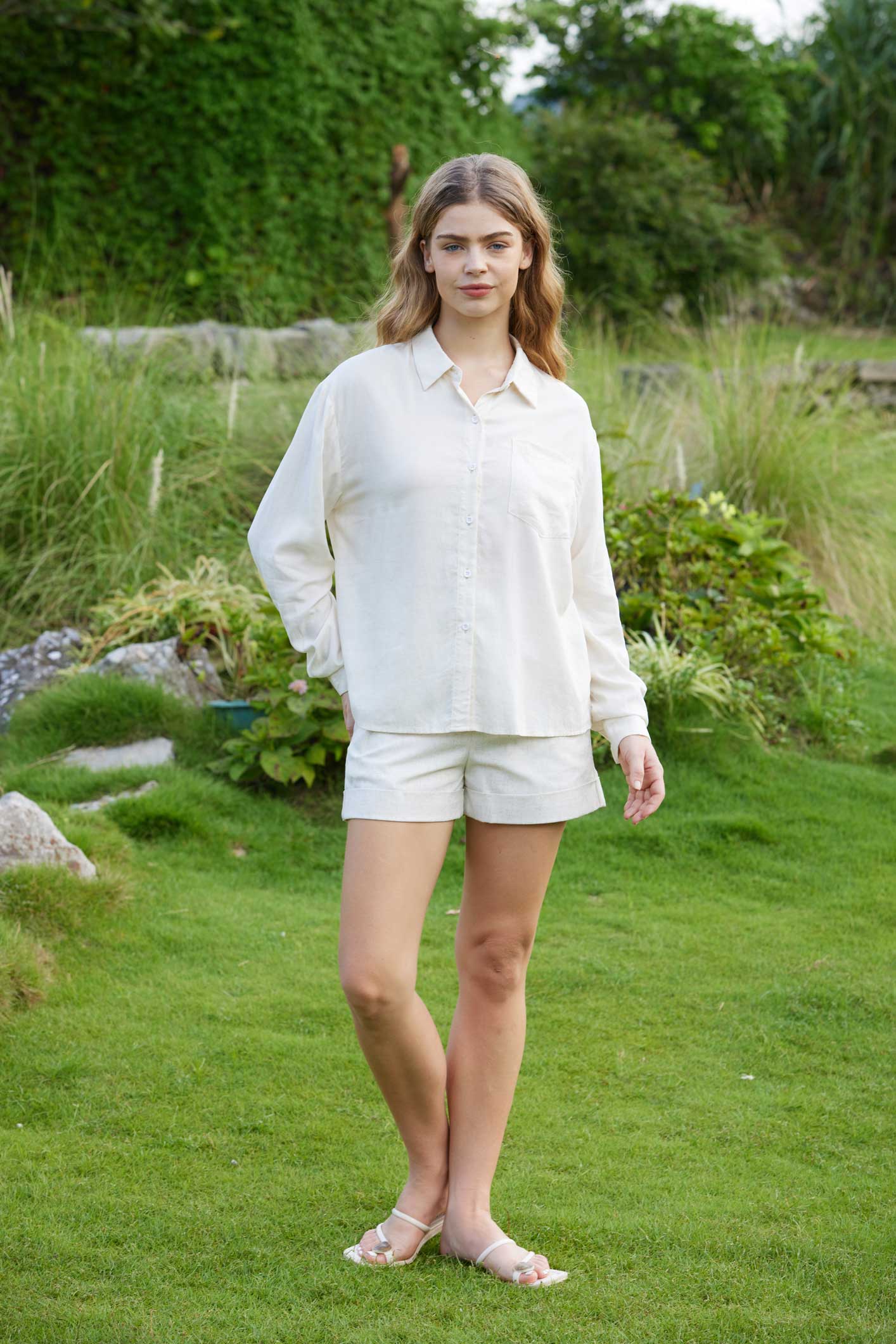
- 140 to 190 gsm long-sleeve linen shirts, worn open over a plain tee in the morning and buttoned or removed by afternoon.
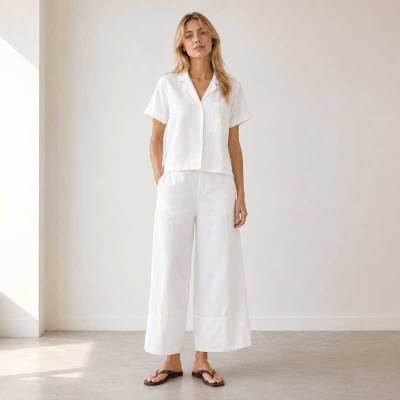
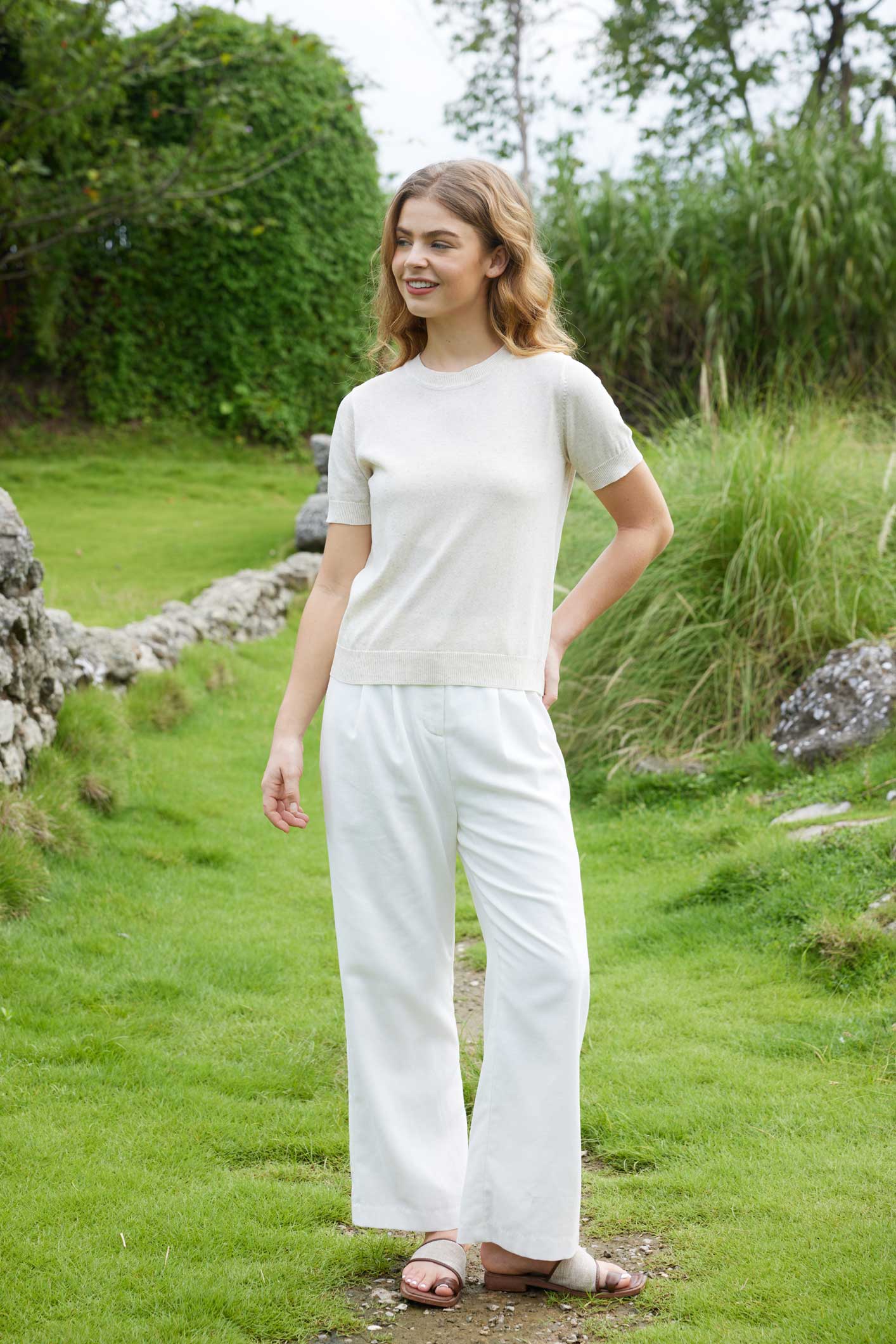
- Mid-weight linen pants in a relaxed cut, which sit between a summer short and a winter trouser in both warmth and formality.
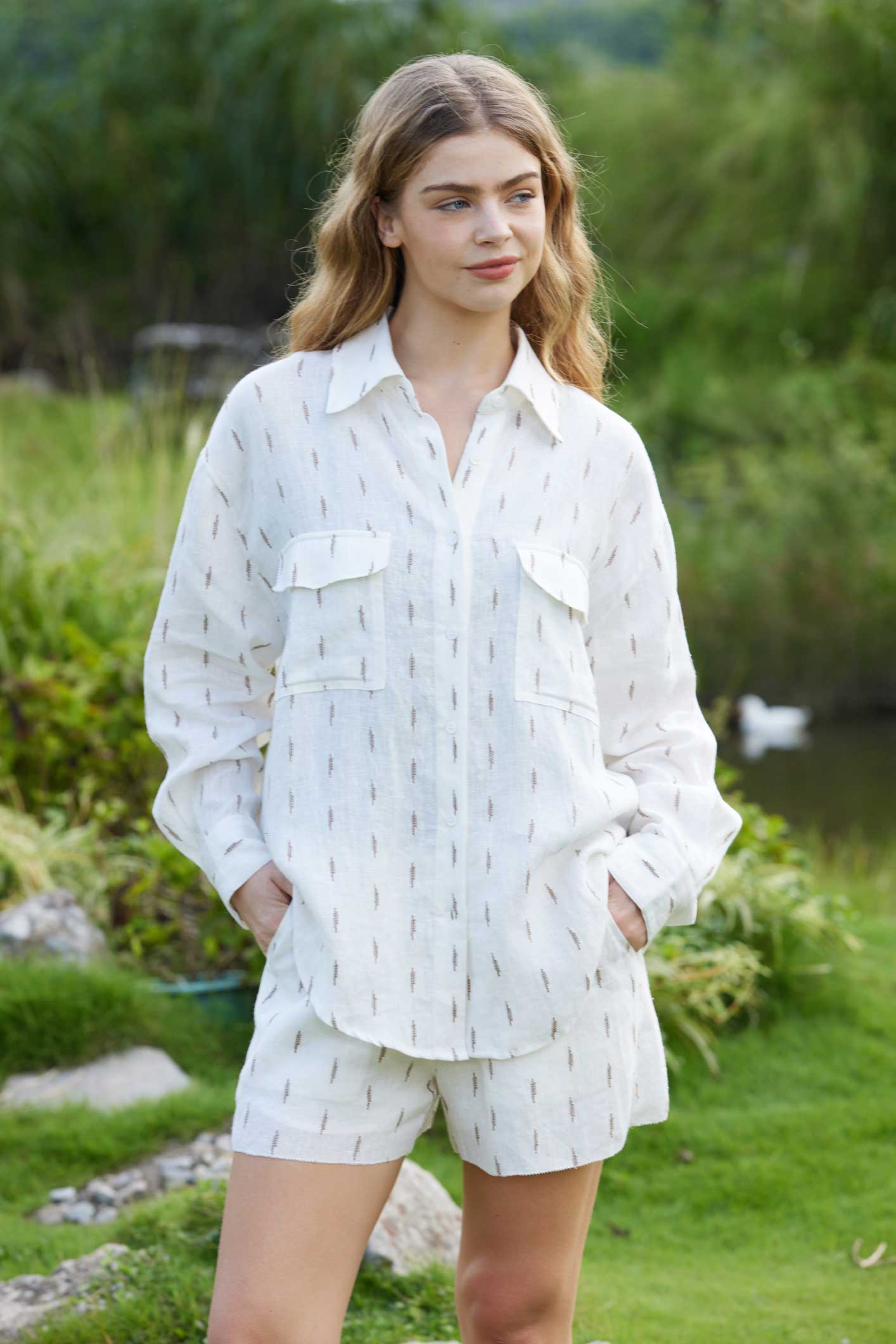
- A light linen overshirt or unlined jacket for the 12 to 18 degree band, layered over a cotton or linen tee.
- A linen scarf in a 150 to 190 gsm weave for the transitional weeks when mornings are cold and afternoons are not.
Why spring suits linen
Spring air carries more moisture than winter air, and showers arrive without warning. Linen tolerates both: it does not feel cold and clammy the way a dense synthetic does when humidity rises, and it dries quickly if you are caught in rain. It also creases noticeably, which reads as relaxed rather than formal, and that matches the mood of the season.
What to avoid
Skip the lightest 90 to 140 gsm summer shirting in March and early April unless you are layering it under something. A 110 gsm shirt in a 10 degree morning is a cold shirt, regardless of how good it looks in a photograph.
[IMAGE_PLACEHOLDER] img prompt: A woman in a mid-weight oatmeal linen overshirt and linen trousers walking along a city street in early spring, light jacket carried over one arm, visible loose weave texture, soft morning light, natural lifestyle fashion photography4. Summer: The Season That Needs No Argument
Summer is where linen needs the least explanation and the most care about weight. In a 28 to 35 degree heatwave, a 110 to 140 gsm weave is the difference between staying comfortable outdoors and retreating indoors.
What to wear
- 110 to 140 gsm shirts, dresses and shorts, cut loose so air can move between fabric and skin.
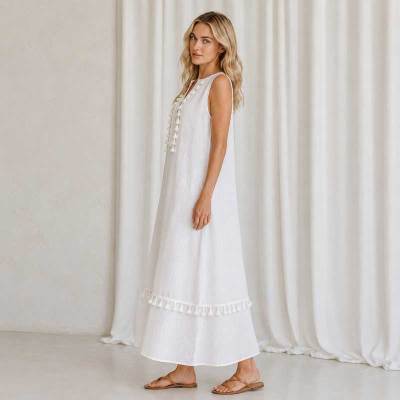
- Loose midi and maxi dresses in light weaves, which shade the body without trapping heat.
- Lightweight linen blend tops where structure matters more than maximum airflow.
- An unstructured linen hat, bag or scarf to keep the sun off without adding insulation.
The summer details that matter
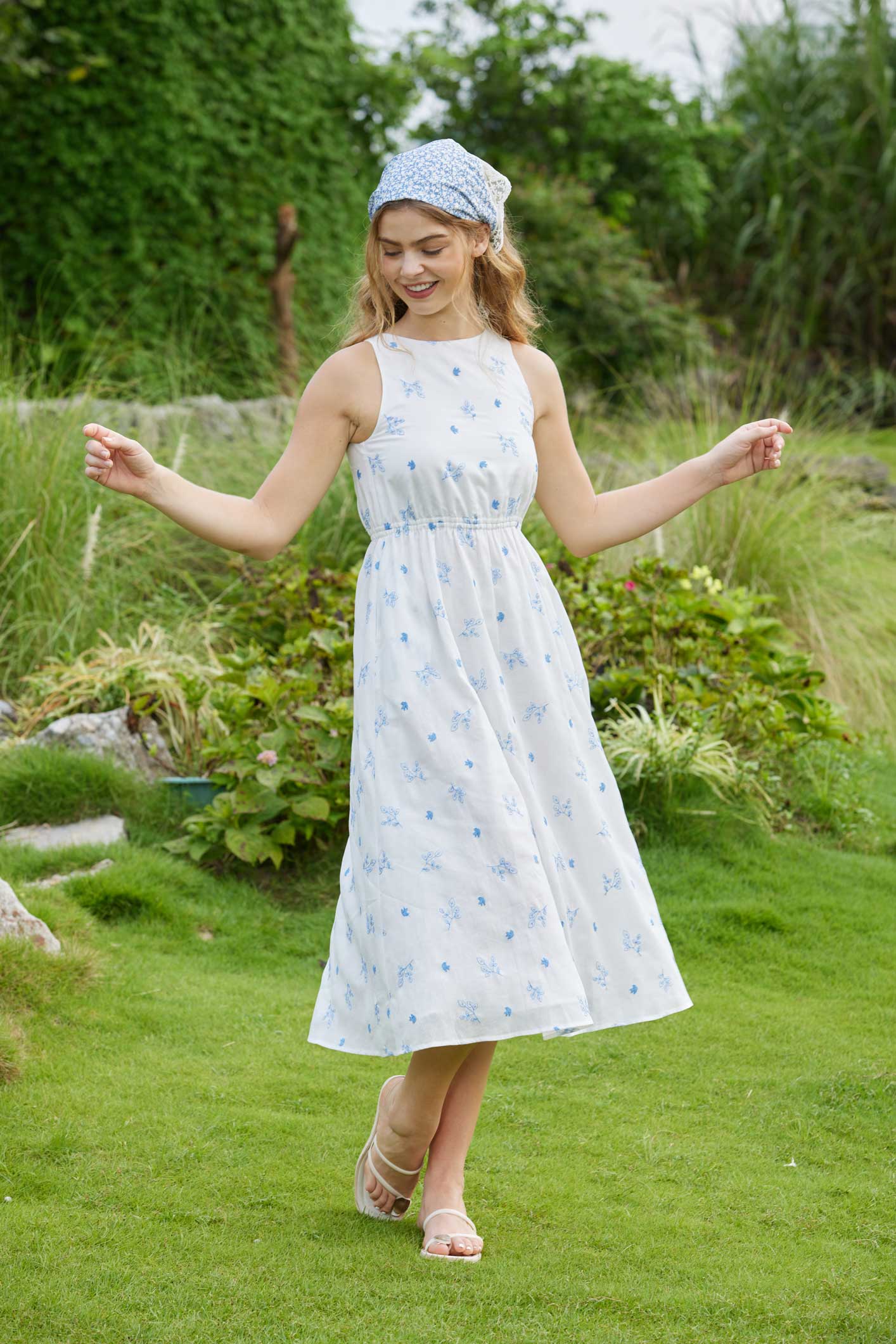
Colour does real work in summer. Undyed natural, oatmeal and pale stone reflect light and show heat haze less than dark tones, and they tolerate the frequent washing that summer requires. Cut matters as much as fibre: a fitted linen shirt in 34 degree heat performs worse than a loose one in the same weight, because airflow is what actually cools you. Our linen dresses are cut with that airflow in mind, and every product page lists the weight in gsm so you can match the dress to the temperature band you are dressing for.
What to avoid
Avoid heavy 260 gsm weaves in peak summer, and avoid tight fits in any weight. Both trap air and moisture, which is the opposite of how linen is meant to be used in heat.
5. Early Autumn: Extending Your Summer Pieces by One Season
Early autumn, roughly 16 to 24 degrees Celsius, is the point where most linen wardrobes get put away too early. Summer pieces do not stop working in September; they simply need a different role in the outfit.
Turn a summer dress into an autumn outfit
- Keep the light summer dress as the middle layer rather than the outer layer.
- Add a fitted long-sleeve tee or light knit underneath for a 16 to 20 degree day.
- Add an open overshirt, unlined linen jacket or light cardigan on top for the mornings and evenings.
- Swap sandals for closed shoes or boots, which changes the visual weight of the whole outfit more than any other single change.
- Add one layer on the legs, such as tights under a midi dress or socks with a linen pant, once the low drops below 16 degrees.
The same logic works in reverse for men and for anyone dressing in separates: a light linen shirt becomes a middle layer under a heavier linen or wool overshirt, which is much warmer than either piece alone. The layering principle here is the same one that governs the whole season: add one removable layer rather than changing the fabric, and let the pieces you already own take on a new role instead of being replaced.
Why linen layers well in autumn
Linen is thin for its warmth, so it adds a layer without adding bulk. That means you can wear a linen shirt, a linen overshirt and a light jacket where a heavy knit alone would already feel too thick indoors. It also means the removal test works: a linen layer comes off easily and folds small enough to fit in a bag when the afternoon warms up.
[IMAGE_PLACEHOLDER] img prompt: A linen midi dress layered over a long-sleeve tee with an open unlined linen overshirt, styled with boots, standing on a tree-lined path with early autumn leaves, warm afternoon light, editorial fashion photography6. Late Autumn: Moving Linen Inward as the Base Layer
From roughly 8 to 15 degrees Celsius, linen stops working as outerwear for most people and starts working as the layer against the skin. This is the part of the year that decides whether you genuinely wear linen year round or only claim to.
How to use linen in late autumn
- As a base layer: a 140 to 190 gsm long-sleeve linen shirt or tee under a wool sweater, a heavy knit or a quilted jacket. The linen handles moisture; the outer layer handles warmth.
- As a mid layer: a heavier linen overshirt in a 190 to 260 gsm weave worn over a tee and under a coat, which adds structure and a clean collar line without bulk.
- As trousers: mid and heavy weight linen pants, which block more wind and hold a crease far better than summer shirting weight.
- As an accessory: a thicker linen scarf or wrap in a 190 to 260 gsm weave, which is warm enough for a 10 degree morning without the itch of some wool blends.
Why linen under wool works
Wool is warm but can feel damp against the skin during activity, especially on a commute that moves between a cold street and a heated train. A thin linen layer between the two absorbs that moisture and passes it outward, so the wool stays dry and warm and the linen never feels wet. This is the same principle behind technical base layers, applied with a natural fibre that does not hold odour the way synthetics can.
Late-autumn rule: if you can see the linen as the outermost layer in a photograph, it is probably the wrong weight for the temperature. Below 15 degrees Celsius, linen should be the layer closest to your body, not the one the weather hits first.
7. Winter: Linen Indoors, Under Layers and Between Seasons
Winter is where linen is most often written off, and where it is most useful in a supporting role. In a 0 to 8 degree Celsius winter, very few people wear linen as their only outer layer, and that is fine. The fibre still earns its place in three specific ways.
Use one: the indoor layer
Heating dries indoor air, and a wool sweater worn directly over a synthetic base layer can feel static and clammy. A thin linen shirt or tee under a knit keeps the indoor layer comfortable and reduces the static that comes with dry air.
Use two: the travel layer
Linen is thin, light and packs small, which makes it valuable on winter trips where luggage space is limited and temperatures vary between a cold airport, a warm hotel and a heated car. A single mid-weight linen overshirt covers the middle of that range and folds into a fraction of the space a second knit would need. Our guide to storing linen clothing for winter explains how to rotate those pieces without damage when they are not in use.
Use three: the warm-climate winter
For readers in Florida, southern California, southern Spain, Italy, Australia or Southeast Asia, winter is often 15 to 22 degrees Celsius and linen never becomes inappropriate. In those climates linen is a year-round fabric in the ordinary sense, and the only adjustment for the cooler months is a slightly heavier weave and one added layer in the evening.
What winter linen is not
Linen is not a substitute for wool or down as the only insulating layer in freezing conditions, and no weight of linen will keep you warm in a wet, windy 2 degree day on its own. Used correctly, it is a comfort layer rather than a warmth layer, and that distinction is what makes it work.
8. The Weight Chart That Decides Everything
If you remember one table from this guide, make it this one. Weight in gsm, measured in grams per square metre, is the single most useful number on a linen label, and it maps directly to the temperature range a piece can handle.
| Weight | Typical pieces | Comfortable temperature (worn alone) | Best use in cold months |
|---|---|---|---|
| 90 to 140 gsm | Summer shirts, dresses, shorts, light tops | 24 to 35 degrees Celsius | Base layer only, or skip |
| 140 to 190 gsm | Shirts, midi dresses, sleepwear, wraps | 18 to 28 degrees Celsius | Base layer under knitwear or wool |
| 190 to 260 gsm | Pants, overshirts, robes, heavier shirts, towels | 12 to 22 degrees Celsius | Mid layer under a coat |
| 260 gsm and above | Totes, aprons, upholstery-grade weaves, heavy overshirts | 8 to 18 degrees Celsius | Outer layer in mild cold, high-abrasion use |
Two readings of the table are worth stating plainly. First, the 140 to 190 gsm band is the true three-season weight: it is the safest single purchase if you want linen to work in spring, summer and early autumn without buying three different pieces. Second, the 190 to 260 gsm band is the one that turns linen into a genuine cool-weather fabric, and it is under-represented in most wardrobes because summer is when people buy linen. If your linen drawer is full of 110 gsm shirting and you want to wear linen in November, the missing piece is a heavier weave, not a different fibre.
9. Building a Linen Capsule That Actually Covers Twelve Months
Year-round linen is easier to achieve with a small, deliberate set of pieces than with a large summer collection plus a separate winter one. Nine items, chosen across weight bands, cover almost every temperature between 5 and 35 degrees Celsius.
- Light summer shirt, 110 to 140 gsm. The plain hot-weather workhorse, also usable as a base layer in autumn.
- Mid-weight overshirt, 140 to 190 gsm. The single most versatile layer you can own; worn open in spring and layered in autumn.
- Heavy overshirt or unlined jacket, 190 to 260 gsm. The piece that makes late autumn and mild winter genuinely wearable.
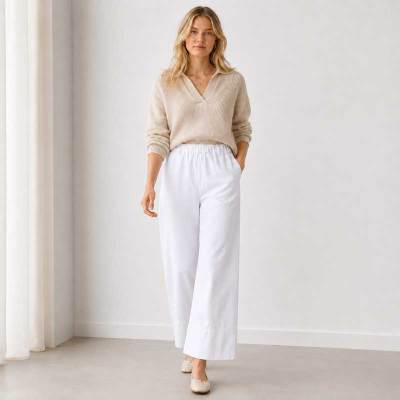
- Linen trousers or pants, 190 to 260 gsm. Structured enough for cool weather and formal enough for smart-casual settings.
- Light summer pants or shorts, 110 to 140 gsm. For the top half of the temperature range.
- One midi dress or equivalent, 140 to 190 gsm. Worn alone in summer, over a tee and under an overshirt in autumn.
- A linen wrap or scarf, 150 to 190 gsm. The cheapest single item that extends the usable season of everything else.
- A heavier robe or set, 190 to 260 gsm. Indoor comfort in the cold months and the easiest linen piece to wear daily.
- A care kit. A mesh wash bag, a mild detergent and a three-number care card, which keeps every piece above usable for years.
Notice what is absent: there is no need for a second wardrobe, a different fibre or a seasonal swap. The set is built to overlap, so each piece has at least two roles. If you already own several summer pieces, the highest-value additions are items two, three and four, because weight is the only real gap between a summer wardrobe and a year-round one.
For a broader view of how those pieces fit together with colour and silhouette, our linen capsule wardrobe guide covers the same approach from the perspective of building a whole wardrobe rather than a seasonal kit.
10. Colour and Texture Through the Year
Weight decides comfort; colour and texture decide whether a piece looks like it belongs in the season. The good news is that linen's natural palette is already seasonal in a neutral, unforced way.
Spring and summer
Undyed natural, oatmeal, pale stone, soft clay and white read as light and cool. Solid colours keep the outfit calm in heat, and texture comes from the weave rather than from pattern.
Autumn
The same neutrals deepen as they layer: a natural linen shirt under a clay overshirt under a charcoal coat reads as intentional rather than accidental. This is the season to layer tones in the same family and let the linen weave provide the contrast that a pattern would supply in other fabrics.
Winter
Because winter linen is usually a base layer, its colour matters less than its weight. Choose an undyed or light neutral base so it does not show through a lighter knit, and keep the visible outer layers in the darker tones of the season.
Texture as a season marker
Heavier weaves look heavier, and that alone does most of the seasonal work. A 220 gsm linen trouser reads as autumn even in the same colour as a 130 gsm summer pant, because the surface texture and the way it holds a crease are visibly different. When you want linen to look appropriate for a cooler month, the fastest change is to increase the weight, not to change the colour.
11. Care Across the Year: What Changes and What Does Not
Linen care is largely season-independent, but two things change as the temperature drops: how you dry linen and how you store it.
Washing, all year
- Wash at 30 degrees Celsius or cool on a gentle cycle with a mild liquid detergent.
- Wash linen with similar weights and similar colours, because heavier weaves abrade lighter ones in the drum.
- Never use chlorine bleach on coloured linen, and use oxygen-based bleach only on white linen.
- Turn printed or embroidered pieces inside out before washing to protect the surface.
Drying, all year
Linen dries quickly on a line or a rack and needs no high heat. High-heat tumble drying is the single most common cause of shrinkage and stiffness, so dry flat or hang in shade and reshape the piece while it is still slightly damp. In winter, do not dry linen directly on a radiator: the hot, dry surface sets creases and can make the fibre brittle. The full method, including temperature bands and how to handle stains by type, is set out in our linen care guide.
Storing, by season
Fold rather than hang heavy linen pieces for long storage, because the weight of a heavy weave on a narrow hanger distorts shoulders over months. Store clean, fully dry pieces in a breathable cotton bag rather than a sealed plastic one so the fibre can breathe, and keep them away from damp walls and direct sunlight. Linen that will not be worn for a season should be washed before storage, because invisible body oils and food residue oxidise over months and become much harder to remove later.
Two habits prevent almost all long-term linen damage: wash at 30 degrees Celsius or cool, and never tumble dry on high heat. Both apply in every month, and together they are the difference between a linen piece that lasts three years and one that lasts fifteen.
12. Common Myths and Mistakes About Year-Round Linen
- Myth: linen is only for summer. Linen sold as summer shirting is only for summer. The fibre covers a much wider temperature range once you include mid and heavy weights.
- Myth: linen is cold in winter. Linen alone is not warm, but as a base layer under wool or knitwear it is comfortable and drier than most alternatives.
- Mistake: wearing one weight all year. A single 120 gsm shirt cannot cover both a 32 degree afternoon and a 6 degree morning, and expecting it to is the main reason people conclude linen is seasonal.
- Mistake: treating linen as outerwear in the cold. Below about 15 degrees Celsius, linen should usually be the inner layer rather than the visible outer one.
- Mistake: judging linen by its first wear. Garment-washed linen continues to soften across the first twenty to thirty washes, so the piece you wear in month six is noticeably better than the one you unwrapped.
- Mistake: ignoring construction. Weight and cut matter more than brand. Two shirts in the same weight from different makers can behave very differently if one is tightly fitted and the other is cut for airflow.
Avoiding these six issues is worth more than any single purchase. Most people who believe linen is a summer fabric have simply never owned a mid-weight linen overshirt or a heavy linen trouser, and the gap is a gap in the wardrobe rather than a fact about the fibre.
Frequently Asked Questions
Can you wear linen in winter?
Yes, as a base layer or under a heavier outer layer. A 140 to 190 gsm linen shirt worn directly against the skin under a wool sweater or a quilted jacket keeps you drier than most alternatives, because linen moves moisture away from the body instead of holding it. Linen is not a substitute for wool or down as the only insulating layer in freezing weather, but it is an excellent comfort layer beneath them.
What is the best weight of linen for year-round wear?
A 140 to 190 gsm weave is the most versatile single weight: it layers under knitwear in cool months and works on its own in warm ones. If you want genuine cold-weather linen, add a 190 to 260 gsm pant or overshirt, which holds structure and blocks more wind than summer shirting weight.
Is linen warmer than cotton in cold weather?
Weight for weight, linen and cotton insulate similarly, but linen handles moisture better and feels drier against the skin, which makes it feel warmer in changeable conditions and less clammy after activity. In very cold, wet weather, neither fibre replaces wool as the insulating layer. Linen's advantage over cotton in changeable weather comes from moisture handling rather than insulation value: the two fibres insulate similarly at the same weight, but linen releases vapour faster and so feels drier against the skin.
The Short Version
Linen works in every month if the weight matches the temperature. Above about 24 degrees Celsius, a 110 to 140 gsm weave is comfortable alone. Between 18 and 28 degrees, a mid-weight 140 to 190 gsm weave is the most useful piece you own. Below about 15 degrees Celsius, linen moves inward and becomes the layer against your skin, under wool, knitwear or a coat, while a 190 to 260 gsm pant or overshirt handles the visible outer layer in mild cold.
If you want one practical action, audit your linen by weight. A drawer full of 110 to 140 gsm summer pieces cannot cover a cold month no matter how it is styled, and adding a mid-weight overshirt and a heavier trouser is usually enough to turn a summer wardrobe into a year-round one. Confirm 100 percent European Flax and a garment-washed finish while you are at it, and the same pieces will keep softening rather than wearing out.
Building a linen wardrobe that works in every month? Start with the mid-weight pieces that carry three seasons: our linen tops and linen pants are made from 100 percent European Flax with a garment-washed finish, and every product page lists the exact fibre content and weight in gsm so you can match the piece to your climate. If you are ordering across seasons, our shipping FAQ covers delivery timelines and destinations.