How to Transition Your Linen Wardrobe from Summer to Fall
How to Transition Your Linen Wardrobe from Summer to Fall
You can keep wearing linen well into fall — the transition is not about giving up the fabric, it is about changing how you layer, which colours you choose, and what fabric weight you reach for. Linen's breathability, which feels essential at 30°C, becomes an advantage at 15–20°C when you add one or two layers: a linen shirt under a knit or jacket, a mid-weight linen dress with a long-sleeve base and tights, linen trousers with a sweater on top. The practical range for comfortable linen wear is roughly 10–25°C once you layer correctly, and the transition happens in three deliberate moves: build a three-layer system around your existing linen pieces, shift your palette from bright summer tones to deeper autumn ones, and favour mid-weight garment-washed linen (roughly 150–180 gsm) that holds warmth better than featherweight summer weaves. This guide walks through each move with concrete temperature targets, honest fabric facts, and the specific pieces that earn their place across both seasons — no invented statistics, and no claim that linen keeps you warm on its own.
This is a practical seasonal-transition guide written from how flax linen actually behaves, based on the same fabric facts we publish across KOSSR product pages: 100% European flax, garment-washed pre-shrunk finish, and honest care guidance. Temperatures and layer recommendations are practical targets, not laboratory claims.
Why Linen Is Not a Summer-Only Fabric
The idea that linen belongs to July is one of the most persistent fabric myths, and it costs people a wardrobe that could easily serve eight or nine months of the year. The myth survives because linen's most famous property — breathability — is framed as a heat-only benefit. In reality, breathability is a two-way mechanism: the same open weave and hollow flax fibre that lets heat escape in summer also lets body heat and moisture regulate in cooler weather, which is exactly what makes linen a superb base layer in autumn.
The fabric physics are straightforward. Flax fibres are hollow, which creates natural air pockets; this is why linen feels cool in heat. But those same air pockets trap a layer of still air next to your skin when you cover them with a mid-layer — and still air is the best insulator a natural fibre can offer. Wool works on the same principle, which is why the classic autumn pairing of linen and wool is not a contradiction: the linen manages moisture and next-to-skin comfort, the wool traps warmth. Our guide to washed linen vs regular linen explains the finish side of this story; the seasonal side is that a garment-washed linen base performs the same moisture-managing job in October that it does in July, just with more layers on top.
- Linen does not keep you warm alone. A single lightweight linen shirt at 10°C will not keep you warm, and no honest guide claims otherwise. Linen's autumn role is as the breathable foundation of a layered outfit, not as an outer layer on a cold day.
- Linen's moisture management matters more in fall than summer. In autumn you move between cold outdoors and warm interiors constantly. Linen wicks perspiration and dries fast, which means less clammy layering and less odour buildup than synthetics.
- Garment-washed linen behaves predictably in layers. Pre-washed linen is pre-shrunk and softer, so it drapes smoothly under a sweater or jacket instead of bunching stiffly the way raw linen does.
In short: the question is not "can you wear linen in fall" — it is "how do you layer linen in fall." The answer is a system, and the rest of this guide builds it step by step.
Know Your Transition Window: Temperature, Not Calendar
The calendar is a poor guide for linen because autumn temperatures vary wildly by region and even by week. A better approach is to match your outfit to a temperature window, and to know which window each linen piece can serve:
| Temperature window | What works | Layering approach | Linen role |
|---|---|---|---|
| 25°C and above | Single linen pieces, no layers | None needed | Full outfit: dress, shirt, shorts, or set worn alone |
| 20–25°C | Linen with one light layer | Add a thin knit, overshirt, or cardigan that comes off indoors | Linen stays as the main or base piece; the layer does the temperature work |
| 15–20°C | Linen with two layers | Base + mid (knit, sweater, or blazer); bottoms switch to longer cuts | Linen trousers or a long-sleeve linen shirt anchor the outfit; top layers add warmth |
| 10–15°C | Linen as the base of a three-layer system | Base + mid + outer (wool coat, trench, or jacket); add tights or thermal under trousers | Linen does moisture and comfort; the outer layers carry the warmth |
| Below 10°C | Linen only in protected situations | Indoors, or as a base layer under heavy winter outerwear | Linen's job shrinks to base-layer comfort; expect to rely on wool and insulation |
Read the table as a transition map: most people experience the 15–25°C windows for six to ten weeks of autumn, and those windows are exactly where linen shines with light layering. Below 10°C, linen's role honestly shrinks — we will not pretend a linen shirt keeps you warm in a frost. What the table does show is that the "linen ends on Labor Day" rule ignores the fact that most autumn days in temperate climates sit inside the comfortable layered-linen range.
Two practical habits make the temperature approach work. First, check the morning low and afternoon high before dressing — autumn days often swing 8–10°C, so a layered linen outfit you can peel is worth more than one heavy decision. Second, prioritise pieces that remove easily: a linen shirt under a cardigan that comes off at noon beats a single thick garment you cannot adjust. Our summer linen buying guide covers choosing pieces for heat; this transition guide is the mirror image — choosing and combining them for cooler days.
Build the Three-Layer System Around Your Linen
Layering is the entire game of transitioning linen between seasons, and a three-layer system is the simplest reliable structure. Each layer has one job, and your linen pieces slot into specific positions:
- Base layer — your linen. A linen shirt, blouse, or long-sleeve top sits closest to the skin. Its job is moisture management and breathable comfort, not warmth. This is the piece that makes the whole system feel better than a synthetic base, because linen wicks sweat and dries fast when you move between cold air and heated rooms. A garment-washed linen shirt at roughly 150–170 gsm is the ideal base — soft enough to wear against skin, structured enough to layer under.
- Mid layer — the warmth. A knit sweater, cardigan, overshirt, or blazer goes over the linen. This layer traps the air that actually insulates. Wool, cotton knit, or a textured natural-fibre sweater all work; the mid layer is where the temperature control happens, which is why it should come off easily indoors.
- Outer layer — the weather shield. A trench, wool coat, padded jacket, or parka handles wind and cold when you step outside. In early fall this layer may stay in the car or on the back of a chair; by late fall it is the piece you reach for first. Linen rarely appears in this layer — its job in the system is underneath.
The system works because each layer is replaceable. A 20°C day needs only base + mid; a 12°C morning needs all three; a heated office at 22°C needs just the base again. This "peel-ability" is the single biggest advantage of a linen-based transition wardrobe, and it is why the same linen pieces that served July can credibly serve October.
| Outfit | Base (linen) | Mid | Outer | Works at |
|---|---|---|---|---|
| Early fall office | Long-sleeve linen shirt | Knit cardigan or blazer | Optional light trench | 18–24°C |
| Weekend errands | Linen t-shirt or tank | Overshirt or hoodie | None or light jacket | 16–22°C |
| Cool evening out | Linen dress or shirt | Turtleneck under dress, or knit over shirt | Wool coat or jacket | 10–16°C |
| Late fall day | Linen shirt or top | Heavy knit sweater | Padded or wool coat | 5–12°C (linen is base only) |
The layering rule of thumb: if you feel clammy, your base is not breathing — switch the synthetic base for linen. If you feel cold, add a mid layer, not another base. Linen's job is the comfort layer; the wool and outerwear do the warming.
Switch Your Palette: From Summer Brights to Autumn Depths
Colour is the fastest, cheapest way to make summer linen read as autumn linen. The same linen dress that looks unmistakably summery in white or sky blue looks seasonally right in rust, olive, or deep navy — and the fabric does not change at all. A seasonal palette shift is a styling decision, not a wardrobe replacement, and it is one of the most effective transition moves you can make with pieces you already own.
| Summer palette | Autumn counterpart | Why it works |
|---|---|---|
| White, ivory, sky blue | Oat, ecru, stone, warm sand | Warm neutrals absorb the lower autumn light instead of glaring against it |
| Bright yellow, citrus | Ochre, mustard, amber | Deepened golds echo autumn foliage and pair with browns and olive |
| Pastel pink, lavender | Terracotta, rust, burnt sienna | Warm earth tones carry the same softness with more seasonal weight |
| Bright green, mint | Olive, sage, forest | Muted greens ground an outfit and match wool, leather, and suede layers |
| Navy, cobalt | Deep navy, charcoal, espresso | Darkened versions of existing colours extend pieces without buying new ones |
Three practical colour rules make the transition easy:
- Anchor with two warm neutrals. Oat, ecru, and stone are the backbone of a transitional linen wardrobe because they sit under every autumn colour. Two neutral linen pieces — a shirt and a pair of trousers — anchor most outfits.
- Add one autumn accent per outfit. Rust, olive, or mustard in a scarf, knit, or bag changes the season of an otherwise summer outfit instantly. One accent is enough; three competing accents look costumed.
- Pair linen with autumn textures. Suede boots, wool knits, leather belts, and brushed cotton make linen read as fall. Texture does for the eye what layers do for temperature — and it costs nothing new.
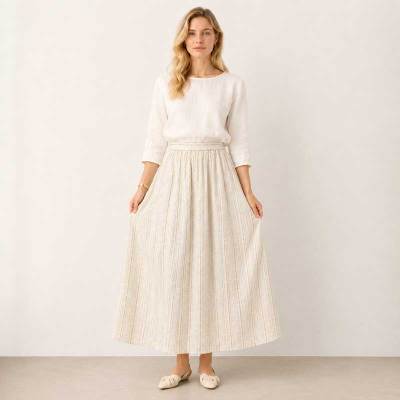
None of this requires buying new linen. The colour transition works across pieces you already own: a white linen shirt anchors a rust cardigan and olive trousers as easily in October as it anchors beach whites in July. What changes is what surrounds it. The linen tops and linen bottoms collections show the neutral-to-deep range in practice if you are building the transition wardrobe from scratch.
Choose the Right Fabric Weight for Cooler Days
Fabric weight is the technical half of the transition, and it is the half most buyers overlook. Linen is sold across a wide weight range, and the weight you chose for July is not automatically right for October. Understanding gsm (grams per square metre) turns a vague "this feels thicker" into a repeatable choice:
| Weight range | Character | Best season | Transition role |
|---|---|---|---|
| 100–140 gsm (featherweight) | Sheer, light, crinkly, very breathable | High summer | Keep for hot days; as a base it is too light to hold structure under layers |
| 150–180 gsm (mid-weight) | Dense but soft, holds shape, drapes well | Summer through mid-autumn | The transition sweet spot — substantial enough to layer, breathable enough to wear alone at 22°C |
| 180–220 gsm (heavy) | Sturdy, structured, almost canvas-like | Cool weather, outer-layer roles | Great for overshirts, jackets, and structured trousers in late fall |
For a transition wardrobe, mid-weight garment-washed linen is the workhorse. At 150–180 gsm, a linen shirt holds a crisp collar under a knit, a linen dress drapes without clinging, and linen trousers keep their line instead of crumpling. The garment-washed finish matters as much as the weight: pre-washing softens the fabric and pre-shrinks it, so the piece behaves predictably through the autumn wash cycle and layers smoothly from day one. You can see the weight and finish stated honestly on KOSSR product pages — composition, gsm, and garment-washed treatment are all listed — so the choice is verifiable rather than guessed.
A practical test you can do at home: hold the fabric up to the light. A featherweight linen lets light through clearly and moves like tissue; a mid-weight linen diffuses light and holds a soft fold; a heavy linen barely lets light through and keeps a firm crease. If your existing linen pieces are mostly featherweight, the single most useful transition purchase is one or two mid-weight pieces — a long-sleeve shirt and a pair of trousers — because they bridge both seasons instead of serving only one.
The Transitional Linen Capsule: Seven Pieces That Bridge the Seasons
A transitional wardrobe does not need to be large — it needs to be deliberately chosen. These seven pieces, built around mid-weight garment-washed linen, cover the 10–25°C range when combined with two or three non-linen layers:
- One long-sleeve linen shirt. The base-layer anchor. Worn alone at 22°C, under a knit at 16°C, under a coat at 10°C. Choose a mid-weight weave with a collar that holds its shape.
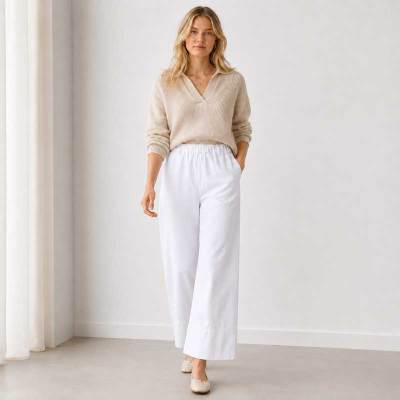
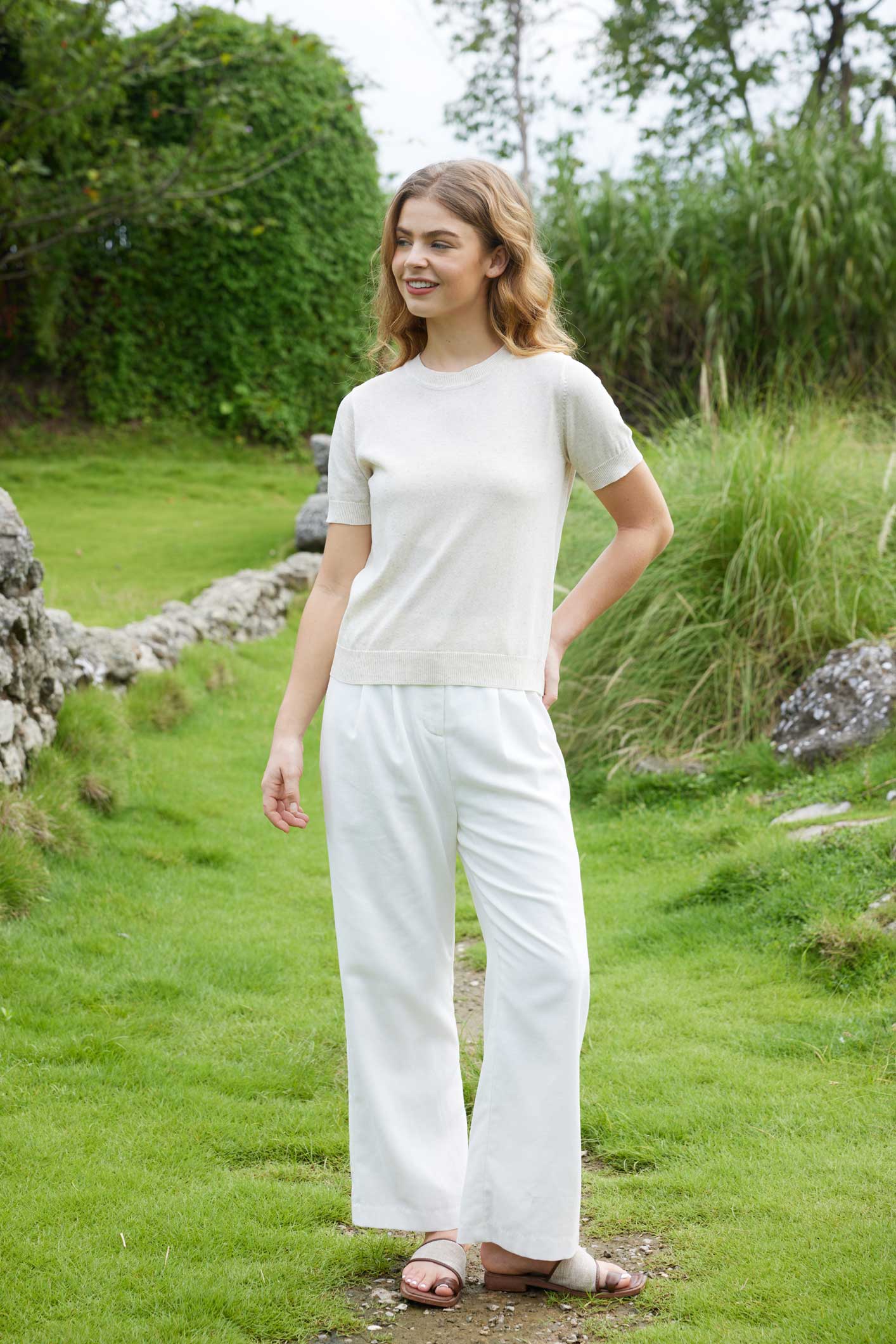
- One pair of mid-weight linen trousers. Wide-leg or straight, in a warm neutral like oat or stone. They pair with knitwear and boots and carry the colour transition on their own.
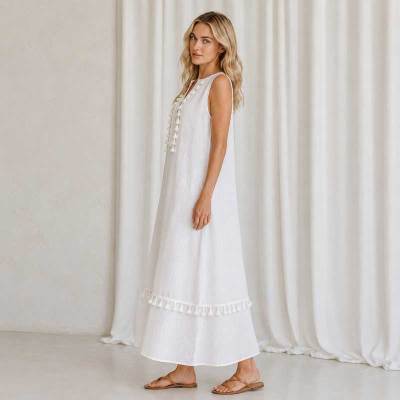
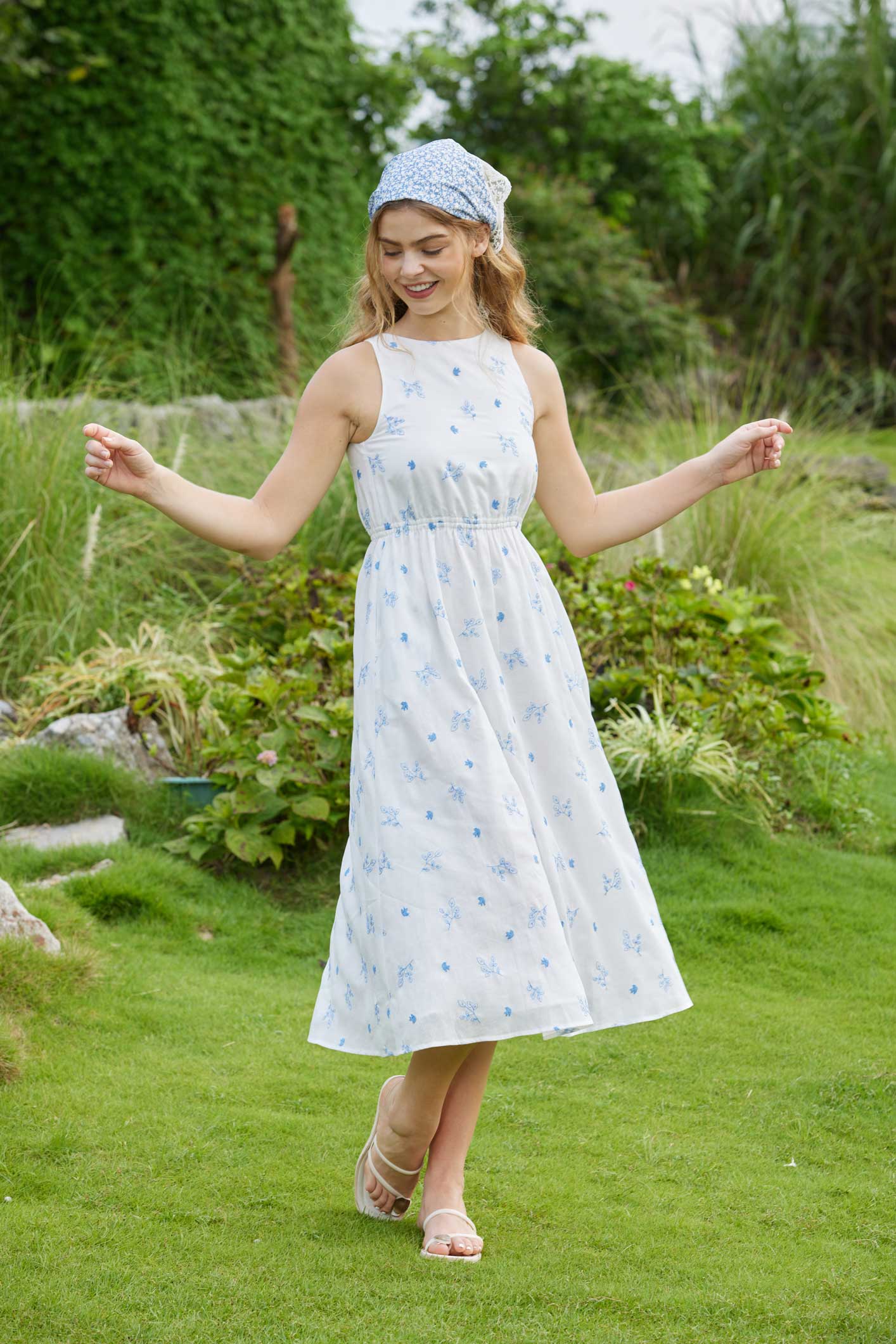
- One mid-weight linen dress. The cross-season hero. Wear it alone at 24°C, add a knit over it and tights at 14°C, layer a turtleneck under it at 10°C. A shirt-dress or slip-style cut layers best.
- One linen shirt or overshirt in an autumn colour. Rust, olive, or deep navy. This piece does the palette work — it reads as autumn even on a warm September day.
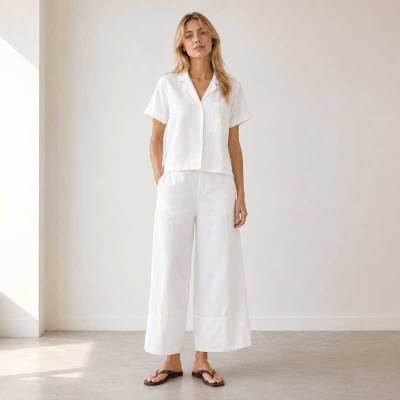
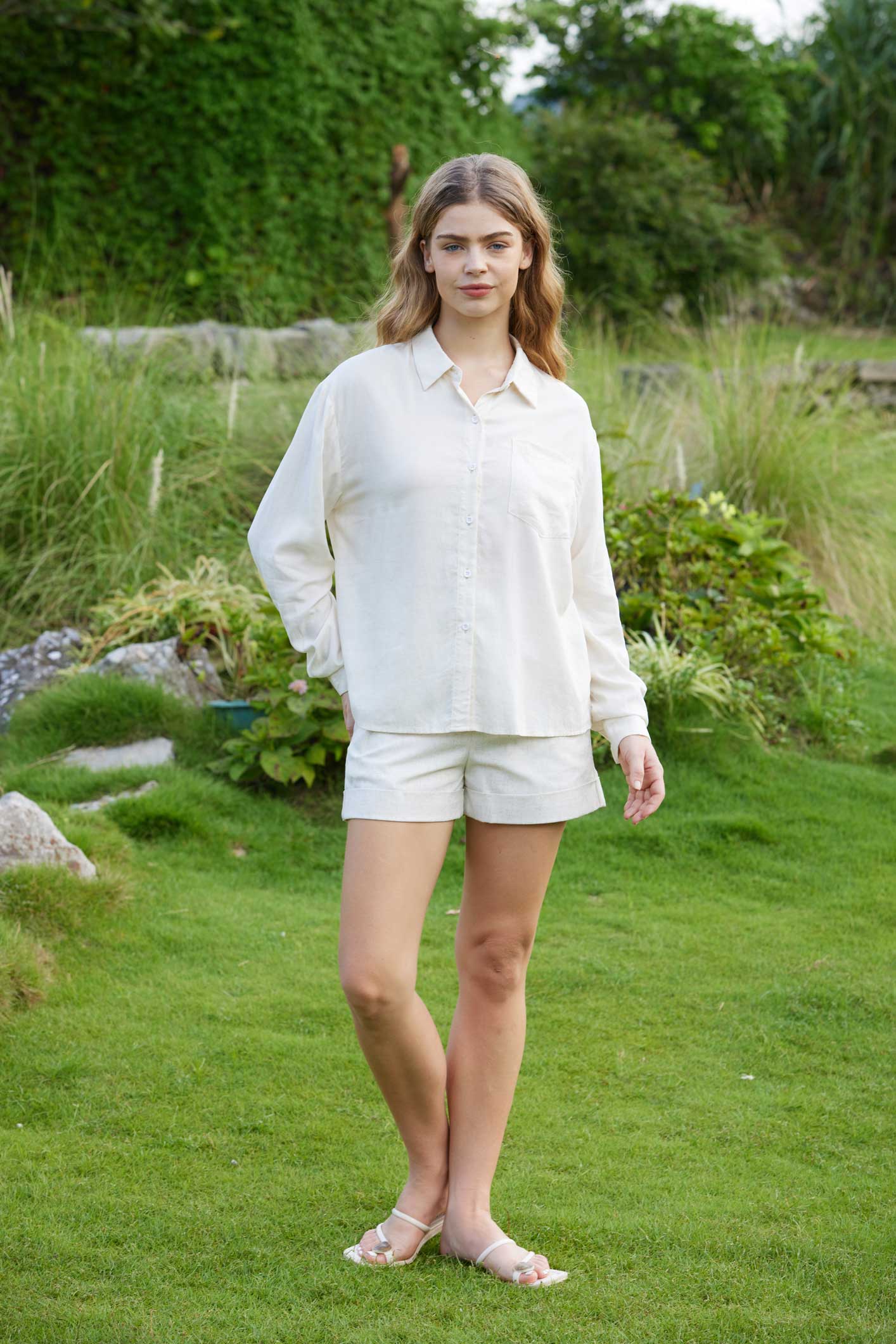
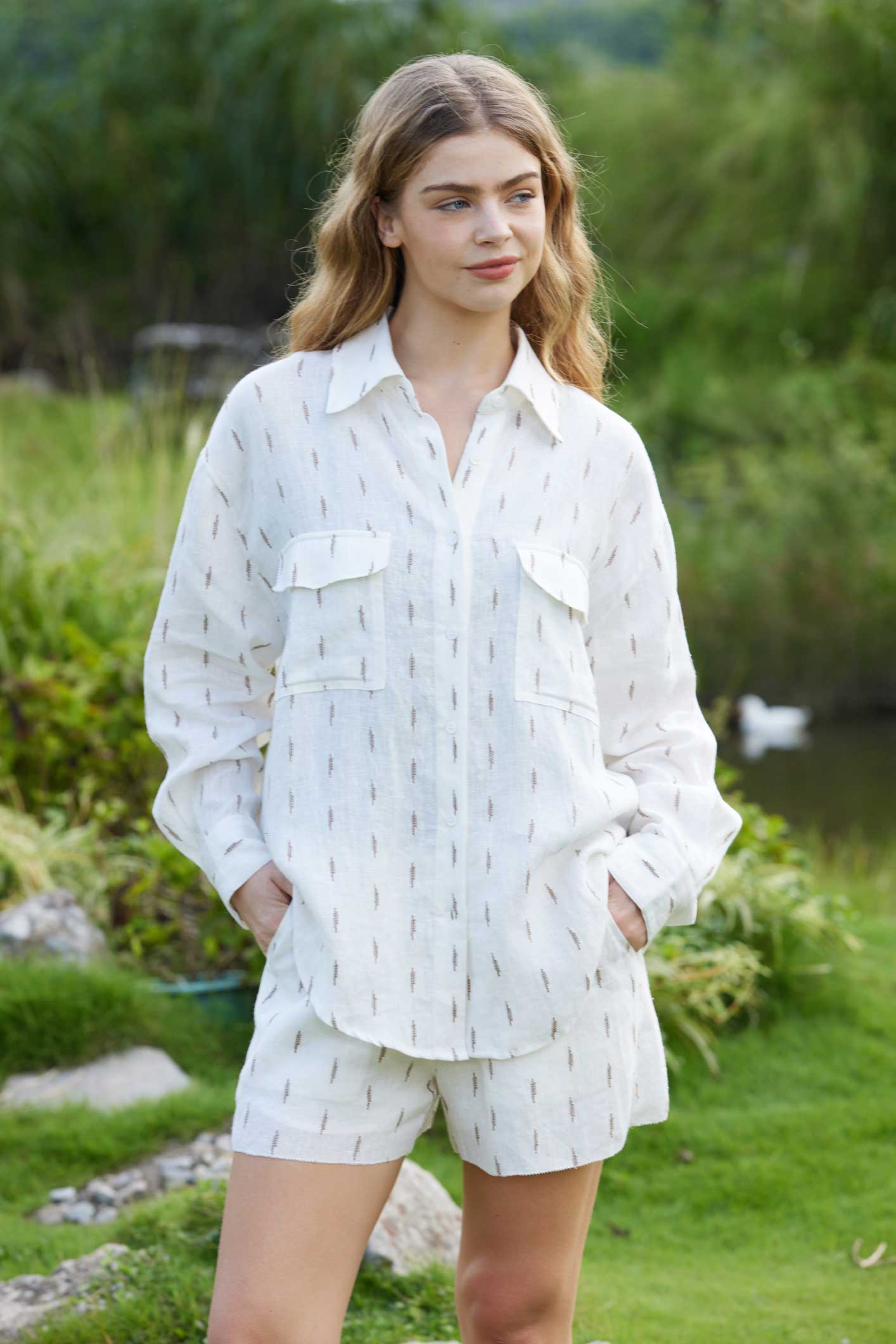
- One linen set (top + bottom). Matching sets extend effortlessly into fall with a knit and boots; they are also the easiest pieces to pack for a transition-weekend trip.
- One pair of linen shorts or a cropped style (optional). Keep them for the warm tail of September; with tights they extend a few more weeks, though honestly most people retire shorts by mid-October.
- Two non-linen layers to complete the system. A wool or cotton knit and a trench or coat. These are the warmth pieces — the linen does comfort, they do heat.
Seven pieces, combined with the layering table above, produce more outfits than most wardrobes of thirty pieces do, because every piece mixes with every other and the layers multiply the combinations. If you already own a linen capsule wardrobe, the transition version is simply the same capsule with one colour shift and two added layers. The linen dresses collection is where the cross-season hero piece starts.
Dress-by-Piece: How Each Linen Garment Transitions
Different linen garments transition differently, and the details matter more than the general rule. Here is the honest piece-by-piece breakdown:
Linen shirts and blouses
The most versatile transition piece. A long-sleeve linen shirt works as a base under knits and blazers, worn open over a t-shirt as an overshirt, or buttoned alone with trousers at 20°C. Buttoned to the top under a sweater, the collar frames the face the way a shirt collar should — this is the classic autumn look linen does best. Choose a collar with some structure; a floppy summer collar disappears under a knit.
Linen dresses
The most dramatic transition. A summer linen dress becomes an autumn outfit with three additions: a long-sleeve base or knit on top, tights or trousers underneath, and boots or closed shoes. A shirt-dress layers a knit over it like a cardigan; a slip dress takes a turtleneck underneath and a coat above. The dress's weight decides how far it goes — a 160 gsm dress layers well into late fall, while a 110 gsm dress is honestly a warm-day piece.
Linen trousers and bottoms
Linen trousers are the easiest piece to carry across seasons because legs need less layering than the torso. Swap sandals for boots, add a knit on top, and the same wide-leg linen trousers that worked in July work in October. In cooler weather, add thermal or merino leggings underneath — the linen's loose drape hides them completely. Mid-weight fabric matters most here; featherweight trousers lose their line under layers.
Linen sets
A matching linen set is the transition's hidden weapon: the top and bottom share a colour, so the outfit reads as intentional even with knit and boots added. Wear the set as loungewear at home, with a blazer for a casual office day, or with a coat for a weekend outing. Sets also travel best for the September-to-October trips that span both seasons.
Linen shorts
Honest advice: shorts are the one piece most people retire by mid-October. They work through the warm September tail with tights, but past 12–14°C they look and feel seasonal. Retire them early and let the trousers carry the transition.
The through-line: every linen piece transitions, but the three that do the heaviest lifting are the long-sleeve shirt, the mid-weight trousers, and the layering-friendly dress. Build around those three and the rest of the wardrobe follows.
Care Differences Between Summer and Fall Linen
Autumn linen needs slightly different care than summer linen, mostly because it gets worn in layers, washed less often, and stored for longer stretches. The differences are small but worth knowing:
- Wash less often, air more. In summer, sweat drives frequent washing. In autumn, linen worn over a base layer stays cleaner — air it after each wear and wash every few wears instead. Fewer washes preserve the fabric and the garment-washed softness.
- Mind the layering creases. Wearing linen under a knit or coat creates pressure creases that differ from summer's casual wrinkles. Hang linen overnight after a layered day — gravity releases most creases — and use steam rather than a hot iron on garment-washed fabric. Our FAQ on removing wrinkles from linen covers the steam-first method.
- Wash in cool water, gentle cycle. The same cool-water rule applies year-round: 30°C or below, mild detergent, no bleach. Cool water protects both the fibre and the autumn colours — deep dyes stay richer longer when washed cool. The full routine is in our FAQ on how to wash linen clothing.
- Dry flat or hang, away from direct heat. Air-dry linen naturally; avoid radiators and tumble dryers. Linen dries fast anyway — a shirt hung in a ventilated room is usually ready the same evening.
- Store heavier pieces properly at season's end. When you rotate pieces out for winter, wash, dry completely, and store folded or hung in a dry, breathable space — never in plastic. Moth protection matters more for wool than linen, but clean storage protects the fabric either way. Our FAQ on storing linen clothing gives the full seasonal routine.
The autumn care difference in one line: linen gets worn more and washed less in fall — air it, steam it, and keep the cool-water routine, and it will look as considered in November as it did in July.
Transition Mistakes to Avoid
- Mistake: "Linen is only for summer, so I need a whole new autumn wardrobe." The most expensive mistake, and the easiest to avoid. Your linen pieces transition with layers, colours, and weights — the additions are a knit, a coat, and maybe one or two mid-weight pieces, not a new wardrobe.
- Mistake: "I'll just wear a heavy linen jacket as my outer layer." A linen jacket or overshirt is a mid layer, not a winter outer layer. Linen blocks wind poorly and offers little insulation. Treat it as the mid layer it is, and put a wool or padded coat on top for real cold.
- Mistake: "Thicker linen is automatically warmer." Weight adds structure, not insulation. A 200 gsm linen overshirt is still linen — it breathes and wicks like the featherweight version. Warmth comes from layers that trap air (knits, wool, coats), not from a heavier linen weave.
- Mistake: "Autumn means dark colours only." Warm neutrals — oat, ecru, stone — are the backbone of transitional dressing. The goal is deepened warmth, not darkness; bright white reads as summer, but warm ivory reads as autumn all day.
- Mistake: "I can wear linen shorts until Thanksgiving." You can, technically, but past about 12–14°C they stop serving you. Let the trousers carry late autumn — it is what they are for.
- Mistake: "Wrinkle-free linen blends are better for layering." A blend with synthetic fibres creases less but breathes worse, which defeats the entire point of a breathable base layer. If you layer for warmth, the base layer's moisture management is the whole job — pure garment-washed linen does it best.
Every mistake here follows the same pattern: treating the transition as a wardrobe replacement instead of a layering system. The system is cheaper, more sustainable, and — honestly — more flattering, because it builds outfits from what already works.
Frequently Asked Questions
Is linen too cold for autumn?
Not with layering. A single lightweight linen shirt at 10°C is cold — but linen as a base under a knit and coat is comfortable at 10–15°C because the layers trap the warmth while linen manages moisture. The practical range for layered linen is roughly 10–25°C; below that, linen's role shrinks to base-layer comfort under heavy outerwear.
What do I wear over a linen shirt in fall?
A knit cardigan, crew-neck sweater, overshirt, or blazer. The mid layer provides the warmth; the linen shirt manages comfort underneath. For colder days add a wool or padded coat as the outer layer. The combination of linen base + knit mid + coat outer covers the full 5–20°C range.
Can I wear linen trousers in winter?
Linen trousers work in winter indoors and in mild conditions, and with thermal or merino leggings underneath they extend further — the loose drape hides the extra layer completely. Below about 5–8°C outdoors, most people switch to warmer bottoms for the outer walk; linen trousers remain a good indoor and mild-day option.
What colours should I wear for fall linen?
Warm neutrals and deepened earth tones: oat, ecru, stone, rust, olive, mustard, terracotta, and deep navy. The shift is from bright summer whites and pastels to warm, muted depths — which lets existing pieces read as autumn simply by changing what surrounds them.
Do I need heavy linen for cooler weather?
Mid-weight linen (150–180 gsm) is the sweet spot — substantial enough to layer with structure, breathable enough for warm days. Heavy linen (180–220 gsm) suits overshirts and structured pieces. Weight adds drape and structure, not insulation; warmth still comes from the layers above the linen.
The Transition Summary
Transitioning your linen wardrobe from summer to fall is a system, not a replacement. Remember the three moves: build the three-layer structure with linen as the breathable base, deepen your palette from summer brights to warm autumn tones, and favour mid-weight garment-washed linen (150–180 gsm) for pieces that carry both seasons. Practically, that means a long-sleeve linen shirt, a pair of mid-weight trousers, a layering-friendly dress, one autumn-colour piece, and two non-linen warmth layers. Combined, they cover the 10–25°C range that most autumn days actually deliver — and they do it with the same garments that served your summer. Linen was never a summer-only fabric; it was waiting for a system.
Build Your Cross-Season Linen Wardrobe
Browse the KOSSR collection of 100% European flax, garment-washed linen — dresses, tops, pants, bottoms, and sets in warm neutral and deep autumn tones — or contact us with any question about fabric weight, fit, or layering before you order.
Browse linen dresses · Browse linen tops · Browse linen pants · Browse linen sets · Ask us a question