Best Linen Tank Tops for Hot Weather | KOSSR Best Picks Guide
Best Linen Tank Tops for Hot Weather
A great linen tank for hot weather is a small garment with a big job: it has to move air, absorb moisture, dry fast, survive frequent washing, and still look intentional when the temperature passes 30 °C. The tank top is the most minimal piece in a summer wardrobe, which is exactly why fabric and cut matter so much — with no sleeves and no extra layer, the cloth itself does all the work. This guide explains what to look for in a linen tank top for hot weather, the style silhouettes that are worth considering, how to choose one for your body and climate, how to style it, and how to care for it so it lasts more than one summer. It is written honestly: there is no single "best" tank for everyone, so the aim here is to give you the criteria and the options, then let you match them to your own life.
This is a selection guide, not a paid ranking. The styles below are described as silhouettes and criteria — no invented reviews, no invented statistics, and no claim that any single garment is objectively the best on the market. Fabric facts follow how flax linen is described across the industry, and the range referenced is KOSSR's own linen collection.
Why Linen Tank Tops Work So Well in Hot Weather
Before talking about which linen tanks to consider, it is worth being precise about why linen earns its place in hot weather at all. The reasons sit in the fibre itself:
- Breathability. Flax fibres are hollow, and the classic linen weave leaves small gaps between yarns. Together these create channels for air to move through the cloth, so body heat escapes instead of being trapped against the skin. For a sleeveless top, where the garment covers the torso, this airflow is the main cooling mechanism.
- Moisture handling. Linen absorbs moisture without feeling wet, then releases it quickly — which is why it dries fast and does not cling the way cotton can in humidity. On a sweating summer day, a linen tank moves moisture away from the skin instead of trapping it.
- Quick drying. A light linen tank washed in the evening can be dry by morning. For travellers and hot-climate residents, this turns one top into a nearly continuous wardrobe.
- Low maintenance at high temperatures. Linen does not need the constant re-ironing of some crisp cottons once it is garment-washed; its natural creases are part of the look, and a relaxed tank hides them effortlessly.
The honest counterpoint matters too. Linen wrinkles — that is a property of the fibre, not a defect, and anyone who dislikes visible creases should know it before buying. Linen also has no stretch, so a tank that fits well in the morning still fits at dinner; there is no give in the cloth to forgive a poor cut. And very light linen can be slightly sheer in pale colours. None of these are reasons to avoid linen tanks; they are reasons to choose weight, cut, and colour deliberately — which is exactly what the rest of this guide covers.
In short: a linen tank is the most direct way to put the fibre's cooling properties to work — but only when the fabric weight, weave, and fit are chosen for the heat.
For the deeper fibre-level explanation, our FAQ on whether linen is good for hot weather and the explainer on whether linen clothing is breathable cover the science in more detail.
What Makes a Linen Tank Top "Best" for Hot Weather: The Five Criteria
Strip away the styling and a hot-weather tank is judged on five things. Run any candidate through these and the right choice becomes obvious:
| Criterion | What to Look For | Why It Matters in Heat |
|---|---|---|
| Fabric weight | Light to mid-weight linen, roughly 120–180 gsm; very light (under 120 gsm) for the hottest, driest days | Weight controls how much air moves and how fast the cloth dries; heavy linen defeats the purpose of a tank |
| Weave openness | Plain weave with visible yarn gaps; hold it to the light — pinpricks of light mean air will pass | An open weave is the difference between a cool top and a warm one of identical weight |
| Finish | Garment-washed or washed linen — soft, pre-shrunk, ready to wear from day one | Pre-shrunk means the fit you buy is the fit you keep, and softness means no break-in period |
| Cut and armhole | Relaxed body with an armhole that sits away from the underarm; length that suits how you will wear it | Air circulation around the torso is the whole point; a tight cut traps heat even in perfect fabric |
| Colour | Light neutrals for sun reflection and easy pairing; darker shades for opacity and smarter looks | Pale colours reflect sun and hide sweat better, but can be sheer in very light cloth — check opacity |
A useful mental shortcut: a light, open-weave, garment-washed tank in a relaxed cut will outperform a heavier, tightly woven, unwashed one in almost every hot-weather situation — regardless of brand or price. The criteria above are the product-level facts you can check on a product page or in a shop before you pay.
Linen Tanks vs Other Tank Fabrics: An Honest Comparison
A tank top is the one garment where fabric choice makes the biggest visible difference, because there is so little of it. Here is how linen compares with the other common tank fabrics, without the marketing:
| Fabric | Coolth in Heat | Moisture & Drying | Care & Longevity | Honest Trade-offs |
|---|---|---|---|---|
| Linen | Excellent — hollow fibres and open weave move air | Absorbs without feeling wet; dries fast | Durable for years; gentle 30 °C wash | Wrinkles; no stretch; can be slightly sheer when very light |
| Cotton | Good — breathable, but wet cotton clings and cools slowly | Absorbs a lot; dries slowly; feels heavy when damp | Easy care; wears well | In humidity, damp cotton sticks to the skin; less crisp character |
| Viscose / rayon | Moderate — smooth and light, but less air movement | Absorbs well; dries moderately | Softer feel; can be delicate in the wash | Made from processed wood pulp; often weaker when wet |
| Polyester / synthetic blends | Variable — technical knits wick, but trap heat when tight | Wicks moisture; dries very fast | Very easy care; no ironing | Holds odour; non-biodegradable; can feel clammy in humid heat |
The honest summary: for the hottest, most humid days, a well-chosen linen tank is hard to beat on pure comfort — air moves, moisture does not cling, and the cloth stays cool against the skin. Synthetic technical knits win on zero-iron convenience and fast drying, which matters for travel; cotton is a perfectly good middle ground but behaves poorly in humidity. The trade-offs are real on every side, which is why the right answer depends on your climate and your tolerance for linen's character — wrinkles and all.
Six Tank Silhouettes Worth Considering for Summer
There is no single best tank top, but there are silhouettes that consistently earn their place in a summer wardrobe. The six below cover the range we make and recommend; which one suits you depends on your climate, your body, and how you plan to wear it.
The Relaxed Fit Tank
The classic summer tank: a loose body, slightly dropped armhole, and a hem that skims rather than grips. It is the coolest cut because air moves freely around the torso, and it forgives both heat and movement. Best for the hottest days, humid climates, and anyone who wants maximum airflow with zero fuss.
The Square-Neck Tank
A square neckline adds a touch of structure to the otherwise minimal tank, making the piece feel slightly more considered — dress it up with trousers for dinner, keep it casual with shorts by day. It suits people who want a tank that crosses easily from beach to terrace.
The Longline Tank
Cut longer through the body, the longline tank works as a light layer over linen trousers or under an open shirt. It gives more coverage than a cropped style while keeping the cooling openness of a sleeveless cut — a strong choice for travel, where one piece needs to do several jobs.
The Fitted Tank
A closer cut for people who prefer a cleaner line. The honest trade-off: fitted linen shows every crease and has no stretch, so the fit must be exactly right and the fabric must be garment-washed to be comfortable. Choose this silhouette for structure, not for maximum coolth.
The Cropped Tank
A short hem that pairs naturally with high-waisted linen trousers or skirts. The cropped tank is the most styling-forward option — it is about proportion rather than coverage, and it shines in outfits built around matching linen sets or wide-leg bottoms.
The Layer-Ready Tank
A simple, neutral tank designed to sit under open shirts, kimonos, or light jackets. It is the workhorse of a summer capsule — the piece that makes every other layer work while staying cool and unobtrusive underneath.
If you are choosing between them, start with how the tank will be worn: maximum heat and humidity point to relaxed or longline; a smarter evening look points to square-neck or fitted; a travel capsule points to longline and layer-ready. The current KOSSR range lives in the linen tops category, and the silhouettes there map directly onto the descriptions above.
How Many Linen Tanks You Actually Need
Because a tank is washed frequently, there is a natural temptation to buy several. The more useful question is how few will cover your summer — and the answer is usually three:
- One neutral workhorse. A sand, white, or oat tank in a relaxed or layer-ready cut. This is the piece that goes under shirts, with trousers, and into nearly every outfit.
- One structured option. A square-neck or fitted tank in a slightly deeper shade — terracotta, olive, or navy — for evenings and situations where you want a more considered line.
- One travel or heat specialist. A longline or extra-light tank for the hottest days and for holidays, where quick drying and easy pairing matter most.
Three tanks, rotated with two pairs of trousers and a skirt, cover a full summer without a single piece going unworn — which is also the more sustainable way to build a warm-weather wardrobe. If you are planning a trip, the packable linen travel picks guide explains how a small tank-and-bottoms combination performs as a complete holiday wardrobe.
If you are building on a budget, start with the neutral workhorse and the travel specialist — the two that do the most work per wear — and add the structured option only when you have a specific evening use for it. Because linen tanks are washed so often, a slightly better-made garment-washed piece usually costs less per wear than a cheaper one replaced after one season; the fabric weight and the finish matter more than the label. And if your summer is short, one well-chosen tank worn three times a week is a better purchase than four tanks that each get worn once.
How to Choose a Linen Tank for Your Body and Your Climate
Hot weather is not one climate, and the ideal tank differs between a dry 35 °C day, a humid 28 °C afternoon, and an air-conditioned office with a hot commute. Match the tank to your actual situation:
- Hot and dry. Lightweight (120–160 gsm), open-weave linen in a relaxed cut. The lighter the cloth, the cooler it feels; a pale colour adds sun reflection.
- Hot and humid. Mid-weight linen (around 160–180 gsm) in a relaxed or longline cut. Slightly heavier cloth holds its shape without clinging in humidity, and the garment-washed finish prevents the sticky feeling that unwashed linen can have.
- Hot days, cool evenings. Choose a longline or layer-ready tank that works under an open linen shirt or light jacket, so one garment covers the whole day.
- Between sizes. Linen has no stretch, and sizing varies between cuts. Measure yourself against the size chart rather than assuming your usual letter. For a relaxed cut, size down if you prefer a cleaner line; for a fitted cut, size up if you want summer ease — and when in doubt, the relaxed silhouette is the forgiving one.
A note on sheerness: very light linen in pale colours can be slightly see-through in direct sunlight. If that matters to you, choose a mid-weight cloth, a darker shade, or a relaxed cut with a little more fabric — or simply wear it as intended over a swimsuit on holiday. It is a property of light natural cloth, not a flaw.
Honest sizing advice: because linen does not stretch, a tank that is slightly too small will not "give" with wear. Take the measurement step seriously — it is the difference between a summer staple and a regret.
How to Style a Linen Tank Top
A tank is the most flexible piece in a linen wardrobe because it combines with almost everything. These pairings cover the main summer situations:
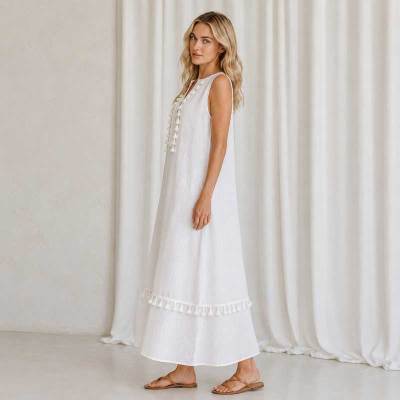
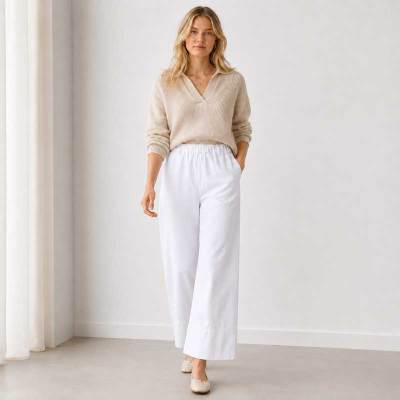
- With linen trousers. A relaxed or square-neck tank over wide-leg linen trousers is the easy summer uniform — cool, considered, and appropriate from market to dinner. The linen bottoms category shows the trouser options that pair naturally with a tank.
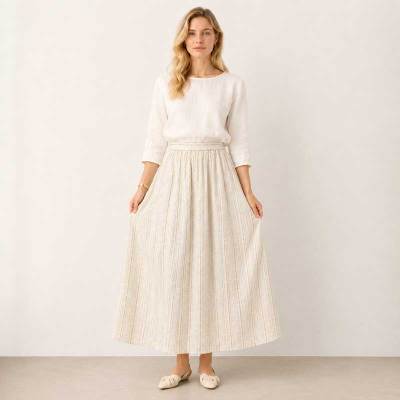
- With a linen skirt. Tuck a fitted tank into a midi skirt for a cleaner line, or let a longline tank skim over it for a softer silhouette.
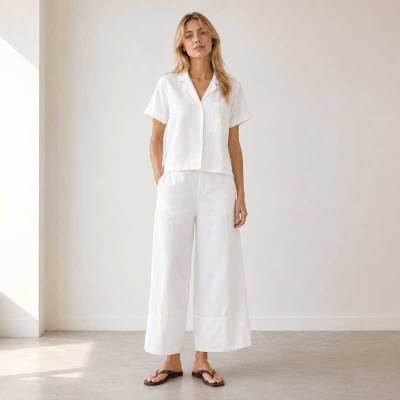
- As a set or near-set. Matching a tank with high-waisted linen trousers or shorts in the same colour creates the effortless two-piece look — the linen sets category is built around this idea, and mixing a tank with a coordinating bottom achieves the same effect.
- Under layers. The layer-ready tank makes open shirts, light jackets, and even a linen dress worn open over trousers work in hot weather — you get the layering look with a cool base.
- Accessories. Because the tank is minimal, accessories do the styling: a straw hat, leather sandals, or a simple necklace lift the whole outfit without adding heat.
The styling principle is simple: let the tank provide the coolth, and let the bottom half and accessories provide the character. One further trick for very hot days: choose a slightly oversized tank and knot the hem at the side — it lifts the fabric off the skin and adds a deliberate detail with zero effort. For more outfit direction, the styling guides in our styling FAQ cover linen pairings in more depth.
By situation, the same three tanks cover most of a summer calendar: for the beach or pool, a relaxed tank over swimwear with shorts and a straw hat reads as intentional rather than thrown together; for city days and cafés, a square-neck tank tucked into high-waisted linen trousers keeps the look cool without looking casual; and for evenings, a fitted or square-neck tank with a midi skirt and simple jewellery moves from day to dinner without a change of clothes. If your summer involves air-conditioned offices, the longline tank under an open shirt is the pairing that handles the temperature swing — the layer comes off as the afternoon heats up, and the tank stands alone.
How to Care for Linen Tank Tops
A tank top is washed more often than almost any other garment — it sits against the skin in the hottest weather — so care is not an afterthought, it is part of choosing linen at all. The routine is short:
- Wash gently and cool. Machine wash at 30 °C on a delicate cycle, or hand wash. Cool water protects both the fibres and the colour.
- Skip the fabric softener. Softener coats the fibres and reduces the breathability and absorbency that make linen valuable. Real softness comes from the garment-washed finish and from washing itself.
- Dry flat or on low heat. Air drying is gentlest; if you tumble dry, keep it short and low. High heat is the main cause of shrinkage and stiffening.
- Wear the wrinkles. Garment-washed linen creases softly and relaxes on the body within minutes. If you prefer a smoother look, iron while slightly damp — but the lived-in crease is the natural character of the fabric.
Two honest expectations: unwashed linen can shrink a few percent in the first wash, which is why garment-washed (pre-shrunk) linen is the sensible choice for a summer staple — see whether linen shrinks after washing for the details. And if the tank feels stiff after a wash, the wash method — hot water, high heat, or hard water — is the usual cause, not the fabric; a gentle rewash restores softness, and our guide to softening linen fabric explains the full routine.
On holiday, the care routine compresses to its essentials: rinse the tank in the sink with a little mild detergent, squeeze gently without wringing, roll it in a towel to remove excess water, and hang it in the shade. Light linen dries in a few hours, which is why a single tank can serve a whole trip. The towel-roll method also keeps the fabric from stretching out of shape while wet.
Common Questions About Linen Tank Tops
Are linen tank tops see-through?
Very light, pale linen can be slightly sheer in direct light — that is a property of light natural cloth, not a defect. Choose mid-weight cloth or a darker shade if opacity matters, or wear the tank over a swimsuit as intended on holiday. Product pages usually state the fabric weight so you can judge before buying.
Do linen tank tops shrink?
Unwashed linen can shrink roughly 3–5% in the first wash, which is why garment-washed linen is the safer choice for a fitted piece like a tank. Garment-washed tops arrive pre-shrunk, so the size you buy is the size you keep — assuming you wash cool and dry gently.
Do linen tanks wrinkle a lot?
Yes — linen wrinkles, and a tank shows creases because there is so little fabric. Garment-washed linen wrinkles softly and relaxes on the body within minutes of wearing; the creased look is the fabric's natural character. If visible wrinkles will bother you, linen may not be the right fabric, and that honest mismatch is worth knowing before purchase.
Are linen tank tops cool enough for the hottest days?
When chosen correctly — light weight, open weave, relaxed cut — a linen tank is one of the coolest garments available, because the fibre moves air and manages moisture better than most alternatives. The caveat: a heavy, tightly woven, fitted linen tank will be warmer. The criteria in this guide exist to prevent exactly that mismatch.
Do linen tank tops pill?
Pilling is rare on good linen. The flax fibre is long and strong, and the smooth plain weave of a typical tank does not generate the friction that creates pills on softer, shorter-fibre knits. The few surface fibres that lift with wear wash away or relax over time; if a tank pills noticeably, it usually points to a blended or low-quality cloth rather than linen's normal behaviour.
How long does a linen tank top last with regular summer wear?
With cool washing and gentle drying, a well-made garment-washed linen tank typically outlasts several summers of regular wear — the honest answer is that longevity depends on the fabric weight, the construction, and the care routine, not on a fixed lifespan. The two habits that extend it most are washing at 30 °C instead of hot and drying flat or on low heat; both protect the fibres and the shape. A tank that has softened beautifully after a dozen washes is not worn out — it is finally at its best, which is the opposite of how cheaper synthetics age.
The Honest Bottom Line
A linen tank top earns its place in a hot-weather wardrobe when the fabric and cut are chosen for the heat: light to mid-weight garment-washed linen, an open weave, and a relaxed silhouette that lets air move. No single tank is the best for everyone — the six silhouettes here cover the realistic range, and the five criteria let you judge any candidate for yourself. The two pieces of advice worth repeating: measure before you buy, because linen does not stretch; and wash cool, because a well-cared-for tank will outlast several summers of heat.
The final honest point: a linen tank will not make you feel cool the way air conditioning does — no garment can. What it does is remove the fabric-related heat: no trapped air, no clinging dampness, no sticky synthetic layer. On a 35 °C day, that difference is the difference between tolerable and miserable. Choose light weight, open weave, garment-washed finish, and a relaxed cut, and the tank becomes the piece you reach for every morning of the summer.
If you are planning a hot-weather wardrobe around linen, the related reading is useful: our guide to the best linen tops for summer covers the fuller top range beyond tanks, and the packable linen travel picks article explains how a couple of tank-and-trouser combinations cover an entire holiday.
Build Your Hot-Weather Linen Wardrobe
Browse the KOSSR linen tops and matching bottoms to put these criteria into practice — or contact us with any question about weight, fit, or what to expect from a specific piece before you order.
Shop linen tops · Browse all linen clothing · Ask us a question