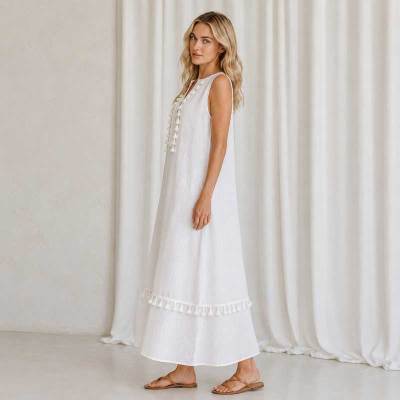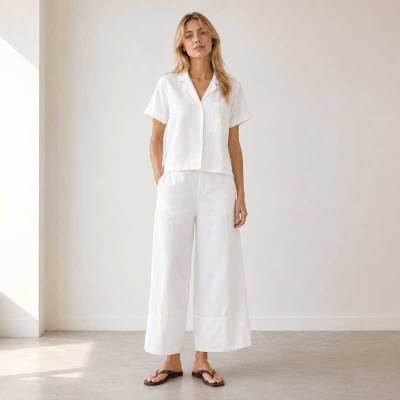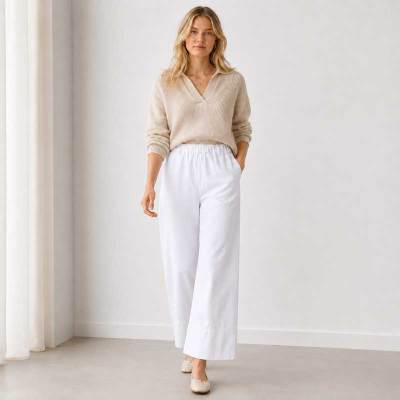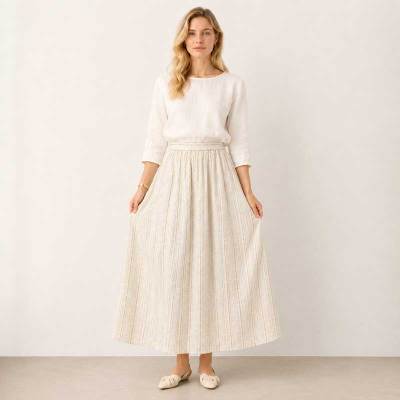
Best Linen Blazers & Jackets for Fall Layering
Best Linen Blazers & Jackets for Fall Layering
A linen blazer or jacket is one of the most useful pieces you can add to a fall wardrobe, because it sits in the one layer most people get wrong: the middle. Linen outerwear does not try to replace a wool coat — it replaces the shapeless knit or the stiff synthetic blazer you currently reach for on 12–20°C days. The best linen blazers for fall are garment-washed, mid-weight pieces around 180–220 gsm with a structured but relaxed cut, worn over a linen shirt, a knit, or a simple tee, and paired with trousers, dresses, or even shorts in the warm September tail. They breathe when the sun comes out, layer under a real coat when the temperature drops, and read as intentional rather than casual — which is why a linen blazer works from an office day to a weekend dinner without changing. This guide covers the honest selection criteria, the styles that actually earn their place in a layered fall wardrobe, temperature-specific layering systems, and the care routine that keeps a linen jacket looking sharp for years. Every recommendation follows the fabric facts we publish on KOSSR product pages: 100% European flax, garment-washed pre-shrunk finish, and composition and weight stated directly on each product.
This is a practical buying and styling guide written from how flax linen actually behaves. Weights, temperatures, and layering combinations are practical targets from real seasonal dressing, not laboratory claims or invented statistics. Where we state a range, it is a working range, not a guarantee.
Why a Linen Blazer or Jacket Belongs in Your Fall System
Most fall layering advice stops at "add a knit," and that is exactly where a linen blazer or jacket earns its place. A knit adds warmth, but it adds no structure — it softens an outfit rather than sharpening it. A linen blazer does both: it adds a real layer of warmth while giving the whole outfit a line, a shape, and a reason. It is the difference between looking like you layered for the cold and looking like you dressed with intent.
The fabric case is just as strong. Linen's hollow flax fibres trap a layer of still air next to your body, which is the same insulating principle wool uses — a mid-weight linen jacket at 180–220 gsm holds noticeably more warmth than a summer-weight 120 gsm shirt, even though both are the same fibre. The honest limit is wind: linen's open weave is not a wind shield, so a linen blazer works best in the 12–20°C range where wind is not yet the dominant problem, and as a mid layer under a coat when it is. That is why our transition guide on moving linen from summer to fall treats outerwear as the missing piece — a linen wardrobe already has the base and the trousers; the blazer or jacket is what turns it into a three-layer system.
- Linen blazers add structure without stiffness. A garment-washed linen jacket drapes and moves with you, unlike the rigid shoulder pads and synthetic lining of a typical fast-fashion blazer. You get the sharp line of tailoring with the ease of a shirt.
- They are genuinely seasonally flexible. The same blazer works open over a tee at 22°C in late September, buttoned over a knit at 14°C in October, and under a wool coat at 8°C in November. Few garments cover a 14-degree swing in one piece.
- They solve the "too warm for a coat, too cool for a shirt" gap. The 12–20°C range is the hardest to dress for, and a linen jacket is the single most reliable answer to it — warmer than a shirt, lighter than a coat, and adjustable because you can take it off indoors.
- They upgrade everything underneath. A linen blazer over a plain tee and trousers reads as considered; the same tee alone reads as casual. It is the fastest styling upgrade in a fall wardrobe, which is why our FAQ on wearing linen in fall recommends outerwear as the key addition.
In short: a linen blazer or jacket is the layer that gives fall outfits both warmth and shape. It is not a substitute for a winter coat, and it is not a gimmick — it is the middle layer most people are missing.
Blazer, Jacket, or Overshirt: What Are You Actually Buying?
Before picking a piece, it helps to know which of the three linen outerwear categories fits your wardrobe, because they layer differently and suit different temperatures. The differences are cut, length, and how they are meant to be worn:
| Category | Cut and length | Best worn | Works at | Under a coat? |
|---|---|---|---|---|
| Linen blazer | Structured shoulders, notched or shawl lapel, hip length, tailored through the body | Over a linen shirt, tee, or knit; office, dinners, events | 14–20°C open or buttoned | Yes — the classic layered look under a wool coat |
| Linen jacket | Relaxed cut, collar, front pockets, hip or slightly below, often no lining | Over tees and shirts for casual wear; errands, travel, weekends | 12–20°C, worn open most of the time | Yes — roomier cut layers easily under heavier coats |
| Linen overshirt | Shirt-like cut with a collar, straight hem, buttons to the bottom, worn like a shirt | Over a tee as a light layer; the most casual option | 15–22°C; doubles as a top when buttoned | Yes, but best as an indoor layer or mild-day outer |
Most people need one of these, not all three. If your fall calendar includes offices, dinners, or events, the blazer is the one. If your autumn is mostly weekends and travel, the jacket covers more ground. The overshirt is the entry-level piece — the least formal, the most casual, and the easiest to wear daily. Whichever you choose, the fabric rule is the same: 100% linen, garment-washed, and a weight you can verify on the product page rather than guess from a photo.
What to Look For: Weight, Cut, and Finish
Not every linen jacket is worth buying, and the differences that matter are measurable. Here is the honest checklist, with the numbers that separate a piece you will wear for years from one that hangs unworn in the closet:
Weight: 180–220 gsm is the fall zone
Linen outerwear lives in a different weight band than summer shirts. Featherweight linen at 100–140 gsm makes a lovely summer shirt but a flimsy jacket that collapses without shape. Mid-weight 150–180 gsm is the crossover zone — acceptable for a relaxed overshirt, a touch light for a structured blazer. The fall sweet spot is 180–220 gsm: substantial enough to hold a tailored line, breathable enough to stay comfortable at 20°C, and heavy enough to trap the still air that provides actual warmth. A 200 gsm garment-washed blazer is the piece you will reach for most; a 240 gsm one reads as heavier and layers less easily.
Cut: relaxed tailoring, not rigid armour
The best fall linen blazer is cut with a little room through the shoulders and body — enough to layer a knit underneath without pulling at the buttons, but not so boxy that it loses its line. Look for a natural shoulder (light or no padding), a two-button front, and a sleeve that lets you push the cuff or roll it for a relaxed look. The test is simple: you should be able to button the blazer over a knit without strain, and the lapels should lie flat when you move. A blazer that fits only over a bare shirt is a summer piece, not a fall one.
Finish: garment-washed is non-negotiable
Raw linen creases sharply, shrinks unpredictably, and feels stiff against the skin — the opposite of what a layering piece needs. Garment-washed linen is pre-softened and pre-shrunk, so it drapes cleanly, wrinkles softly rather than sharply, and behaves through years of washing. This is the finish we use across the KOSSR collection, and it is stated on every product page alongside composition and weight, so the choice is verifiable rather than guessed.
Lining: none, or breathable
Ask what is inside the jacket. Many linen blazers are fully lined with polyester, which destroys the breathability that is the entire point of linen — you get a linen shell over a plastic layer. Unlined or partially lined linen blazers are cooler, lighter, and layer better; if a blazer needs structure, a breathable cotton or viscose lining at the back and sleeves is the honest compromise. When in doubt, an unlined garment-washed linen blazer is the safer fall choice.
The Linen Blazer Styles That Earn Their Place in Fall
Style is personal, but three blazer styles consistently work for fall layering, and each suits a different wardrobe. Choose by how you actually dress, not by what looks best on a hanger:
The classic natural-shoulder blazer
Oat, stone, or navy, two buttons, notch lapels, no padding. This is the workhorse: it carries the office day at 18°C over a linen shirt, moves to a dinner at 15°C over a knit, and disappears under a wool coat at 8°C without bulk. It pairs with everything in our linen tops and linen pants collections, which makes it the highest return on investment of any single fall piece.
The relaxed boyfriend or oversize blazer
Cut a size looser with a soft shoulder, this blazer reads casual rather than corporate. Wear it open over a tee with jeans or wide-leg linen trousers; the oversized line does the styling work, so the rest of the outfit can stay simple. It is the best choice if your fall is mostly weekends, travel, and casual socialising.
The collarless or shawl-collar blazer
A softer, more feminine line that layers beautifully over dresses and knit tops. The shawl collar adds polish without the sharpness of a traditional lapel, and the lack of a structured collar means it sits comfortably under a coat. This is the style to choose if dresses and skirts dominate your wardrobe — see our guide on styling a linen dress for how a blazer completes the layered dress look.
One honest note on colour: warm neutrals — oat, stone, ecru, rust, olive — extend the wear season because they read as autumn while still working with summer's palette. Bright white reads as summer and shortens the useful window; deep navy and charcoal read as year-round and lengthen it. If you buy one blazer, buy a warm neutral or navy.
The Linen Jacket Styles Worth Owning
If a blazer is the sharp option, the linen jacket is the easy one — and for many people it is the more worn of the two. Three cuts cover most of what you need:
The field or safari jacket
Four pockets, a collar, and a straight cut — the classic travel and weekend piece. The pockets are genuinely useful, the cut layers over knits without fighting them, and the relaxed line forgives a long day. It is the jacket equivalent of the linen shirt: it does not try to be formal, it just looks right.
The chore-style jacket
Borrowed from workwear, with a simple collar, front patch pockets, and a boxy straight cut. Worn open over a tee or buttoned over a knit, it is the most casual option here and the easiest to wear daily. It pairs naturally with linen trousers or jeans and handles the 15–20°C range most autumn days deliver.
The shirt jacket
Essentially an overshirt with a slightly heavier hand — buttoned fully it works as a top, worn open it works as a light jacket. This is the most versatile single piece in the category: it is the bridge between your linen sets and your autumn layers, and it packs flat for travel, which makes it the piece to carry when you are not sure what the weather will do.
Whichever jacket style you pick, the layering rule is identical: it is a mid layer with an outer-layer option on mild days. Treat it as the piece that sits between your base and your coat, and it will serve you from September through November.
How to Layer a Linen Blazer or Jacket: Temperature by Temperature
The blazer or jacket is the middle layer of a three-part system, and each part has one job: the base manages moisture, the blazer adds structure and moderate warmth, the coat handles real cold. Here is how the system works across the fall temperature range:
- Base layer: a linen shirt, tee, or knit. The piece under the blazer should be breathable and not bulky — a garment-washed linen shirt, a fine knit, or a plain tee. The blazer is meant to be layered over something, and the base is what you will take down to when you remove the jacket indoors.
- Middle layer: the linen blazer or jacket. This is where the piece earns its place. Buttoned, it adds warmth and structure; open, it adds structure alone. The cut must allow the base to sit comfortably beneath — which is why the fit test in this guide matters more than any style consideration.
- Outer layer: a wool coat, trench, or padded jacket when needed. Below about 10–12°C, the linen blazer becomes a mid layer under a real coat. An unlined linen blazer sits flat under a wool coat without bulk, and the coat provides the wind protection linen cannot.
| Temperature | System | Outfit example |
|---|---|---|
| 20–24°C | Blazer open, no base layering needed | Linen blazer over a tee or linen shirt, trousers, loafers |
| 16–20°C | Blazer buttoned or open over a shirt | Linen blazer over a long-sleeve linen shirt, trousers, closed shoes |
| 12–16°C | Blazer over a knit or fine sweater | Linen blazer over a merino or cotton knit, trousers, boots |
| 8–12°C | Blazer as mid layer under a coat | Wool coat over linen blazer over knit, trousers, boots |
| Below 8°C | Blazer indoors, coat outdoors | Linen blazer in the office; heavy coat and layers outdoors |
Two habits make this system work in real life. First, choose a blazer you can button over a knit — that single fit decision determines how far the piece carries into cold weather. Second, treat the blazer as peelable: the moment you are indoors, it comes off, which is exactly what makes linen outerwear more comfortable than a heavy single layer. If you are building the whole system from scratch, our capsule wardrobe guide on building a linen capsule wardrobe shows how one blazer plus a few bases covers most of autumn.
Linen Blazer vs Other Fall Jackets: An Honest Comparison
A linen blazer is not the only middle-layer option, and the honest comparison helps you decide when it is the right choice and when something else wins. Here is how it stacks up against the usual alternatives:
| Material | Warmth | Breathability | Structure | Best for | Honest limit |
|---|---|---|---|---|---|
| Linen blazer | Moderate (180–220 gsm traps still air) | Excellent — the best in this group | Sharp but relaxed | 12–20°C layering, offices, travel | Poor wind protection; not a cold-weather outer layer |
| Wool blazer | High | Good but heavier | Very sharp | Cooler days, formal settings | Too warm above 18°C; heavier to carry |
| Cotton twill jacket | Low to moderate | Moderate | Casual | Mild days, casual wear | Does not regulate temperature as well as linen |
| Synthetic blazer (polyester) | Moderate | Poor — traps heat and moisture | Stiff, moulded | Formal occasions only | Uncomfortable in temperature swings; not sustainable |
| Denim or corduroy jacket | Moderate to high | Moderate | Casual | Weekends, casual looks | Heavier, less breathable, harder to layer formally |
The pattern is clear: linen wins on breathability and temperature regulation, which are exactly the qualities that matter in the swingy 12–20°C range of early and mid autumn. Wool wins when it gets genuinely cold; synthetics win nowhere except price. That is the honest case for a linen blazer — not that it is the warmest jacket you can own, but that it is the most comfortable one for the temperatures you will actually meet in September and October.
Caring for Linen Blazers and Jackets
A good linen blazer should last years, and the care routine is simpler than people expect. The rules are the same as for any garment-washed linen, with a few outerwear-specific notes:
- Wash less, air more. Outerwear worn over a base layer stays clean longer than shirts — air it after each wear, spot-clean marks, and wash only when genuinely needed. Fewer washes preserve both the fabric and the garment-washed softness. The full routine is in our FAQ on how to wash linen clothing.
- Cool water, gentle cycle, mild detergent. When a blazer does need washing, use 30°C or below on a gentle cycle with mild detergent and no bleach. Cool water protects the fibre and keeps deep colours — navy, rust, olive — richer for longer.
- Dry flat or hang, away from heat. Air-dry a linen blazer on a padded hanger so the shoulders keep their shape. Avoid tumble dryers and radiators; heat is the fastest way to age linen.
- Steam, do not iron, the structured areas. For lapels and shoulders, steam rather than a hot iron — garment-washed linen responds well to steam, and you avoid pressing in creases that are hard to remove. Our FAQ on removing wrinkles from linen covers the steam-first method.
- Store on a padded hanger, not folded. A blazer keeps its shape best hung on a broad, padded hanger in a dry, breathable space. Folded storage risks shoulder creases that take a steam session to remove. The full seasonal storage routine is covered in the KOSSR linen care FAQ collection.
The care difference in one line: linen outerwear is washed rarely, steamed rather than ironed, and stored on a padded hanger — treat it like a tailored piece, and it will hold its line for years.
Frequently Asked Questions
Are linen blazers in style for fall?
Yes — and they have become a staple of relaxed tailoring, which dominates autumn dressing. The appeal is the combination a linen blazer offers that few other pieces do: the structure of tailoring with the ease of a natural fibre. It reads as current in an office, a dinner, or a weekend look, and its breathability makes it more wearable across temperature swings than a wool blazer.
Is a linen blazer warm enough for fall?
For the 12–20°C range, yes — a mid-weight garment-washed linen blazer at 180–220 gsm traps enough still air to add real warmth, especially over a knit. Below about 10–12°C, it becomes a mid layer under a wool coat rather than a standalone outer layer. The honest framing: it is warm enough for most autumn days, and it is not a winter coat.
What do you wear under a linen blazer in fall?
A garment-washed linen shirt, a fine knit or merino sweater, or a plain tee — depending on temperature and formality. The blazer is designed to layer over a breathable base, and the base is what you keep when the blazer comes off indoors. For colder days, layer the knit under the blazer and add a coat on top.
Can you wear a linen blazer with jeans?
Yes — this is one of the easiest combinations in autumn dressing. A relaxed or natural-shoulder linen blazer over a tee with jeans is a classic elevated-casual look, and it works from 14–20°C. Add boots and the look moves easily from day to evening.
Do linen jackets wrinkle a lot?
Linen wrinkles by nature, but garment-washed linen wrinkles softly rather than sharply — the creases are part of the fabric's relaxed character and usually settle within minutes of wear. Pressure creases from sitting or layering come out with steam or an overnight hang. If you want the least wrinkling, choose mid-weight 180–220 gsm linen, which holds its line better than featherweight.
What size should I buy if I want to layer under a linen blazer?
Buy the size that fits with a knit underneath — the blazer should button comfortably over a mid-weight sweater without pulling. If you plan to wear it mainly over tees and shirts, your usual size works. When in doubt, size up rather than down; a relaxed blazer reads intentional, while a tight one reads wrong. Measure against the size chart on each product page before ordering.
The Bottom Line on Linen Blazers and Jackets for Fall
A linen blazer or jacket is the missing middle layer of most fall wardrobes — the piece that adds both warmth and structure across the 12–20°C range that dominates September and October. Buy garment-washed, mid-weight 100% linen at 180–220 gsm with a cut that layers over a knit; choose a blazer for structure and formality, a relaxed jacket for everyday ease, or an overshirt for the most casual option. Wear it open over a shirt or tee on mild days, buttoned over a knit when it cools, and under a wool coat when the temperature drops below about 10°C. Care is simple: wash rarely and cool, steam rather than iron, and store on a padded hanger. Done this way, one linen blazer earns its place from late summer through deep autumn — and that is the honest definition of a good buy.
Find Your Fall Layer
Browse the KOSSR collection of 100% European flax, garment-washed linen — outerwear, tops, pants, dresses, and sets in warm neutral and deep autumn tones — or contact us with any question about weight, fit, or layering before you order.
Browse linen outerwear · Browse linen tops · Browse linen pants · Browse linen sets · Ask us a question