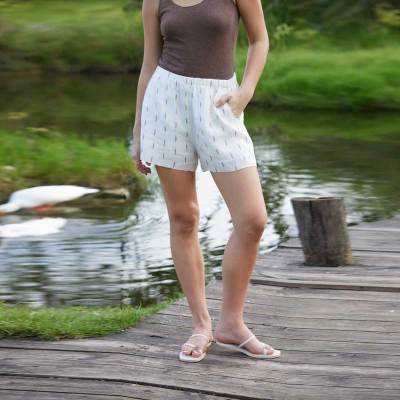
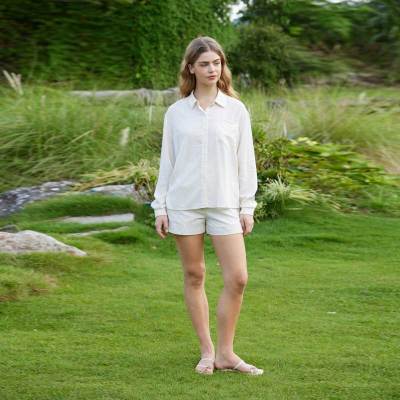
Yes, linen is a lightweight fabric — and it feels even lighter than its weight suggests. Most linen clothing weighs between 120 and 180 gsm (grams per square meter), with airy summer linen pieces coming in around 90 to 140 gsm. For comparison, a typical cotton t-shirt fabric sits at roughly 150 to 180 gsm, and denim at 300 to 400 gsm. The combination of thin, hollow flax fibers and an open weave makes linen both light on the scale and light against the skin — which is why it is a first choice for warm-weather clothing.
How Light Is Linen, Exactly?
Fabric weight is measured in grams per square meter (gsm) — the weight of one square meter of cloth. Linen spans a wide range depending on how it is spun and woven, but the weights used for clothing fall into a few clear bands:
| Linen Category |
Typical Weight |
Common Uses |
Feel & Behavior |
| Very light linen |
Under 90 gsm |
Scarves, sheer overlays, handkerchief linen |
Translucent, floats away from the body, creases easily |
| Lightweight linen |
90–120 gsm |
Summer blouses, airy shirts, light dresses |
Very breathable; may need a lining for opacity |
| Mid-weight linen |
140–180 gsm |
Dresses, pants, shirts, skirts, sets |
The all-around sweet spot: opaque, drapes well, holds shape |
| Medium-heavy linen |
180–220 gsm |
Blazers, structured trousers, jackets |
Holds crisp lines; still breathable but less floaty |
| Heavy linen |
220+ gsm |
Coats, upholstery, home textiles |
Sturdy and durable; rarely used for light summer garments |
At KOSSR, most of our clothing collection uses mid-weight linen between 140 and 180 gsm, because this range is light enough to stay airy in summer while remaining opaque, wrinkle-resistant enough for daily wear, and durable for years of use. Lighter 90–120 gsm linen appears in a few of our breeziest summer tops where maximum airflow matters more than structure.
Linen Weight vs Other Fabrics: A Quick Comparison
To understand how light linen really is, it helps to compare it with the fabrics you already know. The table below shows typical weights for common clothing fabrics:
| Fabric |
Typical Clothing Weight |
Lightness Ranking |
| Silk (chiffon / charmeuse) |
60–120 gsm |
Lightest — but delicate and less durable |
| Linen |
90–220 gsm (mostly 120–180) |
Light, yet strong and long-wearing |
| Cotton (shirting / poplin) |
120–180 gsm |
Similar weight, but denser and less airy |
| Cotton jersey (t-shirts) |
150–200 gsm |
Medium; feels heavier against skin when damp |
| Wool (light suiting) |
180–280 gsm |
Heavier; chosen for warmth and drape |
| Denim |
300–450 gsm |
Heaviest of everyday fabrics |
The key point is that linen sits in the same weight range as typical cotton shirting, yet it feels significantly lighter in wear. Because flax fibers are hollow and the weave is open, a linen garment carries more air and less dead weight against your body — so it performs like a much lighter fabric than the number on the label suggests.
Why Linen Feels So Light: The Structure of Flax Fiber
The lightness of linen is not only a matter of grams — it is also a matter of structure. Three physical properties of flax fiber make linen feel lighter than its measured weight:
- Hollow fiber core. Flax fibers have a central hollow channel (the lumen). This trapped air makes the fiber lighter per volume than solid fibers like cotton, and it also acts as built-in insulation — warm in winter, cool in summer.
- Low yarn twist. Linen yarn is spun with relatively low twist, which keeps the yarn soft and airy instead of dense and heavy. The result is a fabric with more air between the fibers.
- Open, breathable weave. Typical linen weaves are looser than those of poplin or denim, allowing air to move through the fabric freely. A mid-weight linen dress can feel cooler than a lighter-weight synthetic blouse because it does not trap heat against the skin.
This is why a 160 gsm linen shirt can feel lighter than a 140 gsm cotton-polyester shirt: the linen moves air and wicks moisture, so it never clings or feels heavy when you sweat.
Fiber length also plays a role in how light a linen fabric feels. Long-staple flax fibers — the kind grown in Western Europe — allow mills to spin finer, more even yarns at lower weight while keeping the fabric strong. Short-staple fibers, by contrast, force manufacturers to spin heavier yarns to reach the same strength, producing denser, less airy cloth. This is why two linen shirts with the same GSM can feel completely different: the one made from longer fibers will drape more softly and breathe more easily at the same weight.
Moisture matters for the "light" feeling: Linen can absorb up to 20% of its own weight in moisture before it feels damp. It pulls sweat away from your skin and releases it into the air, so the fabric stays dry against your body even on humid days. A fabric that stays dry always feels lighter than one that soaks up sweat and sticks to you.
Lightweight vs Mid-Weight Linen: Which Should You Choose?
Lightweight is not automatically "better" — the right weight depends on the garment and how you plan to wear it. Here is an honest comparison:
Lightweight Linen (90–120 gsm)
- Maximum airflow and a floaty, breezy drape
- Best for blouses, loose summer dresses, and resort wear
- More creasing and softer structure
- Can be slightly translucent in light colors
- Typically needs gentle handling in the wash
Mid-Weight Linen (140–180 gsm)
- Still breathable and light — but opaque and structured
- Best for dresses, trousers, shirts, sets, and blazers
- Wrinkles less and holds its shape through the day
- More durable; survives frequent washing better
- Works across three seasons, not just summer
If your main goal is extreme coolness for the hottest weeks — think beach cover-ups or airy resort blouses — lightweight linen is the right call. If you want one wardrobe piece that looks polished at work, at dinner, and on holiday, choose mid-weight linen. Most quality linen brands, including KOSSR, build their core collections around mid-weight fabric for this reason.
Here is a simple decision rule by scenario:
- Beach vacation or resort wear: lightweight linen (90–130 gsm) — maximum airflow, easy to pack, relaxed drape.
- Daily summer wear, work, or travel: mid-weight linen (140–180 gsm) — opaque, structured, and wrinkle-tolerant.
- Layering, blazers, or cooler evenings: medium-heavy linen (180–220 gsm) — holds shape under a jacket or on its own.
- Home textiles, coats, or upholstery: heavy linen (220+ gsm) — durability first, comfort second.
Is "Lightweight" Always Better? The Limitations
Every fabric weight has trade-offs, and it helps to know them before you buy:
- Sheerness. Very light linen (under 110 gsm) in white or pastel shades can be see-through. Check the product description for opacity notes or choose mid-weight for workwear.
- More wrinkles. The lighter the linen, the more freely it creases. If you dislike ironing, mid-weight and heavier linen wrinkle less because longer fibers and tighter weaves hold their shape.
- Less durability. Ultra-light linen is lovely but thinner, so it wears faster in high-friction areas like elbows and thighs. Mid-weight linen lasts years longer.
- Drape vs structure. Lightweight linen drapes softly but cannot hold tailored lines the way mid-weight fabric can. Structured garments such as blazers simply need heavier cloth.
The practical takeaway: "lightweight" is a feature, not a quality score. A 120 gsm linen blouse and a 180 gsm linen blazer are both correctly light for their purpose — what matters is matching the weight to the garment.
Weight also influences how a garment should be cared for. Lightweight linen (under 120 gsm) is best washed on a gentle cycle or by hand, because thin fabric is more easily stressed by aggressive machine washing. Mid-weight linen handles normal machine washing well, which is one more reason it is the practical choice for everyday pieces you will wear and wash often.
There is also a seasonal logic to linen weight. For peak summer heat, lighter linen (90–140 gsm) is unbeatable — it moves air, dries fast, and feels like wearing almost nothing. For spring and autumn layering, medium-heavy linen (180–220 gsm) adds warmth without the bulk of wool or cotton knits. Many of our customers in humid climates (Southeast US, southern Europe, Japan) choose mid-weight linen as their year-round daily fabric, while customers in very hot dry climates (Middle East, North Africa) prefer the lighter end of the range.
How to Check Linen Weight Before You Buy
Because weight is the single most useful number for predicting how linen will feel, here is how to find it when shopping:
- Look for the GSM on the product page. Quality retailers list fabric weight. If it is not listed, check the details tab or ask customer service directly.
- Hold the fabric up to the light. If you can clearly see through it, the weight is likely under 110 gsm. A soft blur of light means roughly 120–160 gsm; little or no light means 160+ gsm.
- Feel the drape. Drape the fabric over your hand. Floaty and papery means light; a calm, smooth fall means mid-weight.
- Check the garment type. As a rule of thumb: blouses 90–140 gsm, dresses and pants 140–180 gsm, blazers and structured pieces 180–220 gsm. If a dress is described as "lightweight," expect the lower end.
- Ask the seller directly. A reputable linen seller will answer with an exact GSM range, fiber origin, and washing behavior. Vague answers are a warning sign.
At KOSSR, every product page states the fabric weight range, fiber origin (European flax), and finishing (pre-washed) so you know exactly what you are ordering before you buy.
KOSSR's Approach to Lightweight Linen
In our own production, we select fabric weight by garment function rather than defaulting to the lightest option:
- Summer tops and breezy blouses — European flax linen around 90–140 gsm for maximum airflow.
- Dresses, trousers, shirts, and two-piece sets — 140–180 gsm mid-weight linen so the pieces stay opaque, structured, and durable.
- Every garment is pre-washed, which softens the fibers and locks in the final weight, so what you receive is what you will keep wearing for years.
Because we control the fabric from flax selection to final garment, we can guarantee the weight, origin, and shrinkage behavior of every piece — information that matters when you are comparing linen between brands.
This transparent approach is part of how we build trust with our customers — you can read more about our sourcing and production philosophy on our About Us page, and browse care guidance for every fabric we use in our blog library.
Linen Fabric Types and Their Typical Weights
Not all linen looks or weighs the same. The weave and finishing style change both the weight and the hand-feel of the fabric. Knowing the common types helps you decode product descriptions when shopping:
- Plain-woven linen (most shirts, dresses, pants): 120–180 gsm. The standard balanced weave — smooth, crisp, and the most common choice for clothing.
- Crinkle / washed linen: 130–170 gsm. Pre-creased texture that hides wrinkles and feels relaxed; popular for resort wear and casual dresses.
- Slub linen: 140–190 gsm. Deliberately irregular yarn thickness gives it a rustic, handcrafted texture — slightly heavier than plain linen at the same nominal weight.
- Linen canvas / duck: 220–320 gsm. Dense and sturdy; used for structured jackets, bags, and home textiles rather than summer clothing.
- Sheer / handkerchief linen: 60–100 gsm. Very fine and translucent; used for scarves, overlays, and airy blouses where transparency is intentional.
- Linen blends (linen-cotton, linen-viscose): 120–200 gsm. Weight varies with the blended fiber; blends drape differently and usually wrinkle less, but sacrifice some of linen's breathability.
When a product page simply says "linen" without a weight, the fabric type in the photo and the garment category usually hint at the range: structured blazers and trousers are almost always 180 gsm or above, while floaty dresses and blouses are typically 90–150 gsm.
Buying Lightweight Linen Online: What to Ask the Seller
Lightness is easy to misjudge from photos, so before you order linen online — especially lightweight linen — ask these five questions:
- What is the exact GSM of this garment? A specific number ("145 gsm") is far more useful than a vague "lightweight."
- Is the fabric pre-washed? Pre-washed linen won't shrink further and is soft on arrival; unwashed linen may shrink 5–8% in the first wash.
- Is it 100% linen or a blend? If it is a blend, ask for the exact composition — "linen" with 40% polyester is a very different garment.
- Is the garment lined or opaque? For light colors in lightweight linen, ask whether you can see through the fabric and whether a lining is included.
- What are the care instructions? Lightweight linen may require hand-washing or a gentle cycle; confirm you are comfortable with the care routine.
At KOSSR we answer all of these upfront — every product page lists the GSM range, fiber origin, finish, and care instructions, so there are no surprises when your order arrives. If anything is unclear, just ask us directly and we will give you the exact fabric details before you buy.
Related Questions About Linen Fabric
Is linen fabric breathable?
Yes — linen is one of the most breathable natural fabrics. The hollow flax fibers and open weave let air circulate freely, and linen's moisture-wicking ability keeps the fabric dry against your skin. This is why mid-weight linen can feel cooler than much lighter synthetic fabrics.
Is linen fabric soft?
Quality linen softens with every wash. Pre-washed linen is comfortable from the first wear, while unwashed linen starts stiffer and needs three to five washes to soften. Higher-grade long-staple flax produces naturally softer, smoother fabric.
Is linen fabric made from natural fibers?
Yes — linen is made entirely from the flax plant. The fibers are extracted from the plant stem, spun into yarn, and woven into fabric with no synthetic components. Pure linen is fully natural and biodegradable, which is why it is a preferred fabric for sustainable fashion.
Why is linen popular for clothing?
Linen is popular because it combines lightness, breathability, durability, and a timeless natural aesthetic. It keeps you cool in summer, softens with each wash, lasts for years, and works across casual and elegant settings — a rare combination among fabrics.
Ready to feel how light linen actually is? Browse the KOSSR linen collection — every piece lists its exact fabric weight so you can choose the lightness that fits your wardrobe. Questions about a specific garment? Contact our team and we will tell you the GSM, fiber origin, and care details before you order.