Why Linen Is a Slow Fashion Essential | KOSSR Linen Lifestyle Guide
Slow fashion is often described as "buy less, choose well, make it last" — and linen is the fabric that makes that philosophy practical. Linen is a slow fashion essential because it is one of the few natural fibres that is durable enough to last a decade, sustainable enough to justify the purchase, and timeless enough to stay wearable year after year. Flax, the plant linen is made from, grows with minimal water, produces a fabric roughly twice as strong as cotton, and gets softer with every wash instead of wearing out. This guide explains what slow fashion really means, why linen is its most natural material partner, how the economics work out in your favour, and the honest limitations you should know before you build a linen wardrobe.
This article is written for shoppers who want to buy fewer, better clothes — and for anyone tired of replacing summer basics every single season. We cover the definition of slow fashion, the fibre facts behind linen's durability and sustainability, cost-per-wear math, how to recognise quality linen, the common myths worth ignoring, and the practical steps to build a slow wardrobe that actually works.
1. What Slow Fashion Actually Means
Before explaining why linen fits slow fashion, it is worth being precise about what the term means — because it is used loosely. Slow fashion is not simply "expensive clothing" or "buying less." It is a set of principles that oppose the fast-fashion cycle of producing cheap garments, wearing them a handful of times, and discarding them within months:
- Buy fewer, better pieces. Prioritise quality and longevity over volume and novelty. One well-made linen shirt that lasts eight years beats eight cheap shirts that each last a season.
- Choose materials with a low environmental footprint. Prefer fibres that need little water, few chemicals, and produce no microplastic pollution — natural, renewable, biodegradable materials.
- Design for longevity. Timeless silhouettes, strong construction, and repairable garments — not trend-driven pieces designed to look dated next season.
- Wear things for longer. The single most effective way to reduce the impact of your wardrobe is to extend the life of each garment. A garment worn 100 times has a fraction of the per-wear footprint of one worn 10 times.
- Transparency and fair production. Knowing where fibre comes from, who makes the clothes, and under what conditions — and paying a price that reflects real costs.
Slow fashion does not require you to be perfect or minimalist. It is a direction: each purchase is a decision to value durability, honesty, and the environment over speed and disposability. With that definition in place, the case for linen becomes very concrete.
2. The Fibre Facts: Why Linen Lasts
Linen's durability is not folklore — it is measurable fibre physics. Flax fibres are long, straight, and highly crystalline, which makes them among the strongest natural textile fibres in the world:
- Roughly twice as strong as cotton. Flax's tensile strength is about double that of cotton, which is why vintage linen items from decades ago still survive in usable condition while cotton garments of the same era rarely do.
- Long-staple fibres. European flax is typically processed as long fibres (line flax), which spin into smoother, stronger yarn with fewer weak points than the short fibres used in cheaper fabrics.
- Resistant to abrasion. Linen wears well under friction — elbows, seats, bags — without pilling the way cotton or synthetic blends do.
- Improves with age. Unlike synthetics that degrade or cotton that thins, linen softens and gains a subtle lustre with washing and wearing. It does not fall apart; it becomes more comfortable.
- Mould and moth resistance. Linen's natural properties make it less hospitable to moths and mildew than wool or cotton, so it survives storage between seasons.
In practice, this means a well-made 100% linen garment has a realistic service life of 5–10 years of regular summer wear — and often longer for jackets, trousers, and home textiles. That longevity is the foundation of linen's claim to slow fashion.
3. The Cost-Per-Wear Reality
Slow fashion is often assumed to be more expensive — and it is true that a quality linen garment costs more upfront than a fast-fashion equivalent. But the correct measure is cost per wear, not purchase price. Here is an honest example using typical retail figures:
| Scenario | Upfront Price | Wears Per Year | Years of Use | Total Wears | Cost Per Wear |
|---|---|---|---|---|---|
| Quality linen shirt | $90 | 30 | 6 | 180 | $0.50 |
| Fast-fashion cotton shirt | $20 | 30 | 1 | 30 | $0.67 |
| Disposable synthetic top | $12 | 15 | 0.5 | 8 | $1.50 |
These are illustrative numbers, not guarantees — your own wear patterns will differ. But the pattern is robust: because linen lasts several times longer, its cost per wear is typically equal to or lower than cheaper garments that must be replaced every one or two seasons. You are not paying more for linen over the life of the garment; you are paying the same or less, while buying and discarding far fewer items.
Quick answer: Linen is not a premium indulgence — it is a value decision over time. At typical wear rates, a good linen garment's cost per wear beats fast fashion, because durability is the multiplier that makes the math work.
There is a second, non-financial benefit: fewer purchases means fewer resources consumed. The most sustainable garment is the one already in your wardrobe — and linen is the fibre most likely to still be there in a decade.
4. The Environmental Case: Where Linen's Footprint Is Genuinely Low
Slow fashion's environmental claims should always be examined carefully. Linen's case holds up better than most, for four measurable reasons:
- Rain-fed cultivation. Flax is grown mainly in the cool, humid climate of Western Europe — Normandy, Flanders, the Netherlands — where annual rainfall of 700–900 mm covers most of the plant's needs. Over 80% of European flax is grown without irrigation and without synthetic pesticides, according to the European Confederation of Flax and Hemp (CELC).
- Very low water footprint. A linen garment uses roughly 6.4 litres of water across its life cycle, versus about 2,700 litres for a conventional cotton T-shirt. Per hectare, flax uses roughly 1/15th the water of cotton.
- Biodegradable and microplastic-free. Pure linen is a plant fibre with no synthetic components. It biodegrades naturally at the end of its life and sheds no microplastics when washed — a direct contrast to polyester, nylon, and other oil-based fabrics.
- Whole-plant use. Nothing in the flax plant is wasted: fibre becomes fabric, seeds become linseed oil, and shives become building materials. The crop is renewable and grown in rotation that benefits soil.
Honest caveats matter here. Finishing and dyeing add water and chemicals, so undyed or low-impact dyed linen has a smaller footprint than heavily processed fabric. And transport, sewing, and care still contribute to the total. But the fibre-level advantage is real and large — and because linen lasts longer, its per-wear environmental cost is even smaller than the headline numbers suggest.
5. Timeless Design: Linen Does Not Date
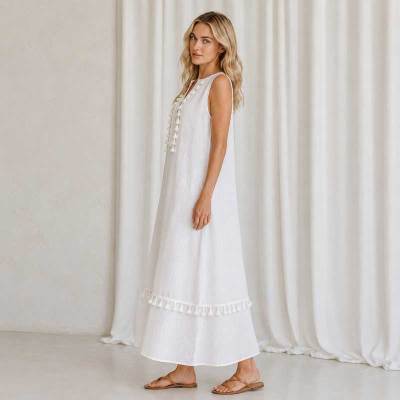
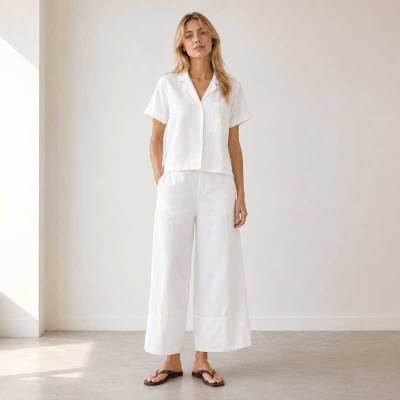
Slow fashion requires clothes that do not look outdated when trends move on. Linen has a built-in advantage here: its visual language is classic rather than trendy. A natural-coloured linen shirt, a relaxed linen dress, or a tailored linen blazer does not belong to any particular season's trend cycle — the same garments have been worn, and looked right, for decades.
This timelessness is partly visual (neutral natural tones, relaxed texture, simple silhouettes) and partly cultural: linen is associated with summer ease and considered style, not with a specific year. A garment that still looks current in year five is a garment you will keep wearing in year five — which is exactly what slow fashion needs from every purchase.
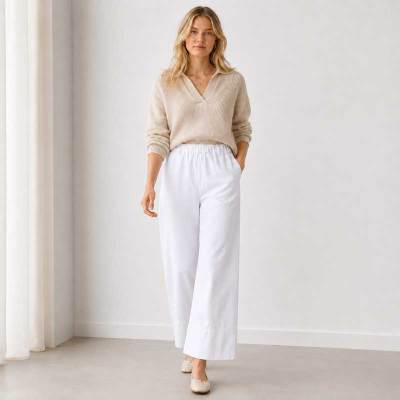
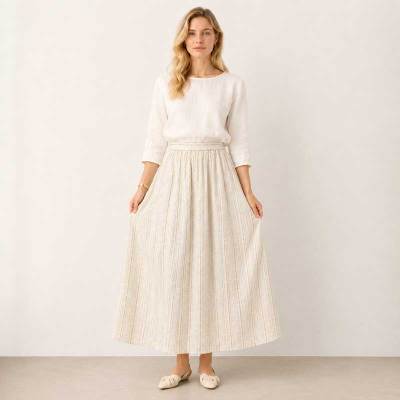
There is also a practical side. Because linen styles are not trend-dependent, they mix easily with the rest of a wardrobe. A linen shirt works with denim, tailored trousers, skirts, or layered under a blazer. Versatility extends the life of every piece it is worn with, compounding the slow-fashion effect across your whole wardrobe.
6. How Linen Ages: Better, Not Worse
Most fast-fashion fabrics degrade: synthetics pill, lose shape, and develop odour; cheap cotton thins and loses colour. Linen is unusual in that it genuinely improves with use:
- Softens progressively. The crisp hand-feel of new linen relaxes into a supple, comfortable softness over the first several washes — without losing strength.
- Develops a natural lustre. Long flax fibres take on a gentle sheen with wear and washing, the "lived-in" glow that linen lovers describe.
- Colour deepens honestly. Natural and vegetable-dyed linen fades gracefully and evenly, ageing like good leather or wood rather than looking tired.
- Wrinkles become character. The creases that bother some buyers at first become part of linen's relaxed aesthetic — and pre-washed linen needs less ironing as it ages.
- Repairable. Because the weave is strong and visible, small tears and loose buttons are straightforward to repair, further extending garment life.
This aging behaviour is central to slow fashion: a garment you enjoy more over time is a garment you keep longer. Linen is one of the few fabrics where the second year genuinely feels better than the first.
7. The Honest Limitations of a Linen Wardrobe
For slow fashion to be an informed choice, the limitations deserve equal airtime. Linen is not the answer to every garment need:
- Wrinkles. Linen creases naturally. If you dislike ironing or need pristine formal looks, you will manage wrinkles with steam, damp hanging, or acceptance.
- No stretch. Pure linen has no elastane. Fitted silhouettes depend on cut; if you need stretch, consider a 95/5 linen-elastane blend and accept a small breathability trade.
- Seasonality. Linen excels in warm weather. It can be layered for cooler months, but a purely linen wardrobe in cold climates requires other fabrics too.
- Upfront cost. Quality linen costs more at the till than fast fashion. The cost-per-wear math usually works out, but the initial outlay is real and not everyone can absorb it at once.
- Not all linen is equal. Cheap, loosely woven, short-fibre linen wears out faster and erodes the whole argument. Slow fashion only works if you buy the right linen — which is why the quality checklist below matters.
None of these cancel linen's role in slow fashion; they simply define its boundaries. Linen is a cornerstone, not a complete wardrobe.
8. How to Recognise Quality Linen for a Slow Wardrobe
Because durability is the entire premise, buying quality linen is not a luxury — it is the mechanism. Here is the checklist we use at KOSSR, and you can apply it to any brand:
- Read the fibre composition. Look for "100% linen" or an explicit ratio. Vague labels like "linen mix" hide weak fibre content.
- Check flax origin. European flax (France, Belgium, the Netherlands) is rain-fed, long-staple, and grown under strict EU rules — the most reliable quality signal available. Origin disclosure is a good sign; silence is a warning.
- Look at the weight. Mid-weight linen of 140–180 gsm is the durable sweet spot for clothing. Very light linen (under 110 gsm) is airier but weaker and more translucent.
- Confirm pre-washing. Pre-washed linen is soft on arrival and shrinks only 1–3%; unwashed linen can shrink 5–8% in the first wash and stiffens again.
- Examine construction. Tight, even weave; neat seams with reinforcement at stress points; secure buttons; consistent dye. A great fibre in a poorly made garment is still a poor purchase.
- Check the care reality. Quality linen is machine-washable cool and air-dries fast — if a "linen" garment requires dry-cleaning only, question the fibre content.
At KOSSR, every garment is cut from 100% pre-washed European flax in mid-weight ranges, with composition, origin, and weight stated on the product page — so the quality questions are answered before you order, not after.
One honest note: the word "linen" on a label does not guarantee quality. A garment can legally be called linen with surprisingly low flax content. The composition line and origin disclosure are the only facts that tell you what you are really buying.
8. Linen vs Other Slow Fashion Fabrics
Linen is not the only natural fibre, so an honest comparison keeps the argument credible. The main alternatives are organic cotton, hemp, wool, and Tencel (lyocell). Here is how they stack up on the criteria that matter for a slow wardrobe:
| Fibre | Durability | Water Footprint | Biodegradable | Best Use |
|---|---|---|---|---|
| Linen (flax) | Excellent — ~2x cotton strength | Very low; rain-fed in Europe | Yes, fully | Warm-weather clothing, durable staples |
| Hemp | Excellent | Low; rain-fed in many regions | Yes, fully | Hard-wearing casual wear |
| Organic cotton | Good | Moderate (1,000–2,000 L/garment) | Yes, fully | Soft everyday basics |
| Wool | Good, naturally elastic | High (land + sheep + processing) | Yes, fully | Cold-weather layers |
| Tencel (lyocell) | Moderate | Low-ish, but wood-pulp processing | Partially (with certification caveats) | Soft draping pieces |
Two conclusions follow. First, there is no single "perfect" fibre — the honest slow-fashion approach is to match fibre to use: linen and hemp for durable warm-weather staples, wool for winter, organic cotton where softness matters most. Second, linen's specific strength is the combination — it is durable, low-water, biodegradable, and suitable for the highest-rotation summer garments all at once, which is why it anchors so many slow wardrobes.
9. Common Misconceptions About Linen and Slow Fashion
A few ideas about linen circulate that deserve a straight correction, because they affect buying decisions:
- "Linen is delicate." The opposite is true: flax is roughly twice as strong as cotton and resists abrasion. The fine look of linen comes from fibre quality, not fragility.
- "Linen shrinks badly." Only unwashed linen shrinks significantly (5–8% in the first wash). Pre-washed linen — standard on quality garments like ours — shrinks just 1–3%.
- "Linen is only for summer." Linen is at its best in warm weather, but it layers beautifully for cooler months — under blazers, with knitwear, or in heavier weaves for jackets. Seasonality is a strength, not a limitation, if your wardrobe is built for layering.
- "Wrinkles mean poor quality." Wrinkling is inherent to flax's fibre structure, present even in the finest linen. It is a characteristic to manage (or embrace), not a defect — and pre-washed linen wrinkles less than new.
- "All linen is equally sustainable." The fibre is sustainable; the product depends on origin, finish, and dye. European flax with low-impact finishing carries the strongest claim, which is why origin disclosure matters.
Reading these myths clearly helps you buy with confidence — and it also helps you spot marketing that trades on linen's reputation without delivering its substance.
10. Building a Slow Fashion Wardrobe with Linen: A Practical Plan
If the idea of slow fashion appeals but the scale feels daunting, here is a realistic, step-by-step approach — you do not need to replace your wardrobe overnight:
- Audit what you already own. Count how many summer basics you actually wear and how long they lasted. This baseline makes the cost-per-wear argument concrete for your own wardrobe.
- Identify the highest-rotation gaps. Start with the pieces you wear most in warm weather — shirts, dresses, trousers — because that is where durability pays off fastest.
- Buy one quality linen piece at a time. Choose natural tones (white, sand, ecru, navy) that mix with everything, and a silhouette that fits your life for years, not one season.
- Care for it properly. Cool wash, air dry, store on padded hangers or folded. Linen rewards simple care with a decade of service.
- Repair rather than replace. Loose buttons and small tears are fixable. A repair keeps the garment's footprint low and its story going.
- Repeat and retire gradually. As older pieces genuinely wear out, replace them with quality linen — the wardrobe shifts toward slow fashion without a dramatic overhaul.
11. Why KOSSR Builds Around Linen
Our position comes from working with flax at scale, not from theory. We chose 100% European flax for the core collection for three practical reasons: our customers buy linen for warm weather and want it to last; the fibre's environmental story is verifiable rather than marketing; and linen's aging behaviour means our garments earn their place in a wardrobe over years. We specify European origin, fabric weight, and pre-washing on every product page because we believe slow fashion only works when buyers can verify what they are purchasing.
We are not opposed to blends in principle — a small elastane percentage can make a fitted piece genuinely more comfortable — but we believe fibre content should always be disclosed clearly, never hidden. When we use blends in future lines, the ratio will be stated alongside the same origin and weight information we publish for our pure-linen pieces, so you can compare on facts rather than marketing.
If you are building a slower wardrobe, our practical advice is: start with the pieces you wear most, choose natural tones, verify the fibre and origin, and care for what you buy. More guidance is available in our linen lifestyle and buying guides, and you can read about our sourcing and production standards on our About Us page.
12. Linen's End of Life: The Circular Conclusion
Slow fashion does not end when a garment stops being worn — it ends with what happens next. Here, too, linen closes the loop in a way few fabrics can match. Because 100% linen is a pure plant fibre with no synthetic components, it is fully biodegradable: a linen garment returns to soil naturally, breaking down without leaving microplastics or persistent waste behind. It can also be composted at home, and well-worn linen has a long second life as cleaning cloths, quilting material, or rags before it finally degrades.
Contrast that with the typical fast-fashion outcome: polyester and nylon garments persist in landfill for centuries and shed microfibres into waterways throughout their entire life, including every wash. Even "sustainable" blends lose this advantage once synthetics are added — only the natural fibre portion biodegrades. This is one more reason the fibre composition line matters so much: it determines not only how long the garment lasts, but what happens to it at the end.
The full linen story is genuinely circular: a renewable rain-fed crop, a durable fabric that serves for years, a repairable and improvable garment, and a compostable end. That is what a slow fashion essential looks like — every stage of the life cycle is defensible, not just the marketing.
Frequently Asked Questions
Why is linen considered slow fashion?
Linen embodies the three core slow-fashion principles: it is made from a renewable plant with a very low water footprint, it is exceptionally durable (roughly twice as strong as cotton, with a realistic 5–10 year life), and its classic, natural look does not date. That combination makes it one of the most practical materials for buying fewer, better, longer-lasting clothes.
Is linen sustainable enough to justify the price?
On fibre-level metrics, yes: European flax is largely rain-fed with minimal irrigation and pesticides, uses about 6.4 litres of water per garment versus roughly 2,700 litres for a cotton T-shirt, and is fully biodegradable with no microplastics. Because linen also lasts years longer, its per-wear environmental cost is smaller still. Finishing and dyeing add impact, so undyed or low-impact linen is the most sustainable choice.
How long does a linen garment last?
A well-made 100% linen garment, worn and cared for normally, typically lasts 5–10 years — and often longer for jackets, trousers, and home textiles. Flax is roughly twice as strong as cotton, resists abrasion and pilling, and softens with age rather than degrading. Pre-washed, mid-weight linen (140–180 gsm) from European flax gives the longest service life.
Does linen get softer with age?
Yes — this is one of linen's defining qualities. New linen feels crisp; over the first several washes it relaxes into a supple softness while keeping its strength. With continued wear it develops a gentle lustre. Unlike synthetics that pill or cotton that thins, linen genuinely improves with use, which is why it suits a slow-fashion wardrobe.
Is 100% linen better than linen blends for slow fashion?
For durability and environmental footprint, yes: 100% linen is fully biodegradable and maximally strong, while blends dilute both. A 95/5 linen-elastane blend can add useful stretch with modest trade-offs. The key is reading the ratio — the higher the flax percentage, the more of linen's slow-fashion benefits you keep.
What is the most sustainable way to care for linen?
Wash in cool water with full loads, air dry rather than tumble drying, and iron only when damp if you want crispness. Linen dries fast and rarely needs ironing once pre-washed and aged. These habits extend garment life — which is the single most effective way to reduce the environmental cost of any piece of clothing.
Slow fashion is a decision to value durability over disposability — and linen is the fabric that makes that decision easy. It is durable enough to last a decade, sustainable enough to justify itself, and timeless enough to stay in rotation year after year. That is why the entire KOSSR linen collection is made from 100% pre-washed European flax, with composition, origin, and weight stated on every product page. Browse the collection to see the difference, read more linen guides, or contact our team — we are happy to help you choose pieces that will still be in your wardrobe years from now.