Why KOSSR Chooses Linen for Daily Life
Why KOSSR Chooses Linen for Daily Life
When we started KOSSR, we asked ourselves one fundamental question: what fabric could carry someone through a full day — from morning coffee to evening wind-down — without sacrificing comfort, style, or conscience? We tested cottons, weighed the environmental cost of synthetics, looked at wool for its natural properties, and even explored hemp and Tencel. The answer, we kept coming back to, was linen.
Linen is not the newest fabric. Archaeological evidence shows flax fibers being used for textiles as far back as 8,000 years ago in the Fertile Crescent. But its relevance for daily life in the 21st century is stronger than ever. It is not a nostalgic choice or a fashion statement. It is a practical, performance-driven decision based on how the fabric behaves in real living conditions — how it breathes, how it wears, how it ages, and what it costs the planet.
This article explains exactly why KOSSR builds every garment around linen and why we believe it is the best all-around fabric for a daily-wear wardrobe.
Breathability That Keeps Up With Your Day
Linen's defining physical advantage is its hollow fiber structure. Under a microscope, each flax fiber appears as a polygonal rod with a central cavity called a lumen — an open channel that runs the length of every fiber. This natural air duct system is what makes linen uniquely breathable among natural textiles.
On a warm afternoon, the hollow fibers move excess body heat away from your skin through convection — warm air exits the fabric, cool air enters. In an air-conditioned room, the same air pockets provide a light insulating buffer against abrupt temperature drops. Cotton, by comparison, has a flat ribbon-like fiber structure with no central cavity, so its moisture and heat management relies entirely on the weave density rather than the fiber itself.
Synthetic fabrics such as polyester or nylon bypass all natural ventilation entirely. They trap heat and moisture against the skin because their solid or microporous extruded fibers do not allow the same degree of passive air exchange. This is why wearing a synthetic blouse on a humid day leads to the clammy, sticky sensation that linen wearers never experience.
The measurable difference:
- Air permeability: Linen allows approximately 1.5 times more airflow than cotton in a comparable weave density, and up to three times more than tight-weave polyester blends.
- Moisture regain: Linen can absorb up to 20 percent of its own weight in moisture before the fabric surface feels wet to the touch. Cotton, by comparison, saturates at around 8 to 10 percent moisture regain before the dampness becomes perceptible.
- Drying speed: Because moisture spreads across the surface of each flax fiber rather than pooling inside the fiber structure, linen dries noticeably faster than cotton after washing or after absorbing perspiration.
- Antistatic properties: Linen's natural moisture content prevents static charge buildup. Synthetic fabrics, being hydrophobic, generate static through friction that causes clinging, flyaway fabric, and lint attraction.
For daily wear, the practical effect is this: a linen garment does not become uncomfortable partway through the day the way synthetics do. It adjusts to your body temperature and activity level continuously, and it recovers quickly — step out of the heat into a shaded area, and the fabric cools with you almost immediately.
Durable Enough for Everyday Wear and Regular Washing
Daily life is hard on clothing. Sitting, stretching, bending, washing, drying, folding, wearing again. The cycle repeats weekly for months and years. Linen handles this mechanical stress better than most people expect.
Flax fibers are among the strongest natural fibers known to textile science. Their tensile strength — the amount of pulling force a fiber can withstand before breaking — is roughly twice that of cotton. This strength comes from the fiber's crystalline cellulose structure and the way the cellulose chains are oriented along the fiber axis. When flax fiber is wet, its tensile strength actually increases by approximately 20 percent, which is why wet linen can be aggressively processed in spinning and finishing without fiber breakage.
Pilling resistance. Pilling is almost nonexistent in pure linen. The reason is fiber length. Flax staple fibers average 30 to 90 centimeters in length, compared to cotton fibers which average 2 to 5 centimeters. Shorter fibers have more exposed ends at the fabric surface, which tangle into pills under abrasion. Linen's long fibers mean far fewer exposed ends, so the fabric surface stays smooth even after repeated washing and wear.
Washing behavior. Linen does not require special handling. It can be machine washed on a normal cycle at 30 to 40 degrees Celsius with standard detergent. Avoid chlorine bleach, which weakens cellulose fibers over time, but oxygen-based bleach is safe for white linen. Tumble drying on medium heat is acceptable, though air drying preserves the fabric texture best. The key difference from cotton or synthetics is that linen actually improves with washing — each wash cycle softens the fibers, breaks down residual pectin, and relaxes the weave, making the fabric more supple and comfortable.
Wrinkling — addressed honestly. Linen wrinkles. This is a function of the fiber's high rigidity and low elastic recovery. Unlike synthetic fibers that spring back to shape after deformation, flax fibers hold the crease they are put into. For many wearers, this natural wrinkling is part of linen's appeal — it signals the fabric's natural origin and gives garments a relaxed, effortless character. For those who prefer a crisper look, ironing linen while slightly damp at a medium-high setting produces a sharp finish that holds until the next wash. Between washes, hanging linen in a steamy bathroom or using a garment steamer removes most wrinkles in minutes. The practical trade-off is clear: linen's unrivaled breathability and comfort come with a visible natural texture that synthetics cannot replicate.
Low Maintenance, High Return
The practical care routine for linen is simpler than most people assume. Here is exactly how to keep linen garments looking and feeling their best:
- Washing frequency. Linen does not need washing after every wear because its natural fibers resist odor-causing bacteria better than synthetics. Air out linen garments overnight between wears, and wash every two to four wears depending on activity level.
- Machine washing. Use cool or warm water (30 to 40 degrees Celsius). Add a mild liquid detergent — powders may not dissolve fully in cool water and leave residue on the fiber. Do not use fabric softener, which coats the fibers and reduces breathability. A half-cup of distilled white vinegar in the rinse cycle naturally softens linen without coating the fibers.
- Drying. Shake the garment out before hanging or laying flat to dry. Line drying in shade preserves color better than direct sunlight. If using a tumble dryer, select medium heat and remove the garment while still slightly damp to minimize wrinkles.
- Ironing. Iron while the fabric is still damp, using a medium-high setting. For a relaxed, lived-in look, skip ironing entirely — the natural creases are part of the aesthetic.
- Storing. Store linen flat or on padded hangers. Linen breathes naturally and resists mildew better than cotton in humid conditions, but avoid prolonged storage in plastic bags, which trap moisture.
The practical result is that a well-constructed linen garment can remain in regular rotation for five to ten years or longer. Compare this to a fast-fashion synthetic blouse, which may pill, lose shape, and feel less comfortable after three to six months of weekly wear. The cost per wear of linen, calculated over its full usable life, is significantly lower than that of cheaper synthetic alternatives precisely because linen lasts longer and performs better throughout its life.
Temperature Regulation Across Real Environments
Most people think of linen as strictly a summer fabric. In reality, linen's thermoregulating properties make it useful across a wider temperature range than any other natural fabric. The hollow fiber structure acts as a passive thermal buffer: in warm conditions, the air-filled lumens conduct heat away from the body; in cool conditions, the trapped air provides a thin insulating layer.
| Condition | Linen Behavior | Why It Works |
|---|---|---|
| Hot and humid (28 to 35 degrees Celsius) | Feels cool and dry against skin | Hollow fibers move heat away from the body; moisture spreads across fiber surface and evaporates quickly |
| Warm and dry (22 to 28 degrees Celsius) | Lightweight and airy, no cling | Natural air permeability allows continuous ventilation without fabric sticking to skin |
| Mild and breezy (15 to 22 degrees Celsius) | Comfortable as a single layer outdoors; easy to layer | Linen's slight fabric stiffness creates a micro-air layer between fabric and skin; adding a cardigan or jacket provides warmth without bulk |
| Cool indoor air conditioning (18 to 22 degrees Celsius) | Does not feel cold or clammy | Unlike synthetic fabrics that feel cold when the wearer is sweating, dry linen does not conduct temperature extremes when damp |
| Warm transit environments (bus, train, car in summer) | Continues to breathe even when seated | Ventilation continues through the fabric structure regardless of position; no sticky accumulation at contact points |
This temperature range covers the vast majority of daily living environments for most people, particularly those in temperate, Mediterranean, and subtropical climates. A single linen garment can transition from a warm morning commute to an air-conditioned office to an evening outdoors without requiring a mid-day change of clothes. That is a practical convenience that synthetic fabrics, with their tendency to trap heat or cling when damp, simply cannot match.
Environmental Impact That Compounds With Every Wear
Every time you choose linen over a synthetic garment, you make a measurable difference to your wardrobe's environmental impact. The difference is not symbolic — it is quantifiable and cumulative.
- Water footprint. Flax requires virtually no irrigation in its primary growing regions. The flax grown in France, Belgium, and the Netherlands relies entirely on natural rainfall. Total water consumption for linen production — including field and processing water — is approximately 50 to 150 liters per kilogram of fabric. Conventional cotton, by comparison, requires 10,000 to 20,000 liters per kilogram, much of it from irrigation in water-stressed regions. A single linen shirt's water footprint is roughly one-tenth that of a cotton shirt at the fiber production stage.
- Carbon footprint. Flax plants sequester atmospheric carbon dioxide during their 100-day growing cycle. The cradle-to-gate carbon footprint of linen fabric is approximately 0.6 kilograms of CO₂ equivalent per kilogram of fabric. Polyester, on the other hand, generates 6 to 9 kilograms of CO₂e per kilogram, most of it from fossil fuel extraction and energy-intensive polymerization. A linen garment's carbon impact at the production stage is roughly one-tenth that of a comparable synthetic garment.
- Chemical use. Flax production uses minimal agricultural chemicals. The crop grows densely enough to suppress most weeds naturally, reducing herbicide requirements. Fungicides and insecticides are rarely needed. In textile processing, linen requires bleaching only if a pure white finish is desired, and most linen finishing uses enzyme treatments rather than harsh chemical baths. For comparison, synthetic fiber production requires solvents, catalysts, stabilizers, and finishing agents — many of which are hazardous to aquatic ecosystems if released untreated.
- Biodegradability and end of life. Pure linen fabric buried in soil decomposes within three to six months, returning cellulose to the soil ecosystem. Synthetic fabrics in landfill conditions persist for 200 years or more, breaking down into microplastic particles that enter groundwater and food chains. Even mechanically recycled polyester degrades in quality with each recycling cycle, while linen can be composted without quality loss at the end of its textile life.
- Circular economy potential. Linen offcuts and end-of-life garments can be repurposed into industrial wipes, insulation material, or composite board reinforcement. The flax plant itself generates no waste — seeds are pressed for linseed oil, shives become particleboard, and short fibers (tow) are used for coarse yarns and paper products.
The cumulative effect across years of daily wear is substantial. A person who replaces five synthetic garments with linen equivalents and wears them regularly for three years reduces their personal textile-related water footprint by approximately 30,000 liters and their carbon footprint by roughly 40 kilograms of CO₂e — just from those five garments.
Why KOSSR Specifically
We do not claim to have invented linen. What KOSSR does is focus on the details that make linen genuinely work for daily life — the decisions that turn a good fabric into a reliable wardrobe staple.
Cut and fit. We design for real bodies engaged in daily activities. Our garments allow enough ease for bending, reaching, sitting, and walking while keeping a clean, intentional silhouette. Shoulder seams align with the natural shoulder line. Armholes are cut high enough to avoid gaping but deep enough for unrestricted movement. Waist and hip measurements account for the range of proportions found across standard size charts rather than one idealized shape.
Fabric weight selection. For most of our garments, we select mid-weight linen in the range of 160 to 200 grams per square meter. This weight is heavy enough to drape well and hold its shape through a full day of wear, but light enough to breathe effectively and feel comfortable against the skin. Lighter linen (under 140 GSM) works well for scarves and summer blouses but tends to wrinkle excessively and lacks the body for structured garments. Heavier linen (over 220 GSM) is durable but feels warm and stiff for everyday wear in most climates.
Pre-washing. All KOSSR garments are pre-washed before cutting and sewing. This is a deliberate manufacturing step that most linen brands skip. Pre-washing removes natural starch and residual pectin from the weaving process, so the garment arrives at your door already softened. It also means that any initial shrinkage — typically 3 to 5 percent for pure linen — has already occurred before the garment reaches you. The size you order is the size it stays.
Production transparency. We work with mills that provide fiber composition certification for every fabric batch. Our garment labels carry accurate fiber percentages, wash instructions, and country-of-origin information. We do not use "linen" as a broad marketing term to describe blends that are predominantly synthetic.
Accessible pricing. We believe sustainable daily wear should be accessible, not premium-priced for exclusivity. Our price-to-quality ratio reflects a commitment to garments you can afford to wear every day — not reserve for special summer holidays or weekend brunches. A KOSSR linen dress costs roughly what you would pay for a mid-tier fast-fashion cotton dress, but it will last five to ten times longer and perform better from the first wear to the last.
The Slow Fashion Argument
"Buy less, choose well, make it last" — this principle captures what KOSSR is built on. Linen embodies slow fashion not through marketing language but through material physics and practical garment behavior.
- Linen improves with age. A linen garment worn weekly for three years is more comfortable than it was in its first month. The fabric softens, the drape relaxes, and the color takes on a gentle lived-in patina. Synthetic fabrics deteriorate with age — they pill, fade unevenly, lose elasticity, and develop permanent odor from bacterial buildup in the fibers.
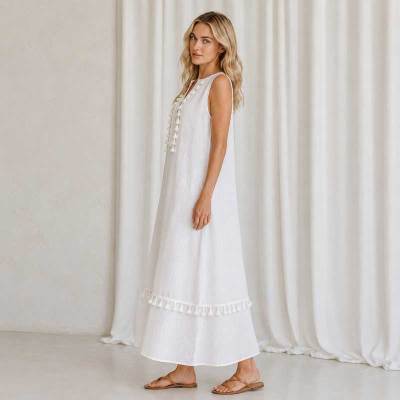
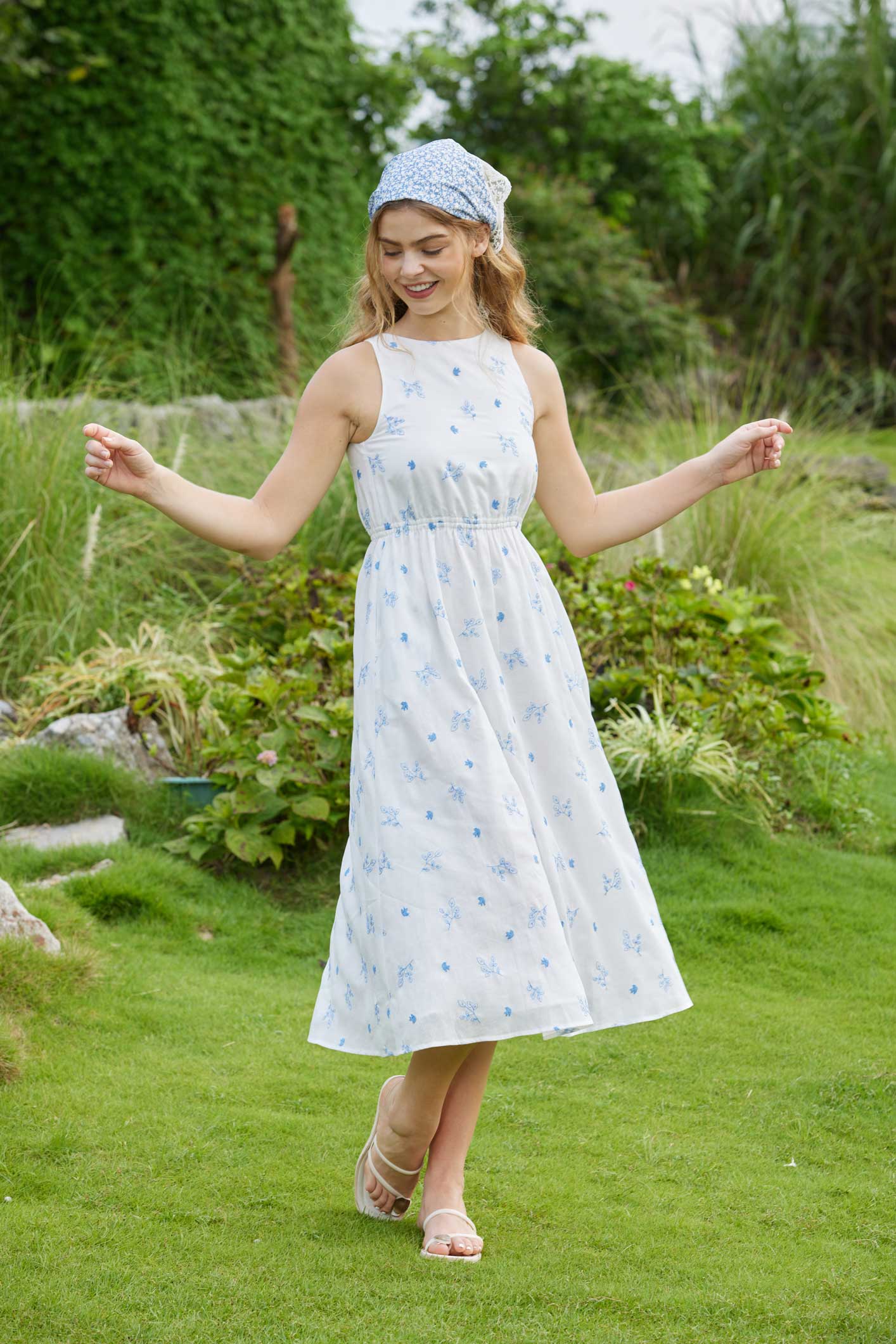
- Linen is seasonless. A mid-weight linen dress works in summer as a standalone piece with sandals, in early autumn with a cardigan and ankle boots, and in spring with a denim jacket and sneakers. A single linen garment can serve across three seasons, reducing the number of garments needed in a functional wardrobe.
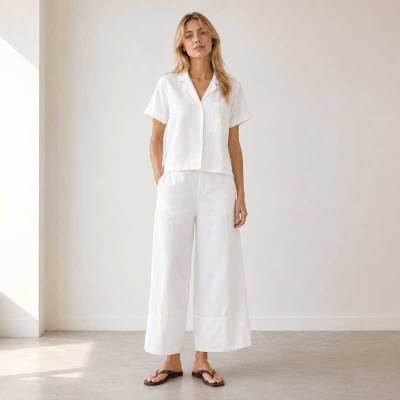
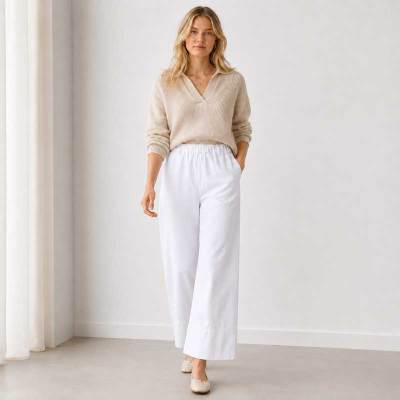
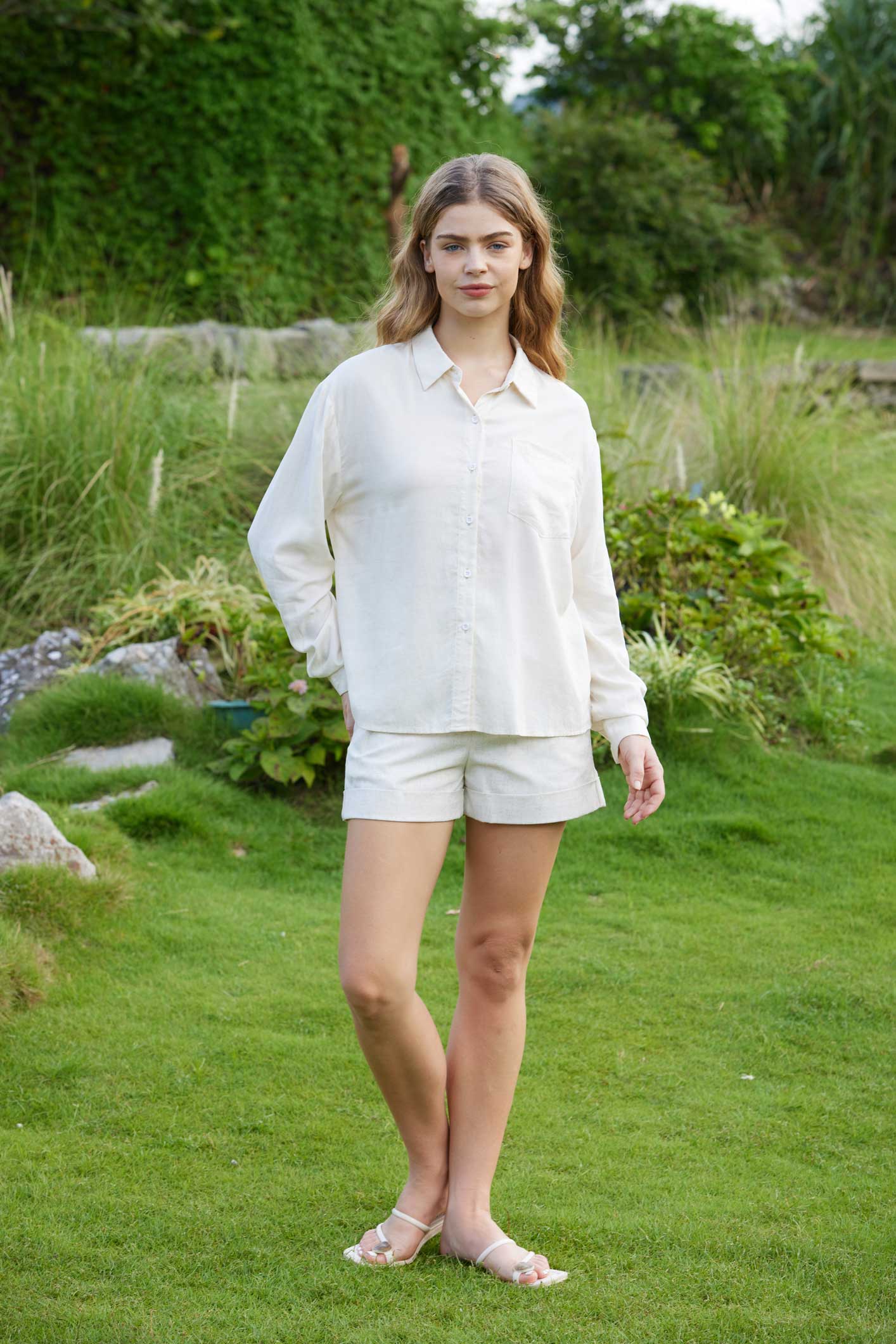
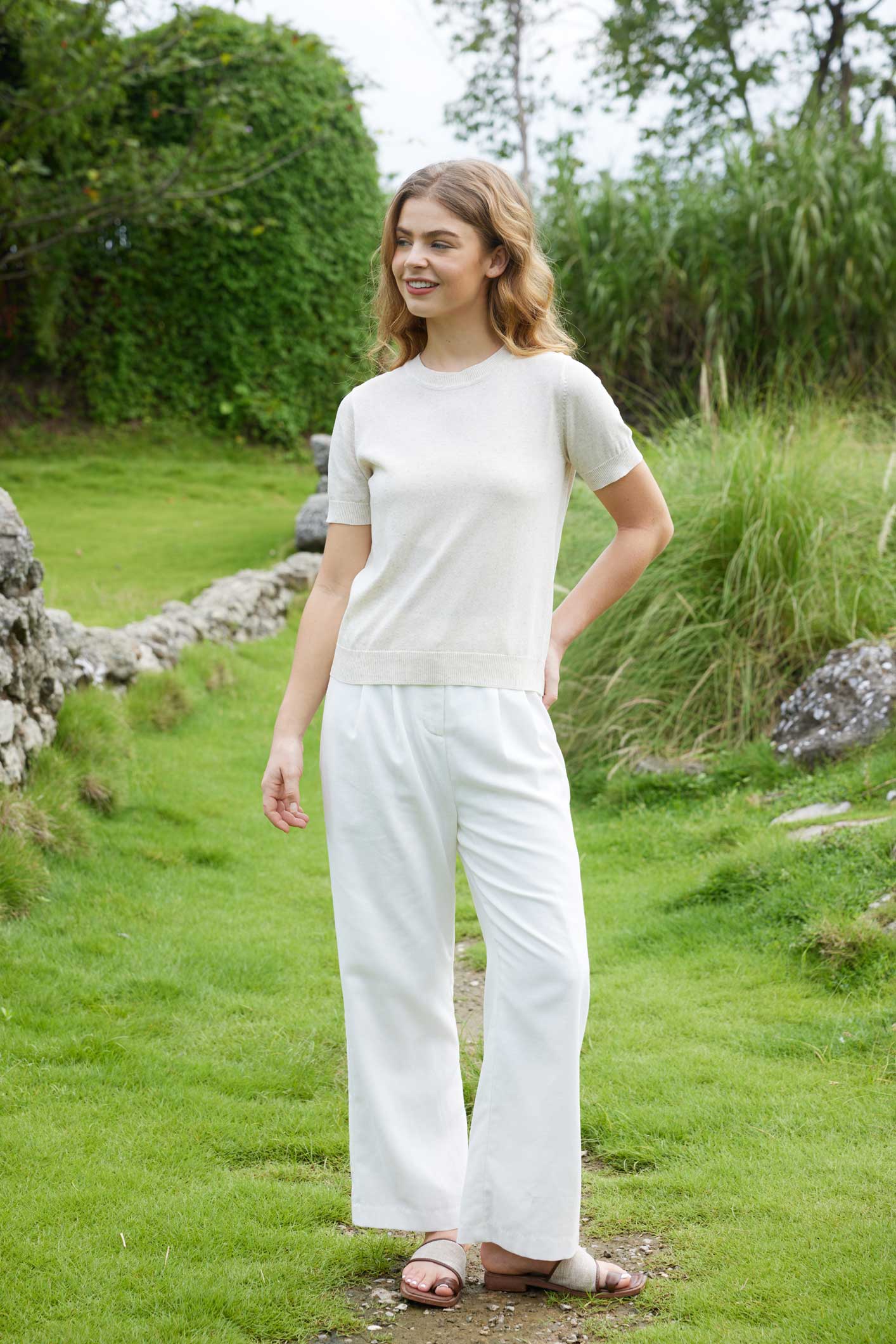
- Linen fits a capsule wardrobe naturally. A cream linen shirt, a pair of oat linen trousers, and a versatile linen dress form the backbone of a practical 20-piece wardrobe. These pieces coordinate with denim, knits, blazers, and accessories without clashing in texture or formality. Linen's neutral-to-warm color palette — cream, oat, sand, slate, sage, dusty rose — integrates naturally with the colors and textures already found in most wardrobes.
- Linen does not go out of style. The appeal of linen is not derived from seasonal trends or fashion cycles. It comes from texture, drape, and natural presence — qualities that are independent of the current season's runway trends. A linen garment purchased this year will look as appropriate five years from now as it does today.
Practical slow fashion means having fewer garments that serve more roles. Linen, more than any other fabric in our experience, makes this possible. One linen dress can function as a work dress, a brunch outfit, a travel companion, a date-night piece, and a loungewear option — each time looking intentional rather than compromised.
What Our Customers Tell Us
When we ask KOSSR customers why they choose linen for daily life, three themes emerge consistently across hundreds of conversations:
- Comfort they forget they are wearing. The most common customer reply is some version of "I forget I'm wearing it." Linen's lightweight feel and continuous temperature regulation mean wearers do not adjust, tug, or fidget with their clothing throughout the day — not because the garment restricts less, but because the fabric itself stays neutral against the skin regardless of changing conditions.
- Versatility that simplifies packing and planning. "I packed one linen dress for a five-day trip and it worked for everything" is a recurring story. The combination of neutral color, transitional weight, and the ability to dress up with accessories or down with flat sandals means one linen garment covers multiple contexts that would otherwise require three separate garments.
- Longevity that builds loyalty. "I've had my KOSSR linen shirt for three years and it's still my favorite piece" is the kind of feedback that validates our approach. Customers do not say this about synthetic blouses or fast-fashion cotton tees. They say it about linen because linen earns that loyalty through consistent performance over years of wear.
Start Your Daily Linen Practice
If you have never worn linen as a regular part of your daily wardrobe, here is a straightforward way to begin:
- Choose one piece. A linen shirt, a pair of linen pants, or a linen dress. Pick something that works with at least three outfits you already own and wear regularly.
- Wear it for a full ordinary day. Not for a special outing or a vacation. Wear it for a normal Tuesday. Pay attention to how it feels at 10 AM versus 3 PM versus 8 PM. Notice whether you adjust it less than your usual clothing.
- Wash it and wear it again. Notice the softening. This is usually the moment when linen skepticism turns into linen preference.
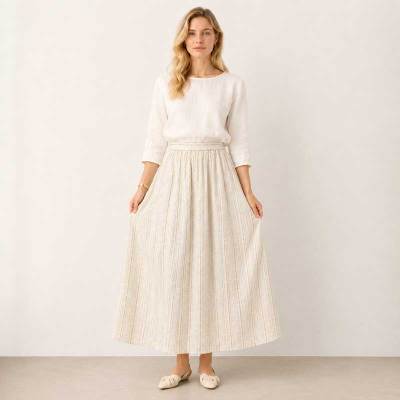
- Add one more piece. Once you have worn your first linen garment through a few cycles, add a complementary piece — a linen cardigan for layering, a linen skirt for warmer days, or a second linen top for rotation.
The goal is not to replace your entire wardrobe with linen. It is to experience what the fabric does for your daily comfort and to decide whether that difference matters to you. Most people who try it find that it does.
At KOSSR, we build our garments for exactly this kind of gradual, meaningful integration. Linen is not a luxury indulgence or a vacation-only fabric. It is a practical, durable, comfortable textile that earns its place in your daily rotation through performance — not marketing, not trend cycles, not seasonal hype. Explore our collection to see how linen fits into the life you live every day.