Maternity and Postpartum Linen: Soft, Breathable Comfort
Maternity and Postpartum Linen: Soft, Breathable Comfort
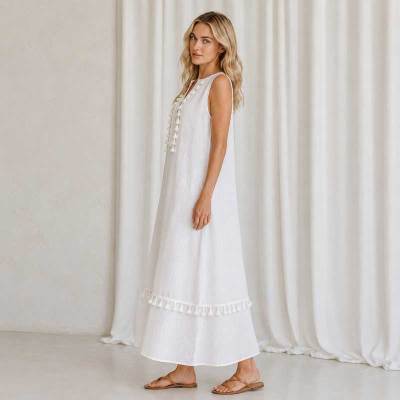
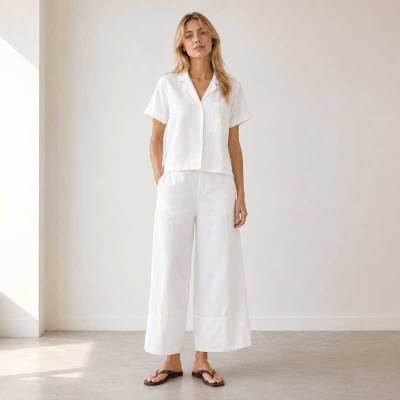
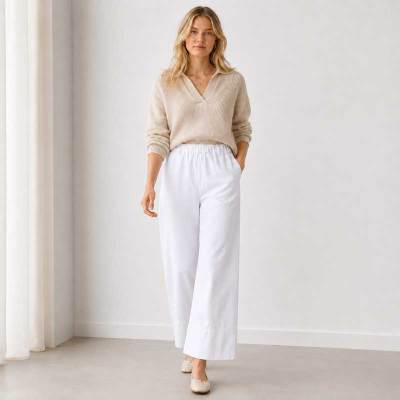
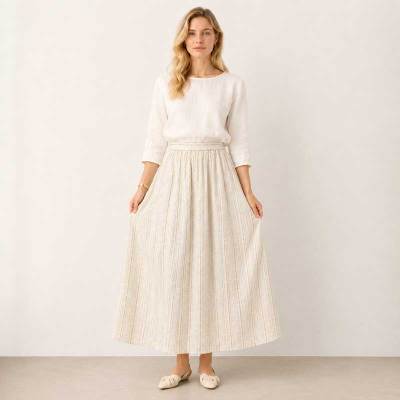
Linen is a strong choice for pregnancy and the postpartum months because it regulates temperature, moves moisture away from skin and softens with every wash. The practical answer is to choose garment-washed 100% European flax in the 140-190 gsm range, in cuts that clear the bump and open at the front: linen shirt dresses, wrap dresses, tunic tops, relaxed pants with a soft waistband and two-piece sets. Buy the size that fits your ribcage and hip measurement rather than guessing a trimester size, and let the cut do the work.
Why Linen Suits Pregnancy Better Than Most Fabrics
Pregnancy changes three things that clothing has to answer: how warm you feel, how sensitive your skin becomes, and how quickly the shape of your body changes. Linen responds to all three. It is a hollow-fibre plant fabric, so it carries air inside the fibre and releases heat rather than trapping it. It absorbs moisture quickly and dries fast, which keeps the skin surface drier through warm rooms, long days and the hot flushes that many people experience in the third trimester.
The second reason is mechanical rather than chemical. Linen has almost no stretch. That sounds like a disadvantage in maternity wear, and it would be if you tried to wear a fitted linen bodycon dress at 34 weeks. In practice, the lack of stretch is what keeps a loose linen shirt dress or a wide-leg linen pant hanging cleanly instead of clinging to a changing silhouette. A stretch jersey adapts to the bump by stretching over it; a well-cut linen piece adapts by hanging away from it. The second option looks intentional and feels cooler.
The third reason is longevity. Maternity clothing has a short active life, often five to seven months of pregnancy plus a few months of postpartum. Buying pieces that only work while pregnant creates a small, expensive wardrobe that is thrown away or stored indefinitely. Linen pieces chosen for their cut, not their stretch, usually continue as everyday clothing afterwards: the shirt dress becomes a summer dress, the wide-leg pants become workwear, the tunic becomes a beach cover-up. That is the logic behind the slow-fashion position KOSSR takes across the collection: fewer pieces, worn longer.
Finally, there is the texture question. During pregnancy and breastfeeding, skin can feel more reactive. Some people find synthetic fibres, tight elastic and rough seams irritating. Garment-washed linen has already been softened in production, so it does not have the stiff, papery hand of raw linen. It still has a visible slub and texture, but it sits lightly on the skin rather than scratching it. If your skin is very reactive, wash new pieces once before wearing them, which removes any residual sizing and softens the fibre further.
- Breathability: air moves through the weave, so heat escapes instead of building up under the fabric.
- Moisture handling: flax absorbs moisture quickly and releases it, so skin feels drier for longer.
- No cling: a cut that hangs from the shoulder or an empire seam stays away from the bump and the lower back.
- Softening over time: each wash relaxes the fibre, so the piece you wear most becomes the softest one you own.
- After-pregnancy value: the same pieces work as everyday summer and loungewear once the maternity period ends.
What Changes in Your Body, and What Clothing Has to Solve
Most maternity advice focuses on the bump, but the bump is only one of several changes that affect how clothing feels. Ribcage expansion is often more disruptive than the belly: bras and button-front shirts that fitted in the first trimester can feel restrictive by the third. Blood volume rises significantly during pregnancy, which contributes to feeling warmer than usual and to visible heat in the hands, feet and face. Ligaments soften, joints feel looser, and pressure from waistbands becomes more noticeable, especially after a long day.
Postpartum brings a different set of requirements. The abdomen is still changing shape for weeks, the chest is often larger and more sensitive, and night sweats are common as fluid levels normalise. Clothing needs to open easily, sit softly against the skin and be washable at short notice. A garment that requires hand washing, dry cleaning or careful ironing is a garment that will stay in the drawer during the weeks when you have the least time and the least patience.
The table below maps each change to a practical clothing response, so you can judge a piece before you buy it rather than after the first wear.
| Change | What it feels like | What to look for in linen |
|---|---|---|
| Ribcage expansion | Button-front shirts feel tight across the chest; straps dig in | Loose through the chest, drop shoulder, no fitted bust darts, size by bust and ribcage measurement |
| Warmer core temperature | Overheating in heated rooms, restless sleep | Light to medium weight (110-170 gsm), single layer, open weave, natural colour that reflects light |
| Bump growth | Waistbands press; fitted skirts ride up | Empire or under-bust seam, wrap front, A-line skirt, elastic or drawstring waist that sits below the bump |
| Skin sensitivity | Seams and labels feel rough; chest skin tender | Garment-washed finish, soft seams, no scratchy trim, front-opening neckline for feeding |
| Postpartum night sweats | Waking damp, needing to change at night | Linen sleepwear or lounge sets that absorb and dry fast, plus a spare set within reach |
| Frequent washing | Milk, cream and oil marks appear without warning | Machine-washable at 30-40 degrees, colour-fast dye, no dry-clean-only pieces |
The Right Linen Weight for Each Stage
Linen weight is measured in grams per square metre, usually shortened to gsm. It is the single most useful number on a product page, because it predicts how the fabric will behave far better than a description like "lightweight" or "premium". A 110 gsm linen is almost translucent and moves constantly; a 240 gsm linen is dense, structured and warm. For pregnancy and postpartum, the useful range sits between 140 and 190 gsm, with a lighter option for sleep and a heavier option for cold-weather layering.
Weight also affects how a garment reads on the body. Light linen drapes close to the shape, which is flattering in a flowing maxi but unforgiving in a fitted skirt. Medium linen holds a soft structure, which is why it works so well for shirt dresses, tunics and wide-leg pants: the fabric hangs from the shoulder or waist and skims the body without pressing against it. Heavy linen holds a sharp line and can feel stiff against a sensitive bump, so reserve it for jackets, overshirts and pieces worn away from the skin.
| Weight | How it behaves | Best use during pregnancy and postpartum |
|---|---|---|
| 110-130 gsm | Sheer, very breathable, drapes closely | Sleepwear, lounge pants, hot-climate dresses, layering pieces for July and August |
| 140-160 gsm | Light but opaque, soft hand, gentle drape | Shirt dresses, tunic tops, loose pants, nursing-friendly shirts for spring and summer |
| 170-190 gsm | Medium body, holds shape, still breathable | Wrap dresses, two-piece sets, wide-leg pants, pieces worn outside the house in autumn |
| 200-220 gsm | Structured, minimal drape, warmer | Overshirts, jackets, skirts for cool weather, layering over a light base |
| 230-240 gsm | Dense and crisp, holds a sharp line | Outer layers only; avoid against a tender bump or chest in the first postpartum weeks |
A simple rule for a due date in late autumn or winter: build the base wardrobe in 170-190 gsm, add one 140-160 gsm piece for heated interiors, and use a 200-220 gsm overshirt or jacket as the outer layer. That combination covers a heated apartment, a cold commute and a warm hospital or clinic room without needing three separate wardrobes.
Maternity Cuts That Make Room Without Looking Oversized
The mistake most often made in maternity linen is buying a much larger size of a straight-cut piece. The result is a garment that is wide everywhere, including the shoulders and the hem, and that reads as borrowed rather than relaxed. A better approach is to keep your normal shoulder size and choose a cut that is deliberately generous where you need it: through the waist, over the bump and across the hip. The shoulders and neckline stay in proportion, which is what makes the whole thing look intentional.
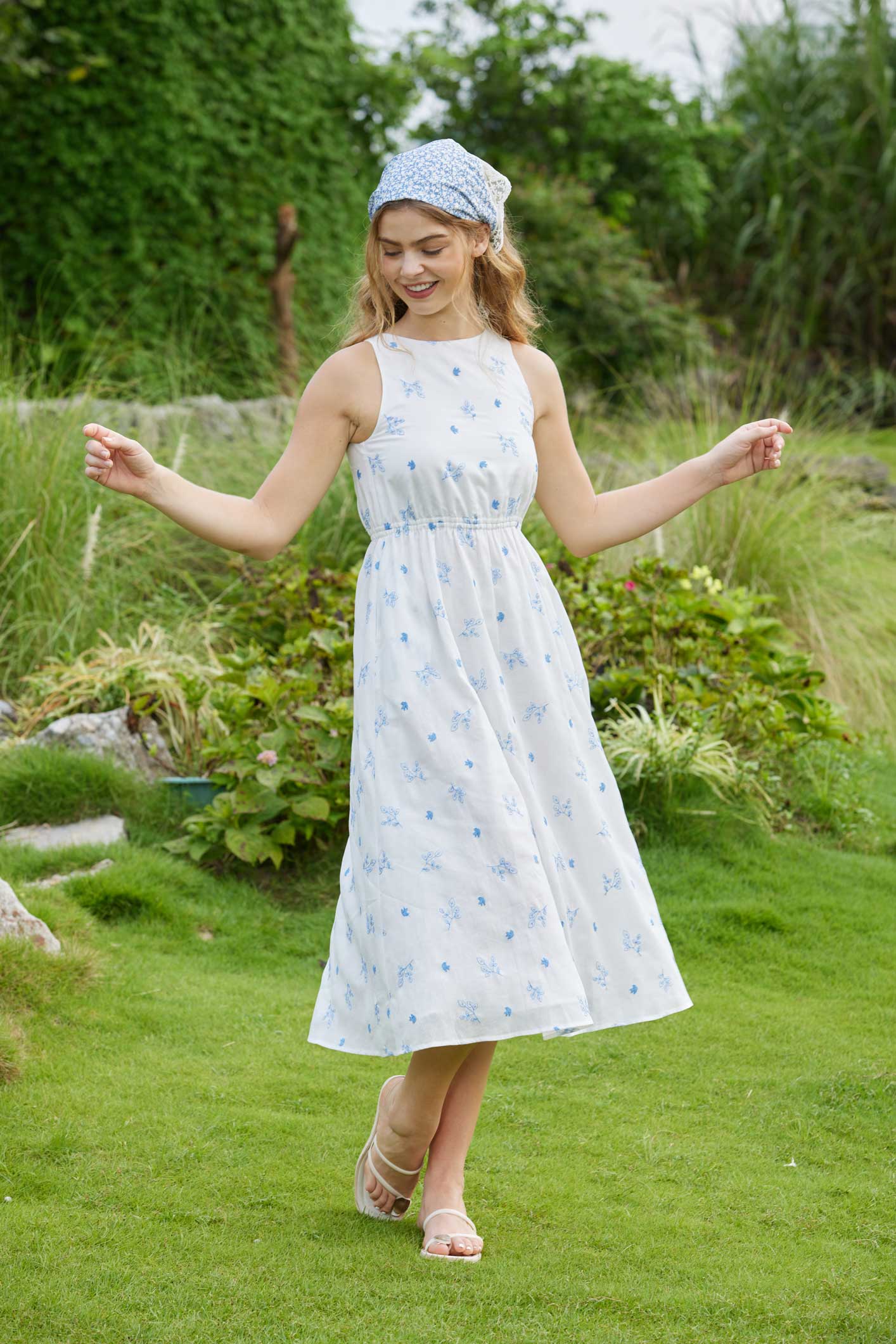
Shirt dresses are the most useful single piece. Worn open as a duster coat in early pregnancy, belted above the bump in the second trimester, and loose in the third, they cover a wide range of shapes with one garment. Look for a version with a full front placket, a hem that falls below the knee and a sleeve that can be rolled. The linen shirt dress collection is built around that shape, and it doubles as a postpartum piece because the front opens completely for feeding.
Wrap dresses solve a different problem. The wrap tie lets you adjust the fit across the waist week by week, and the V neckline opens wide enough to feed without undressing. Choose a wrap with a true overlap rather than a faux wrap that is sewn shut, and check that the tie sits above the bump rather than across its widest point. A wrap in 170-190 gsm holds the line better than a very light one, which tends to collapse into the body after a few hours of wear.
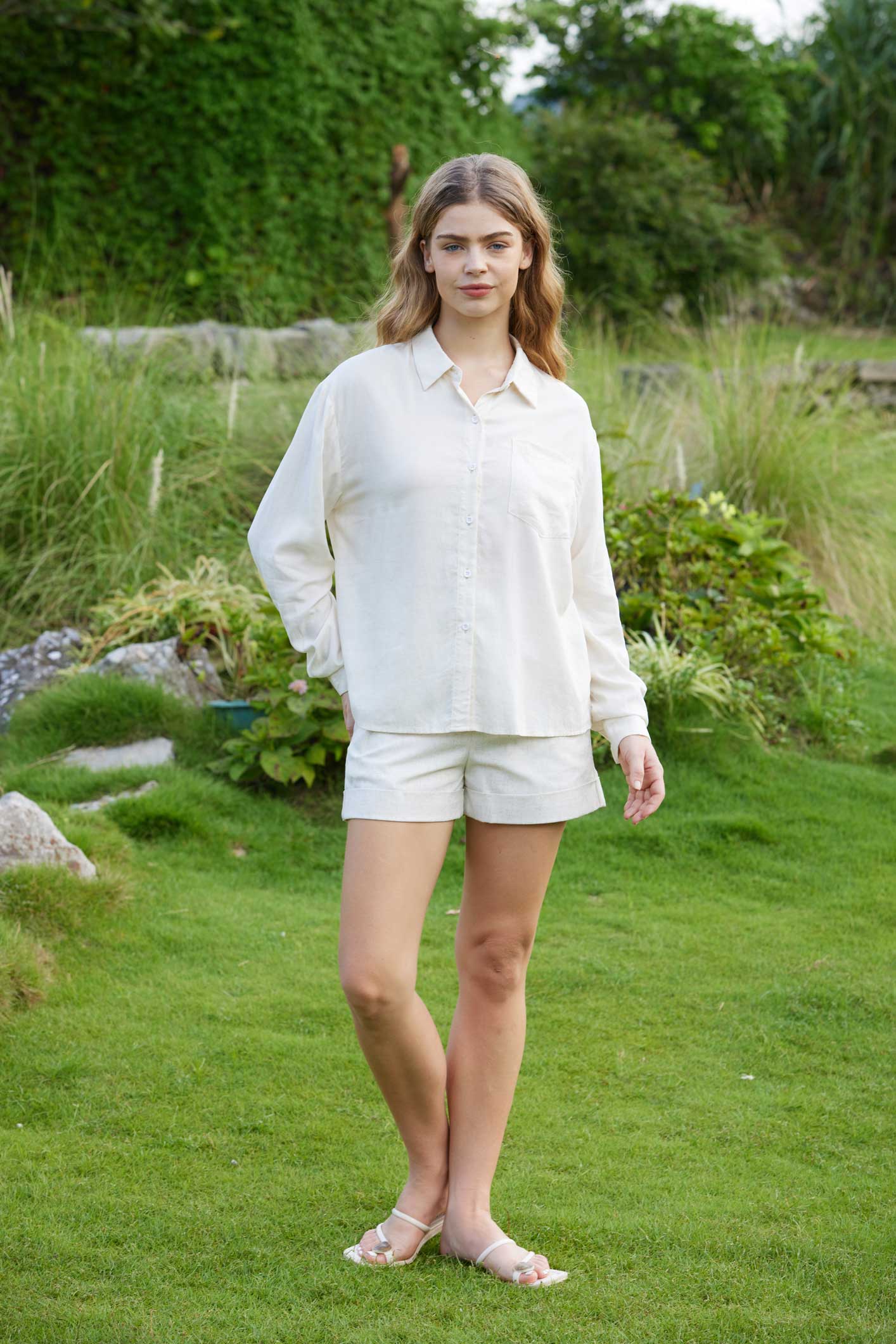
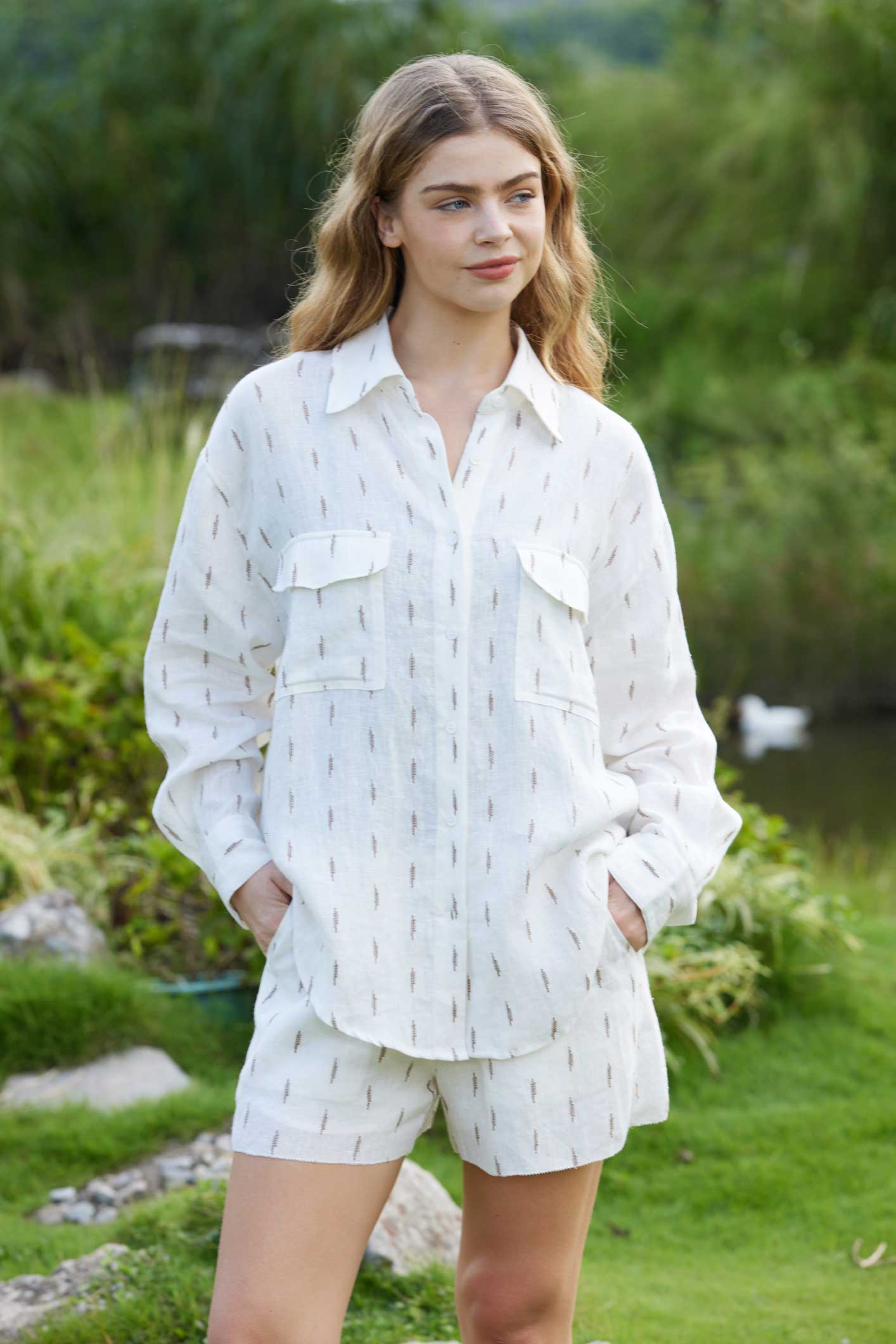
Two-piece sets are the quiet workhorse. A relaxed top and a pull-on pant can be worn together as an outfit, split and worn with other pieces, and adjusted independently as the body changes. A set in the same colour reads as a deliberate outfit even when both pieces are loose, which is useful in the weeks when you want to look put together with minimal effort. The linen top and pants sets are cut with a soft waistband and a straight leg, which is the combination that stays comfortable after birth.
- Empire-seam dress: the seam sits under the bust, so the skirt falls free over the bump and the back stays smooth.
- Full-placket shirt dress: opens flat for feeding and works as an open layer in early pregnancy.
- True wrap dress: adjustable at the waist, with a V neckline that opens for nursing.
- Tunic top: covers the hip and the bump without a waistband; wear it over leggings, straight pants or a skirt.
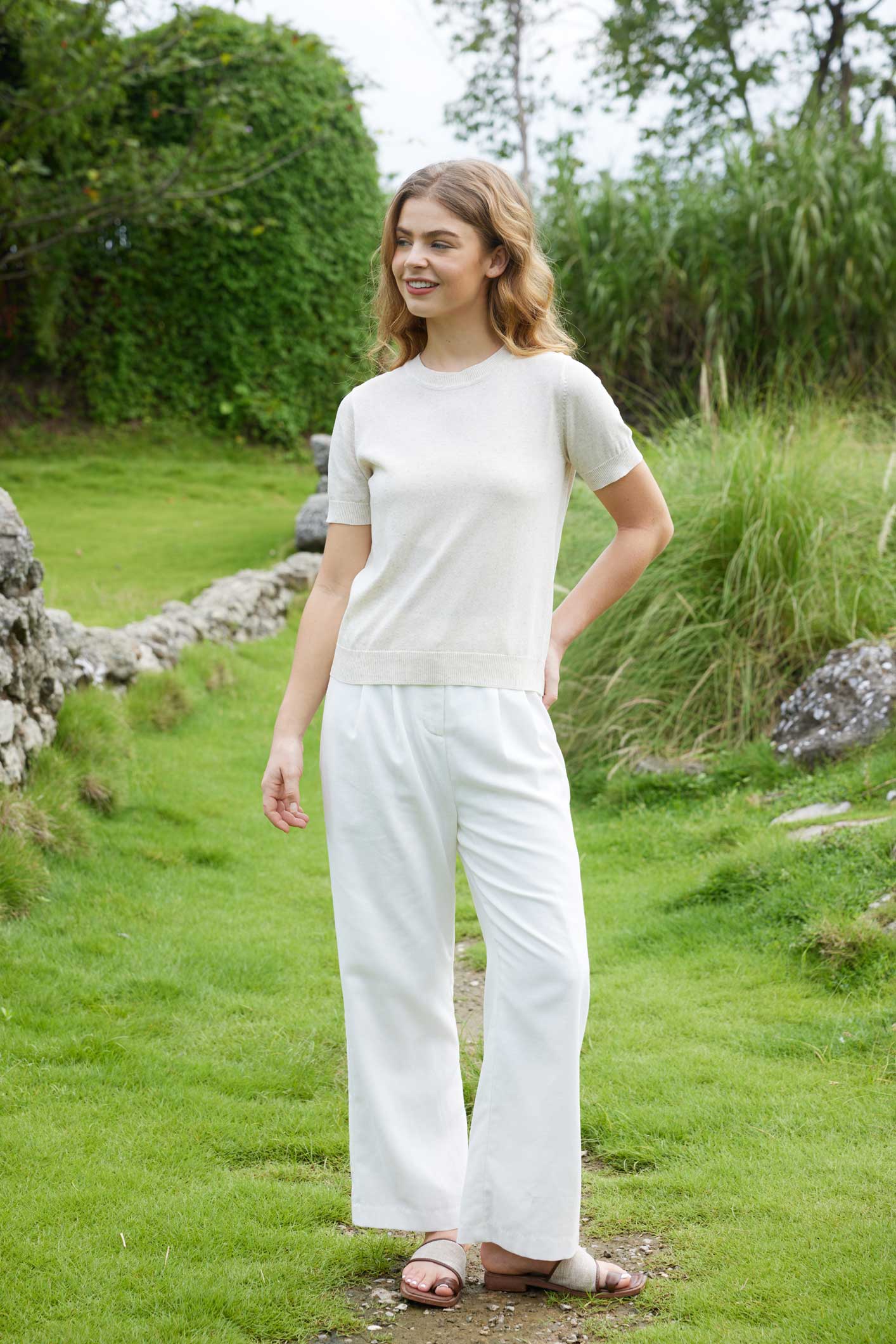
- Relaxed wide-leg pants: a soft waistband that sits below the bump, with a leg that does not cling to the calf.
- Two-piece set: the most flexible purchase, because each half can be worn separately after pregnancy.
A Six-Piece Maternity Capsule in Linen
A workable maternity wardrobe does not need to be large, but it does need to cover four situations: sleeping, being at home, leaving the house, and being seen by other people. Six pieces can do that if each one has a clear job and if the colours work together. Choose two neutrals (black, white, sand or navy) and one accent, and keep the weights within the 140-190 gsm band so everything layers with everything else.
The first piece is a shirt dress in a mid-neutral. It is the piece that handles appointments, lunch, travel and the postpartum period. The second is a wrap dress, ideally in a darker colour, for anything that requires a little more polish. The third is a tunic top that covers the hip, worn with the fourth piece, a wide-leg or straight-leg linen pant with a soft waistband. The fifth is a lounge set, which covers home days and the first weeks after birth. The sixth is an overshirt or light jacket in a heavier weight, which extends the whole wardrobe into cooler weather and works as a breastfeeding cover when needed.
That is six pieces, but the combinations are far more than six: dress alone, dress under overshirt, tunic with pants, tunic with skirt, lounge set as sleepwear, lounge top with jeans, overshirt over everything. The point is not minimalism for its own sake. It is that every piece earns its space, which matters when the wardrobe is temporary and the budget is already stretched by everything else a baby requires.
- Shirt dress, 170-190 gsm, hem below the knee, full front placket.
- Wrap dress, 170-190 gsm, true overlap, tie above the bump.
- Tunic top, 140-160 gsm, hip length, no waistband.
- Wide-leg or straight-leg pants, 160-190 gsm, soft waistband sitting below the bump.
- Lounge set, 110-140 gsm, loose top and pull-on pant for home and sleep.
- Overshirt or jacket, 200-220 gsm, roomy through the armhole so it layers over everything.
Third Trimester: Heat, Swelling and Sleep
The third trimester is usually when the wardrobe decisions become obvious. The bump is at its largest, the ribcage is at its widest, and the body is carrying more fluid. Feet and ankles may swell, rings may stop fitting, and the sensation of being too warm arrives without warning, often at night. Clothing that was comfortable at 24 weeks can become intolerable at 34 weeks, not because it is too small in one place but because it is close to the skin in several places at once.
At this stage, looseness matters more than shape. A dress that skims rather than defines, a pant with a waistband that sits below the bump and a top that does not touch the waist at all will be worn far more often than a tailored piece. Keep one "going out" outfit for the events that matter, and accept that the rest of the wardrobe can be soft, plain and repeatable. Nobody is grading the rotation.
Sleep is the other third-trimester problem. Body temperature is higher, position changes are harder, and the bed often needs to absorb more heat than usual. Linen sleepwear helps because it releases heat and dries quickly, but the fabric is only half the solution: a spare set within reach and a light layer that can be removed without getting up make more difference than any single garment. The same logic applies to the linen sleepwear guide for hot sleepers, which covers the weight and cut questions in more detail.
- Choose a dress with a hem that clears the ankle if swelling is an issue, so nothing catches on the foot.
- Keep the waistband below the bump rather than across it; pressure across the front is what causes discomfort when sitting.
- Prefer a wide armhole or a drop shoulder, because the ribcage is wider than it was in early pregnancy.
- Wash and wear the same three pieces on rotation rather than saving them; the fabric softens faster with use.
- Keep a light 110-140 gsm layer for nights and a medium 170-190 gsm layer for daytime.
Postpartum: Nursing Access, Skin Sensitivity and Night Sweats
The first weeks after birth are not a smaller version of pregnancy. The body is recovering, the chest is often larger and more sensitive, and sleep is fragmented. Clothing has to do three jobs at once: open easily for feeding, sit softly against skin that may be tender, and be washable often enough that a spare set is always clean. This is where linen performs well and where several popular maternity fabrics perform badly.
For feeding, the useful necklines are the ones that open without pulling the whole garment over the head. A full front placket, a true wrap, a deep V with a soft edge and a wide scoop all work. Look for a garment that opens far enough to feed comfortably without exposing the whole torso, and check the opening with one hand: if it needs two hands and a struggle, it will be annoying at 3 a.m. Button-front linen shirts and shirt dresses are the simplest answer, and they continue to work long after the nursing period.
For skin sensitivity, the finish of the fabric matters more than the fibre name. Garment-washed linen has been tumbled and relaxed in production, so the surface is smoother than raw linen and the seams have already been through one wash cycle. Avoid heavy trims, stiff labels and tight elastic. If a seam irritates, a light wash with a gentle detergent often softens it; if it continues to irritate, the garment is the wrong choice for the first months.
Night sweats are common in the weeks after birth as fluid levels settle. Linen sleepwear absorbs moisture quickly and dries faster than cotton jersey, which means you wake less damp and the bed feels drier. Keep two sets and change at the first sign of dampness rather than waiting until morning. A loose lounge set in 110-140 gsm is often more practical than a dedicated nursing nightdress, because the top can be lifted or opened and the pants can be worn separately.
The Transition Wardrobe: Pieces That Work Before, During and After
The most expensive mistake in maternity shopping is buying pieces that only work for one stage. A dress bought at 30 weeks may be unwearable at 38 weeks and again at 8 weeks postpartum, which gives it a useful life of a few weeks. A transition piece is different: it is cut loosely enough to accommodate a bump, structured enough to look deliberate without one, and simple enough to keep wearing afterwards.
Three tests separate a transition piece from a maternity-only piece. First, does it work open? A shirt dress, overshirt or wrap that can be worn open over a base layer adapts to changing temperatures and changing shapes. Second, does it work without a waist seam? A piece that relies on a fixed waistline will stop fitting when the waistline moves; a piece that falls from the shoulder or an empire seam will not. Third, does it survive frequent washing? If the care label says dry clean only, it is not a postpartum piece.
In practice, the transition wardrobe is built from the same six pieces described above, worn in different combinations. The shirt dress is a dress in pregnancy, an open layer in early postpartum and a beach cover-up in summer. The wide-leg pants are maternity pants with a soft waistband, then everyday pants once the waistband sits normally again. The lounge set is sleepwear, then homewear, then travel wear. This is the same principle behind the linen wide-leg pants: separates extend the useful life of a wardrobe because each half can be recombined.
- Works open: front placket, wrap tie or a jacket that can be worn unbuttoned.
- Works without a waist seam: empire line, A-line, straight tunic or drop-waist shape.
- Works through washing: machine washable at 30-40 degrees, colour-fast, no dry-clean-only pieces.
Layering Linen for Cold-Weather Pregnancies
A pregnancy that runs through autumn and winter needs a different layering strategy from a summer pregnancy. The temptation is to buy oversized knitwear and treat linen as a summer fabric that gets packed away. In practice, linen works well as the base layer in cold weather because it handles moisture close to the skin, while wool, cashmere or a padded outer layer handles insulation. The linen layer stays thin, and the warmth comes from the layers above it.
The most useful cold-weather combination is a 170-190 gsm linen shirt or tunic against the skin, a fine-gauge knit or cardigan over it, and a coat or jacket that fits over both. The linen absorbs sweat during the overheated parts of the day (a warm office, a crowded waiting room, a bus) and dries before the cold outdoor section. A cotton base layer would hold that moisture and feel cold afterwards; a synthetic base layer would trap heat. Linen sits in the middle, which is why it works in both directions.
| Outdoor temperature | Base layer | Mid layer | Outer layer |
|---|---|---|---|
| 15-20 C | 140-160 gsm linen shirt or tunic | None, or an open linen overshirt | Optional light jacket |
| 8-14 C | 170-190 gsm linen shirt | Fine knit cardigan or a linen overshirt | Wool coat or padded jacket |
| 0-7 C | 170-190 gsm linen shirt, tucked or loose | Merino or cashmere knit | Insulated coat that closes over the bump |
| Below 0 C | Linen shirt as a base under a thermal if needed | Heavy knit plus a long overshirt | Long insulated coat, scarf, hat |
Two practical notes for cold weather. First, check that the coat closes over the bump before you need it; a coat that fitted at 20 weeks may not close at 36 weeks, and a coat extender panel is cheaper than a new coat. Second, keep the linen layer loose enough that it does not bunch under the knit. A tunic that clears the hip will sit flat under a cardigan, while a tightly tucked shirt will create bulk at the waist and press on the bump when you sit.
Sizing, Fit and Alterations
Maternity sizing advice is often contradictory: some guides say size up, others say buy your normal size, and a few suggest buying two sizes. The reliable approach is to ignore the label and measure three points: the bust, the ribcage just under the bust and the fullest part of the hip. Compare those measurements with the size chart rather than with your pre-pregnancy size, because the ribcage and hip are the two measurements that change most and the ones that determine whether a garment will close and hang properly.
For a loose linen piece, the key measurement is the hip, not the waist. A shirt dress or tunic that clears the hip at 20 weeks will usually still clear it at 36 weeks, because the fabric falls from the shoulder rather than gripping the body. For pants, the key measurement is the waistband position: a soft waistband that sits below the bump needs a hip measurement that matches the garment, while an over-bump panel needs a size that matches your pre-pregnancy hip. If you are between sizes, take the larger one for pants and the smaller one for a very loose dress, then use the tie or belt to adjust.
Alterations are worth considering for expensive pieces. Taking up a hem is simple and cheap; letting out a side seam is possible on a garment with a generous seam allowance, which is one reason to check the inside of a linen piece before buying. Shortening sleeves is also straightforward, and it can turn a piece that feels overwhelming into one that fits. The KOSSR size and fit guide sets out the measurements behind each size, and the between-sizes guidance is useful if your measurements sit on a boundary.
- Measure at 20 weeks and again at 30 weeks: the difference tells you how much room the garment needs to have.
- Check the hip, not just the bump: a garment that clears the bump but grips the hip will ride up when you walk.
- Test sitting down: a waistband that feels fine standing can press hard when you sit; try it before removing tags.
- Check the armhole: a drop shoulder or a wide armhole is more comfortable than a fitted one as the ribcage expands.
- Leave the hem long enough: it is easy to shorten a hem and difficult to add length later.
Care: Washing, Softening and Stain Handling
Linen is easier to care for than its reputation suggests, and the maternity and postpartum period is exactly when easy care matters. Most garment-washed linen can be machine washed at 30-40 degrees on a gentle cycle with a mild detergent. Avoid bleach, avoid fabric softener (it coats the fibre and reduces absorbency), and avoid overloading the drum, because linen needs room to move. Pre-washed linen has already shrunk, so the residual shrinkage is low, but a hot wash or a hot dryer can still tighten the fibre and shorten the garment.
For stains that arrive with a baby, speed matters more than technique. Milk, formula and cream are protein and fat stains; rinse in cool water first, then work in a small amount of mild detergent and wash as normal. Do not use hot water on a protein stain before the bulk of it is removed, because heat can set it. For oil-based creams, apply a little detergent directly to the mark, leave it for ten minutes and wash. If the stain has dried, soak in cool water with oxygen-based cleaner rather than chlorine bleach, which can yellow linen.
Drying is the step where most linen damage happens. A low tumble dry is acceptable for garment-washed linen if you remove the piece while it is still slightly damp, but line drying in shade is gentler and keeps the colour longer. Direct sun is useful for white linen but can fade dyed colours over time. If a piece dries stiff, a short tumble with a clean towel or a brisk shake before hanging usually restores the soft hand. Ironing is optional: the natural crease is part of the fabric's character, and most people who wear linen regularly stop ironing it after the first month.
For more detail on temperature, detergent and drying, the linen shrinkage and washing guide covers the specific settings. The short version is: cool wash, gentle detergent, low heat, remove damp, hang or lie flat.
[IMAGE_PLACEHOLDER] img prompt: Close-up of hands folding a soft washed linen baby-blue shirt on a wooden table beside a small stack of neutral linen pieces, natural window light, visible weave and gentle creases, calm home laundry scene, lifestyle photographyWhat to Skip
Knowing what not to buy is as useful as knowing what to buy. Several categories of clothing look appealing in a maternity catalogue and then fail in daily use. The most common failure is the fitted ribbed dress: it stretches over the bump, but it also shows every seam and holds heat against the skin. The second is the fashion pant with a hard, narrow waistband; it may fit at 20 weeks and become unbearable at 30. The third is the delicate hand-wash-only piece that spends the postpartum weeks in the laundry basket.
Also worth skipping: garments with a fixed waist seam that sits at the natural waist, because that is exactly where the body changes most; heavily lined dresses, which add heat; and anything with a tight elasticated cuff or ankle, which becomes uncomfortable when swelling appears. None of these are permanent rules, but each one is a predictable source of regret in a wardrobe that only has a few months to prove itself.
- Fitted ribbed jersey dresses that cling to the bump and trap heat.
- Hard, narrow waistbands that sit at the natural waist.
- Hand-wash-only or dry-clean-only pieces for the first postpartum months.
- Heavily lined or coated fabrics that reduce breathability.
- Tight cuffs, ankles and elastic trims that press on swollen areas.
- Very light 110 gsm linen for outerwear, because it is translucent in daylight.
Budget and Buying Order
Maternity spending is usually compressed into a short window, which makes the order of purchase more important than the total. Buy the pieces you will wear most first, and delay the pieces that only work for a specific event. In practice, that means sleep and home wear first, then the everyday dress, then the pieces for leaving the house, and finally the occasion piece if an occasion actually appears.
A sensible order is: one lounge set, one shirt dress, one pair of pants, one tunic, one wrap dress and one overshirt. That sequence covers sleep, home, errands, work and a dinner, and it can be bought over several weeks rather than in one expensive session. If the budget is tight, spend more on the pieces that will be worn after pregnancy (the shirt dress, the pants, the overshirt) and less on the pieces that are purely functional for a few months.
| Priority | Piece | Why it comes first |
|---|---|---|
| 1 | Lounge set | Worn daily at home and in the first postpartum weeks; needs to be washable and soft |
| 2 | Shirt dress | Handles appointments, work and postpartum feeding; continues as an everyday dress |
| 3 | Wide-leg or straight pants | Solves the waistband problem and works with every top in the capsule |
| 4 | Tunic top | Covers the hip and bump; layers under knitwear in cold weather |
| 5 | Wrap dress | The adjustable option for events and for a changing waistline |
| 6 | Overshirt or jacket | Extends the wardrobe into winter and works as a nursing cover |
Quick Answers
Is linen good for pregnancy in hot weather?
Yes. Linen breathes, absorbs moisture and dries quickly, which helps with the warmer core temperature many people experience in pregnancy. Choose 110-160 gsm for hot weather and a loose cut that clears the bump rather than a fitted shape.
Should I size up in linen during pregnancy?
Not automatically. Measure your bust, ribcage and hip at the point of purchase and compare them with the size chart. For a loose dress, keep your normal shoulder size; for pants, choose a soft waistband that sits below the bump and size by hip measurement.
Can I wear linen after giving birth?
Yes, and it is often more useful then than during pregnancy. Front-opening shirt dresses and wrap dresses work for feeding, loose lounge sets handle night sweats, and machine-washable pieces cope with frequent changes.
Is linen safe for a newborn to lie on?
Linen is a natural plant fibre and is often used for baby blankets and bedding, but a newborn should always follow safe-sleep guidance: a firm, flat surface, no loose bedding in the cot and no soft items near the face. Linen used as a pram blanket or a nursing cover is a different question from linen used in a cot.
The Short Version
Linen works for pregnancy and postpartum because it handles heat, moisture and sensitive skin without clinging, and because the right cuts keep working after the bump has gone. Build a small capsule in 140-190 gsm: a shirt dress, a wrap dress, a tunic, loose pants, a lounge set and an overshirt. Measure your bust, ribcage and hip rather than guessing a size, choose front-opening pieces for feeding, and keep everything machine washable. The result is a wardrobe that covers pregnancy, birth and the months that follow without needing to be replaced at every stage.
Explore the linen lounge sets for home and sleep and the linen pants with soft waistbands for the transition period.