How to Stop Linen from Fading: Color Care That Works
How to Stop Linen from Fading: Color Care That Works
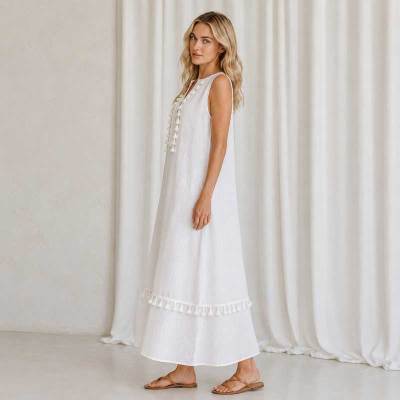
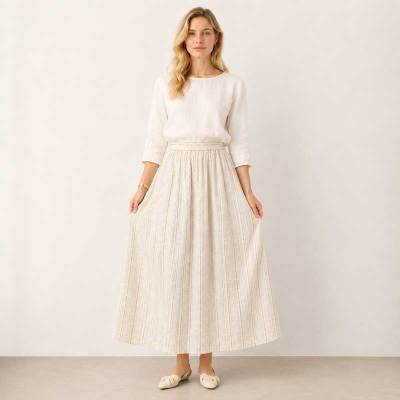
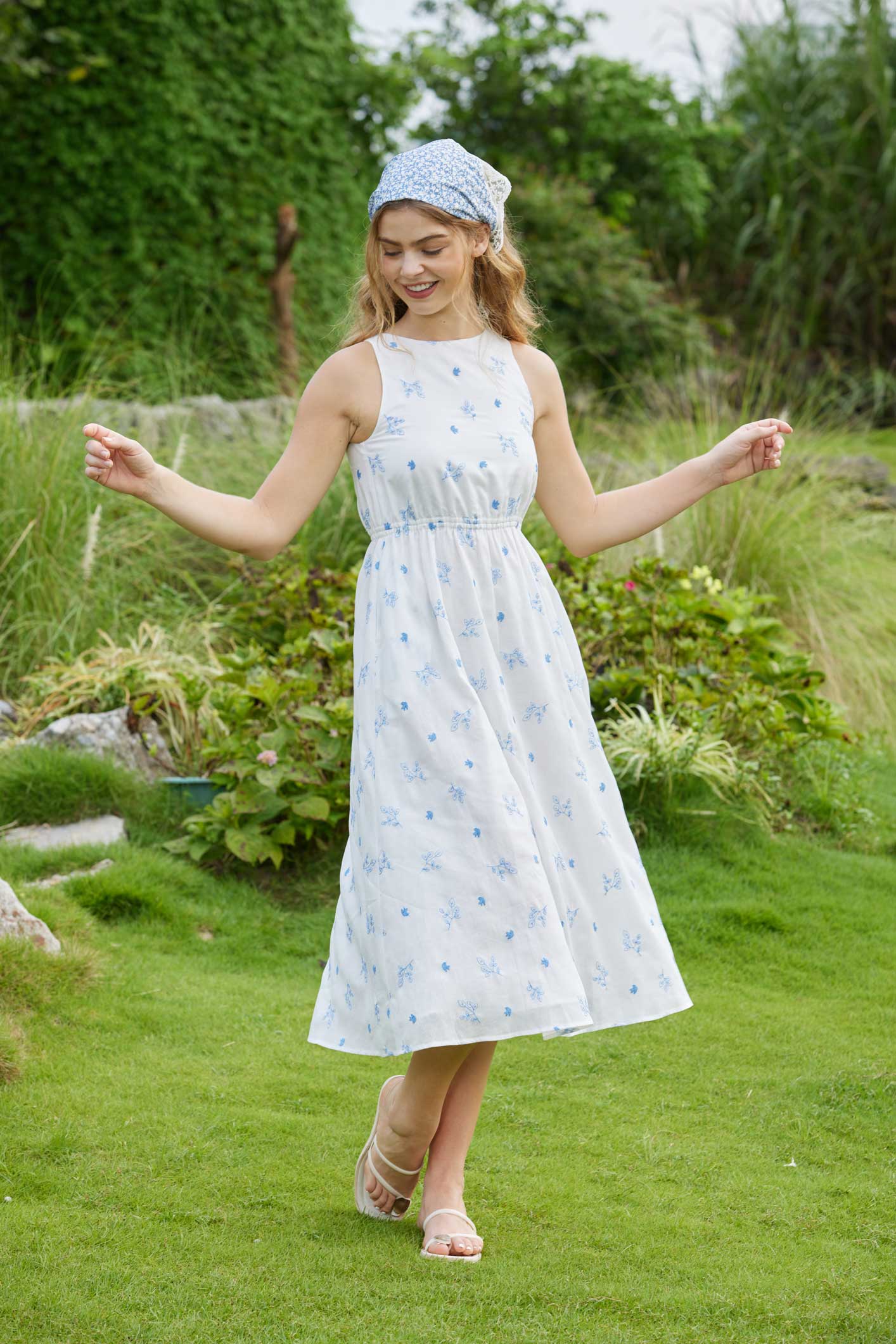
Linen fades because colour leaves the fibre in four predictable ways: ultraviolet light breaks the dye molecule, alkaline detergent and chlorine lift dye out of the cellulose, hard-water minerals dull the surface, and mechanical friction wears the dyed outer layer of the yarn. You cannot stop all four, but you can slow them enough that a linen dress or shirt holds its shade for five to eight summers instead of one. The working routine is short: wash coloured linen inside out at 30°C (86°F) for 15 to 30 minutes with 20 to 30 ml of pH-neutral detergent, spin at 600 rpm, dry in shade with no more than two hours of direct midday sun, iron on the reverse at 150 to 170°C, and store dark shades away from daylight. This guide explains what each of those numbers is protecting, how white, black, indigo and printed linen need different treatment, what to do once fading has already started, and which details on a product page tell you whether a piece will hold colour before you buy it. If you are caring for a linen dress you already own, the routine below applies directly to it.
The Short Answer: Why Linen Loses Colour
Linen is a cellulose fibre spun from flax. Dye does not sit in a smooth tube the way it does in synthetic filament; it binds to the crystalline regions of the cellulose and lodges in the spaces between them. That structure is why linen takes colour beautifully and also why it lets colour go: the same microscopic gaps that let dye in during dyeing let water, detergent and oxygen radicals in during washing.
Four forces do almost all of the damage, and they rarely work alone. Sunlight and washing together remove far more colour than either does separately, because UV light first breaks the dye's chromophore into a form that water can dissolve. This is why a linen shirt that lives on a sunny balcony and is washed weekly fades roughly twice as fast as the same shirt kept indoors and washed every third wear.
| Force | What it does to the fibre | Measurable trigger | How it looks |
|---|---|---|---|
| Ultraviolet light | Breaks the dye molecule and oxidises cellulose | Direct midday sun, UV index 6 and above, 2 or more hours per week | Even, overall lightening; whites go creamy, blacks go charcoal-brown |
| Alkaline detergent | Increases dye solubility so colour rinses away | Detergent pH above 9, or dose above 40 ml in soft water | Dull, slightly grey cast; colour runs in the rinse water |
| Chlorine and oxygen bleach | Oxidises dye to a colourless form; yellows cellulose | Any sodium hypochlorite; percarbonate above 60°C | Patchy pale spots, yellow-white whites, pink or orange shifts on dark shades |
| Mechanical abrasion | Wears the dyed surface of the yarn | Full drum, 1,200 rpm spin, zips and hooks left open | Pale seams, cuffs, collar edges and pocket mouths before the body fades |
| Hard water | Calcium and magnesium deposits scatter light | Water hardness above 180 ppm | Chalky haze, stiff hand, colours look dusty rather than deep |
The practical order of priority is not intuitive. Most people worry about detergent and ignore sunlight, yet sunlight is the single fastest route to a visibly lighter garment. The second most common mistake is over-dosing a gentle detergent, which puts more alkaline chemistry into the fabric than a hot wash would.
One more distinction matters before you change anything: linen is dyed in three different ways, and the method decides how much fading is normal.
How Linen Is Dyed, and Why It Changes the Care Rules
Not all coloured linen behaves the same way in the wash. Three dye routes account for nearly all garments on the market, and each has a characteristic failure mode.
Yarn-dyed linen
The yarn is dyed before weaving. Colour sits through the full thickness of each thread, so surface abrasion exposes more of the same colour rather than a paler core. Yarn-dyed linen is the most colour-stable option and the safest choice for dark shades such as black, navy and deep olive. It is also the most expensive to produce, because the dyer must match shade across large yarn lots.
Piece-dyed linen
The woven cloth is dyed as a continuous length. Colour penetration is good but slightly less uniform than yarn dyeing, and the face of the cloth carries a marginally higher dye concentration than the back. Fading therefore shows first as a soft halo at high-friction points: collar, cuffs, seat and pocket edges. Piece-dyed linen in medium and light shades holds up well when washed at 30°C.
Garment-dyed and pigment-dyed linen
The finished garment is dyed, often with pigment rather than a fibre-reactive dye. Pigment sits on the surface with a binder, which produces the soft, slightly chalky look many people associate with washed linen. It also means the colour is literally a surface layer, so abrasion removes it. A garment-dyed linen shirt will always lighten at the collar and cuffs first, and no detergent will prevent that. This is a design characteristic, not a defect, but it should shape what you buy the piece for.
| Dye route | Colour depth through the yarn | Typical fade pattern | Care priority |
|---|---|---|---|
| Yarn-dyed | Full | Slow, even loss after many seasons | Control UV; everything else is secondary |
| Piece-dyed | High on the face, lower at the core | Edges and friction points first | Turn inside out; avoid high spin |
| Garment-dyed pigment | Surface layer with binder | Collar, cuffs and seams within months | Cold wash, no brush, no enzyme detergent |
The useful takeaway is that "linen fades" is not one problem. A pigment-dyed garment that lightens at the collar is behaving normally; a yarn-dyed black trouser that turns brown after four washes is being damaged. Treating both with the same routine wastes effort on the first and fails the second.
Our own garments are 100% European Flax, garment-washed for softness, and specified between 110 and 240 gsm depending on the style. Garment washing removes surface fuzz and relaxes the weave, which also means a small shade shift on the first wash is expected. From the second wash onward, the routine below is what keeps the colour where it is.
Six Rules That Do Most of the Work
If you change nothing else, change these six habits. Together they address every fade force in the table above, and none of them requires a special product.
- Wash at 30°C, not 40°C. Linen tolerates heat, dye does not. A 30°C cycle with 15 to 30 minutes of agitation removes normal body oils and dust from linen; the extra 10°C buys very little cleaning and costs measurable colour.
- Use 20 to 30 ml of pH-neutral liquid detergent. In soft water, 20 ml is enough for a half load. More detergent does not mean cleaner linen; it means more alkaline residue left in a fibre that holds minerals.
- Turn every coloured piece inside out. This single habit protects the face of the cloth from drum abrasion and from direct contact with zips, buttons and hooks.
- Skip chlorine bleach entirely. Not "use less" — skip it. Oxygen bleach at 40°C is the only safe whitening route for linen, and even that should be reserved for white and undyed pieces.
- Dry in shade. Two hours of direct midday summer sun per week is enough to shift a dark shade over a season. A shaded line, an indoor rack or a covered balcony removes that exposure entirely.
- Iron on the reverse at 150 to 170°C. High heat with steam can scorch dye as well as fibre, and pressing the face flat compresses the weave so light reflects differently and the colour looks flatter.
Two of these rules interact in a way worth understanding. Turning a garment inside out protects it from abrasion, but it also exposes the inner face to dye transfer if the dye is still loose. For the first three washes of any indigo or deeply saturated piece, wash it alone or with like colours, and accept that some colour will leave the garment. That colour is surplus dye, not the colour you are trying to keep.
[IMAGE_PLACEHOLDER] img prompt: Front-loading washing machine mid-cycle with a folded olive linen shirt inside a mesh laundry bag, detergent measuring cap with 25 ml of clear liquid on top of the machine, bright utility room, natural side light, clean documentary style, no textThe rules also explain why "gentle" cycles are not automatically better. A 30°C gentle cycle with a long soak can be harder on dye than a 30°C normal cycle with a short wash, because time in water is itself a fading mechanism. Prefer a shorter cycle with a clear rinse over a long, low-agitation one.
The Washing Routine, Step by Step
This is the sequence we recommend for coloured linen shirts, dresses, trousers and sets. It assumes a front-loading domestic machine; a top-loader needs the same temperatures with a shorter agitation time and an extra rinse.
- Empty pockets, close zips and buttons. An open zip is a rasp. A closed button stack is a smooth edge. Turn the garment inside out and place printed or embroidered pieces in a mesh bag.
- Sort by shade, not just by colour family. Deep indigo, black and olive go together; white and undyed go separately; pale sand and oatmeal can share a load. A dark load of four items is better than a mixed load of ten.
- Fill the drum no more than two-thirds. Linen is heavy when wet. An overloaded drum increases friction between garments, which is exactly the abrasion that fades seams and cuffs.
- Dose 20 to 30 ml of pH-neutral liquid detergent. If your water is soft, stay at the low end. If it is hard, use a water softener rather than more detergent.
- Select 30°C, 600 rpm spin, 15 to 30 minutes. Where the machine offers it, choose a short wash with two rinses. Skip pre-wash and skip fabric softener; softener leaves a film that dulls colour and reduces linen's natural absorbency.
- Remove immediately. Linen left damp in the drum takes creases that need heat to remove, and heat is what you are trying to avoid.
For hand washing, the same numbers apply: 30°C water, 20 ml detergent, five minutes of gentle compression rather than wringing, then two clear rinses. Never twist linen to remove water; press it between two towels instead. Our linen washing FAQ covers the hand-wash variation in more detail, and the longer complete linen care guide explains how to adapt the routine for 110 gsm voile versus 240 gsm trousers.
[IMAGE_PLACEHOLDER] img prompt: Black linen shirt and navy linen trousers drying flat on a wooden rack in a shaded room, window light diffused through a linen curtain, close detail of the weave and seams, muted neutral palette, calm home editorial photography, no textOne habit is worth adding for dark shades: wash them less often. Linen is naturally odour-resistant and releases dust easily, so airing a shirt overnight often replaces a wash. Going from five washes a month to two is roughly a 60 percent reduction in everything that fades the cloth.
Drying: Where Most Colour Is Lost
If you only control one variable, control drying. Washing removes dye slowly and evenly; sunlight removes it quickly and unevenly, and it does so on the surface where it is most visible.
The numbers are simple. Direct summer sun at UV index 6 to 8 delivers enough ultraviolet energy to produce a perceptible shade shift on dark linen in roughly 10 to 15 cumulative hours. That is two hours a day for a week, or one afternoon left out too long. White linen is more forgiving of sun but more vulnerable to the yellowing that comes from over-drying and from detergent residue.
- Dry coloured linen in shade, indoors or under cover, with air moving across it.
- If outdoor drying is the only option, choose early morning or late afternoon and bring the garment in before 11:00.
- Dry flat or on a wide hanger for knits and heavier weaves; line-dry shirts and dresses by the hem to avoid shoulder marks.
- Remove while still slightly damp, at about 10 percent residual moisture. Ironing at that point needs less heat and no steam.
- If you use a tumble dryer, use the lowest heat setting, 40°C or below, and remove the garment while damp. A hot dryer combines heat, abrasion and tumbling in one cycle, which is the worst combination for colour.
A dryer is not forbidden, but it should be a tool of last resort for coloured linen. The tumble-drying FAQ sets out the temperature and timing limits, and the practical rule is that a dryer shortens the colour life of a garment faster than any detergent choice you can make.
There is also a storage-drying overlap worth flagging. Linen that goes into a wardrobe even slightly damp develops a musty smell and, on dark shades, a grey bloom that looks like fading but is actually mildew. Dry fully before storing, then air the wardrobe.
Ironing and Storing Without Colour Damage
Heat damage and light damage produce similar symptoms, which is why ironing is often blamed for fading that actually happened on the line. The distinction matters because the fixes are different.
Ironing rules for coloured linen
Set the iron to 150 to 170°C for coloured pieces and keep the soleplate moving. Use steam rather than pressure, and iron the reverse side first. For black and indigo, place a thin cotton cloth between the iron and the fabric; direct contact at 180°C and above can produce a shine that reads as a lighter patch. Never leave the iron resting on the cloth, even for a few seconds.
Storing rules
- Store dark shades away from daylight. A black linen shirt on an open rail beside a window will fade along the exposed shoulder within a season.
- Use breathable cotton garment bags, not plastic. Plastic traps moisture and concentrates any residual detergent on the cloth.
- Fold rather than hang heavy linen; hangers stretch shoulder seams on 200 gsm and above.
- Keep cedar and lavender sachets away from direct fabric contact; the oils can stain pale linen and shift dark shades.
- Air stored linen once a season. Airing removes trapped humidity and lets you spot fading or pest damage early.
The one storage mistake that causes permanent damage is damp storage with detergent residue. If a garment has been worn and aired but not washed before the end of the season, wash it before storing. Body oils oxidise over months and turn yellow on white linen and brown on pale shades, and that change cannot be reversed by washing later.
Colour-by-Colour Playbooks
Different shades fail in different ways, so the routine needs one adjustment per colour family. The table below gives the short version; the notes after it explain the reasoning.
| Shade | Main risk | Wash | Dry | Extra step |
|---|---|---|---|---|
| White and natural | Yellowing, grey cast | 40°C, pH-neutral, extra rinse | Shade, fully dry | Oxygen bleach every 8 to 10 washes if needed |
| Black | Charcoal-brown cast, shiny seams | 30°C, inside out, 600 rpm | Shade only | Iron on reverse with a pressing cloth |
| Indigo and navy | Crocking and patchy lightening | 30°C, alone for first 3 washes | Shade, away from heat | Accept slight crocking; never brush |
| Olive, sand, clay | Dusty, chalky dullness | 30°C, soft water | Shade | Water softener if hardness is above 180 ppm |
| Printed and embroidered | Binder breakdown, thread bleed | 30°C, mesh bag, no enzyme | Flat, shade | No brush, no soak over 30 minutes |
White and natural linen
White linen does not fade in the same sense as dyed cloth; it yellows. The cause is usually a combination of detergent residue, body oil oxidation and over-drying. Wash at 40°C with a pH-neutral detergent and an extra rinse, dry in shade, and use oxygen bleach only when the cloth has actually greyed. Our guide to keeping white linen bright covers the soak times and the reason chlorine bleach makes the problem worse.
Black and deep shades
Black linen rarely loses dye evenly. It goes brown at the surface because the dye is oxidised by light and abrasion, and it goes shiny at the seams because heat has flattened the fibre. The care response is to reduce both: no direct sun, no hot iron on the face, no high spin. A dye-refresher product designed for cellulose can restore depth once, but it will not fix shine.
Indigo and navy
Indigo is a vat dye that sits partly on the surface of the yarn, which is exactly why it crocks. Expect colour on the inside of a light bag for the first few wears and washes. Wash indigo alone for the first three cycles, in cold or 30°C water, and never spot-scrub a mark; brushing removes the surface dye and leaves a permanent pale patch.
Printed and embroidered linen
The print binder and the embroidery thread are the weak points, not the base cloth. Wash inside a mesh bag at 30°C with a detergent that contains no enzymes, and avoid soaking for more than 30 minutes. Dry flat so the weight of water does not pull the embroidery out of shape. Treat the embroidery as the fragile part and the base cloth as the durable part; that single shift in attention prevents most print and thread damage.
What to Do When Fading Has Already Started
Fading is not reversible in the way a stain is. Once a dye molecule has been broken by UV or rinsed out of the fibre, it is gone. What you can do is even out the appearance, slow the remaining loss, or deliberately change the garment's colour. The options below are ordered from least to most intervention.
- Wash out the residue first. A dull, dusty cast is often detergent and mineral residue rather than dye loss. A 30°C wash with 20 ml of pH-neutral detergent and an extra rinse, followed by shade drying, restores apparent depth on maybe one garment in four. Try this before anything else.
- Use a colour-refreshing wash additive once. Products marketed for dark clothes contain a small amount of dye that tops up surface colour. They work best on black, navy and dark grey and are close to useless on pale shades. Use once, not every wash.
- Re-dye the whole piece. Cellulose dyes designed for home use can restore a garment, but linen takes dye unevenly if it has been garment-washed, because the surface is no longer uniform. Expect a slightly heathered result, and dye a shade darker than the target.
- Overdye deliberately. A faded sand dress that has gone patchy can become a deeper clay or olive piece. This is the only option that turns fading into a design decision rather than a loss.
- Retire it to non-colour-critical use. A faded linen shirt is still an excellent garden, beach or sleep layer. Colour loss does not reduce the fibre's strength or breathability.
Two popular home remedies are worth dismissing. White vinegar does not "set" colour in modern reactive dyes; it slightly lowers pH, which is marginally helpful, but it will not restore a faded garment. Salt is even less useful on linen, because the fibre's dye uptake is not driven by the same salt-assisted exhaustion mechanism as cotton. Neither will ruin the cloth, but neither will fix it.
If the fade is patchy and accompanied by a smell, treat it as mildew rather than colour loss and wash with an oxygen-based sanitiser at 40°C. If it is patchy and accompanied by thin spots, the fibre itself has been damaged by bleach and the garment is near the end of its life. Our stain removal FAQ helps separate a stain from a colour change before you treat it.
Buying Linen That Holds Colour
The most effective colour-care decision happens before the first wash. Five details on a product page predict colour life better than any marketing claim.
- Weight. Heavier linen holds dye better because there is more fibre depth for the dye to occupy. A 110 to 140 gsm voile or shirt is lovely and airy but fades faster at friction points than a 180 to 240 gsm trouser or jacket.
- Garment-washed or not. Garment washing removes surface fuzz and some surplus dye, so the piece you receive has already had its first shade shift. Unwashed linen will change in the first two washes at home.
- Dye route where stated. "Yarn-dyed" is the strongest signal for colour stability, especially in black and navy. "Pigment-dyed" is a legitimate look but should be expected to fade at the edges.
- Fibre content. 100% linen behaves predictably. Blends with viscose or rayon can lose colour faster because the two fibres take and release dye at different rates.
- Stated care instructions. A brand that specifies 30°C and shade drying is telling you it has thought about colour life. A label that says "wash however" is telling you it has not.
Every KOSSR piece is 100% European Flax, garment-washed, and labelled with its weight between 110 and 240 gsm, so you can judge the colour-life trade-off before you buy. If colour longevity is the priority, choose the heavier end of the range and the darker, yarn-dyed shades. Our guide to choosing linen that lasts explains how weight, weave and finishing interact over several years of wear.
One buying habit is worth adopting: buy two of a shade you love. Linen shades are dyed in lots, and a replacement bought two years later will rarely match. A second piece held in reserve costs less than replacing a whole outfit when the first one fades.
A Twelve-Month Colour-Care Calendar
Colour loss is seasonal, and the care routine should follow the seasons rather than stay fixed all year. This is the schedule we use for our own linen.
| Period | Dominant risk | Action |
|---|---|---|
| Late spring | First wears, sunscreen and deodorant contact | Wash after each wear; treat underarm marks before they set |
| Summer | UV index 7 to 9, frequent washing | Shade drying; reduce wash frequency by airing between wears |
| Early autumn | Low sun angle, long direct exposure indoors | Move stored linen away from windows; air once |
| Winter | Indoor heating, dry air, heavier layers | Wash less, moisturise less on contact areas, store dark shades covered |
| End of season | Body oil oxidation during storage | Wash everything before storage, dry fully, store in cotton bags |
The single highest-value entry is the last one. Linen stored with body oil still in the collar will show a yellow or brown line by the following season, and that line is oxidation, not dirt, so a normal wash will not remove it. A pre-storage wash costs one cycle and protects the garment for years.
Winter deserves a note of its own. Cold, dry air does not fade colour, but indoor heating and repeated washing of heavier pieces do add up. Cold, dry air does not fade colour, but indoor heating and repeated washing of heavier pieces do add up, so the winter rule is simply to wash less and air more.
Questions We Get Most Often
Does linen fade in the wash or in the sun?
Both, but the sun is faster. Washing removes dye gradually and evenly; two hours of direct midday summer sun per week can produce a visible shift on a dark shade within one season. Washing at 30°C with pH-neutral detergent slows the wash-side loss to a level most people never notice.
Is fading on garment-dyed linen normal?
Yes, at the friction points. Garment-dyed pigment sits on the surface, so collars, cuffs and seams lighten first. That is the intended look of washed linen. Even, all-over lightening within the first month is not normal and usually points to chlorine, hot water or direct sun.
Can I use bleach on white linen?
Oxygen bleach, occasionally, yes. Chlorine bleach, no. Chlorine oxidises cellulose and leaves white linen with a permanent yellow cast that no subsequent wash will remove.
Does vinegar stop linen from fading?
No. It lowers pH slightly, which is mildly helpful, but it does not restore or lock in colour on modern reactive dyes. A pH-neutral detergent and shade drying do far more.
How many years should coloured linen last?
With the routine above, five to eight summers of regular wear is realistic for a 180 gsm yarn-dyed piece. A 110 gsm pigment-dyed shirt worn weekly and dried in the sun may show clear fading in one to two seasons.
The Short Version
Linen fades from sun, alkaline chemistry, chlorine, abrasion and hard water, in roughly that order of speed. Wash coloured pieces inside out at 30°C with 20 to 30 ml of pH-neutral detergent, spin at 600 rpm, dry in shade, iron on the reverse at 150 to 170°C, and store dark shades away from daylight. Adjust for shade: white needs an extra rinse and occasional oxygen bleach, black needs no sun and no hot iron, indigo needs three solo washes, prints need a mesh bag and no enzymes. Once fading has started, try a residue wash before anything else, and accept that colour cannot be restored, only evened out or deliberately changed.
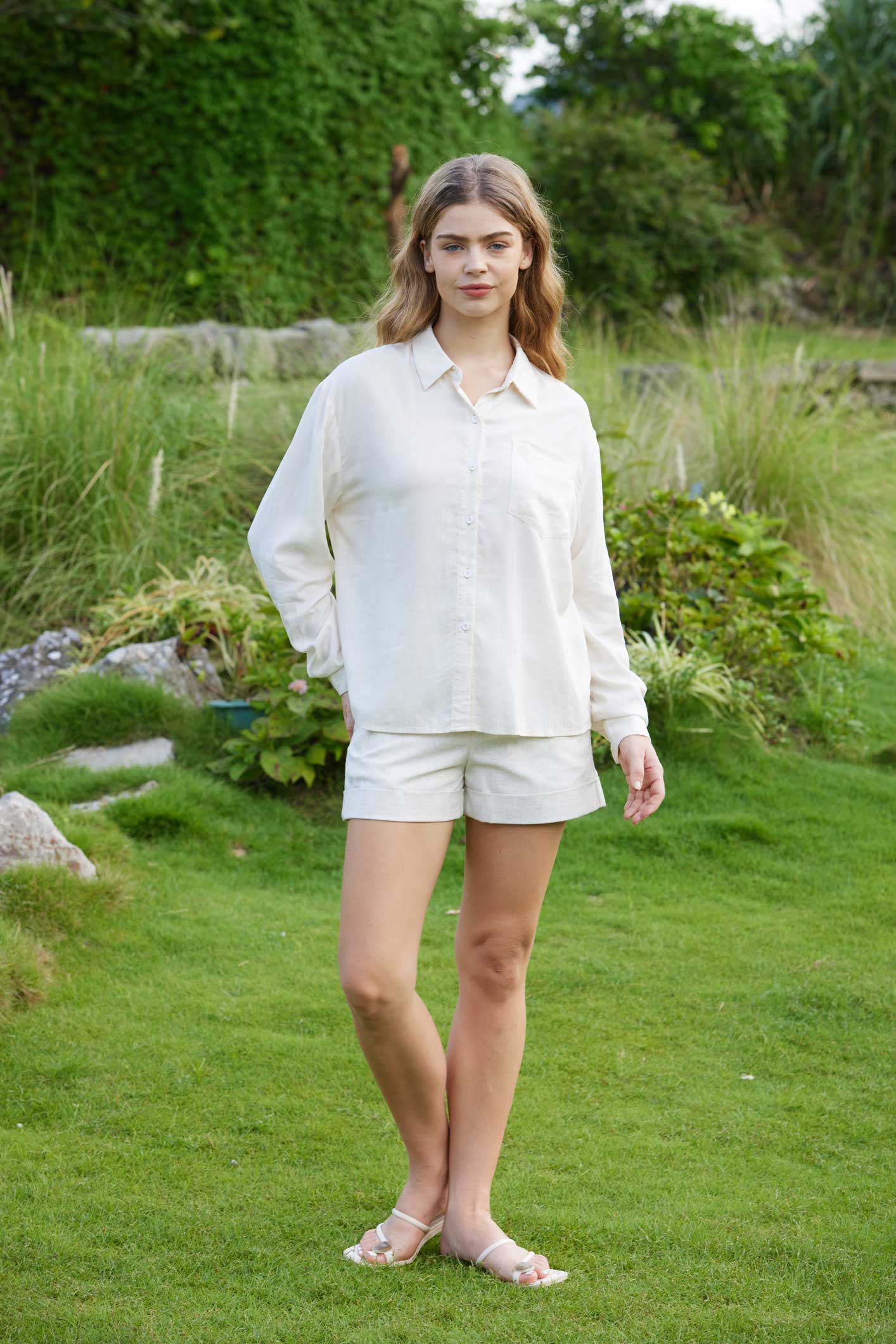
If you are building a wardrobe that holds its colour, start with heavier, yarn-dyed pieces and treat them well. Our linen sets are cut from 100% European Flax, garment-washed and specified by weight, so the care routine in this guide applies from the first wear rather than the first repair.