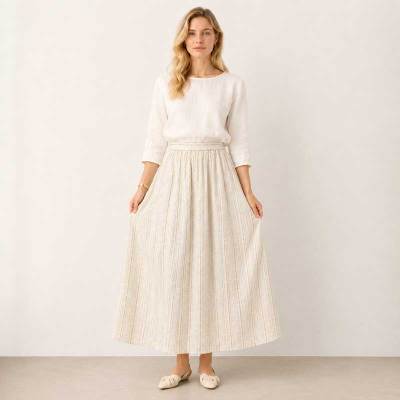
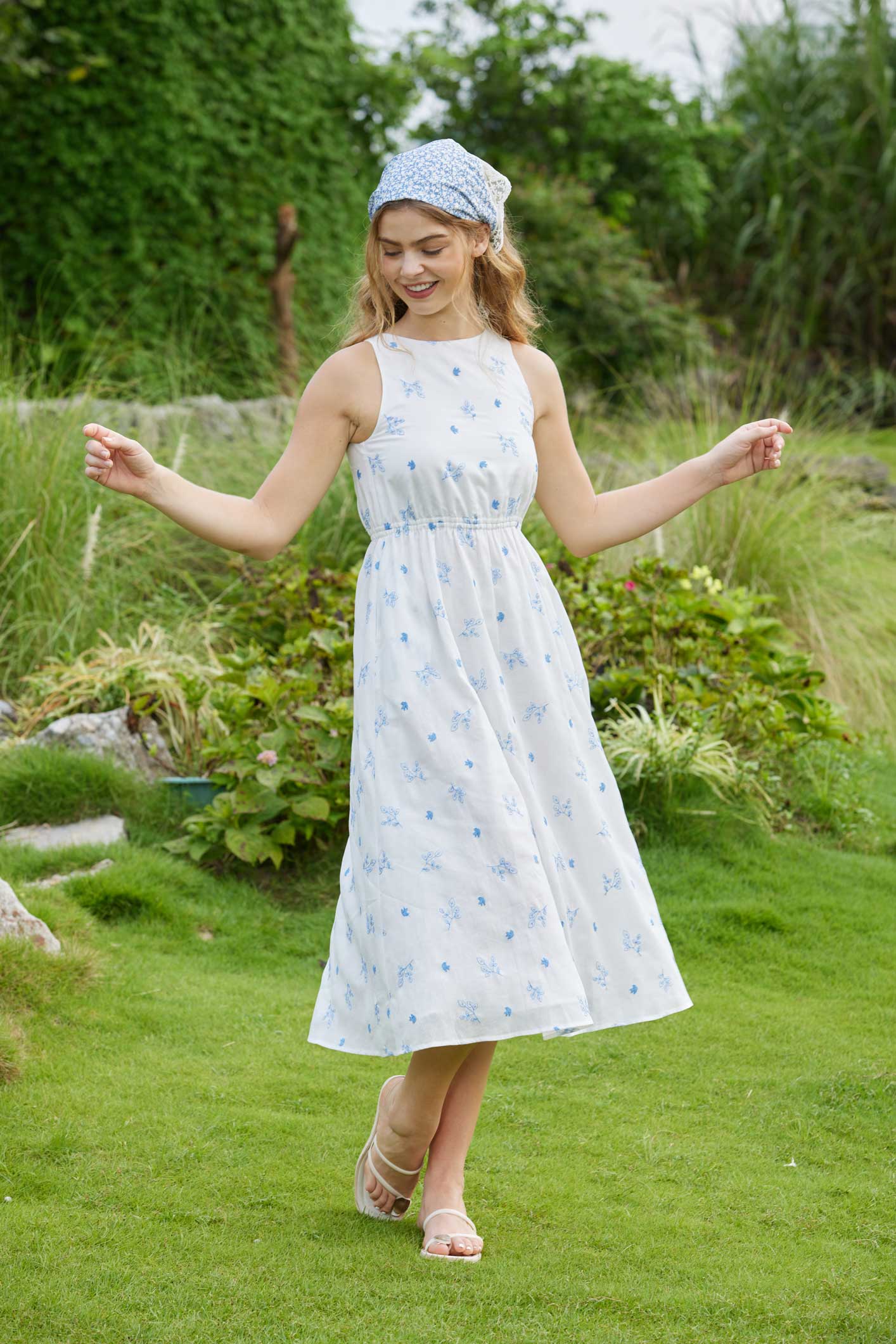
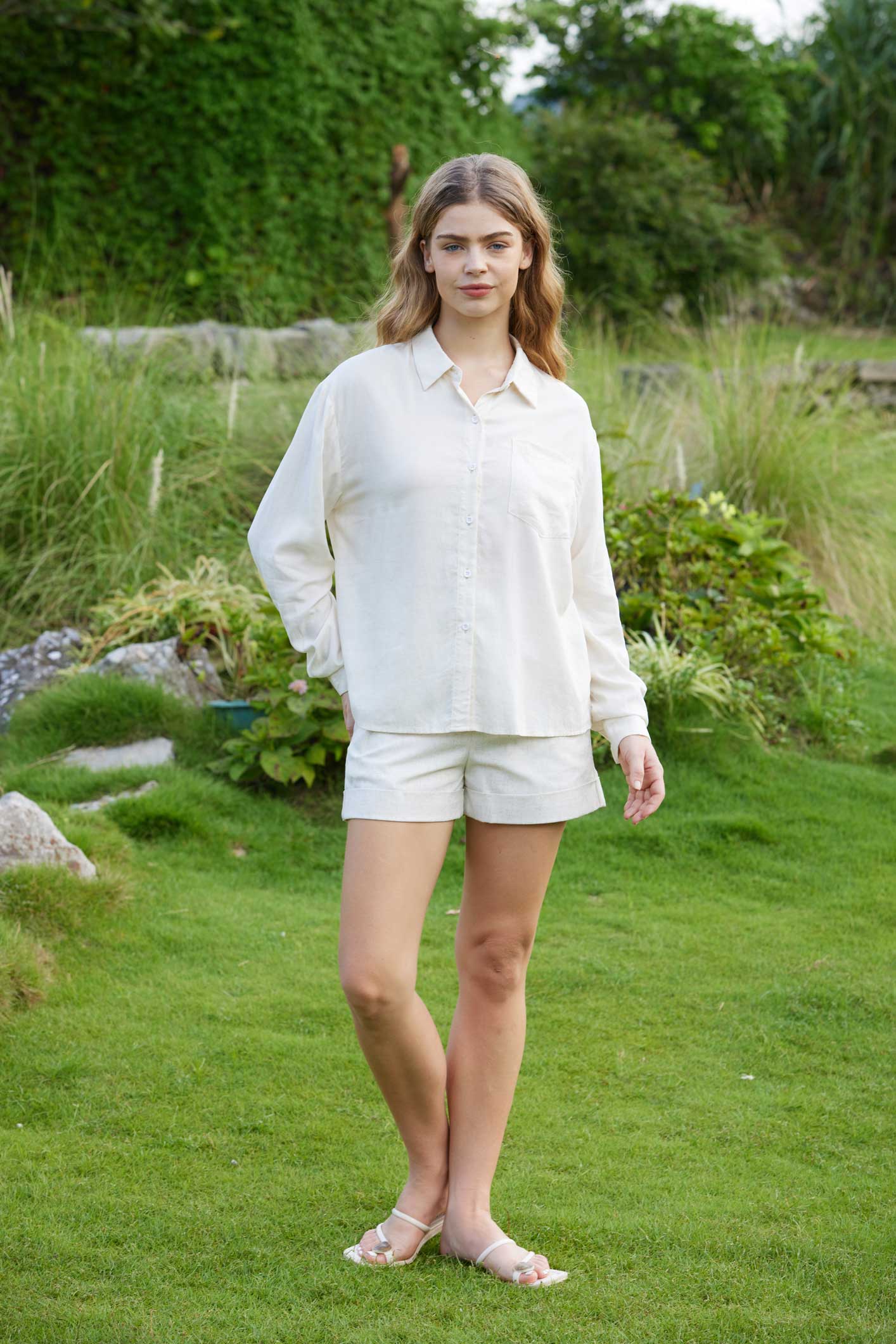
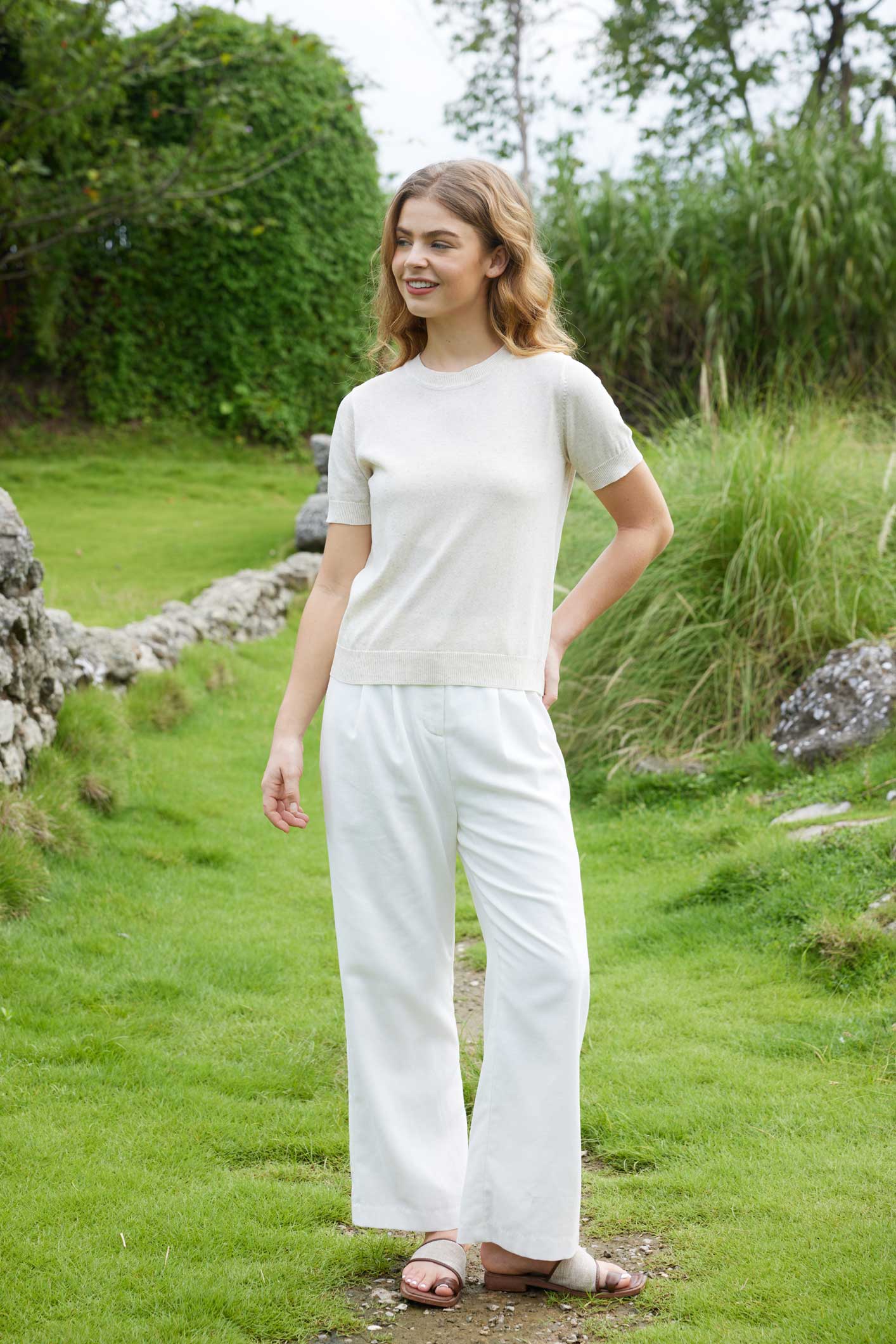
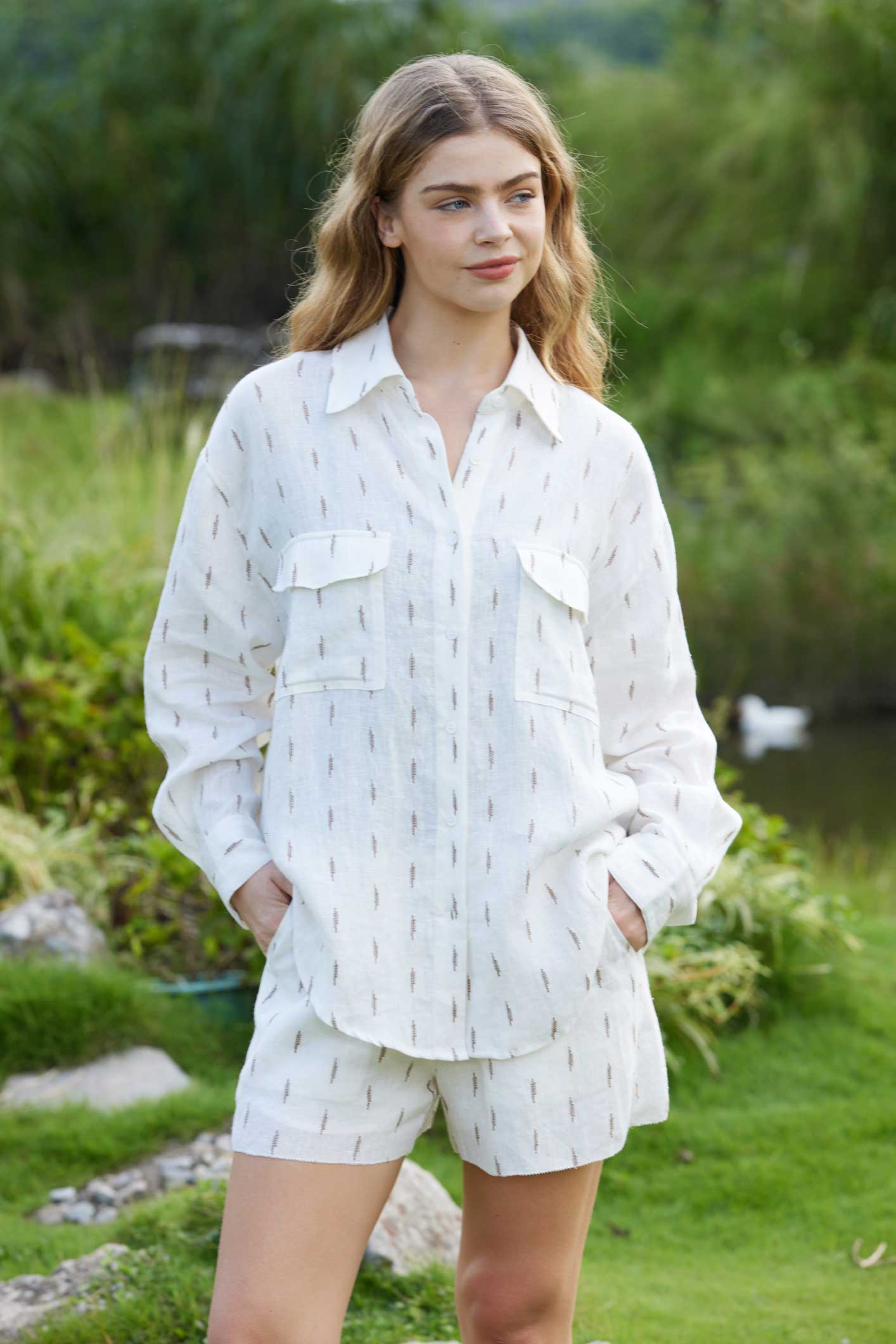
How to Buy Linen Clothing Online: A Complete Guide for Smart Shoppers
Buying linen clothing online can feel overwhelming when you cannot touch the fabric, check the weight, or try the garment on. With hundreds of sellers offering "linen" at wildly different prices — from $15 fast-fashion dresses to $300 designer pieces — knowing what actually matters can save you both money and disappointment. This guide walks through every step of the online linen shopping process: how to verify genuine 100% linen, what fabric weight to choose for your climate, how to find the right fit without trying on, and what specific details separate quality linen from cheap imitations. Whether you are buying your first linen piece or adding to an existing collection, these criteria will help you shop with confidence.
Step 1: Verify That It Is Genuine 100% Linen
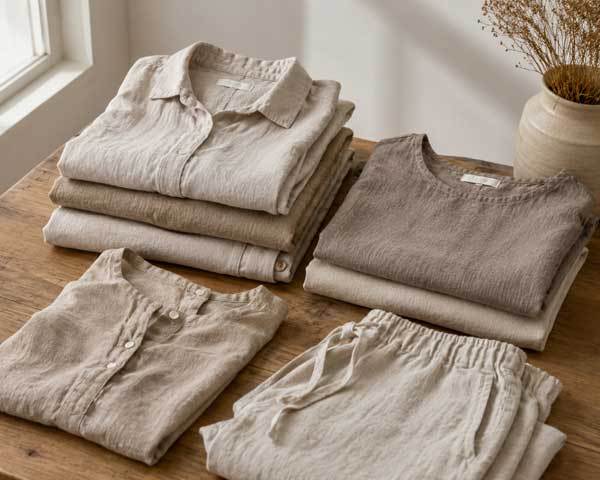
The single most important step when buying linen online is confirming that the garment actually contains real linen — and in what proportion. Many online listings use terms like "linen feel," "linen blend," or simply "linen" in the product title even when the actual fabric content is mostly cotton, rayon, or polyester. Here is how to verify before you buy:
Check the Fabric Composition Label, Not the Title
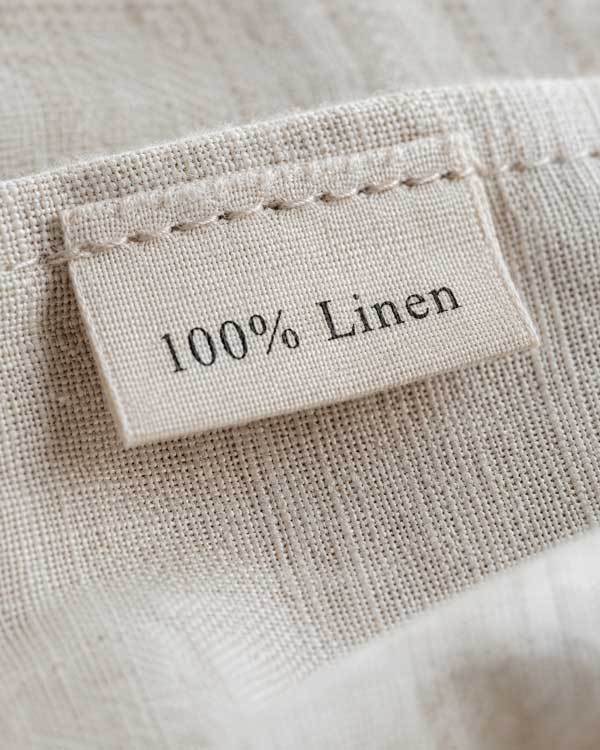
Every legitimate online store is required to list the exact fiber percentage in the product description or size chart. Look for a line that says "100% linen" or "100% flax linen." If you see phrases like "linen blend," "linen/cotton," "linen/viscose," or "linen mix," the garment is not pure linen. A 55% linen / 45% cotton blend will breathe significantly less than 100% linen, and a 30% linen / 70% polyester garment is effectively a synthetic piece with a small amount of linen fiber for texture.
What About European Flax Certification?
If a product specifically mentions "European Flax" or shows the European Flax certification logo, this is a strong reliability signal. European Flax fibers are grown without irrigation (rain-fed), GMO-free, and traceable from field to fabric. At KOSSR, all our linen is 100% European flax, and we state this clearly on every product page. Not all genuine linen carries this certification — Asian-grown flax can also produce quality linen — but European certification adds an extra layer of accountability.
Red Flags When Checking Fabric Content
- "Linen-like" or "linen texture" in the title — almost certainly zero actual linen content, usually polyester or rayon with a textured weave.
- No fabric composition listed at all — the seller is either uninformed or deliberately hiding it. Move on.
- "Linen blend" without specifying percentages — a vague term that often means less than 30% linen. Legitimate sellers specify exact percentages.
- Price below $25 for a full dress — genuine 100% European flax linen fabric alone costs approximately $12–18 per yard wholesale. A dress uses 2–3 yards. Simple math: a $25 linen dress cannot be pure linen.
Step 2: Choose the Right Fabric Weight for Your Needs
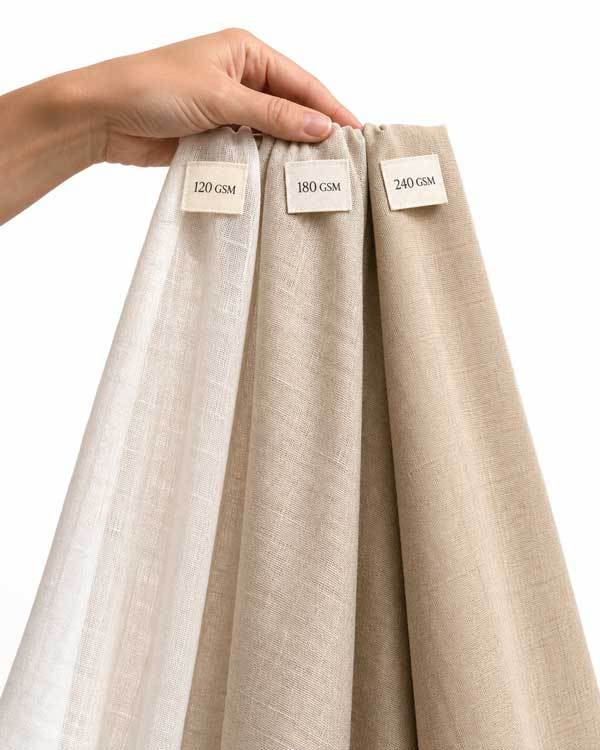
Linen fabric weight is measured in grams per square meter (gsm). This number determines how the garment hangs, how much it breathes, and what season it works best for. Understanding gsm is critical when buying online because you cannot feel the fabric thickness.
| Weight Range |
Best For |
Season |
Breathability |
Opacity |
| 130–150 gsm |
Light dresses, summer tops, scarves |
Summer and tropical climates |
Maximum airflow |
Semi-sheer — may need lining for light colors |
| 150–180 gsm |
Shirts, blouses, mid-weight dresses, wide-leg pants |
Spring to autumn, mild summers |
Excellent |
Mostly opaque |
| 180–220 gsm |
Structured blazers, trousers, A-line skirts, outer shirts |
Cooler months, air-conditioned environments |
Good but more insulating |
Fully opaque |
| 220+ gsm |
Coats, heavyweight jackets, upholstery-weight garments |
Winter and transitional |
Moderate |
Fully opaque |
If the product page does not specify gsm, you can ask customer service. A reputable linen brand — including KOSSR — will be able to tell you the fabric weight. As a general rule: for summer-first wardrobes, choose 140–170 gsm. For year-round versatility, choose 160–190 gsm.
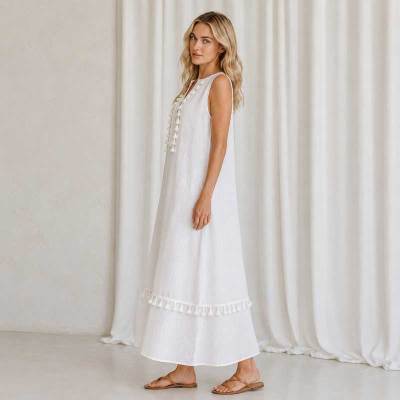
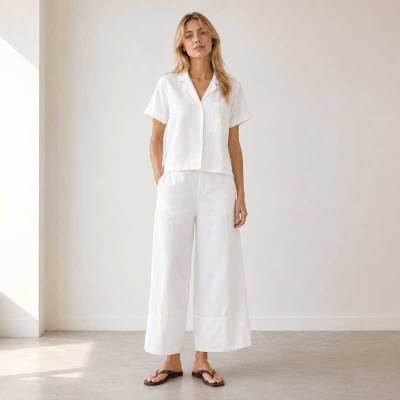
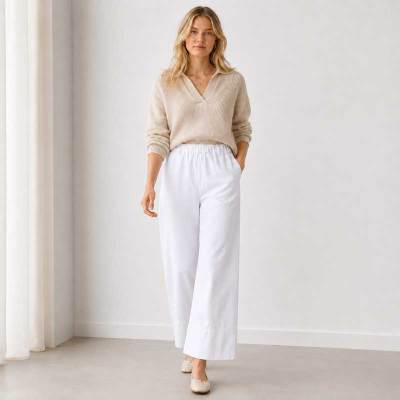
KOSSR Tip: Our summer linen dresses are woven at 140–160 gsm, our linen shirts at 150–170 gsm, and our wide-leg pants at 160–180 gsm. Each weight is selected to balance breathability with the expected structure of the garment. If you are unsure, our customer service team can recommend the right weight for your climate and intended use.
Step 3: Understand Linen Weave Types
Not all linen is woven the same way. The weave type affects the texture, durability, breathability, and appearance of the final garment. Here are the most common weaves you will encounter when shopping online:
Plain Weave (Most Common)
The simplest over-under weave pattern. Plain-weave linen (also called "linen fabric" in its basic form) is lightweight, breathable, and has a slightly crisp hand feel. It is what most KOSSR garments use. It wrinkles naturally and softens beautifully over time.
Loose Weave / Slub Weave
A variation of plain weave where the thread tension is intentionally uneven, creating visible slubs (thicker sections) and an irregular surface texture. This is often called "slub linen" and has maximum airflow. It is popular for resort wear and very casual styles.
Twill Weave
Diagonal parallel ribs create a denser, more durable fabric. Twill linen drapes better and resists wrinkling more than plain weave, but is slightly less breathable. It works well for pants, blazers, and structured garments.
Herringbone Weave
Distinctive V-shaped diagonal pattern. Herringbone linen is heavier, very durable, and has excellent texture. It is commonly used for blazers, coats, and fall-weight pieces.
When browsing online, look for mentions of weave type in the product description. Garments that do not specify weave type are almost always basic plain weave, which is perfectly fine — just know what you are getting.
Step 4: Find the Right Fit — Sizing Linen Without Trying On
Sizing is the most common concern for online linen shoppers. Linen behaves differently from stretch fabrics like cotton-spandex or polyester blends. Here is how to get the size right the first time:
Linen Should Be Loose — but Not Too Loose
Unlike denim or activewear, linen is meant to fit with ease. A properly sized linen garment should allow you to comfortably pinch 2–4 cm of fabric at the waist or hip. If it fits skin-tight, it will restrict airflow and defeat the purpose of linen's breathability. At KOSSR, our size guide recommends choosing your normal size for a relaxed fit and sizing down only if you prefer a more fitted silhouette.
Check Each Garment's Specific Measurements
A "size M" from one brand may be completely different from another brand's "size M." Always look for a size chart with flat-lay measurements: bust width, waist width, hip width, and garment length in centimeters or inches. Compare these measurements against a similar garment you already own that fits well.
Account for Shrinkage
100% linen can shrink 3–5% in the first wash, especially if washed in warm water. Some brands pre-wash their linen (labeled "pre-washed" or "stone-washed") to reduce this. KOSSR pre-washes all our linen garments, so what you receive is the final size and will not shrink significantly. If you buy untreated linen from another seller, consider sizing up to account for first-wash shrinkage.
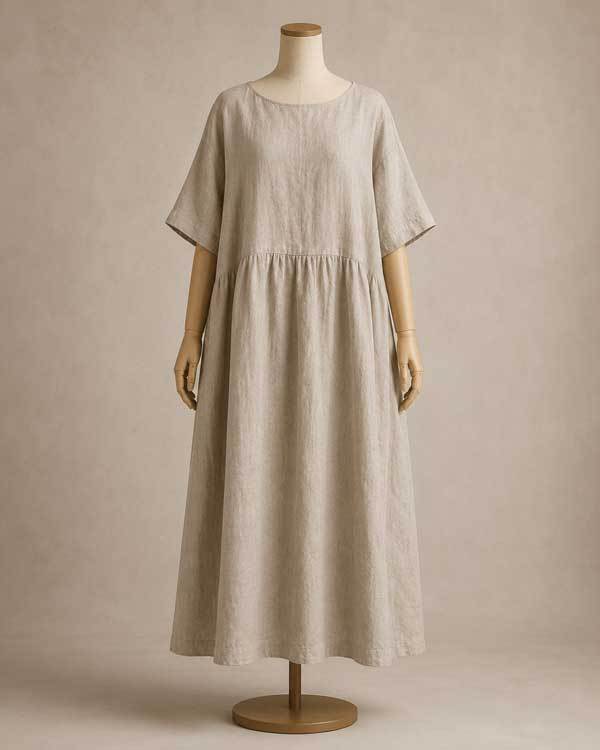
KOSSR's Size Promise: Every product page on our site includes detailed flat-lay measurements for each size, plus a note on the garment's intended fit (relaxed, standard, or fitted). Our customer service team can also help you compare measurements if you are between sizes — just send us a message through our contact page.
Step 5: Evaluate the Store's Linen Expertise
Not every clothing store that sells linen actually specializes in linen. A store's level of linen expertise directly affects the quality of the garment you receive. Here are the markers of a genuine linen-focused brand versus a general retailer that happens to carry some linen pieces:
| Indicator |
Linen Specialist (like KOSSR) |
General Retailer |
| Fabric details |
Lists gsm, weave type, origin of flax |
Usually just "linen" or "cotton-linen" |
| Product photography |
Shows fabric texture, close-ups of weave |
Standard lifestyle shots, no fabric detail |
| Washing guidance |
Linen-specific care instructions included |
Generic care label copy |
| Size guidance |
Notes linen fit characteristics and shrinkage |
Standard size chart, no linen-specific notes |
| Return policy |
30+ days, accepts returns (linen can vary) |
Standard 14–30 day policy |
| Reviews mention |
Fabric quality, weight, breathability |
General "nice" or "fits well" |
Reading customer reviews specifically for feedback on fabric quality is one of the most reliable ways to assess a store's linen. If multiple reviews mention how the fabric feels, how it drapes, and how it washes, you are probably looking at a genuine linen brand. At KOSSR, our customer reviews regularly mention fabric quality firsthand — because we use the same 100% European flax linen across our entire collection and stand behind every yard of it.
Step 6: Compare Pricing Realistically
Understanding the real cost of linen clothing helps you recognize both overpriced and suspiciously cheap options. Here is a rough breakdown of what goes into a genuine 100% linen garment:
- Fabric cost: $12–18 per yard for European flax (2–3 yards per dress or pants = $24–54)
- Cutting and sewing: $15–35 per garment depending on complexity
- Finishing and quality control: $5–10 per garment
- Packaging, warehousing, and shipping: $5–15 per garment
- Total production cost (estimate): $49–114 for a mid-complexity garment like a dress
A final retail price of $49–89 for a linen dress from a direct-to-consumer brand like KOSSR reflects honest margins. Prices below $30 almost certainly mean the garment is not 100% linen or uses low-grade fabric. Prices above $200 may include brand markup, designer positioning, or premium finishing (hand-stitching, bespoke sizing, etc.) — which is fine if you value those extras, but not necessary for quality 100% linen.
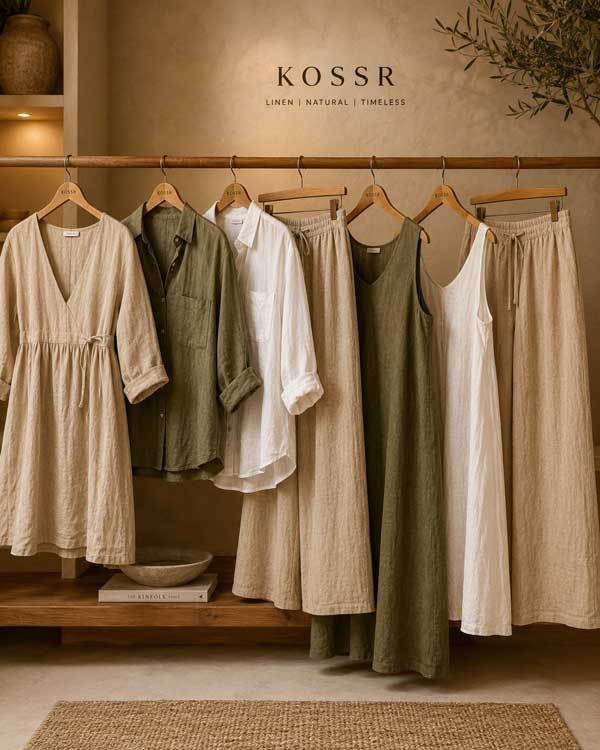
Our pricing at KOSSR: Linen dresses $59–89, linen tops $39–55, linen pants $59–79, linen sets $79–109. We are direct-to-consumer, so you pay for the garment and the fabric — not for a brand logo or retail markup. Every piece is made from 100% European flax linen with pre-washed, pre-shrunk fabric, and our prices include free shipping on orders over $99.
Step 7: Read the Return and Exchange Policy Before Ordering
Even with careful research, linen can fit differently than expected. A generous return policy is a strong sign of a confident seller. Look for these features:
- Minimum 30-day return window — you need time to feel the fabric, try it on at home, and see it in different lighting.
- Full refund (not store credit only) — some stores only offer exchanges or credit, which limits your options if the garment does not work out.
- Clear condition requirements — unworn with tags attached is standard. Avoid stores that reject returns for minor try-on creasing (linen creases naturally).
- Return shipping policy — free returns signal confidence; paid returns are normal but should be clearly stated. At KOSSR, we offer 30-day returns with a small return shipping fee clearly explained on our shipping policy page.
Step 8: Compare White and Light Colors Carefully
Linen in white, cream, and pastel shades requires extra attention because of opacity concerns. As mentioned in the weight guide above, lighter-weight linen (under 150 gsm) in light colors can be semi-sheer. Here is what to watch for:
- Check if the garment is lined: Lined white linen dresses are more opaque and suitable for professional or formal settings. Unlined white linen is more breathable but may show undergarment outlines.
- Read reviews for opacity feedback: Other customers will often mention whether a white or cream linen piece is sheer. Search the review section for keywords like "sheer," "see-through," or "lining."
- Layer strategically: A white linen shirt worn over a nude camisole or bralette looks intentional and polished. Many KOSSR customers style their white linen pieces this way.
- Dark colors and linen: Dark linen (navy, charcoal, black, forest green) is always opaque regardless of weight. It also shows less wrinkling than light-colored linen — a practical consideration if you prefer a more polished look throughout the day.
Step 9: Consider Pre-Washed or Stone-Washed Linen
One decision that significantly affects your first experience with a linen garment is whether the fabric has been pre-washed. Here is the difference:
Pre-washed Linen (Recommended for First-Time Buyers)
- Already soft out of the package — no break-in period needed
- Pre-shrunk — what you order is the size you keep
- Feels lived-in from day one
- Still breathable, slightly more absorbent
- KOSSR uses pre-washed linen on all garments
Unwashed (Crisp) Linen
- Stiff and crisp initially — needs 3–5 washes to soften
- May shrink 3–5% on first wash — order one size up
- Holds sharp creases and structured silhouettes better
- Preferred by customers who like a tailored, pressed look
If you are buying linen online for the first time, pre-washed linen is almost always the safer choice. It removes the guesswork around shrinkage and gives you the soft, relaxed feel that most people associate with linen.
Step 10: Use the Measurement Sheet Method for Confidence
Before placing your order, here is a practical method that experienced linen buyers use:
- Take a similar garment from your closet that fits you well — for example, a shirt if you are buying a linen shirt.
- Lay it flat on a table and measure: shoulder to shoulder, chest width (2.5 cm below armpit), waist width (at narrowest point), sleeve length (shoulder seam to cuff), and total length (shoulder seam to hem).
- Write down these measurements in centimeters.
- Compare them against the online size chart. If the online store does not provide flat-lay measurements, ask customer service. At KOSSR, every product page includes full flat-lay measurements for every size.
- For linen, add 2–4 cm to the chest and waist compared to your fitted garments to account for linen's intended relaxed silhouette.
This method removes almost all sizing uncertainty and works across any brand, any style, and any country's sizing system.
Frequently Asked Questions About Buying Linen Online
Is it safe to buy linen from a store I have never heard of?
Check their fabric details, return policy, and customer reviews on the specific product you are considering. If they provide gsm, weave type, flax origin, and flat-lay measurements, they are likely a genuine linen seller. If they only have generic product descriptions and stock photos, proceed with caution. You can always start with one item to test quality before placing a larger order.
How do I know if linen is good quality from just photos?
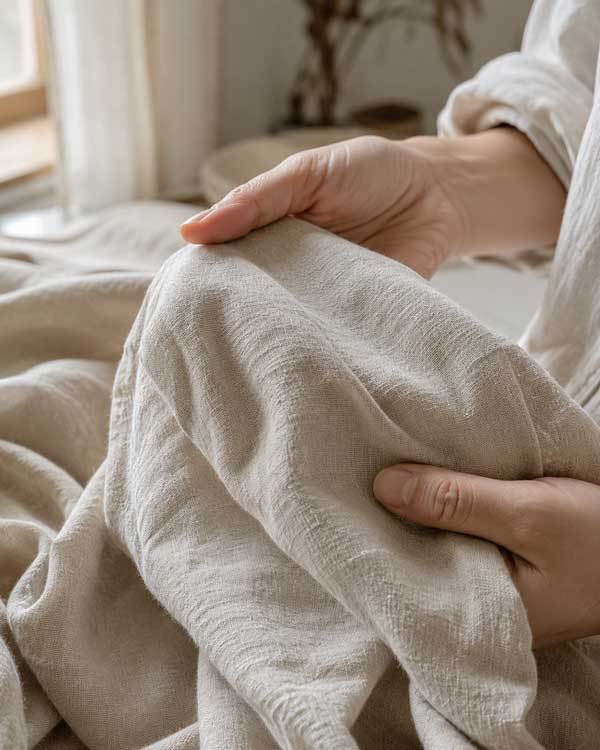
Look for photos that show fabric close-ups and the garment on different body types — not just model shots. Detail shots of seams, buttons, and hem finishing also indicate quality. A store that hides fabric close-ups is often hiding lower-quality material.
Should I buy linen on sale?
Yes, as long as you verify the fabric composition and store credentials first. Seasonal sales from reputable linen brands are an excellent way to try linen at a lower entry price. Just be sure the sale item is final fabric — not a factory-second or irregular piece.
Can I return linen if I do not like the color in person?
This depends on the store's return policy. At KOSSR, we accept returns within 30 days of delivery as long as the item is unworn with tags attached — including color dissatisfaction. We also provide fabric swatches on request if you want to see the exact shade before ordering.
What is the best way to wash linen after buying it?
Machine wash cold (30°C max) with mild detergent, no fabric softener, and air dry or tumble dry low. For complete care instructions, visit our Linen Care Guide.
The KOSSR Difference: What Sets Us Apart
After reading this guide, you now know exactly what to look for when buying linen online. At KOSSR, we built our brand around these same principles:
- 100% European flax linen — verified and stated clearly on every product page
- Full transparency on fabric weight and weave — every product lists gsm and weave type
- Pre-washed, pre-shrunk fabric — what you see is what you keep
- Detailed flat-lay measurements — no guesswork on sizing
- 30-day return policy — shop with confidence
- Direct-to-consumer pricing — quality linen without retail markup
If you would like fabric swatches, personalized sizing advice, or help choosing your first linen piece, our team is available through the contact us page. We also invite you to read our blog for more guides on linen care, styling, and building a sustainable wardrobe.
Final Thoughts
Buying linen clothing online does not have to be a gamble. By following the ten steps in this guide — verifying fiber content, choosing the right fabric weight, understanding weave types, checking flat-lay measurements, evaluating the seller's expertise, comparing prices realistically, checking the return policy, and using the measurement sheet method — you can confidently purchase linen pieces that will serve you for years.
The key is knowing what to look for and being willing to ask questions before clicking "buy." Reputable linen sellers like KOSSR are happy to answer fabric, sizing, and care questions because we take pride in what we make. If a seller cannot answer basic questions about their linen, that lack of transparency is itself an answer.
Ready to find your first (or next) linen piece? Browse the KOSSR collection — every garment is 100% European flax, pre-washed, and backed by a 30-day return policy.