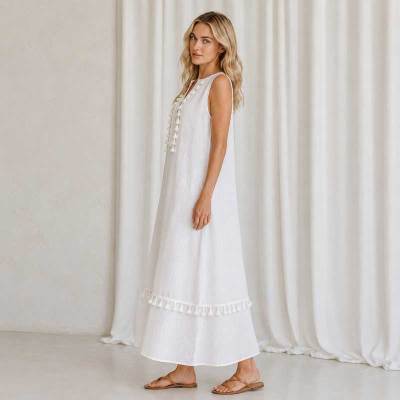
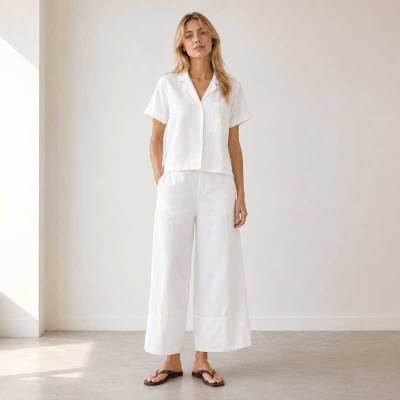
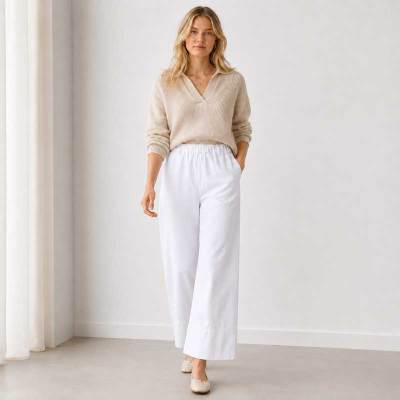
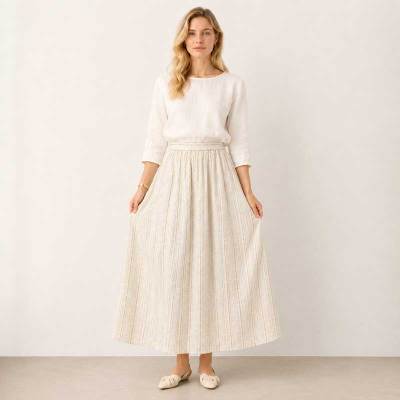
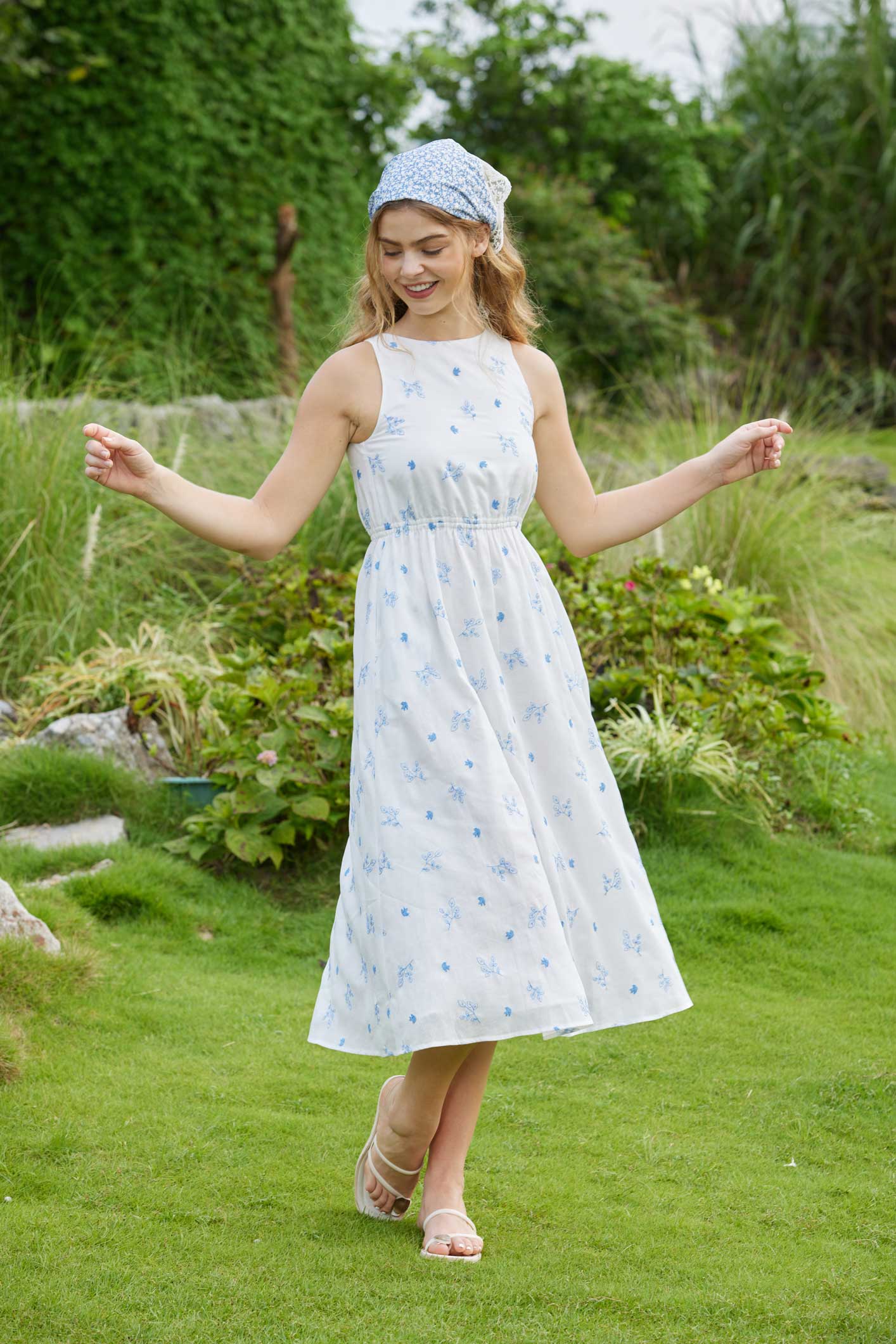
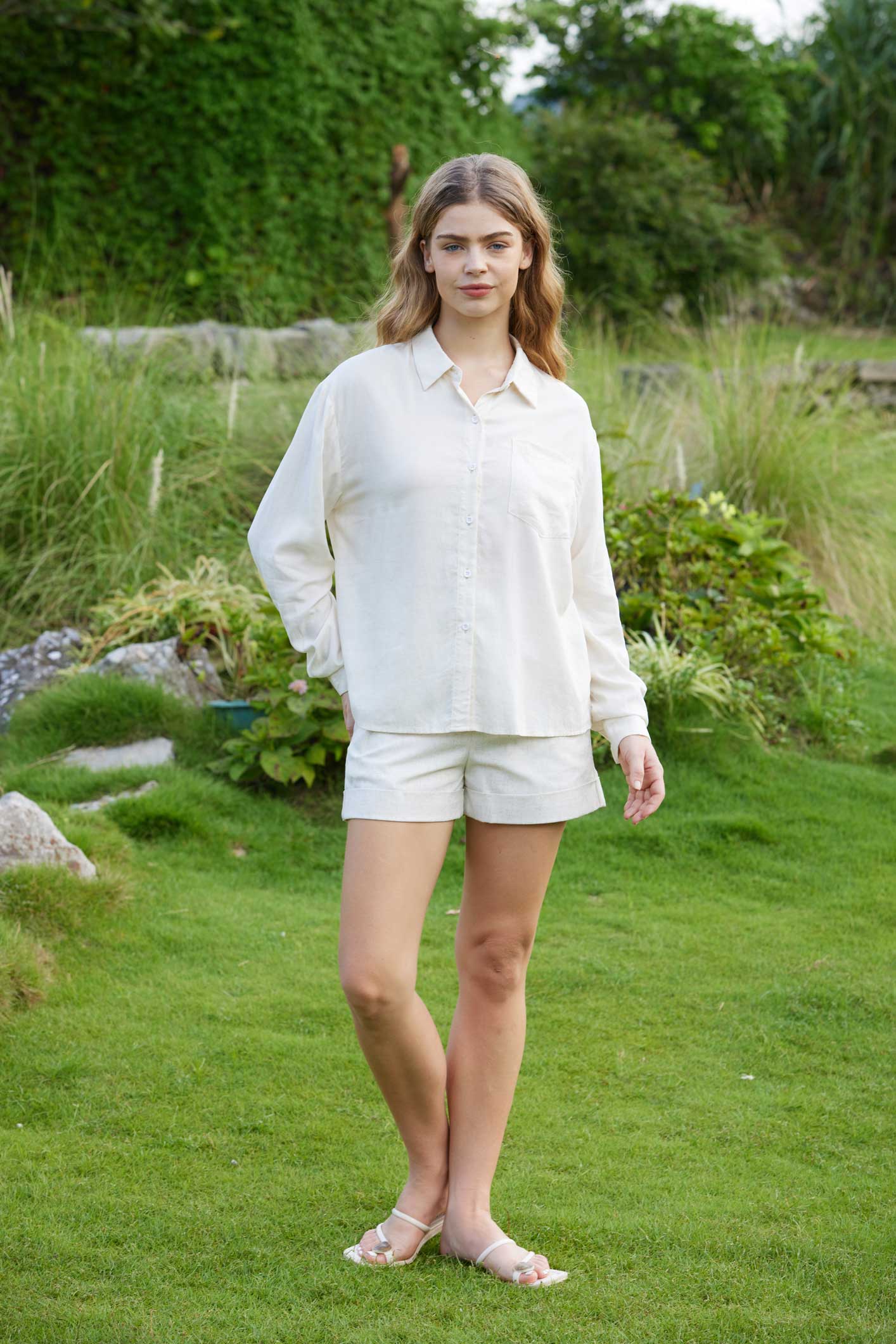
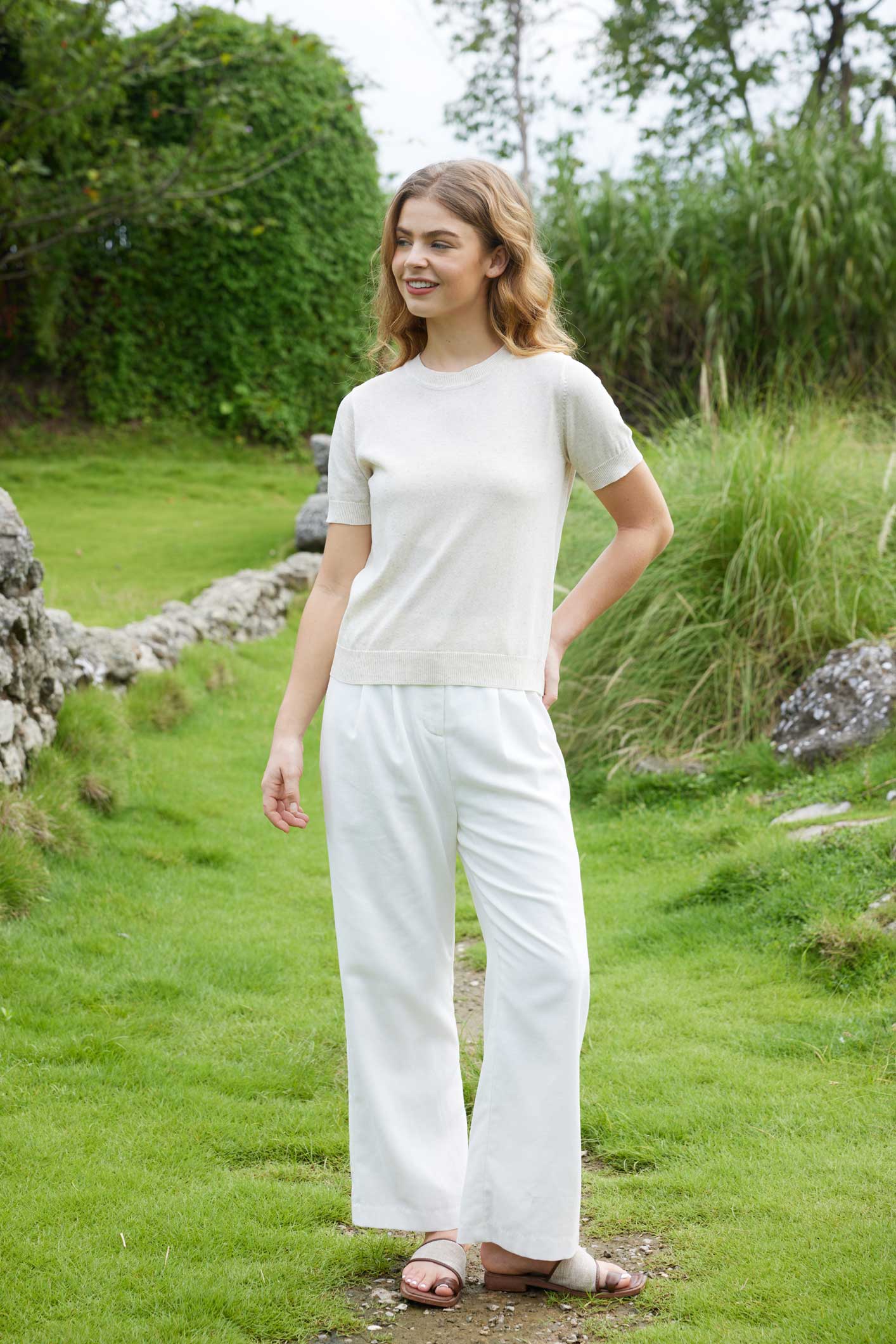
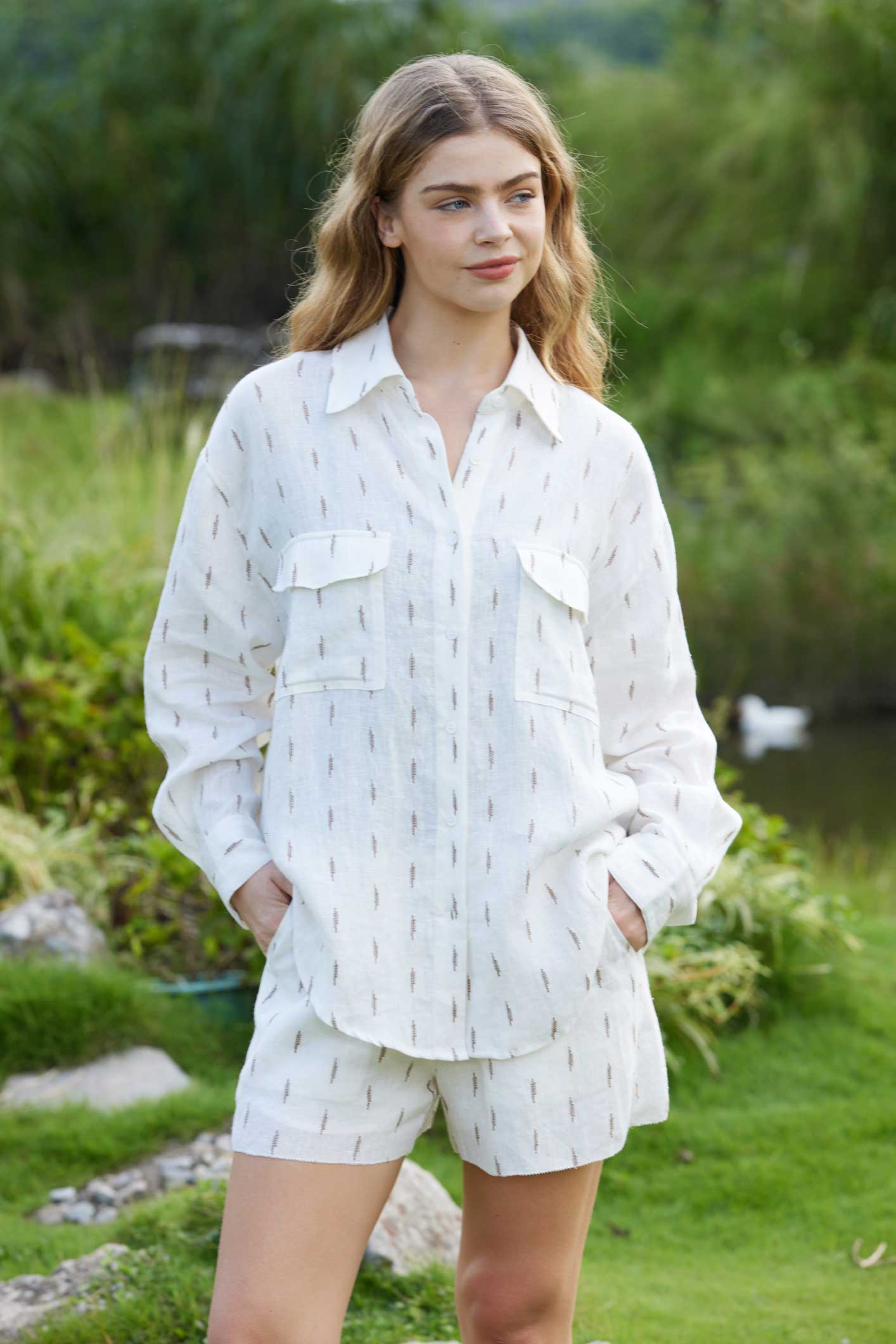
Slow fashion is not about owning less for the sake of it — it is about owning better. A slow fashion wardrobe is built on durable, natural, timeless pieces that you actually wear, season after season. Linen is one of the best fabrics to build it around: it is made from a renewable plant, lasts for years, gets softer with every wash, and never goes out of style. This guide walks you through how to build a slow fashion wardrobe with linen — what to buy first, how to choose quality, how to care for your pieces so they last, and how to shop with intention.
Whether you are starting from scratch or slowly replacing fast-fashion items, the same principles apply: choose European flax, prefer mid-weight fabric, build a cohesive palette, and wear every piece often. This guide is written for anyone — first-time linen buyers, capsule wardrobe builders, and experienced slow fashion advocates alike — and every step is designed to be practical rather than preachy.
1. What Slow Fashion Actually Means
Slow fashion is a movement that pushes back against fast fashion's cycle of mass production, cheap materials, and rapid disposal. Instead of chasing dozens of micro-trends each year, slow fashion prioritizes:
- Buying fewer, better pieces that are designed to last for years rather than seasons.
- Choosing natural, renewable materials with a lower environmental footprint.
- Transparent production — knowing where the fiber comes from, who made the garment, and under what conditions.
- Wearing clothes longer and caring for them properly instead of replacing them.
- Timeless design over trends, so a garment still looks right five years from now.
For most people, slow fashion is not an all-or-nothing commitment. It is a shift in how you shop: fewer impulse buys, more consideration, and a preference for quality natural materials. A linen wardrobe is a practical entry point because linen itself embodies almost every slow fashion value — renewable fiber, low water use, durability, and natural biodegradability.
2. Why Linen Is the Ideal Slow Fashion Fabric
Linen checks every box that slow fashion cares about, and it does so with measurable advantages over most other fabrics:
Renewable & Low-Impact Fiber
Linen comes from the flax plant, which grows quickly in cool European climates with little irrigation. The entire plant is used, and flax cultivation typically requires far less water and fewer pesticides than cotton. At the end of its life, pure linen biodegrades naturally — it is a genuinely circular material.
Durability That Rewards Investment
Linen fibers are among the strongest natural fibers — roughly twice as strong as cotton. A well-made linen garment can last 5 to 10 years or more with proper care. Where fast fashion items wear out in months, linen improves: it softens with every wash while keeping its strength.
Timeless, Trend-Proof Aesthetic
Linen's natural texture and neutral tones do not belong to any single trend cycle. A linen shirt bought in 2026 will still look current in 2031 — the very definition of a wardrobe staple. This timelessness is what makes linen a foundation fabric rather than a seasonal purchase.
Comfort That Keeps You Wearing It
A slow fashion wardrobe only works if you actually wear the pieces. Linen's breathability, moisture-wicking, and temperature regulation make it comfortable across three seasons — meaning your linen pieces earn their place in your rotation instead of sitting unused.
Why this matters for slow fashion: The most sustainable garment is the one already in your closet. Linen's combination of durability and comfort means it stays in rotation, which is exactly what slow fashion is designed to achieve. When you eventually replace it, it returns to the earth instead of a landfill.
3. The Environmental Numbers Behind Linen
Slow fashion is built on environmental responsibility, and linen has some of the strongest numbers of any natural fiber. While no fabric is impact-free, the evidence for flax is consistently favorable:
| Factor |
Linen (flax) |
Why It Matters |
| Water use |
Rain-fed in Western Europe; typically far less irrigation than cotton |
Cotton is one of the most water-intensive crops; flax grown in cool, rainy climates often needs little or no irrigation. |
| Land use |
Grows on marginal land; whole plant is used |
Flax can be grown in rotation with food crops, and the entire plant is utilized — seeds for linseed oil, shives for materials, fiber for fabric. |
| Fiber strength |
About twice as strong as cotton |
Stronger fiber means longer garment life — the single most important factor in reducing a wardrobe's environmental footprint. |
| End of life |
100% biodegradable |
Pure linen breaks down naturally in compost within weeks to months, unlike synthetics that persist for centuries. |
| Microplastics |
Zero — pure plant fiber |
Every wash of synthetic clothing releases microplastic fibers into waterways; linen sheds only natural fiber. |
These properties are why textile researchers and sustainability organizations consistently rank flax among the lower-impact natural fibers. The exact figures vary by region and farming practice, but the direction is clear: a fiber that grows on rain, uses the whole plant, lasts twice as long as cotton, and biodegrades at the end of its life is about as close to circular as clothing materials get.
One honest caveat: The fabric is only part of the story. Dyeing, finishing, and garment production also carry environmental costs, which is why we choose pre-washed, low-impact finishes and produce garments in small, controlled batches. A truly slow fashion purchase considers the whole supply chain, not just the fiber content.
4. The Core Pieces: What to Buy First
A linen slow fashion wardrobe does not need to be large. Six to ten well-chosen pieces can cover a full year of outfits when they are selected to mix and match. Here is the recommended build order:
| Order |
Piece |
Why It Earns Its Place |
Suggested Weight |
| 1 |
Linen shirt (white or natural) |
The most versatile single piece — works with trousers, skirts, denim, and under blazers across all seasons. |
140–160 gsm |
| 2 |
Linen trousers (wide-leg or straight) |
Dress up or down; the backbone of warm-weather outfits and a summer office staple. |
150–180 gsm |
| 3 |
Linen midi dress |
One-piece outfit; pairs with sandals for day and heels or loafers for evening. |
140–170 gsm |
| 4 |
Linen blazer or overshirt |
Adds structure and extends linen wear into cooler months; elevates any base outfit. |
180–220 gsm |
| 5 |
Linen set (top + shorts or pants) |
Coordinates instantly for travel, holidays, and relaxed weekends. |
130–160 gsm |
| 6 |
Linen skirt (midi or maxi) |
Adds silhouette variety and works from beach days to dinner. |
140–170 gsm |
Start with the pieces that match your lifestyle. If you work in an office, the shirt, trousers, and blazer come first. If you travel often, the dress and set give you the most outfit combinations per kilogram of luggage. The goal is a small set of pieces that all work together — not a large collection of standalone items.
5. Mix and Match: Getting Dozens of Outfits From Six Pieces
A capsule wardrobe works because its pieces are designed to combine. With the six core pieces above in a cohesive palette, you can build a surprising number of outfits:
- Shirt + trousers — the classic summer work look; add the blazer for meetings or cooler days.
- Shirt + skirt — relaxed but polished; tuck the shirt in and add sandals for a daytime outfit.
- Dress alone — a one-piece outfit; layer the blazer over it or tie the shirt at the waist for a different silhouette.
- Set worn together — instant coordinated look for travel, brunch, or beach evenings.
- Set pieces split — the set's top with the skirt, or the set's pants with the shirt, doubles your options.
- Blazer over everything — over the dress, over the set, or over shirt and trousers, the blazer instantly elevates any combination.
With six pieces and two neutral base colors, you typically reach 15–20 distinct outfits — more than most people wear from a much larger fast-fashion wardrobe. Add accessories — belts, scarves, bags, and shoes in your palette — and the combinations multiply further without buying a single new garment.
6. Choose a Cohesive Color Palette
The secret to a small wardrobe that feels large is color cohesion. When every piece shares a compatible palette, any combination looks intentional. For linen, the most effective slow fashion palettes are built on neutrals and earth tones:
- Warm neutrals: natural/raw linen, ivory, sand, oatmeal, taupe — these are linen's most classic shades and hide light wear beautifully.
- Deep accents: olive, terracotta, rust, navy, and black — a few deeper pieces add contrast and dressier options.
- One or two personality colors: if you love color, choose one or two shades that flatter you and repeat them across pieces — e.g., a dusty blue shirt and a dusty blue dress.
As a rule of thumb, aim for roughly 70% neutrals and 30% accents in your linen wardrobe. This ratio maximizes mix-and-match combinations while keeping the palette calm and cohesive — the same approach our stylists use when helping customers build capsule wardrobes at KOSSR.
7. How to Choose Quality Linen That Lasts
A slow fashion wardrobe only works if your pieces last — and not all linen is created equal. When you buy linen for the long term, check these quality markers:
- Fiber origin: European flax (France, Belgium, the Netherlands) produces the longest, strongest fibers. Look for "European flax" or Masters of Linen certification.
- Fabric weight: Mid-weight linen (140–180 gsm) is the sweet spot for garments — heavy enough to be opaque and durable, light enough to stay breathable. Avoid ultra-light linen for daily-wear pieces.
- Pre-washed finish: Pre-washed or garment-washed linen is soft from the first wear and has already undergone most of its shrinkage. Unwashed linen can shrink 5–8% in the first wash.
- Construction: French seams or flat-felled seams, dense even stitching (8–12 stitches per inch), and properly finished buttonholes are signs of a garment built to last.
- Certifications: OEKO-TEX Standard 100 means the fabric is free from harmful chemicals — a reliable trust signal when buying online.
Every KOSSR linen garment is made from European flax, pre-washed for immediate comfort, and finished with quality construction details. We list fiber origin, weight, and care information on every product page so you can verify the quality before you buy — no guesswork.
8. Buy Less: The Two-Week Rule and Shopping With Intention
The "buying" part of slow fashion is where most wardrobes go wrong. Before adding any new linen piece, apply a simple filter:
- Wait two weeks. Put the item in your cart or on a wishlist and walk away. If you still want it after 14 days, it is a real need, not an impulse.
- Check your existing wardrobe. Do you already own something that serves this purpose? If yes, pass. If no, what would you wear it with? If you cannot name two outfits, it does not belong in a capsule.
- Verify the quality markers above. Fiber origin, weight, finishing, construction. A bargain that falls apart in a year is the most expensive option.
- Prefer pieces that cover multiple seasons. A mid-weight linen shirt works in summer alone, under a blazer in spring, and layered with knitwear in autumn — far more valuable than a single-season piece.
- Buy from brands you can verify. Read the fabric details, check for certifications, and choose sellers who disclose how their linen is made.
Realistic expectation: Slow fashion does not mean you never buy clothes. It means each purchase is considered, quality-driven, and designed to last. Over a year, most people find they buy fewer items but wear them far more often — which is the whole point.
9. The Cost-per-Wear Math: Why Quality Linen Is the Cheaper Choice
Slow fashion is often assumed to be more expensive, but the math works differently when you measure cost per wear — the price of a garment divided by how many times you wear it. Consider a realistic comparison:
| Scenario |
Price |
Wears |
Cost per Wear |
| Fast-fashion linen-blend dress (synthetic content) |
$35 |
~15 wears before pilling, fading, or losing shape |
~$2.33 |
| Quality 100% linen dress (European flax, pre-washed) |
$89 |
~150 wears over 5+ years with care |
~$0.59 |
| Quality linen dress worn twice a week for 3 seasons/year |
$89 |
~200 wears over 6+ years |
~$0.45 |
These are illustrative figures based on typical garment lifespans, but the principle holds across real purchases: a garment that lasts five times longer and is worn ten times more often is dramatically cheaper per wear — even at two to three times the purchase price. Add the environmental savings (one durable garment replacing several disposable ones) and the case for quality linen becomes hard to argue with.
Where the savings come from: Linen's durability is not marketing — flax fibers are roughly twice as strong as cotton, and mid-weight linen in particular resists abrasion, repeated washing, and everyday wear. A garment that still looks good after 100 washes has effectively paid for itself many times over.
10. Rotating Your Linen Wardrobe Through the Seasons
A common misconception is that linen is only a summer fabric. In practice, a well-built linen wardrobe works across most of the year with simple rotation strategies:
- Summer (peak heat): Wear lightweight and mid-weight linen alone — dresses, sets, shirts, and skirts in your lightest shades. Light colors reflect heat and stay cool in direct sun.
- Spring and early autumn: Layer mid-weight linen under blazers, over fine knit tops, or with trousers and loafers. A linen shirt under a light jacket is a classic transition-season look.
- Cooler months: Use heavier linen pieces (180+ gsm) like blazers and structured trousers, layer them over knitwear, and pair with tights or boots. Linen's temperature-regulating fibers insulate as well as they cool.
- Travel year-round: Linen packs small, resists odor, and dries quickly — a capsule of 3–4 linen pieces covers a week-long trip in any season.
Rotating the same core pieces across seasons is exactly what slow fashion intends: fewer garments, more wear per garment, and a wardrobe that never feels seasonal or disposable.
11. Where to Buy: Choosing a Linen Brand You Can Trust
Where you buy matters as much as what you buy. A slow fashion wardrobe depends on honest, verifiable brands. Before you commit to a linen purchase, check whether the seller:
- Discloses fiber origin. "European flax" or Masters of Linen certification is the strongest signal of premium fiber. Vague sourcing descriptions are a red flag.
- States fabric weight. A specific GSM range shows the brand understands its own product and has nothing to hide.
- Explains finishing. Pre-washed or garment-washed linen means softer fabric and minimal shrinkage — details quality brands publish openly.
- Provides real product information. Size guides, care instructions, and clear photos of fabric texture help you buy correctly the first time — which is the essence of slow shopping.
- Offers direct contact. A brand that answers fabric questions honestly (origin, weight, composition) before you order is a brand you can trust for years.
At KOSSR, we publish all of this information on every product page because we believe an informed customer is a loyal customer. Every garment is European flax, pre-washed, and labeled with its exact weight and care requirements — so your slow fashion decisions are built on facts, not marketing.
12. Care for Your Linen So It Lasts Years
How you care for linen determines how long it lasts — often more than the fabric itself. Linen is durable, but it rewards gentle, consistent care:
- Wash in cool or cold water (max 30°C) on a gentle cycle, or hand-wash. Hot water and harsh agitation stress the fibers.
- Use a mild detergent without bleach. Linen is sensitive to chlorine bleach, which weakens the fibers over time.
- Air dry whenever possible. Line-drying is gentlest and naturally reduces wrinkles. If using a dryer, use low heat and remove while slightly damp.
- Iron while slightly damp on medium heat for a crisp finish — or embrace the natural crinkle, which many linen lovers prefer.
- Store flat or on padded hangers. Heavy linen pieces can stretch on thin wire hangers; folded storage or wide wooden hangers protect the shape.
Properly cared for, a quality linen garment develops a beautiful softness and patina over years of wear — a character that fast fashion fabrics never achieve. This is the payoff of investing in linen.
13. Linen vs Other Slow Fashion Fabrics: An Honest Comparison
Linen is not the only sustainable fabric on the market, and the best choice depends on your climate and lifestyle. Here is how linen compares with the other common slow fashion materials:
| Fabric |
Strengths |
Weaknesses |
Best Use |
| Linen |
Strongest natural fiber, breathable, low water use, biodegradable |
Wrinkles naturally; needs gentle care |
Warm and hot climates; year-round layering staple |
| Organic cotton |
Soft, familiar, easy care |
Still water-intensive; less durable than linen; shrinks |
Everyday basics, underwear, casual wear |
| Hemp |
Extremely durable, low impact, biodegradable |
Stiff initially; limited color and drape options |
Workwear, rugged casual pieces |
| Wool (responsible sources) |
Insulating, naturally odor-resistant, long-lasting |
Warm-season use limited; higher care requirements |
Cooler months, outerwear, knitwear |
| Tencel / Lyocell |
Soft drape, closed-loop production |
Wood-pulp sourcing varies; less durable than linen |
Dresses, flowing silhouettes |
For a warm-climate capsule, linen is arguably the best single fabric because it pairs the durability of hemp with the drape and comfort of cotton, while outperforming both on breathability. For colder climates, a linen-and-wool combination — linen for transitional seasons, wool for winter — covers the year more completely than either fabric alone.
The practical answer: You do not have to choose one fabric for life. A slow fashion wardrobe works best when each fabric does what it does best. Build the warm-weather core in linen, add responsible wool for winter, and reserve organic cotton for pieces where softness matters most — then wear every piece for years.
14. Common Mistakes to Avoid When Building a Linen Wardrobe
Even with good intentions, it is easy to build a wardrobe that does not quite work. Here are the mistakes we see most often — and how to avoid them:
- Buying too many similar pieces. Three white linen shirts do not build a wardrobe; one great shirt plus variety does. Prioritize different garment types over repeats.
- Choosing ultra-light linen for everything. Very light linen is lovely for blouses but wrinkles heavily and wears faster. Match the weight to the garment's job.
- Ignoring care instructions. Hot washes and dryers shorten linen's life dramatically. Follow the care label — it is part of the slow fashion commitment.
- Buying blends without knowing why. Some linen blends are fine (a little elastane for stretch), but a "linen" garment with heavy polyester content is not a slow fashion purchase. Read the fiber composition.
- Skipping the try-on consideration. Linen has a relaxed drape; if you are between sizes, sizing guidance matters. Check the brand's size guide before ordering rather than guessing.
Frequently Asked Questions About Linen and Slow Fashion
How many linen pieces do I need for a capsule wardrobe?
A practical linen capsule starts with 6–8 pieces: 1–2 shirts, 1–2 pairs of trousers, 1 dress, 1 blazer or overshirt, 1 set, and 1 skirt (choose based on your lifestyle). This is enough for dozens of outfit combinations when colors are cohesive.
Is linen better than cotton for slow fashion?
Generally yes. Linen uses less water and fewer pesticides than conventional cotton, its fibers are stronger (so garments last longer), and it is fully biodegradable. Organic cotton is also a good choice, but linen's durability gives it an edge for long-term wardrobes.
Does linen shrink, and does that matter for slow fashion?
Unwashed linen can shrink 5–8% in the first wash, which is why we recommend pre-washed linen — it has already undergone most shrinkage at the factory. Pre-washed garments (like all KOSSR linen) shrink minimally after purchase, so your investment keeps its fit.
Can I wear linen all year round in a slow fashion wardrobe?
Yes. Linen is breathable in summer, and with layering — under blazers, with knitwear, or with tights — mid-weight linen works well in spring and autumn too. Heavier linen (180+ gsm) extends comfortably into cooler months.
Does linen pill like synthetic or blended fabrics?
Quality 100% linen rarely pills because long flax fibers are strong and smooth. Pilling is more common in linen blends with synthetic fibers or in short-staple, low-grade linen. This is another reason to choose European flax and check the fiber composition before buying.
Can I build a slow fashion wardrobe on a budget?
Yes. Start with one or two quality linen pieces and build gradually — slow fashion is a pace, not a spending level. Shop seasonal sales from quality brands, prioritize mid-weight neutral pieces that work year-round, and care for what you own. Two well-chosen linen pieces worn often outperform ten impulse buys, at any budget.
Is wrinkled linen acceptable in a slow fashion wardrobe?
Yes — natural wrinkles are part of linen's character and a sign of the real fiber, not a flaw. If you prefer a crisper look, iron while slightly damp or steam before wearing. The key is that you wear the piece comfortably and often; a gently crinkled linen shirt worn regularly is the entire point of slow fashion.
Your First Steps: A 30-Day Linen Slow Fashion Plan
Building a slow fashion wardrobe is a process, not an event. Here is a realistic 30-day plan to get started:
- Week 1 — Audit. Empty your closet and identify what you actually wear. Note gaps: which essential pieces are missing from your rotation?
- Week 2 — Define. Choose your color palette (70% neutrals / 30% accents) and your lifestyle priorities — work, travel, or casual?
- Week 3 — Buy quality. Purchase 1–2 core linen pieces that fill your biggest gaps. Apply the quality checklist: European flax, pre-washed, mid-weight, good construction.
- Week 4 — Care & wear. Set up your care routine (cool wash, air dry), and wear your new pieces in at least two different outfit combinations each week.
Repeat the cycle each month, and within a year you will have replaced disposable fast fashion with a small, durable, beautiful linen wardrobe that serves you every day — in summer heat, on holiday, and through the cooler transition months alike.
Keep a simple wardrobe journal: After each purchase, note what you bought, why, and how often you wore it after three months. This one habit reveals your real needs, prevents repeat purchases, and turns slow fashion from a vague intention into a measurable practice. Most people discover after one season that they wear 20% of their clothes 80% of the time — and that the 20% is exactly what a linen capsule contains.
Building a slow fashion wardrobe with linen is one of the most practical sustainability decisions you can make — it is better for the planet, better for your comfort, and better for your wallet over time. At KOSSR, we make it easy: every garment is crafted from European flax, pre-washed for immediate comfort, and built to last for years. Explore the KOSSR linen collection to find your first (or next) slow fashion pieces, or read more about linen care and styling. Questions about which pieces suit your lifestyle? Contact our team — we are happy to help you build a wardrobe you will love for years.