Black Friday Linen Shopping: How to Spot Real Value
Black Friday Linen Shopping: How to Spot Real Value
The short answer: real value on Black Friday linen is not the deepest discount on the page. It is the lowest cost per wear on a garment that will still be in your wardrobe in five years. That means five checks, in this order: fibre content, fabric weight in gsm, construction and seam quality, whether the cloth is garment-washed, and whether the sale price still leaves the garment under roughly two US dollars per wear over a realistic wearing life. A 30 percent markdown on a 180 gsm, 100 percent European Flax linen shirt is usually better value than a 60 percent markdown on a 110 gsm blend with a single-stitched side seam, because the second garment will be replaced long before the first one wears out. This guide gives you the number checks, the listing-reading routine, the discount traps, the pieces worth prioritising, and the price-per-wear maths, so a November sale becomes a wardrobe upgrade rather than a January regret.
Why Black Friday Is an Odd Moment to Buy Linen
Linen is a warm-weather fibre in most shoppers' minds, which is exactly why the end of November produces unusual linen pricing. Retailers are clearing the last of the season's stock to make room for winter coats and knitwear, and the pieces that remain are often the ones that did not sell at full price. That is a genuine opportunity, but it is not a uniform one. Some of what is left is unsold because it was overpriced. Some is unsold because it was cut badly, ran small, or arrived in a colour that photographs differently from real life. A discount does not tell you which of those three situations you are looking at.
The seasonal logic also cuts against impulse. If you buy linen in late November, you will probably not wear it as a standalone garment for three to five months. That gap is where most sale mistakes happen: a purchase feels clever in the moment, then sits folded until the following June, by which time the fit question you talked yourself out of has become obvious. The shoppers who get real value from Black Friday linen are the ones who buy for the shoulder seasons and for layering, not the ones who buy for a beach holiday they have not booked.
There is a third factor: linen is a fibre where quality differences are visible and durable, so a bad purchase does not merely cost money once. A thin, loosely woven shirt that loses shape after six washes keeps costing you attention every time you open the wardrobe. That is the quiet expense of a false bargain, and it is the reason this guide puts fabric numbers ahead of price tags.
Finally, timing within the sale window matters. The best inventory of a Black Friday event is usually available in the first hours, not the last, because the sizes and colours that sell are the ones that sell first. Waiting for a further markdown often means choosing between the remaining extremes: the smallest size, the largest size, and the colour nobody wanted. If you have already done the number checks and know your size in a given cut, buying early in the window is usually the higher-value decision.
The Five Number Checks That Separate Value From Discount
Value in linen is measurable. Five numbers do most of the work, and all five are available before you pay, either on the product page or in a message to the brand.
1. Fibre content, stated as a percentage
A listing should say 100 percent linen, or name the flax origin, for example 100 percent European Flax. If it says "linen blend", "linen-rich" or "linen touch" without percentages, treat the price as a blend price, not a linen price. A 55 percent linen and 45 percent viscose shirt can be pleasant, but it pills faster, creases differently and does not soften the way pure linen does. Pure linen is also the version that can be repaired, re-dyed and eventually composted, which is part of its long-run value.
2. Fabric weight in grams per square metre
Gsm is the single most useful number in linen retail and the one most often omitted. Our own range runs from 110 gsm to 240 gsm, and the differences are practical rather than cosmetic. A 110 to 130 gsm cloth is light and airy but can be semi-sheer in white and wears faster at friction points. A 150 to 190 gsm cloth is the versatile middle: opaque enough for a shirt or dress, cool enough for summer, sturdy enough to layer. A 200 to 240 gsm cloth behaves more like a light jacket fabric, holds a crisp line, and is the best choice for trousers, overshirts and structured dresses.
3. Construction details you can see in a photo
Look for a French seam or a flat-felled seam on the side of a shirt or dress, a faced hem rather than a rolled one on anything structured, and a properly finished armhole. Look at the placket: a one-piece placket with clean topstitching will outlast a folded strip of self-fabric. Check whether the buttons are shell or resin and whether they are anchored with a thread shank. None of these details is expensive, but their presence tells you whether the factory was given time.
4. Whether the garment is washed before it ships
Garment washing is a pre-shrink and softening step. It removes most of the residual shrinkage and takes the stiffness out of new linen, so the garment you receive is close to the garment you will own after ten washes. Unwashed linen can shrink by several percent on the first hot wash and often feels boardy for months. On a sale purchase, where you may not have the option to exchange, a pre-washed garment materially reduces risk.
5. Price per wear, not price
Divide the sale price by the number of times you realistically expect to wear the piece. A 90 USD shirt worn 60 times costs 1.50 USD per wear. A 45 USD shirt worn eight times before it loses shape costs 5.60 USD per wear. The cheaper garment is three times more expensive in use, and it is worse for the wardrobe because it occupies space without earning it.
| Signal | Strong value | Acceptable | Walk away |
|---|---|---|---|
| Fibre | 100% linen or 100% European Flax | 70%+ linen with cotton | "Linen touch", unstated blend |
| Weight | 150 to 240 gsm, stated | 130 to 150 gsm, stated | Under 110 gsm or no weight given |
| Seams | French or flat-felled, faced hem | Overlocked with generous allowance | Single-stitched, raw or fraying edges |
| Finish | Garment-washed, stated | Enzyme-washed, stated | No wash information at all |
| Price per wear | Under 1.50 USD | 1.50 to 2.50 USD | Over 3 USD on a garment you will wear rarely |
Run all five and you will find that most of the loudest discounts fail at least two of them. That is not a coincidence: the garments that need a 60 percent markdown to move are usually the ones with the weakest numbers, because the ones with strong numbers sell at full price in June.
How to Read a Linen Listing in Ninety Seconds
Sale shopping rewards speed, but not carelessness. Ninety seconds per listing, spent in the same order every time, is enough to filter most of the noise.
- Scan the composition line first. If the percentage is missing, stop. There is no useful judgement to make about a garment whose fibre content is hidden.
- Find the weight. If gsm is not listed, look for words like lightweight, midweight or heavy, then check the return policy before assuming. A brand that publishes gsm is usually a brand that has thought about the cloth.
- Zoom into three places in the photos: side seam, hem, and placket or waistband. These are where cheap construction shows first.
- Check the model height and size. A dress photographed on a 178 cm model in size S tells you nothing about where the hem will fall on a 160 cm frame. Compare the stated garment length against a piece you already own.
- Read the care instructions. Machine wash cold and line dry is the standard for garment-washed linen. "Dry clean only" on a casual linen shirt is a warning sign about either the dye or the finishing.
- Check the returns window in sale conditions. Many retailers shorten it for discounted items, and some exclude sale goods from free returns. That single line can convert a bargain into a commitment.
The routine matters more than any individual check because it removes the emotional shortcut that sale pages are designed to trigger. A countdown timer and a "only two left" badge are not information about the garment. They are information about the retailer's inventory system. Keep the ninety seconds and you keep the decision.
Discount Traps: What a Deep Markdown Usually Means
Discount depth is a signal about the retailer's position, not about the garment's quality. Four patterns are worth recognising.
The inflated original price. A garment listed at 180 USD and discounted to 72 USD looks like a 60 percent saving. If the same shirt sells at 95 USD for the rest of the year, the real saving is 24 percent. Check the price history if you can, or compare against a similar piece from the same brand at full price.
The clearance colour. Some colours are produced in smaller runs and discounted harder because they photograph poorly or match less. A mustard linen dress at 55 percent off can be excellent value if mustard suits you. It is not value if you are buying it because it is cheap and hoping to learn to like the colour.
The size trap. Deep discounts cluster in the sizes and cuts that did not sell. If you are between sizes, sale season is the wrong moment to gamble, because the exchange you need may no longer exist in stock. Buy the size you would buy at full price, or do not buy.
The blend substitution. Some sale lines are produced specifically for the event at a lower specification: lighter cloth, fewer seam finishes, plastic buttons. The tell is a gsm or composition that differs from the same style earlier in the season. If a product page has changed its fabric details since summer, assume the garment changed too.
None of these traps requires a conspiracy. They are ordinary retail mechanics. The response is also ordinary: judge the garment on its numbers, not its badge, and be willing to buy nothing. A sale with no purchase is a successful sale if nothing met the bar.
[IMAGE_PLACEHOLDER] img prompt: Two natural linen shirts side by side on a workbench, one showing a neat French seam and one showing a raw overlocked edge, macro detail with a tape measure, neutral studio light, editorial textile comparison photography, no textWhich Linen Pieces Are Actually Worth Buying on Sale
Not every linen garment carries the same value in a November sale, because not every garment has the same wearing life or the same seasonal reach. This is the priority order we would use.
| Priority | Piece | Why it holds value | Target weight | Wears per year |
|---|---|---|---|---|
| 1 | Linen shirt or button-up | Layers under knitwear and over vests, works across three seasons | 150 to 190 gsm | 40 to 70 |
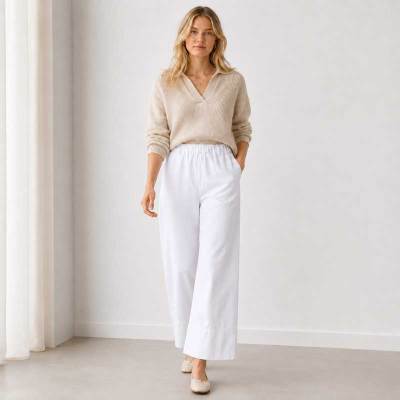
| 2 | Linen trousers, wide or straight leg | Highest friction tolerance, easiest to repair, strongest cost per wear | 190 to 240 gsm | 35 to 60 |
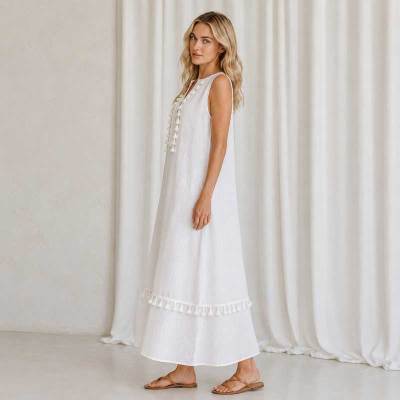
| 3 | Linen midi or maxi dress | One-piece outfits reduce decision cost; midi spans spring to autumn | 160 to 200 gsm | 25 to 45 |
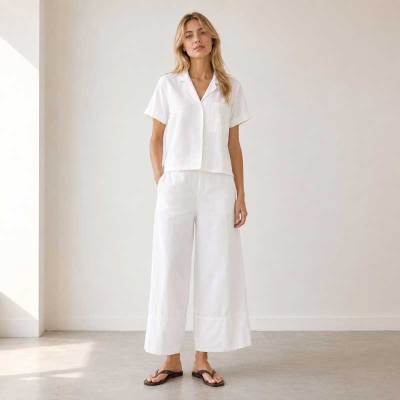
| 4 | Linen two-piece set | Two garments and three outfit combinations from one purchase | 170 to 220 gsm | 20 to 40 |
| 5 | Linen shorts | Short season in most climates, but very high wear rate within it | 150 to 200 gsm | 20 to 35 |
| 6 | Trend-led cut or colour | Short style life regardless of fabric quality | Any | 5 to 15 |
The logic behind the ranking is simple: a piece's value is the product of how often you will wear it and how long it will last, divided by what you paid. Shirts and trousers win because they are worn against the body, layered, and washed often, and because they can be repaired invisibly at the seams. A statement dress that you wear to two events a year can still be a good purchase, but it is not the piece to prioritise when your budget is limited.
If you are buying one thing, buy the piece you would otherwise pay full price for next summer. If you are buying two, add the category you wear most often. The linen trousers category is usually the most under-bought and the most used, which is why it often delivers the best cost per wear in a sale.
Price-Per-Wear Maths for a Black Friday Purchase
Cost per wear is arithmetic, which is why it is useful: it converts a discount into a number you can compare across garments of different prices.
Take a mid-weight linen shirt at 120 USD full price, discounted to 84 USD. If you wear it 50 times a year for four years, that is 200 wears, so the sale price costs 0.42 USD per wear and the full price costs 0.60 USD. Now take a 45 USD sale shirt of thinner cloth that you wear 25 times before the collar frays: 1.80 USD per wear, more than four times the first garment. The expensive shirt was the cheap one.
The same maths works in reverse for a piece you will rarely wear. A 200 USD occasion dress worn six times is 33 USD per wear. If you would only wear it twice, it is 100 USD per wear, and no Black Friday discount fixes that. This is why the first question is not "how much is off?" but "how many times will this actually leave the wardrobe?"
- Wears per year: count the realistic occasions, not the aspirational ones.
- Years of life: assume four to six years for a well-made linen shirt or trouser, two to four for a lightweight summer dress.
- Repair allowance: add 10 to 20 USD over the garment's life for a hem or seam repair, and count it in the total.
- Resale floor: clean linen in a neutral colour often recovers a meaningful share of its price secondhand, which lowers the true cost further.
Our own cost-per-wear analysis of linen goes deeper on the long-run numbers, including how washing frequency and fibre weight change the calculation. The practical takeaway for sale season is narrower: a discount is only real if it improves a cost-per-wear figure that was already acceptable.
Size, Fit and Return Risk During Sale Season
Sale purchases carry more fit risk than full-price ones for a structural reason: the size you need may be gone by the time you decide to exchange. That makes pre-purchase fit work more valuable, not less.
Linen has little stretch, so the garment's measurements matter more than the label. Ask for the three numbers that predict fit: chest or bust circumference, waist circumference, and garment length from high point shoulder. Compare them against a garment you already own and like, laid flat and measured with a tape. This takes four minutes and removes most of the guesswork.
Two fit rules are specific to linen. First, cut tolerance is intentional: a relaxed linen shirt is designed with 8 to 12 cm of ease at the chest, and sizing down to get a "fitted" look usually produces pulling at the placket and stress at the armhole. Second, garment-washed linen has already shrunk, so the fit you receive is close to final; unwashed linen can lose several percent in length after the first wash, which matters most on trousers and long dresses.
If you are ordering across borders, check the duty and return terms before checkout. A 40 percent discount can disappear in return shipping and import handling if the fit is wrong and the item has to travel back. When the numbers are close, buy the size you would buy in a shop, and keep the tags on until you have tried the garment with the shoes and layers you actually wear.
The Black Friday Linen Checklist
Use this in order before you pay. If a garment fails two or more items, close the tab.
- Composition states 100 percent linen or 100 percent European Flax.
- Fabric weight is published, and it sits between 150 and 240 gsm for the piece you need.
- Side seams are French or flat-felled, and the hem is faced on structured pieces.
- The garment is described as garment-washed or pre-shrunk.
- The stated garment length matches a piece you already own and like.
- The sale price produces a cost per wear under 2 USD on realistic wearing frequency.
- The returns window still applies to discounted items, and you can live with the return cost.
- The colour works with at least three things already in your wardrobe.
- You would buy this piece at 20 percent off, not only at 50 percent off.
- You can name the outfit you will wear it with in the first week.
The last two items are the ones that catch most bad purchases. A garment that only makes sense at a deep discount is a garment you do not actually want. A garment with no planned outfit is a garment that will sit in the wardrobe until it becomes clutter.
What Not to Buy, Even at Half Price
Some items are bad value at any discount, and it is worth naming them plainly.
- Very lightweight white linen. Under 130 gsm in white, linen is often semi-sheer in daylight and becomes more transparent as it softens. You will not wear it as often as you expect.
- Blends sold as linen. A 30 percent linen and 70 percent polyester garment at a linen-adjacent price is a poor trade. The polyester dominates the hand-feel, the breathability and the end-of-life options.
- Stretch linen with high elastane content. Two to three percent elastane can improve recovery in a fitted garment, but higher percentages accelerate bagging at the knee and seat and make repair harder.
- Anything that needs dry cleaning to stay presentable. The value of linen is partly that it is easy to wash and wear. A dry-clean-only linen garment shifts a recurring cost onto you.
- Sizes you are gambling on. If the exchange stock is gone, a wrong size is a total loss, not a minor inconvenience.
- Duplicate neutrals. A fourth white linen shirt at a great price is not value; it is storage.
None of this argues against buying linen in a sale. It argues for buying fewer, better pieces and treating the discount as a bonus rather than the reason. The fabric quality guide explains what the good version of each of these categories looks and feels like, which is the fastest way to recognise the weak version when it is marked down.
Protecting the Value After You Buy
The purchase is only half of the value equation. How you wash and store the garment determines whether you get four years or eight.
Wash garment-washed linen in cold or lukewarm water on a gentle cycle, with a mild detergent and no fabric softener. Softener coats the fibre and reduces the natural absorbency that makes linen comfortable. Skip the dryer for anything you care about, or use it on low for ten minutes to soften the cloth and then hang or lay flat to finish. High heat is the main cause of unnecessary shrinkage and of the fibre fatigue that shows up later as thin patches at the collar and cuffs.
Store linen folded rather than on a narrow hanger for long periods, because the weight of the garment on a thin shoulder line can distort the shoulder seam. If you must hang a dress or shirt, use a broad wooden hanger and leave space on either side. Keep the wardrobe dry: linen is a cellulose fibre and stored damp it can develop mildew that is very hard to remove without weakening the cloth.
Repair early. A loose button, a fraying cuff edge or a small pulled thread takes minutes to fix and prevents the kind of damage that ends a garment's life. The full linen washing and maintenance guide covers temperatures, stain treatment and repair in detail, and it is the reference worth keeping next to the washing machine.
[IMAGE_PLACEHOLDER] img prompt: Folded stack of neutral linen shirts and trousers on a pale oak shelf with a small repair kit of thread and needles beside them, warm side light, calm wardrobe organisation photography, no textFrequently Asked Questions
Is Black Friday actually cheaper for linen?
Often, yes, because late November is when retailers clear warm-weather stock. The discount is real on the price tag but not always real on value. Compare the sale price against the garment's normal selling price, check the fibre and weight numbers, and calculate cost per wear before deciding that a markdown is a saving.
Should I buy linen in winter or wait for spring?
Buy in late autumn if you have done the fit and fabric work, because the selection of sizes is usually better than in spring and the prices are lower. Wait if you are unsure of your size in a particular cut, since exchange stock is thinner during clearance events.
How much should a good linen shirt cost?
For 100 percent European Flax in the 150 to 190 gsm range with garment washing and finished seams, a full price of roughly 90 to 140 USD is normal, and a sale price of 60 to 100 USD is a genuine reduction. Under 40 USD, the weight or the finishing is usually where the money was saved.
Does a higher gsm always mean better linen?
No. Higher gsm means heavier cloth, which suits trousers, overshirts and structured dresses but can be too warm for a summer shirt. The right weight depends on the garment and the climate, not on a single ideal number.
The Bottom Line
Black Friday is a good moment to buy linen if you treat it as a fabric decision rather than a price decision. Check the fibre, the weight, the seams and the wash finish, then run the cost-per-wear sum on a realistic wearing life. A modest discount on a garment that passes all four checks beats a dramatic discount on one that fails two, every time, and the difference compounds over the years the garment stays in your wardrobe.
If you are rebuilding a warm-weather wardrobe from scratch, start with a shirt and a pair of trousers in the 150 to 200 gsm range, then add a dress or a set once you know how the fit runs. If you are adding to an existing wardrobe, buy the gap, not the bargain. Our linen dresses and linen sets pages list the weight and composition of each piece, which makes the checks in this guide a two-minute job rather than a research project.
Shop With the Numbers in Front of You
Every KOSSR piece is made from 100 percent European Flax, garment-washed before it ships, and listed with its fabric weight so you can judge value the same way we do. Start with the linen shirts and linen trousers, or read the honest answer on linen pricing before you decide what a fair sale price looks like.